


Understanding the 2026 Child Train Ticket Policies
According to the official 12306 rail policy, child train tickets in China are now strictly based on age, not height. Children under 6 travel free (sharing a seat), children aged 6 to 14 receive a 50% discount on standard seats, and those over 14 require a full-fare adult ticket.
Important Insider Tip: The “under 6 free” rule is limited to one free child per adult. If one parent is traveling alone with two 4-year-olds, the second child must have a half-price ticket. If you want your 5-year-old to have their own seat to prevent squirming on a 5-hour journey, you must purchase a child ticket for them.
How to Buy Train Tickets and Secure Adjoining Seats
In 2026, the days of queuing at a smoky ticket window are entirely over. You should book everything digitally via the official 12306 website or app. Alternatively, third-party apps like Trip.com charge a small convenience fee but offer a highly streamlined English interface and accept foreign credit cards effortlessly.
When booking for a family, the system automatically attempts to seat you together. However, China’s Second Class carriages use a 3+2 seating layout (A-B-C / D-F). If you are a family of four, book seats A, B, C, and D. Try to avoid the “B” seat (the middle) if you are a party of two; instead, book C and D for aisle access across from each other.
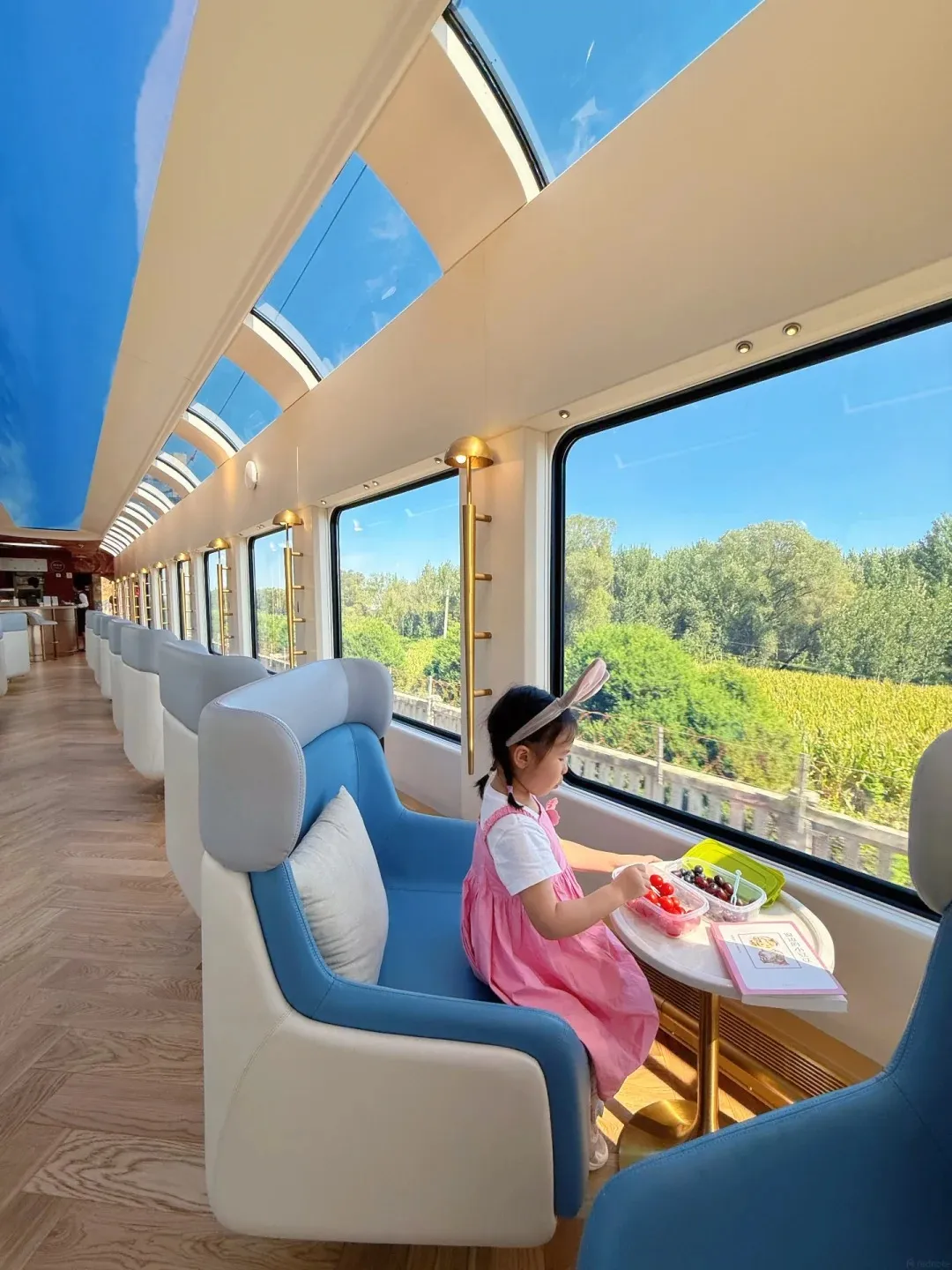
Traveling through China’s picturesque landscapes is an adventure in itself, especially aboard these luxurious high-speed trains. Make the journey even more enjoyable for your little ones with a special snack basket – it’s the perfect way to keep them happy and entertained while taking in the sights!
Essential Apps and Staying Connected
You cannot survive a modern trip to China without a smartphone. You will need Alipay or WeChat not just to buy snacks on the train, but to order food deliveries directly to your seat at upcoming station stops—a lifesaver when the kids refuse to eat the onboard meals.
To ensure these apps work seamlessly, you need a reliable internet connection that bypasses the Great Firewall.
💡 Editor’s Pick: We recommend Nomad eSIM for China because it reliably bypasses the Great Firewall with stable speeds.
Do not rely on the train’s free Wi-Fi. While it exists on newer “Fuxinghao” models, it requires a Chinese phone number to receive a verification SMS and is notoriously slow when the train is packed to capacity.
Navigating the Station: Luggage, Crowds, and Security
Entering a Chinese railway station is more like entering an international airport. You will face security scanners, ID checks, and massive departure halls. The sheer scale of stations like Shanghai Hongqiao or Beijing South can be overwhelming, filled with the echoing announcements and the distinct, savory smell of braised beef instant noodles.
What to Know Before You Go: Luggage Strategies
China Rail permits 20 kg of luggage per adult. While there are overhead racks for cabin-sized bags, large suitcases must go in the storage closets at the ends of each carriage. These fill up incredibly fast. Board the train the second your gate opens to secure a spot for your large bags, or you will be forced to wedge them uncomfortably between your legs.
Additionally, bring luggage with high-quality spinner wheels. While major stations have elevators, they are often tucked away in far corners. You will frequently encounter steep ramps alongside stairs, requiring you to push a stroller while dragging suitcases.
Onboard Survival: Entertainment, Food, and Facilities
A four-hour train ride with a toddler requires strategic packing. Unlike European trains, Chinese high-speed rail carriages are incredibly quiet. Locals value a peaceful environment, and a screaming child will draw stares. Pack headphones, download offline shows, and bring quiet toys.
The Realities of Train Food
Skip the dining car. The food carts pushed down the aisles offer limited, overpriced options. A basic microwaved rice dish costs around 45 RMB (about $6.50 USD) and is rarely a hit with picky eaters. Instead, pack familiar snacks from a local supermarket before you arrive at the station.
Every single carriage has a free boiling water dispenser at the end of the aisle. This is an absolute game-changer for parents. You can easily warm baby bottles, make oatmeal, or join the locals in preparing instant noodles.
Restrooms and Diaper Changes
Squat toilets are still common on older “Hexiehao” trains, but modern high-speed trains feature western-style toilets. Always bring your own toilet paper and hand sanitizer, as they frequently run out by the middle of the journey. If you need a diaper changing table, head straight to Carriage 5, which houses the wheelchair-accessible restroom and a fold-down baby changing station.
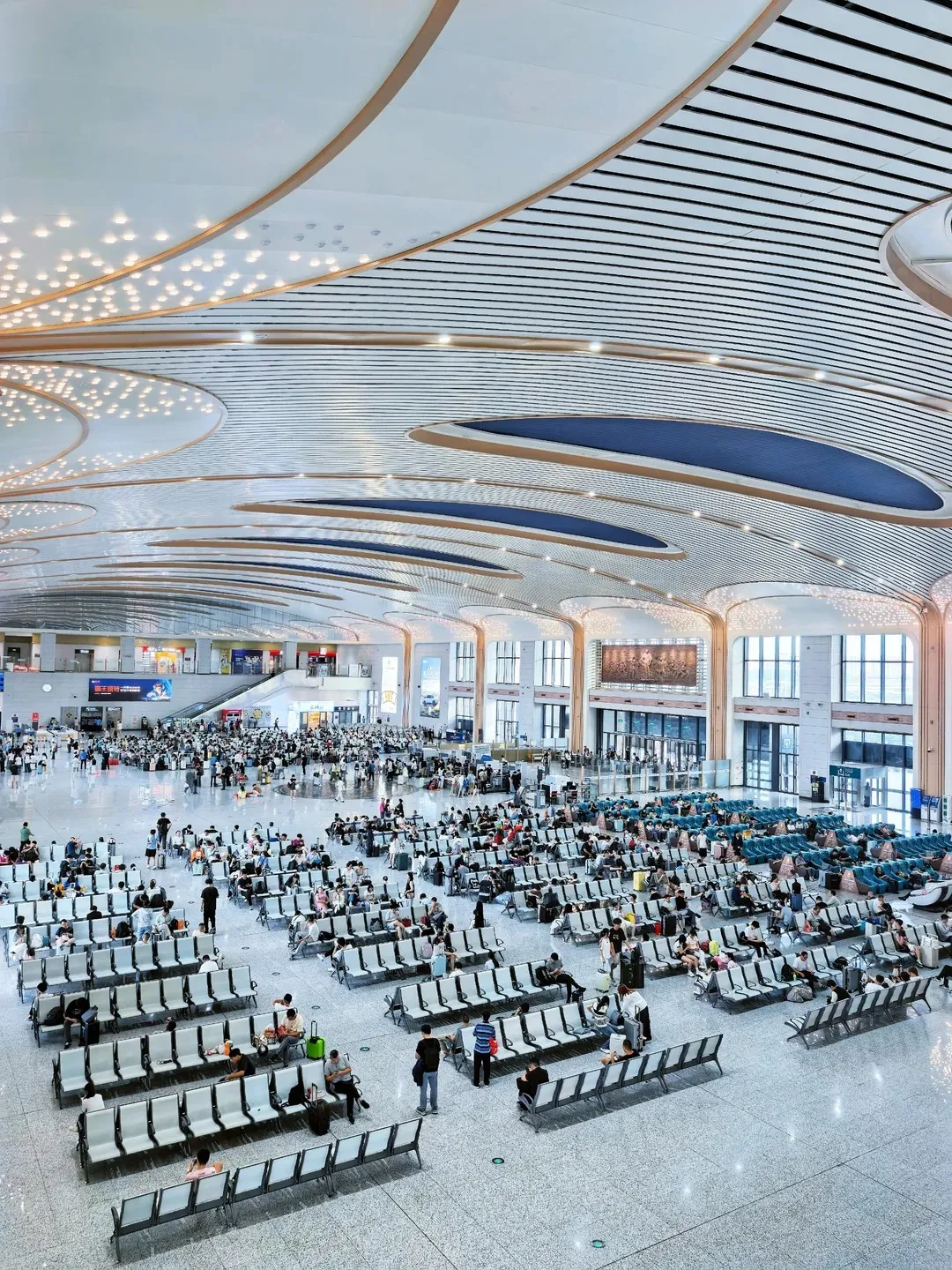
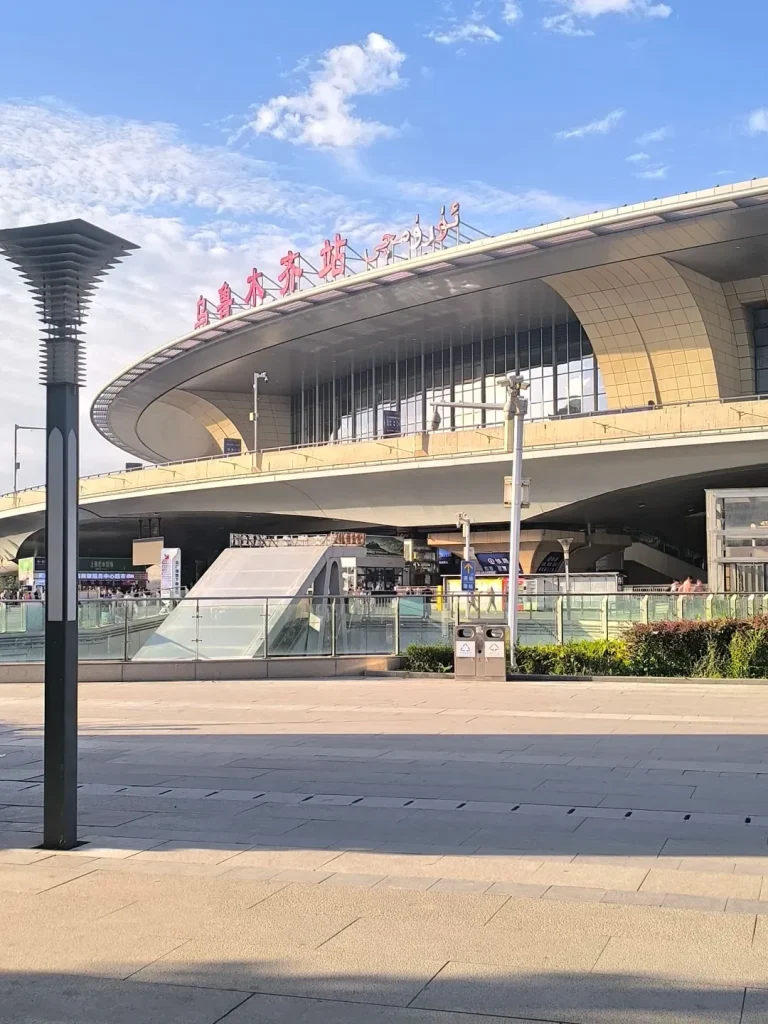
Navigating China’s expansive high-speed rail stations is an adventure in itself! This is the departure hall of a modern station, where families can find comfortable seating areas while waiting for their train, making the start of your rail journey with kids a smooth experience.
Is First Class Worth the Upgrade for Families?
If your budget allows, upgrading to First Class is highly recommended when traveling with children. While Second Class is perfectly clean and comfortable, First Class offers a 2+2 seating layout with significantly wider seats and extra legroom.
This extra space means a toddler can comfortably stand between your legs, and you have more room to deploy an iPad, snacks, and coloring books without elbowing the stranger next to you. During the chaotic Spring Festival or summer holiday rushes, the First Class carriage is noticeably quieter and less crowded.