


What is the 144-Hour Visa-Free Transit Policy?
The 144-hour visa-free transit policy allows travelers from 54 qualifying countries to explore Chengdu and the wider Sichuan province, including Leshan and Mount Emei, for up to six days without applying for a traditional Chinese visa, provided they hold a valid onward ticket to a third country.
Day 1: High-Speed Trains and the Leshan Giant Buddha
Your journey begins at Chengdu East Railway Station. According to the official 12306 rail policy for 2026, foreign passports can now be verified entirely online, meaning you no longer need to queue at the ticket window. Simply swipe your physical passport at the automated turnstiles to board the 60-minute train to Leshan.
To keep the 12306 app, Alipay, and WeChat running smoothly without dealing with the Great Firewall, you will need a reliable eSIM.
💡 Editor’s Pick: We recommend Nomad eSIM for China because it reliably bypasses the Great Firewall with stable speeds.
Insider Tip: The Boat vs. The Hike
Once you arrive in Leshan, you face a critical choice: hike down the cliffside or view the Buddha from the river. Do not hike down the red sandstone steps during summer or public holidays. You will likely stand shoulder-to-shoulder in 40°C (104°F) heat for over two hours just to reach the Buddha’s feet.
Instead, pay 70 RMB for the river cruise. The boat positions you perfectly at the confluence of the Minjiang, Dadu, and Qingyi rivers. You get a full, head-to-toe panoramic view of the 71-meter statue, avoiding the suffocating humidity and the pungent smell of burning incense near the temple entrance.
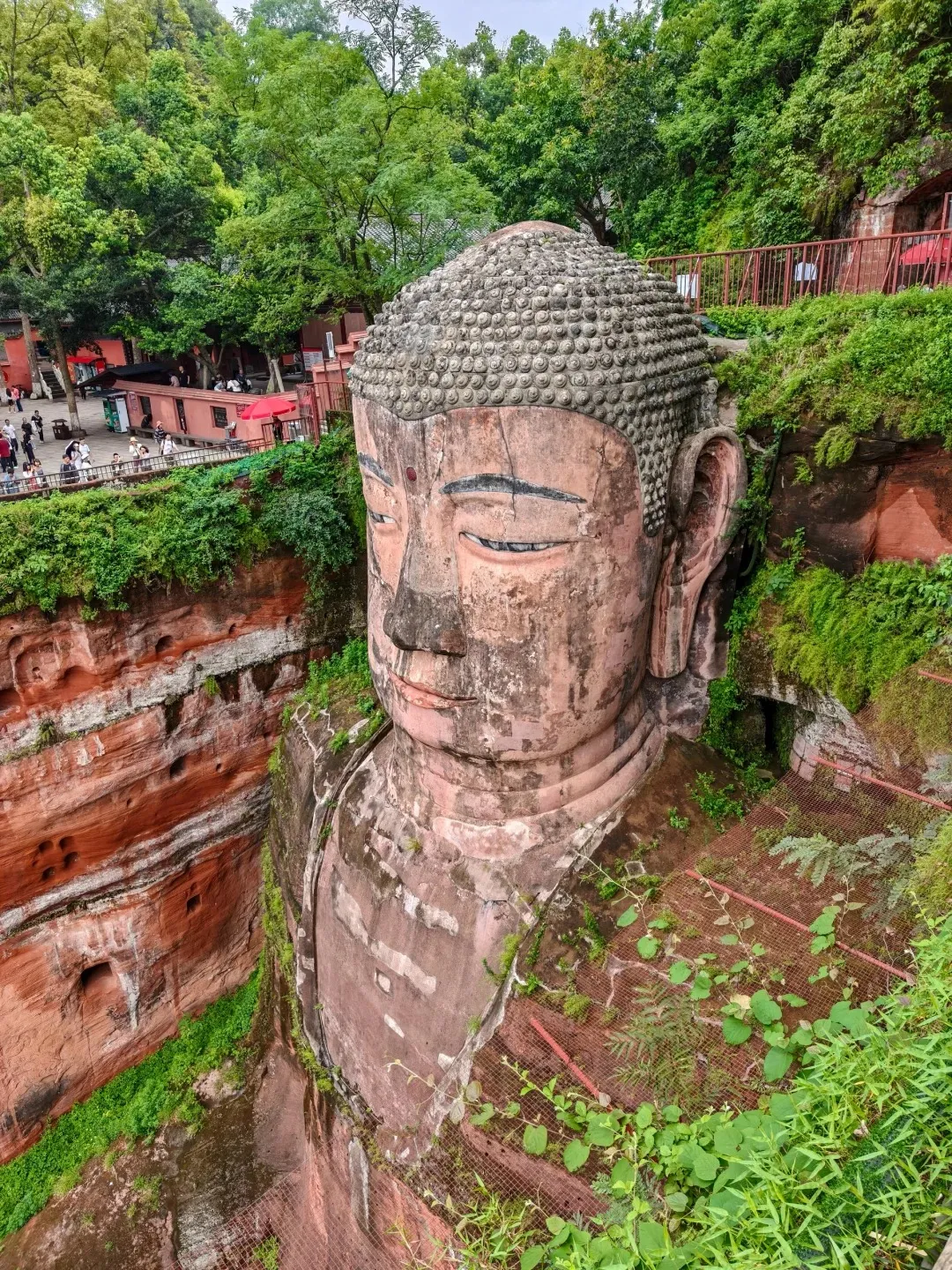
The awe-inspiring Leshan Giant Buddha, carved directly into a mountain, is a testament to ancient artistry and devotion. This magnificent sculpture is a highlight of any visit to the region.
After a lunch of Leshan’s famous Qiaojiao Beef (a fragrant, non-spicy broth), take a 45-minute taxi or a 15-minute high-speed train to Emeishan Station. Check into a hotel at the base of the mountain to rest up for an early start.
Day 2: Conquering Mount Emei’s Golden Summit
Mount Emei is massive. A full hike from the base to the summit covers nearly 60 kilometers and requires two grueling days. For a 3-day itinerary, 90% of visitors take the scenic shuttle bus from the Baoguo Temple Tourist Center up to the Leidongping parking lot.
The winding bus ride takes about two hours and is notorious for causing motion sickness. Pack motion sickness patches and try to secure a seat near the front. Once you step off the bus at Leidongping (elevation 2,400m), you will immediately feel the temperature drop. A bottle of water here costs about 10 RMB, double the price at the mountain’s base.
Is it Worth It? Staying at the Golden Summit
If your goal is to see the famous sunrise over the sea of clouds, you must stay on the mountain. You have two main options:
- Leidongping: Hotels here are basic but much more affordable. The downside? You must wake up at 4:30 AM and hike 30 minutes in the pitch dark to the Jieyin Hall cable car station to catch the first ride up.
- Golden Summit (Jinding): Staying at the Golden Summit Hotel is expensive and food options are limited to overpriced instant noodles and basic hotel buffets. However, you can roll out of bed and walk 10 minutes to the viewing platform.
If you visit in winter (December to February), the stone paths become treacherous. Local vendors sell anti-slip ice grips for 20 RMB—buy them. They are essential for navigating the icy mist that coats the upper trails.
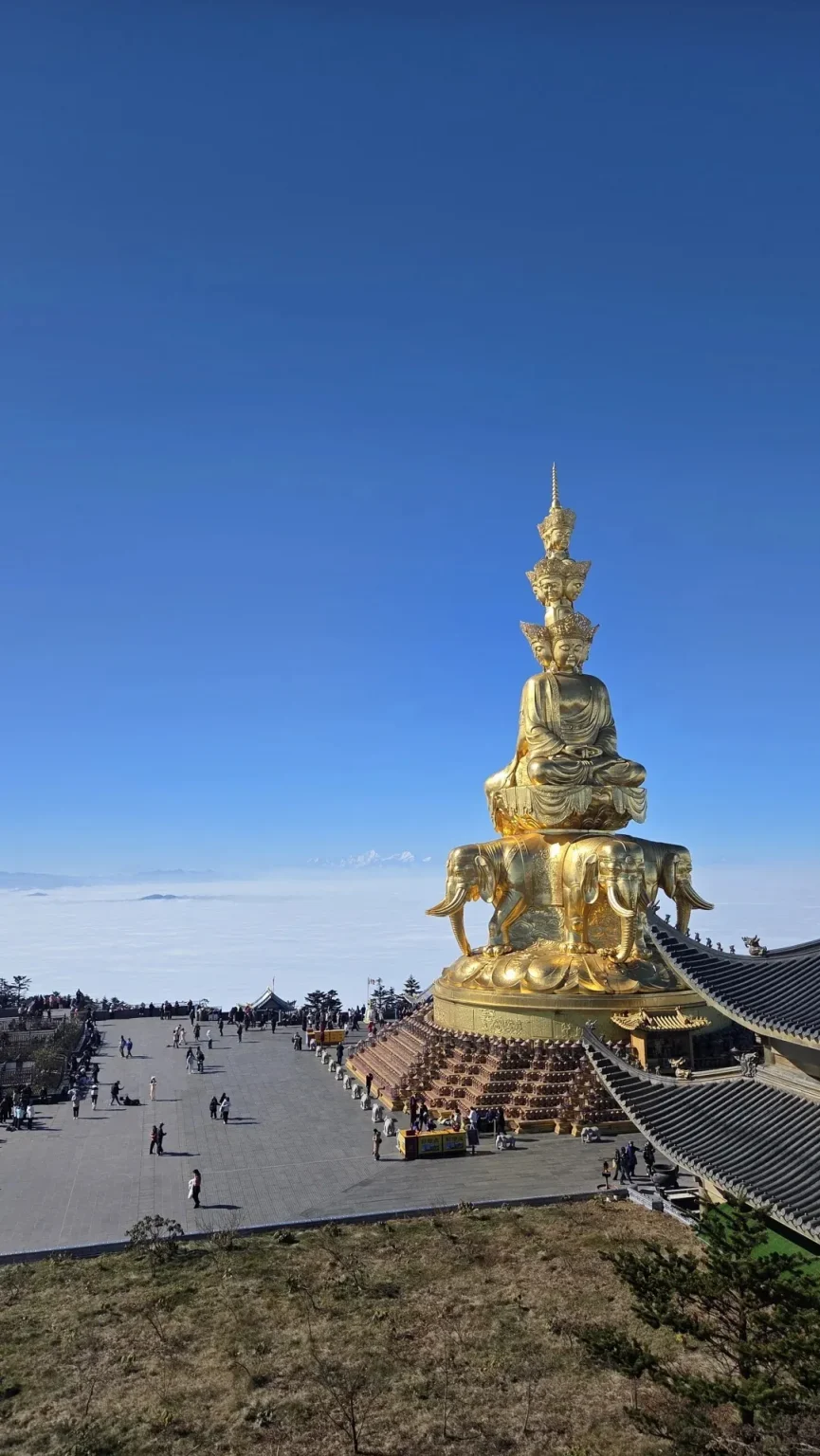
Standing tall above a sea of clouds, the magnificent golden statue of Samantabhadra at Mount Emei’s Golden Summit is a breathtaking sight, offering a spiritual and visual highlight of any visit to this sacred mountain.
Day 3: Ancient Temples, Wild Monkeys, and Hot Springs
After viewing the towering 48-meter golden statue of Samantabhadra at sunrise, take the cable car back down to Leidongping. From here, take the bus halfway down the mountain to the Wannian Temple station.
Wannian Temple is one of Emei’s oldest, featuring a stunning beamless brick hall built in 1600. From here, you can hike down through the Qingyin Pavilion. The trail is beautifully lush, but be on high alert as you approach the Ecological Monkey Area.
What to Know Before You Go: The Emei Macaques
The Tibetan macaques on Mount Emei are not cute, docile pets—they are aggressive wild animals. Do not rustle plastic bags, do not carry food in your hands, and avoid making direct eye contact. If a monkey jumps on your backpack, stay calm and let a local guide or park ranger shoo it away with a bamboo walking stick.
Unwinding at the Hot Springs
By the time you reach the Wuxianggang bus station to head back to the mountain’s base, your calves will be burning. Before catching your train back to Chengdu, book a day pass at the Hongzhushan Forest Hot Spring.
Nestled directly into the mountain forest, soaking in these outdoor thermal pools is the perfect antidote to the biting mountain cold and the physical toll of thousands of stone steps.