


What is the 144-Hour Visa-Free Transit Policy?
The 144-hour visa-free transit policy allows citizens of 54 eligible countries to enter Harbin without a pre-approved visa for up to six days. You must arrive at Harbin Taiping International Airport and hold a confirmed onward flight ticket to a third country or region outside of Mainland China.
Navigating the Harbin Jewish History Trail: Key Sites
The majority of Harbin’s Jewish heritage is concentrated in the Daoli District, making it highly walkable. However, navigating the uneven, icy streets requires sturdy footwear and a solid itinerary.
The Harbin New Synagogue (Jewish History and Culture Museum)
Located at 162 Jingwei Jie, this 1921 structure is the largest synagogue in East Asia. Beautifully restored in 2004, the second and third floors now house a deeply moving exhibition on the cultural and economic life of Harbin’s Jewish diaspora.
The museum features detailed English captions, which is a rarity in many regional Chinese museums. Expect to spend about 90 minutes here. The building is heavily heated in winter, so wear layers you can easily remove once inside.
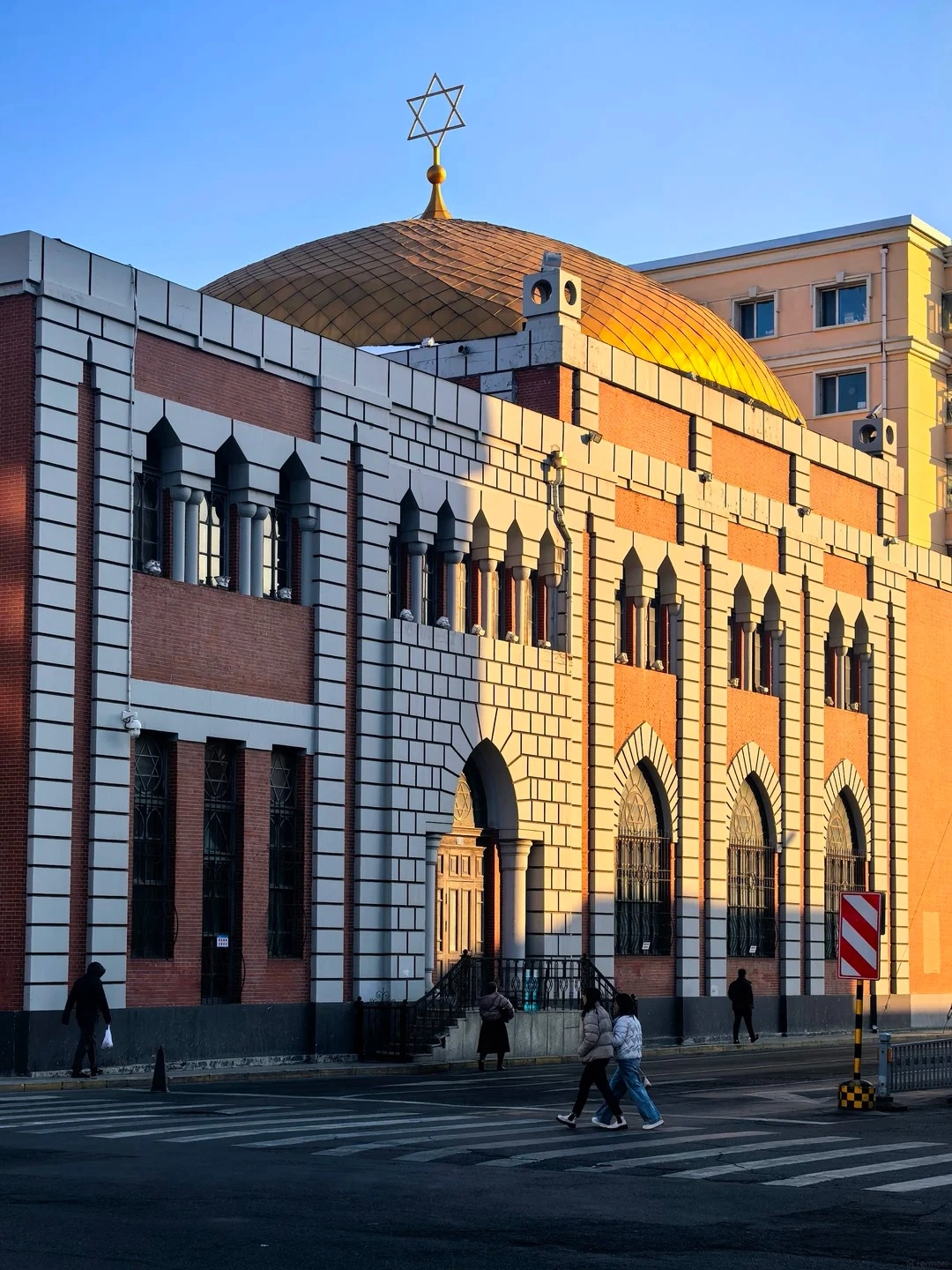
The Harbin New Synagogue, a prominent landmark on the Jewish Heritage Trail in the Daoli District, stands bathed in the warm light of the setting sun, a testament to the city’s rich and diverse history.
The Main Synagogue and Tongjiang Street
Just a short walk away at 82 Tongjiang Jie sits the Harbin Main Synagogue. Built in 1909, this elegant building has been repurposed as a classical concert venue. The former Jewish Middle School shares the same compound.
While you cannot tour it as a traditional museum, you can purchase tickets on-site for evening musical performances. Hearing a string quartet play in this historically acoustic space is a surreal, highly recommended experience.
Zhongyang Dajie (Central Street) Architecture
Originally called China Street, this pedestrian-only avenue was heavily developed by Jewish and Russian merchants. Today, it is lined with over 70 European-style buildings showcasing Baroque and Art Nouveau architecture.
As you walk along the “Bread Stone Road”—named for cobblestones shaped like Russian bread—the smell of roasted sweet potatoes and sweet Dalieba (Russian bread) fills the freezing air. It is bustling, commercial, and deeply atmospheric.
Huangshan Jewish Cemetery: A Somber Outskirts Journey
For a complete historical picture, you must leave the city center. Located off the G101 Highway in the eastern suburbs, the Huangshan Jewish Cemetery (Royal Hill Cemetery) holds over 600 well-maintained graves.
It is the largest Jewish cemetery in the Far East. Because it is remote, do not rely on hailing a cab for your return. Negotiate with your Didi driver to wait for you, which should cost around 150-200 RMB for the round trip.
Logistics: How to Plan Your 2026 Visit
Modern China operates almost entirely on smartphones. To explore Harbin’s historical sites efficiently, you need to set up your digital infrastructure before you land.
Staying Connected: eSIMs and Apps
You cannot use Google Maps, WhatsApp, or Western social media in China without a VPN. However, the most reliable workaround in 2026 is using an international travel eSIM that naturally routes your data outside the Great Firewall.
💡 Editor’s Pick: We recommend Nomad eSIM for China because it reliably bypasses the Great Firewall with stable speeds.
Once connected, ensure you have Alipay and WeChat downloaded and linked to your foreign credit card. Cash is rarely accepted, even when buying a simple 2 RMB bottle of Nongfu Spring water at a local convenience store.
Getting There & Buying Train Tickets
Harbin is a major logistical hub. If you are traveling from Beijing, the high-speed G-train takes roughly 5 hours. According to the official 12306 China Railway policy, foreign travelers can now book tickets online using their passport number and use the manual passport lanes at the station.
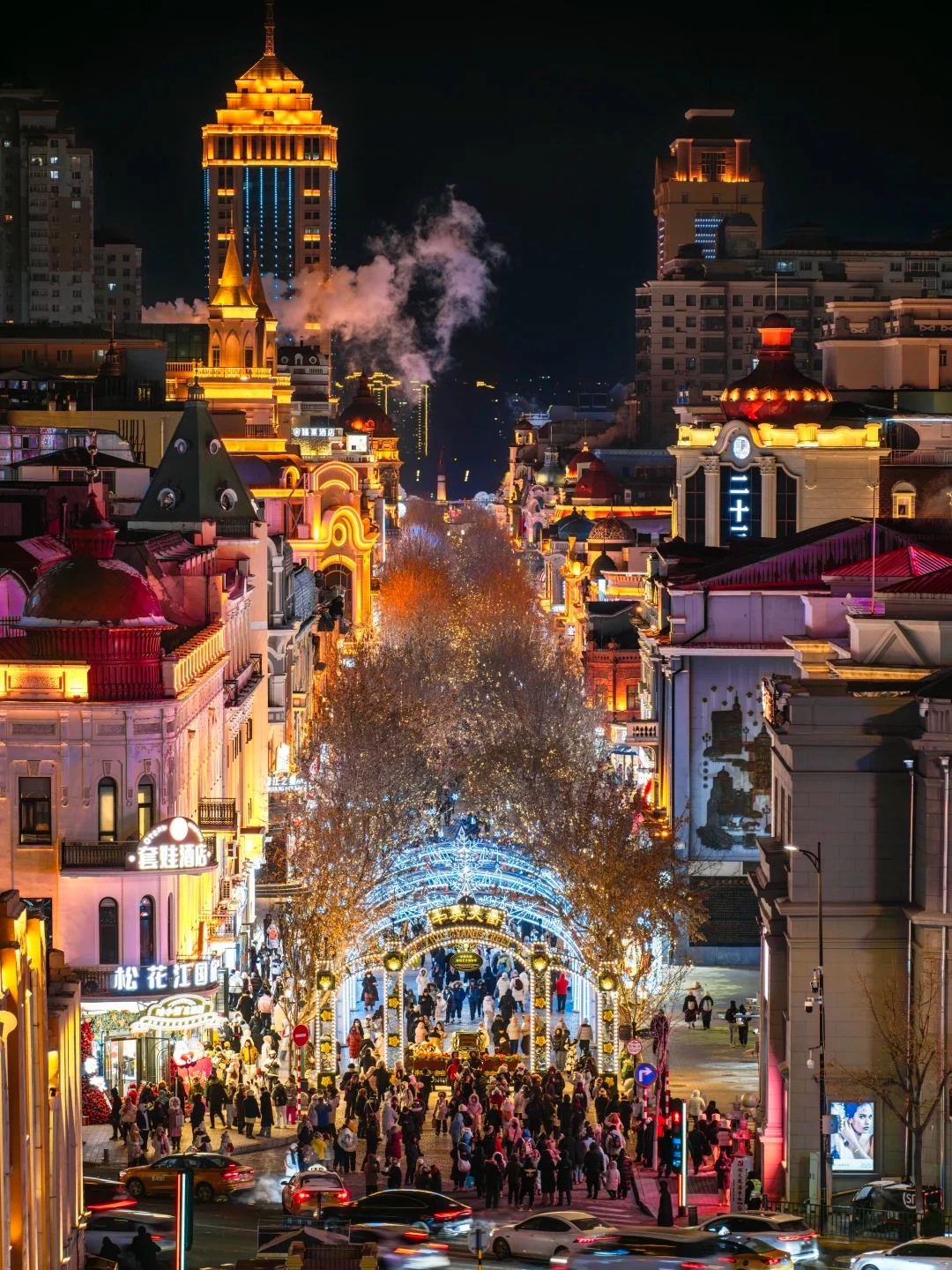
Central Street (Zhongyang Street) in Harbin’s Daoli District is a vibrant artery, often adorned with festive lights that draw crowds even on the coldest winter nights. This bustling scene offers a glimpse into the city’s unique blend of European-inspired architecture and lively street life.
Insider Tips: What to Know Before You Go
Skip the Overpriced Tourist Cafes: Central Street is packed with “authentic Russian” restaurants charging exorbitant prices for mediocre borscht. Instead, duck into the side alleys off Tongjiang Street. You will find quieter, locally-run spots where you can eat excellent Guo Bao Rou (sweet and sour pork) for a fraction of the cost.
Prepare for the Physical Toll: If you visit during the winter, the -25°C wind chill off the Songhua River is brutal. Your phone battery will drain in minutes. Buy a cheap pack of adhesive body warmers (nuanbaotie) from a pharmacy and stick one directly onto the back of your smartphone.
Bring Physical Identification: While China is highly digitized, heritage sites like the Jewish History Museum still require a physical passport scan for foreign visitors. A photo on your phone will not be accepted by the security guards.