

Don't Tap the Table! A Foreigner's Guide to Chinese Teahouse Etiquette

Imagine sitting in a bamboo chair, the humid summer air thick with the scent of jasmine, while the rhythmic clinking of porcelain echoes around you. You are in a traditional Chinese tea house, the ultimate hub of local gossip, relaxation, and culture. But before you sit down and flag a waiter, you need to understand proper China tea house etiquette. Navigating these spaces in 2026 goes far beyond just sipping a hot beverage. It is about understanding centuries of unspoken rules, from how you handle your cup to how you pay using modern apps, ensuring you look like a seasoned traveler rather than a lost tourist.

Quick Summary: Key Takeaways for Your Trip

  • Signal for refills silently: Leave your tea lid resting half-open on the saucer or cup to signal you need more hot water.
  • Finger tapping nuance: Tapping two fingers on the table is a silent “thank you” when someone pours your tea, but knocking on the table for service is highly offensive.
  • Digital payments are mandatory: Cash is rarely accepted in 2026; you must have Alipay or WeChat Pay linked to an international bank card.
  • Embrace the ear cleaners: In Chengdu, local ear cleaners offer a traditional 15-minute grooming service right at your table for about 40-60 RMB.

Summarize with :

What is the 144-Hour Visa-Free Transit?

The 144-hour visa-free transit is an official Chinese immigration policy that allows citizens from 54 qualifying countries to enter specific regions of China (including Chengdu and Hangzhou) for up to six days without a pre-approved visa, provided they have a confirmed onward ticket to a third country.

Navigating the Teahouse Scene: Chengdu vs. Hangzhou
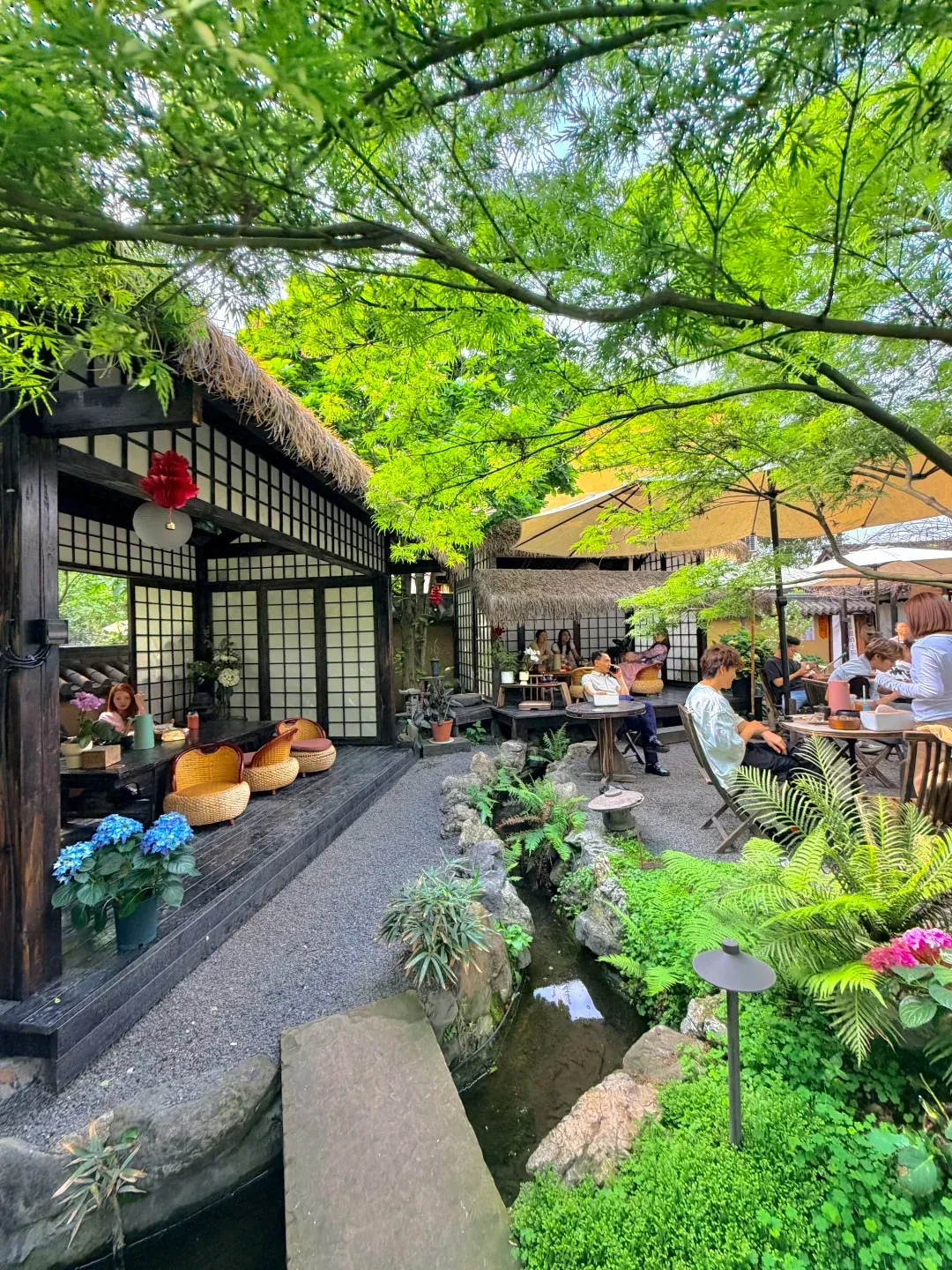
A traditional Chinese teahouse with a thatched roof, dark wooden beams, and sliding shoji screen doors. In the foreground, several people are seated at tables and on bamboo chairs in a tranquil courtyard. A small, winding stream flows through the garden area, surrounded by lush green plants and rocks. Blue hydrangeas in a pot and a red paper lantern hanging from the eaves add pops of color. Sunlight filters through the leafy green trees overhead.

Experience the serene ambiance of a traditional Chinese teahouse. While enjoying your tea, remember the local customs—like not tapping the table to ask for service, as detailed in our guide to teahouse etiquette!

The tea culture in China varies wildly by region. In Chengdu, the capital of Sichuan province, teahouses are loud, communal affairs. Places like the famous Heming Teahouse in People’s Park are packed with locals playing Mahjong, surrounded by the smell of cheap local cigarettes and roasted sunflower seeds.

Insider Tip: While Heming is fantastic for photography, it is heavily overcrowded and overrated for actual relaxation. Walk 15 minutes away to the lesser-known Huanhuaxi Park. The teahouses there offer the exact same authentic bamboo-chair experience with a fraction of the crowds and much cheaper brews.

Conversely, Hangzhou’s teahouses in Longjing Village are serene and refined. Here, you are paying for absolute tranquility and the smell of freshly roasted green tea leaves. The etiquette here is quieter, focusing heavily on the appreciation of the tea’s clarity and subtle flavors.

How to Order and Pay in 2026

Do not expect a waiter to hand you a paper menu. In almost every modern Chinese teahouse, ordering is done by scanning a QR code adhered to the corner of your table. Scanning these codes requires a stable internet connection, which brings us to the most crucial logistical hurdle: bypassing the Great Firewall. You will need a reliable travel eSIM to access local payment gateways without interruption.

💡 Editor’s Pick: We recommend Nomad eSIM for China because it reliably bypasses the Great Firewall with stable speeds. Use code JORICAQLKF at checkout to get $5 USD off your first data plan.

Once connected, you will use Alipay or WeChat Pay. By 2026, both applications seamlessly bind to foreign Visa and Mastercards. Simply scan the code, select your tea (jasmine is the standard in Sichuan, green tea in Zhejiang), and the staff will bring your gaiwan (lidded bowl) and a massive thermos of boiling water.

The Unspoken Rules of China Tea House Etiquette

The Lid Rule: Never leave your tea lid upside down on the table, as this is considered bad luck. If you want a refill of hot water from the roaming attendants, simply slide the lid so it rests unevenly on the cup, or prop it against the saucer. The staff will spot this and refill your cup without a single word spoken.

The Finger Tap: The title of this post is a warning: do not loudly tap or knock on the table to demand a waiter’s attention. However, there is a specific two-finger tap you must know. When a host or friend pours tea for you, gently tapping your index and middle fingers on the table is a traditional sign of gratitude, originating from an ancient imperial legend.

Holding the Gaiwan: Do not remove the lid entirely to drink. Use the lid to brush the floating tea leaves away from you, leaving a small crescent gap. Hold the saucer with your bottom hand and sip the liquid through the gap. This technique prevents you from swallowing a mouthful of bitter leaves.

Dealing with Local Ear-Cleaners in Chengdu
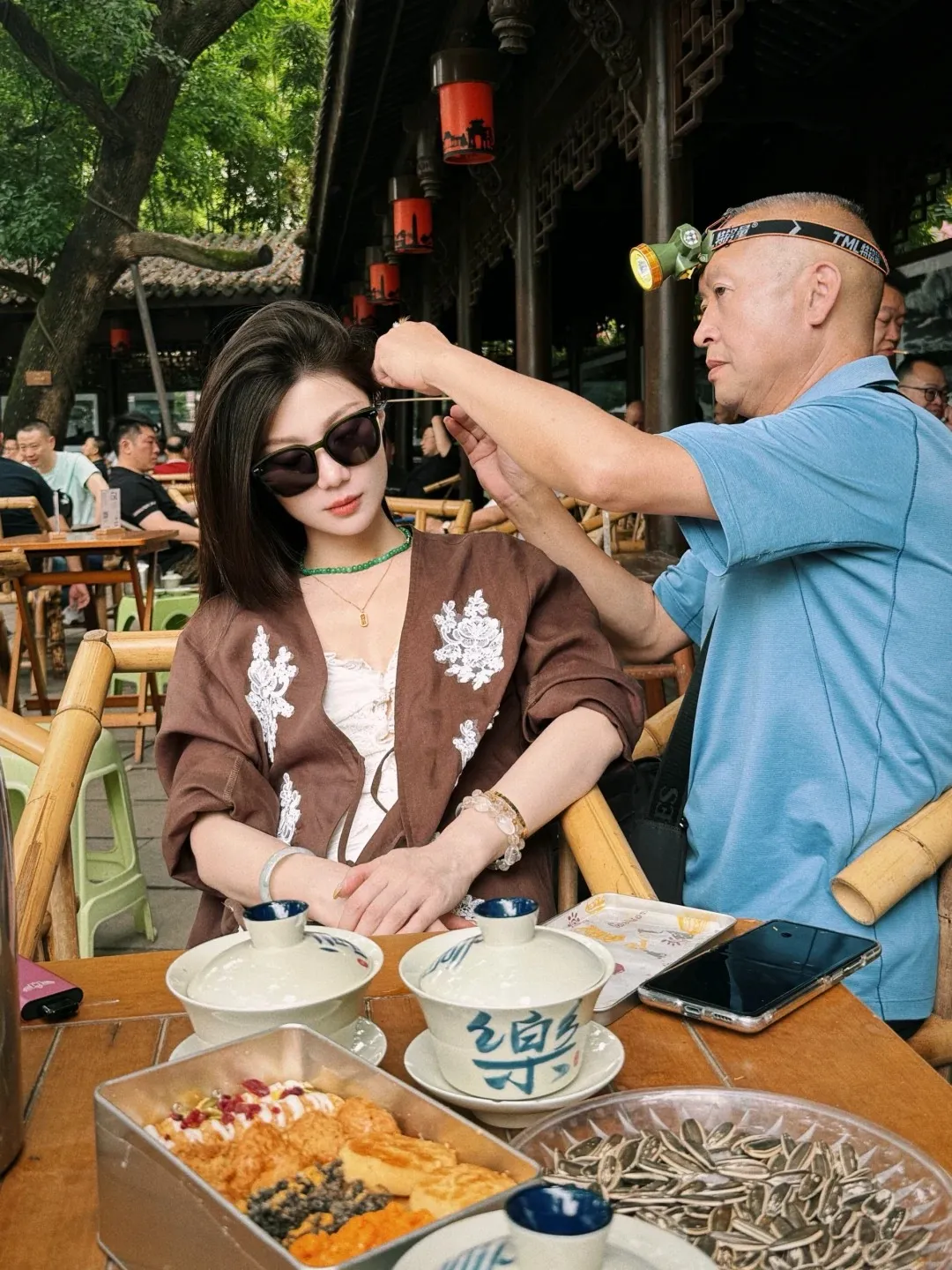
A man wearing a headlamp with a light is using tools to clean a woman's ear while she sits at a table with tea bowls and food.

In a traditional Chengdu teahouse, ear cleaning is a popular service, but remember, as per teahouse etiquette, tapping the table is a no-no!

If you visit a teahouse in Sichuan, you will inevitably hear the high-pitched “twang” of a tuning fork. This signals the arrival of the local ear-cleaners, known as shufu. While it looks intimidating to foreigners, this traditional grooming service is a beloved staple of local leisure culture.

A standard session costs around 40 to 60 RMB (roughly $6-$8 USD). The practitioner uses an array of tiny bamboo scoops, goose feathers, and vibrating metal tools to clean and stimulate the ear canal. It is incredibly relaxing, but be firm if you want to decline; a simple wave of the hand and a polite “bu yao” (I don’t want it) is perfectly acceptable.

What to Know Before You Go: Logistics and Pricing

Getting between China’s major tea hubs is easier than ever via the high-speed rail network. According to the official 12306 rail policy, foreign travelers can now seamlessly book e-tickets using their passport numbers, completely bypassing the old, frustrating paper ticket windows.

When buying tea, remember that you are paying for the seat, not just the leaves. A basic cup of green tea might cost 30 RMB, while premium Longjing can exceed 200 RMB. Do not feel pressured to buy the most expensive option. Locals often order the cheapest tea and sit for six hours playing cards. The price of a standard bottle of mineral water outside is 2 RMB, but inside, you are renting the atmosphere.


Common Questions About China Tea Houses

How do you order and pay in a Chinese tea house in 2026?

Paper menus are rarely used in modern Chinese tea houses. You will need to scan a QR code on your table using a smartphone connected via a travel eSIM. Payments are handled entirely digitally through Alipay or WeChat Pay linked to your international bank card.

Never remove the lid completely when drinking from a gaiwan. Instead, use the lid to brush away floating tea leaves, leaving a small crescent gap. Hold the saucer with your bottom hand and sip the tea through the gap to avoid swallowing bitter leaves.

You do not need to call a waiter over or tap the table. Simply slide the lid of your gaiwan so it rests unevenly on the cup, or prop it against the saucer. Roaming staff will recognize this silent signal and refill your hot water automatically.

Ear cleaners, known locally as shufu, offer a traditional grooming service using tiny bamboo scoops, goose feathers, and vibrating metal tools. A standard 15-minute session costs around 40 to 60 RMB. It is incredibly relaxing, but you can politely decline by waving your hand and saying ‘bu yao’.

Conclusion

Mastering China tea house etiquette is your golden ticket to blending in and experiencing the country’s legendary slow-living culture. By knowing how to order with your phone, signal for hot water with your lid, and politely navigate the local ear-cleaners, you will earn the quiet respect of the locals around you.

Ready to put these skills to the test? Book a high-speed train to Chengdu, set up your mobile payment apps, and prepare for an afternoon of unmatched relaxation. For more insider tips on navigating the Middle Kingdom, check out our complete guide to dining in China without speaking Mandarin.

Similar posts to this one

An open-air teahouse with a dark wooden roof supported by large wooden pillars. Many people are seated at bamboo tables and chairs, some eating and some drinking. In the foreground, a man in a dark t-shirt and yellow shorts leans back in his chair at a table with a bottle and a cup. Orange lanterns hang from the ceiling. The floor is wet and reflective.

Chengdu's Ancient Teahouses: A Guide to Local Brews & Cultural Immersion

If you want to understand the true heartbeat of Sichuan province, you have to slow down. While the modern metropolis [...]

A large table laden with dishes for hot pot dining. In the center is a steaming copper pot with a decorative yellow and blue base. Around it are platters of thinly sliced raw meats, including lamb and beef, arranged in circular patterns. Several skewers of small meat pieces and a bowl of dipping sauce are also visible. Various vegetables, including napa cabbage and purple cabbage, are placed in bowls. Bottles of drinks and stacks of tofu are on the table. In the background, traditional Chinese architecture with red lanterns and green vines can be seen, with people dining at tables.

Beijing Copper Pot Hot Pot: A Guide to Authentic Mutton Shabu-Shabu

When the biting winter winds sweep down from Siberia, locals know there is only one true way to thaw out: [...]

A traditional wooden boat with a thatched roof navigates a narrow canal lined with stone walls. A person wearing a conical straw hat and an orange life vest steers the boat with a long pole. Other boats with passengers are visible further down the canal, and traditional Chinese architecture with tiled roofs and lanterns lines the left bank. Lush green trees and vibrant pink and white flowers bloom along the canal's edge.

A Perfect 1-Day Suzhou Itinerary: Classical Gardens & Pingjiang Road

Trying to squeeze the "Venice of the East" into a single day can feel overwhelming, but a well-planned 1 Day [...]

Get the China Arrival Survival Kit

Planning a trip here has a steep learning curve. Join our newsletter and receive our free “Day One Checklist” covering everything from setting up Alipay and WeChat to bypassing the internet firewall.