


Navigating Chengdu: Visas, Connectivity, and Payments
What is the 144-hour visa-free transit?
The 144-hour visa-free transit is an official Chinese immigration policy allowing eligible passport holders from 54 countries to explore Chengdu and the wider Sichuan province without a pre-approved visa for up to six days, provided they have a valid onward flight ticket to a third country.
According to the official National Immigration Administration, you must present your printed onward ticket at immigration. Once cleared, you are free to explore the city’s culinary and historical sites.
Before stepping foot in a teahouse, you must solve China’s digital barrier. The Great Firewall blocks Western apps like Google Maps, WhatsApp, and Instagram. To navigate the city and translate menus, you need a reliable VPN or, better yet, a travel eSIM that bypasses the firewall automatically.
💡 Editor’s Pick: We recommend Nomad eSIM for China because it reliably bypasses the Great Firewall with stable speeds.
For payments, bind your international credit card to Alipay or WeChat Pay. Whether you are buying a 15 RMB cup of green tea or tipping a local street performer, scanning QR codes is the only way to transact in 2026.
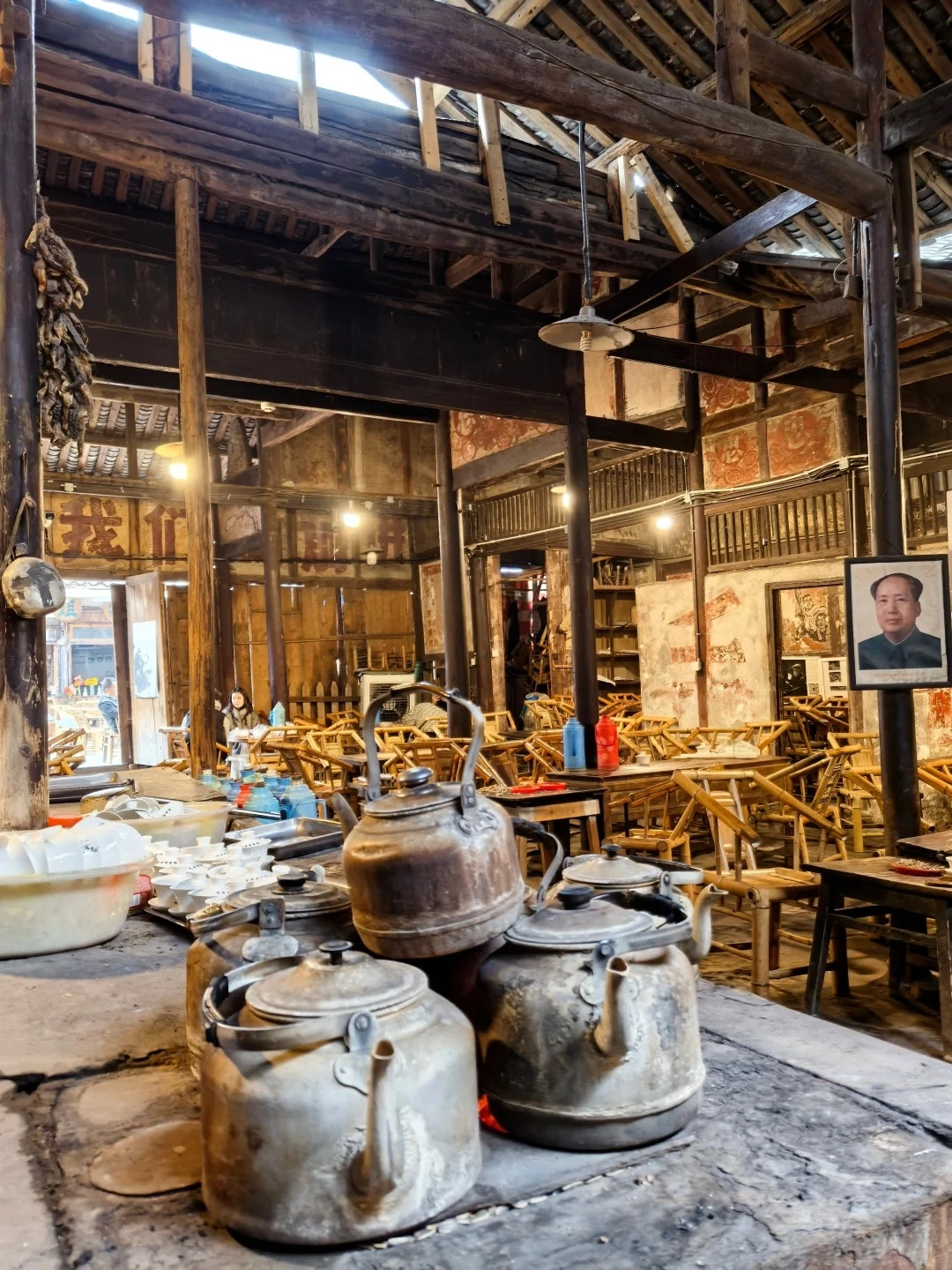
Stepping back in time at Pengzhen Guanyin Pavilion, where the aroma of freshly brewed tea mingles with the history etched into every wooden beam. This iconic teahouse in Chengdu offers a true taste of local life and traditional brews.
Top Historic Chengdu Teahouses You Must Visit
1. Guanyin Pavilion (Pengzhen Teahouse): The Time Capsule
Located in the Shuangliu district, about 24 kilometers from downtown Chengdu, the town of Pengzhen is home to what is widely believed to be China’s oldest operating teahouse. Converted from a Ming-dynasty temple, Guanyin Pavilion is a cavernous wooden structure that feels completely detached from the 21st century.
The sensory experience here is heavy. The air is thick with the smell of hand-rolled cigars, the metallic tang of steaming copper kettles, and the dampness of Chengdu’s famous basin climate. Faded Communist murals from the mid-20th century still cling to smoke-blackened brick walls. Arrive by 6:30 AM to watch the sunlight pierce through the roof slats, illuminating the swirling smoke as elderly locals gather for their morning brew.
2. Daci Temple Teahouse: Zen in the Bustling City
If you want a stark visual of China’s rapid modernization, visit Daci Temple. Outside its ancient walls lies Taikoo Li, a cyberpunk-esque shopping district featuring 3D billboards and luxury boutiques. But step inside the temple grounds, and the noise instantly vanishes.
Founded during the Wei and Jin dynasties, this Buddhist temple houses a teahouse favored by Chengdu’s poets, playwrights, and painters. For around 20 RMB, you can sit under the gingko trees, sip a delicate green tea, and listen to the faint chanting of monks. It is the perfect mid-day retreat when the city’s intense humidity peaks.
What to Know Before You Go: Is Heming Teahouse Worth It?
Every guidebook mentions Heming Teahouse in People’s Park. Operating for over a century, it sits idyllically beside a willow-draped lake. However, travelers expecting a quiet, meditative tea ceremony will be severely disappointed.
By 10:00 AM, Heming is a chaotic, shoulder-to-shoulder sea of tourists. The noise level is deafening, punctuated by the constant, high-pitched *clink-clink-clink* of metal tongs wielded by local ear-cleaners advertising their services. Finding a free bamboo chair requires hovering awkwardly over departing guests.
The Verdict: Go for the spectacle, not the serenity. It is absolutely worth experiencing the vibrant, chaotic energy of Chengdu’s public life. Just temper your expectations regarding peace and quiet, and guard your table fiercely once you secure it.
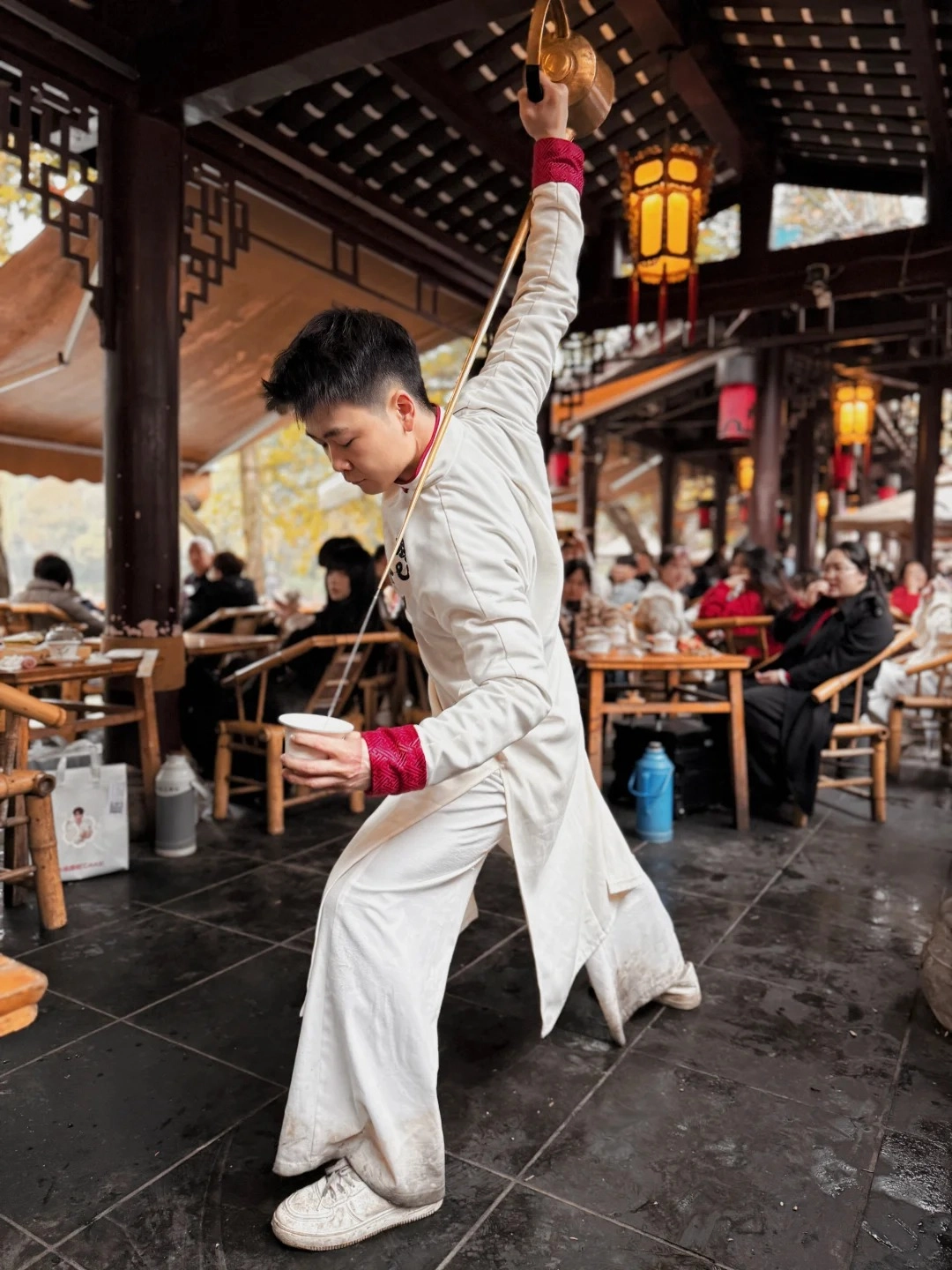
Witnessing a traditional tea ceremony performance is a highlight of visiting Chengdu’s ancient teahouses. The intricate movements and focused grace demonstrate the artistry behind this beloved cultural ritual.
Insider Tip: Escaping the Crowds at the Sha River Teahouse
If you want to completely escape the tourist trail, take the metro to Lijiatuo Station and walk across the small bridge over the Sha River. Here, the urban landscape abruptly gives way to unpaved paths, wild dogs, and a distinctly rural atmosphere.
The local teahouse here operates out of a three-walled barn. You will likely be the only foreigner in sight. During the day, locals paint and drink tea by the riverbank; by nightfall, the space transforms into a lively, low-stakes mahjong parlor fueled by cheap baijiu (Chinese liquor). It is an unfiltered look at authentic community life that most visitors never see.
Practical Tips for Teahouse Etiquette
How to Order and Drink
Most traditional teahouses serve tea in a gaiwan—a three-part vessel consisting of a saucer, a bowl, and a lid. The lid is used to gently scrape the floating tea leaves away from the edge before you sip.
You pay once for the tea leaves (typically 15 to 30 RMB) and receive bottomless hot water refills from a large thermos left at your table. If you need a refill and the server is busy, simply leave the lid of your gaiwan resting half-open on the saucer. This is the universal, unspoken signal that you need more hot water.
The Art of Ear Cleaning (Cai’er)
You will undoubtedly be approached by roaming vendors offering cai’er, the traditional Sichuan art of ear cleaning. Using an array of specialized metal tools and tuning forks, the practitioner stimulates the acupressure points in the ear canal.
It is a bizarrely relaxing, slightly ticklish experience that takes about 10 minutes. Always confirm the price upfront by showing the vendor the amount on your phone calculator—20 to 30 RMB is the standard local rate. Do not fall for the “deluxe” packages pitched to tourists for 100 RMB.