
A Perfect 1-Day Suzhou Itinerary: Classical Gardens & Pingjiang Road

Trying to squeeze the “Venice of the East” into a single day can feel overwhelming, but a well-planned 1 Day Suzhou Itinerary is entirely possible. Located just 30 minutes from Shanghai by high-speed rail, Suzhou offers a striking contrast to the mega-city’s neon skyline.

However, navigating the ancient canals and UNESCO World Heritage gardens in 2026 requires more than just showing up. The crowds are back in full force, and digital payment apps are now mandatory for almost everything. This guide cuts through the noise to help you maximize your time, avoid the worst tourist traps, and experience the poetic beauty of the city.

TL;DR: Trip Essentials

  • Getting there: Take a 30-minute high-speed train from Shanghai Railway Station or Hongqiao directly to Suzhou Railway Station.
  • Must-have apps: Download Alipay and WeChat before you arrive; you will need them for Metro Line 6 and all garden ticket mini-programs.
  • The itinerary at a glance: Skip the overcrowded Humble Administrator’s Garden for the Lingering Garden, explore the Lion Grove rockeries, and end with a sunset stroll down Pingjiang Road.
  • Connectivity: A reliable eSIM is mandatory to bypass the Great Firewall and use Google Maps or translate menus on the go.

Summarize with :

What is the 144-Hour Visa-Free Transit?

The 144-hour visa-free transit policy allows citizens from 54 eligible countries to explore the Shanghai-Jiangsu-Zhejiang region, including Suzhou, without a traditional Chinese visa for up to six days. You must hold a valid passport and a confirmed onward flight ticket to a third country.

Logistics: Getting to Suzhou and Staying Connected

The easiest way to reach Suzhou is via the high-speed rail network. According to the official China Railway 12306 policy, foreign passports now act as your digital ticket. Simply scan your physical passport at the electronic turnstiles—no paper tickets required.

Once you step off the train, you will immediately realize that cash is nearly obsolete in China. You need a stable internet connection to use Alipay for the subway, pay for a 3 RMB bottle of Nongfu Spring water, and scan restaurant menus.

Because Western apps are blocked in China, you must install a travel eSIM before you land. Do not rely on public Wi-Fi, as it often requires a Chinese phone number to log in.

💡 Editor’s Pick: We recommend Nomad eSIM for China because it reliably bypasses the Great Firewall with stable speeds. Use code JORICAQLKF at checkout to get $5 USD off your first data plan.

With your phone connected, follow the signs at Suzhou Railway Station to Metro Line 6. This newly opened subway line is your best friend, connecting the train station directly to the historic garden district.

Your Step-by-Step 1 Day Suzhou Itinerary

8:00 AM: Insider Tip—Skip the Humble Administrator’s Garden

Most guidebooks tell you to rush to the Humble Administrator’s Garden. Here is an honest insider secret: unless you arrive the moment the gates open at 7:30 AM on a Tuesday in winter, it is overwhelmingly crowded. You will be shoulder-to-shoulder with massive tour groups following megaphone-wielding guides.

Instead, take a taxi or bus to the Lingering Garden (Liu Yuan). Priced at 55 RMB during peak season, this 5.6-acre masterpiece offers a much more intimate look at Qing Dynasty landscaping.
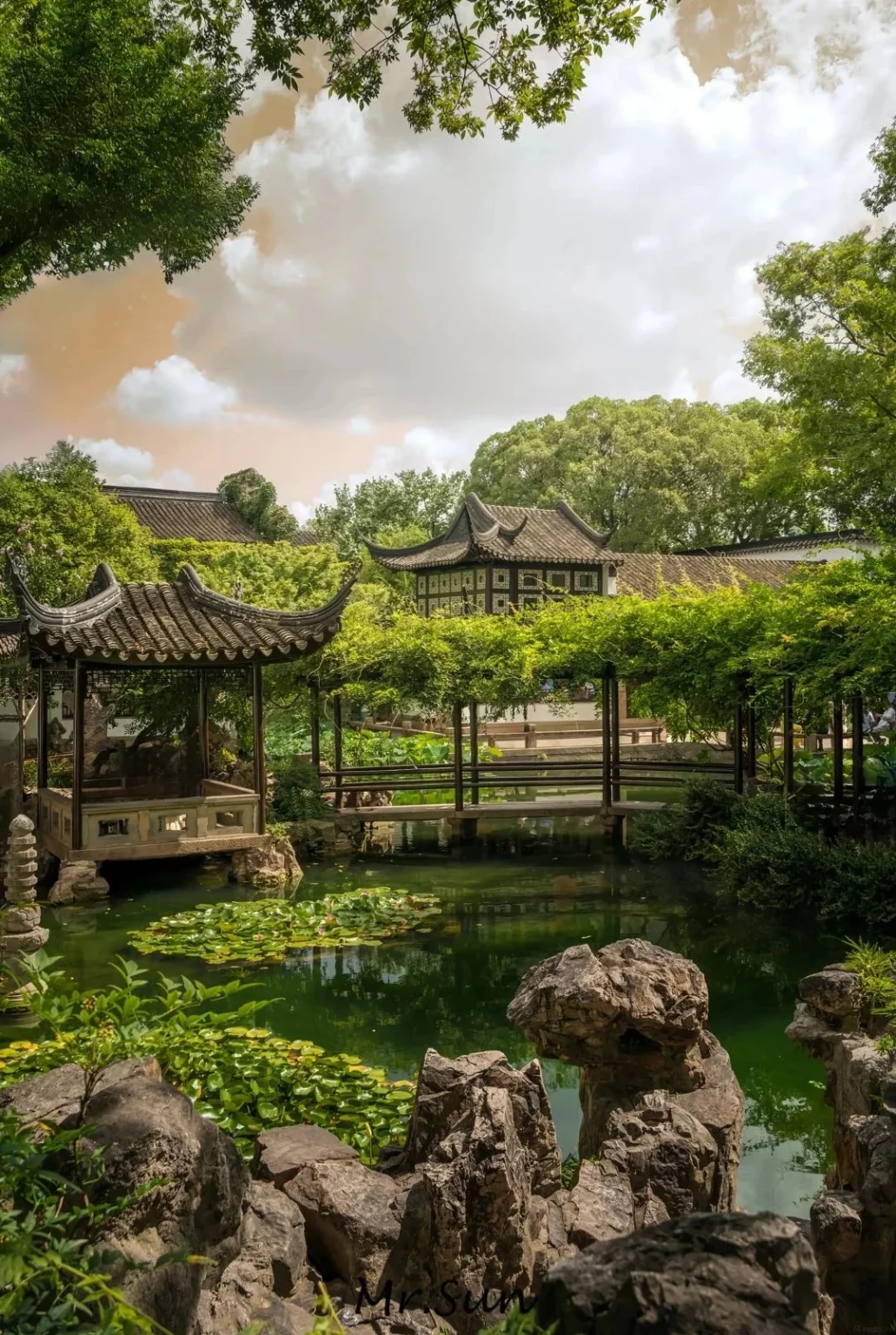
A tranquil pond with lily pads and lush green water in a Chinese garden. In the foreground, large grey rocks are partially submerged. Across the pond, a wooden bridge connects two sides, with traditional Chinese pavilions featuring dark tiled roofs and intricate designs visible on either side. The background is filled with dense green trees and a cloudy sky.

Step into the serene beauty of Suzhou’s Lingering Garden. This classic Chinese garden offers a glimpse into historical architecture and natural harmony, perfect for a peaceful stroll along Pingjiang Road.

Walk through the Nanmu Hall, built entirely without nails, and marvel at the 6.5-meter-high Crowning Cloud Peak. The air here in the morning is incredibly peaceful, often filled with the faint, plucking sounds of live Guqin music echoing across the water.

10:30 AM: Get Lost in the Lion Grove Garden

Take a 15-minute taxi ride to the Lion Grove Garden (Shizi Lin). Built in 1342 by Buddhist monks, this garden is famous for its labyrinth of gnarled, eroded Taihu limestone rocks that resemble guardian lions.

Navigating this miniature stone maze is a highly sensory experience. The black rocks are smooth and sometimes slippery from the morning dew, and the narrow tunnels force you to watch your elbows. It feels like stepping into an ancient, slightly oppressive fantasy world.

What to know before you go: You must book your 40 RMB ticket up to a week in advance using the official “Suzhou Garden Travel” WeChat mini-program. They strictly enforce timed entry slots.

12:30 PM: Lunch at Guanqian Street

Walk south for about 15 minutes to Guanqian Street, the city’s historic commercial hub. If you want a sit-down meal, head to the 200-year-old De Yue Lou restaurant and order the Squirrel Mandarin Fish (Songshu Guiyu). It is deep-fried, scored to look like a squirrel, and drenched in a rich sweet-and-sour sauce.

If you prefer a fast, cheap, and highly authentic local meal, find Lu Changxing noodle house. A steaming bowl of Su-style noodles with braised pork will cost you around 30 RMB. The broth is famously rich, sweet, and deeply comforting after a morning of walking.

2:30 PM: A Leisurely Stroll Down Pingjiang Road

No trip to Suzhou is complete without walking along Pingjiang Road. This 1.6-kilometer cobbled lane follows a narrow canal and represents the quintessential “Venice of the East” aesthetic.

The atmosphere here is thick with sensory details. You will smell the sweet, floral scent of osmanthus rice porridge mixing with the pungent, unmistakable tang of deep-fried stinky tofu from the street vendors.
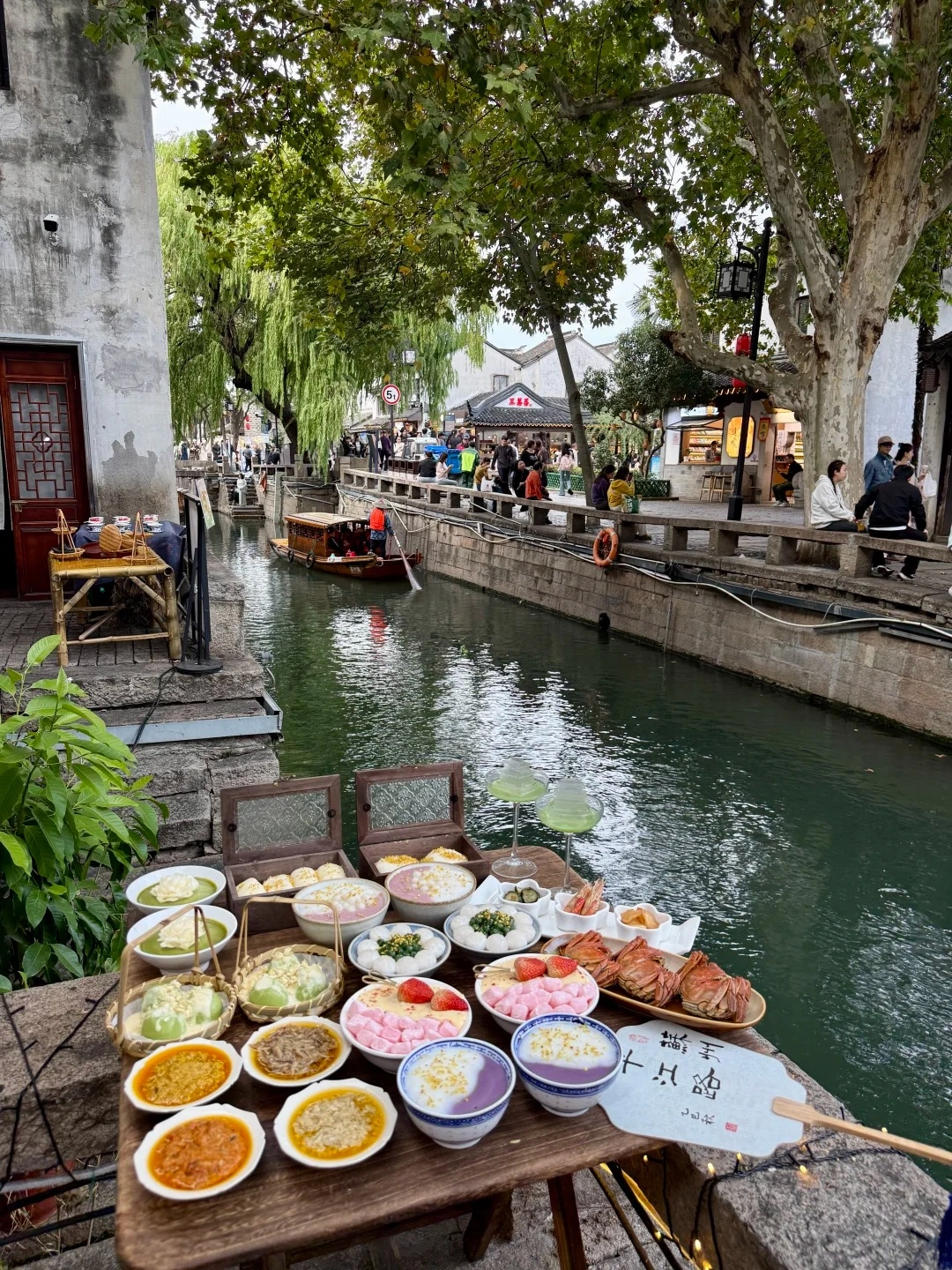
A table laden with various bowls of desserts and snacks sits on a stone ledge overlooking a canal in Suzhou. Dishes include purple sweet potato dessert, mochi, fruit-topped puddings, crab, shrimp, and other small appetizers. In the canal, a traditional wooden boat is being rowed by a person. Along the canal banks are ancient white-walled buildings with tiled roofs and lush green trees with weeping branches. People are visible walking and sitting along the canal's edge.

Start your Suzhou exploration with a delightful culinary experience along Pingjiang Road. This picturesque canal offers a glimpse into traditional life, with delicious local treats served waterside, alongside charming boat rides.

Yes, the main drag is highly commercialized, but the architecture is genuine. Pay 40 RMB for a 40-minute ride on a traditional hand-rowed boat. The boatmen, wearing straw hats, often sing haunting Jiangnan folk tunes as they navigate under the ancient camel-humped stone bridges.

5:00 PM: Sunset at the Master of the Nets Garden

End your day at the Master of the Nets Garden (Wangshi Yuan), the smallest but most delicately proportioned garden in Suzhou. Take the Metro Line 6 to Line 2 to get here.

Because of its small footprint (just over half a hectare), it uses brilliant spatial illusions and “borrowed scenery” to feel massive. If you visit right at sunset, the golden light reflecting off the Rosy Cloud Pool is a photographer’s dream.

Is the night tour worth it? Absolutely. If you stay past 7:30 PM, the garden transforms. For 100 RMB, you can wander the illuminated pathways and watch traditional Kunqu opera and Pingtan music performances in the various pavilions. It is the perfect, poetic end to your day.

Common Questions About Suzhou Travel

Do I need a visa for a day trip to Suzhou?

If you qualify for the 144-hour visa-free transit policy, you can visit the Shanghai-Jiangsu-Zhejiang region (including Suzhou) without a traditional Chinese visa. You must hold a passport from an eligible country and have a confirmed onward flight to a third country.

Alipay and WeChat are absolutely mandatory for navigating China in 2026. You will need these digital payment apps and their built-in mini-programs to ride the subway, buy street food, and book timed-entry tickets for attractions like the Suzhou gardens.

Because Western apps are blocked by the Great Firewall, you must install a travel eSIM before arriving in China. This provides a stable connection to bypass local network restrictions, allowing you to use Google Maps and translation apps seamlessly.

The fastest way is taking a 30-minute high-speed train from Shanghai Railway Station or Hongqiao directly to Suzhou. Foreign passports now act as your digital ticket, meaning you can simply scan your physical passport at the electronic turnstiles to board.

Conclusion

Suzhou is a city where ancient literati culture collides directly with modern Chinese efficiency. By avoiding the largest crowds, utilizing high-speed rail, and securing your digital payments and eSIM in advance, your 1 Day Suzhou Itinerary will be seamless and unforgettable. Whether you are getting lost in a labyrinth of Taihu rocks or sipping tea by a moonlit canal, Suzhou offers a profound glimpse into China’s elegant past. If you are continuing your journey through the Yangtze River Delta, be sure to read our comprehensive guide to navigating the nearby water towns of Tongli and Zhouzhuang.

Similar posts to this one

An open-air teahouse with a dark wooden roof supported by large wooden pillars. Many people are seated at bamboo tables and chairs, some eating and some drinking. In the foreground, a man in a dark t-shirt and yellow shorts leans back in his chair at a table with a bottle and a cup. Orange lanterns hang from the ceiling. The floor is wet and reflective.

Chengdu's Ancient Teahouses: A Guide to Local Brews & Cultural Immersion

If you want to understand the true heartbeat of Sichuan province, you have to slow down. While the modern metropolis [...]

A wide shot of a traditional Chinese teahouse interior with high wooden beamed ceilings, hanging woven bamboo light fixtures, and numerous tables and chairs made of bamboo. People are seated at several tables, some dining and some drinking tea. Red banners with Chinese characters hang vertically from wooden pillars. A large mural depicting a landscape scene with birds is visible on the back wall.

Don't Tap the Table! A Foreigner's Guide to Chinese Teahouse Etiquette

Imagine sitting in a bamboo chair, the humid summer air thick with the scent of jasmine, while the rhythmic clinking [...]

A nighttime view of a multi-tiered traditional Chinese village built into the side of a steep, rocky karst mountain. Numerous wooden buildings with illuminated windows and intricate dark roofs cling to the cliff face, connected by a network of wooden staircases and elevated walkways. Bright orange and yellow square lanterns are strung across a lower section, some appearing to float over lush green foliage. A large, bright yellow full moon is prominent in the dark blue sky above the mountain, with faint stars visible.

Ultimate Guizhou Karst Route: Kaili Villages, Huangguoshu Falls & Zhenyuan

While the crowds flock to Beijing’s Great Wall or Shanghai’s Bund, China’s most dramatic landscapes quietly await in the southwest. [...]

Get the China Arrival Survival Kit

Planning a trip here has a steep learning curve. Join our newsletter and receive our free “Day One Checklist” covering everything from setting up Alipay and WeChat to bypassing the internet firewall.