
Baggage Forwarding at Hotel Front Desks in China: How to Use SF Express

Traveling across China via high-speed rail is a breeze until you have to lug a 25kg suitcase up crowded station escalators. If you want to travel light and avoid the hassle, this China hotel baggage forwarding guide is your ultimate resource. In 2026, sending your heavy luggage ahead to your next city using local couriers like SF Express (顺丰速运) is the ultimate travel hack. Instead of wrestling with oversized bags, you can simply leave them at your hotel front desk and find them waiting in your next room.

Quick Summary: Key Takeaways for Your Trip

  • SF Express (Shunfeng) is China’s most reliable courier, typically delivering luggage between major cities in 24 to 48 hours.
  • Ask your hotel front desk (“Can you help me send my luggage via SF Express?”) to handle the Chinese waybill and pickup process on your behalf.
  • Costs are strictly weight and distance-based, usually ranging from 60 to 120 RMB ($8-$16 USD) for a standard 20kg suitcase.
  • Never ship essential documents like your passport, visa, or medication, as you will need them for train boarding and hotel check-in.

Summarize with :

What is Hotel Baggage Forwarding in China?

Hotel baggage forwarding in China is a logistics service where domestic couriers, primarily SF Express, transport your suitcases directly from your current hotel to your next accommodation. This allows travelers to ride high-speed trains or domestic flights hands-free, retrieving their heavy luggage upon check-in at their destination.
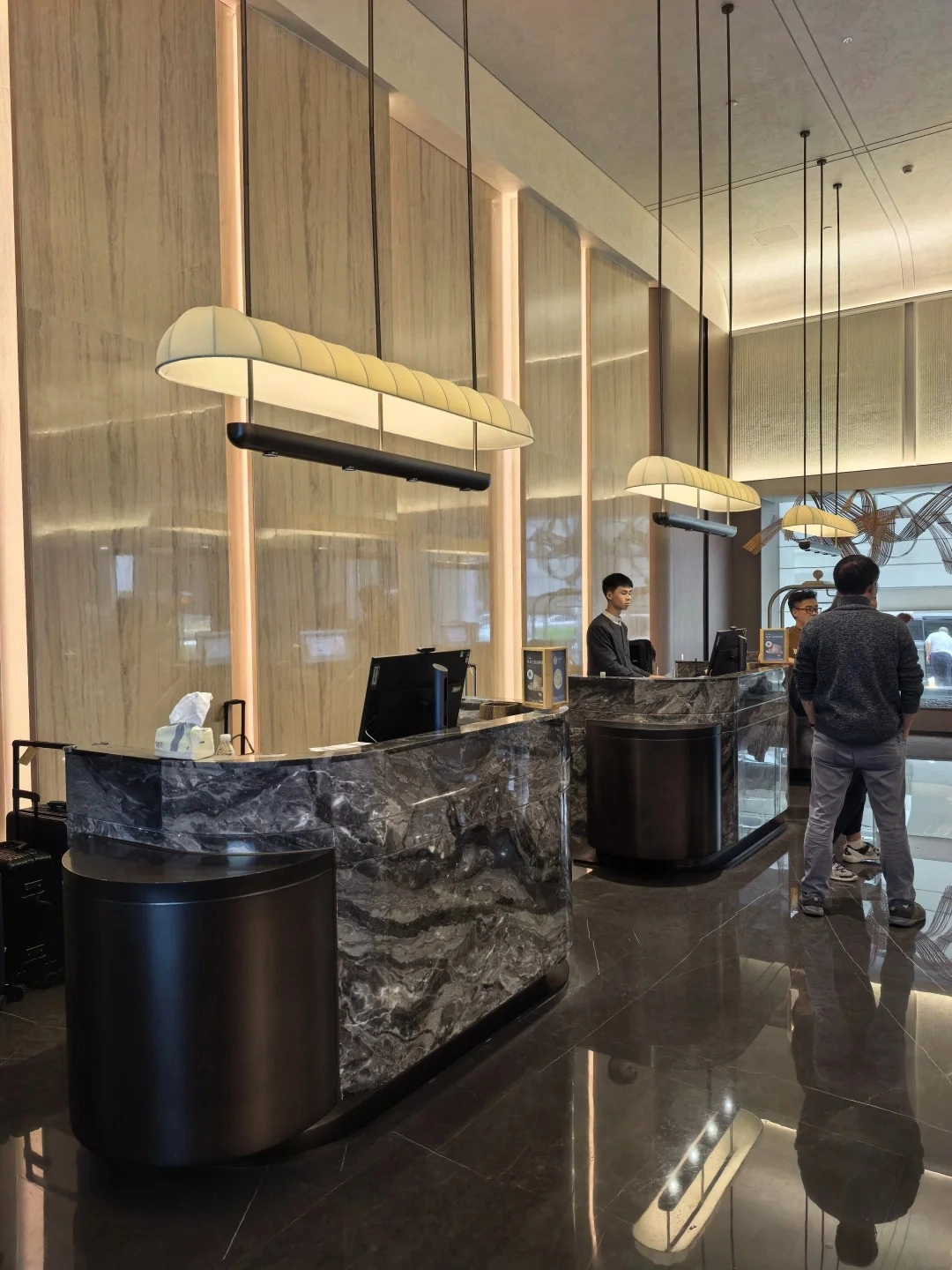
A modern hotel lobby in China with a marble front desk. A hotel employee stands behind the desk, and two guests are standing in front of it. A piece of luggage is visible on the left side of the desk.

Seamlessly ship your luggage from your hotel in China with SF Express. Learn how to arrange baggage forwarding right from the front desk for a hassle-free travel experience.

How to Ship Your Luggage Between Chinese Cities

Navigating Chinese logistics as a foreigner might seem intimidating, but hotel staff are incredibly accustomed to this process. Here is exactly how to execute a seamless luggage transfer.

Step 1: Prep Your Bags and Secure Your Valuables

Before bringing your suitcase to the lobby, ensure it is locked and securely packed. Do not leave lithium power banks, laptops, or flammable items inside, as couriers will X-ray the bags and reject prohibited goods.

Step 2: The Front Desk Translation

Approach the concierge or front desk. If you don’t speak Mandarin, show them this phrase: “我想用顺丰把行李寄到下一个酒店” (I want to use SF Express to ship my luggage to my next hotel). You will need to provide the exact Chinese address and phone number of your destination hotel.

Step 3: Connectivity and Tracking via WeChat

The hotel staff will typically use their own SF Express WeChat mini-program to summon the courier. To track the bag yourself, you’ll need a stable internet connection to use the SF Express app or WeChat tracking links.

💡 Editor’s Pick: We recommend Nomad eSIM for China because it reliably bypasses the Great Firewall with stable speeds.

Once the courier arrives, they will weigh the bag in the lobby. You can pay the shipping fee directly to the hotel staff via Alipay or WeChat Pay, or choose the “pay on delivery” (到付 – dào fù) option, where your next hotel pays the courier and adds the charge to your room bill.

Insider Tip: Don’t Rely on High-Speed Train Baggage Racks

Many tourists assume they can just bring massive bags on the train. According to the official 12306 China Railway policy, adult passengers are limited to 20 kg (44 lbs) of free carry-on baggage, and the total dimensions cannot exceed 130 cm for high-speed (G, D, and C) trains.

I learned this the hard way at Shanghai Hongqiao Station. Dragging a 28-inch suitcase through a sea of thousands of commuters, sweating profusely while smelling the distinct mix of station instant noodles and floor wax, was a nightmare. Finding space on the overhead train racks is fiercely competitive.

Save your energy. Buy a cold 2 RMB bottle of Nongfu Spring water, board the train with just a small backpack, and let the courier do the heavy lifting.
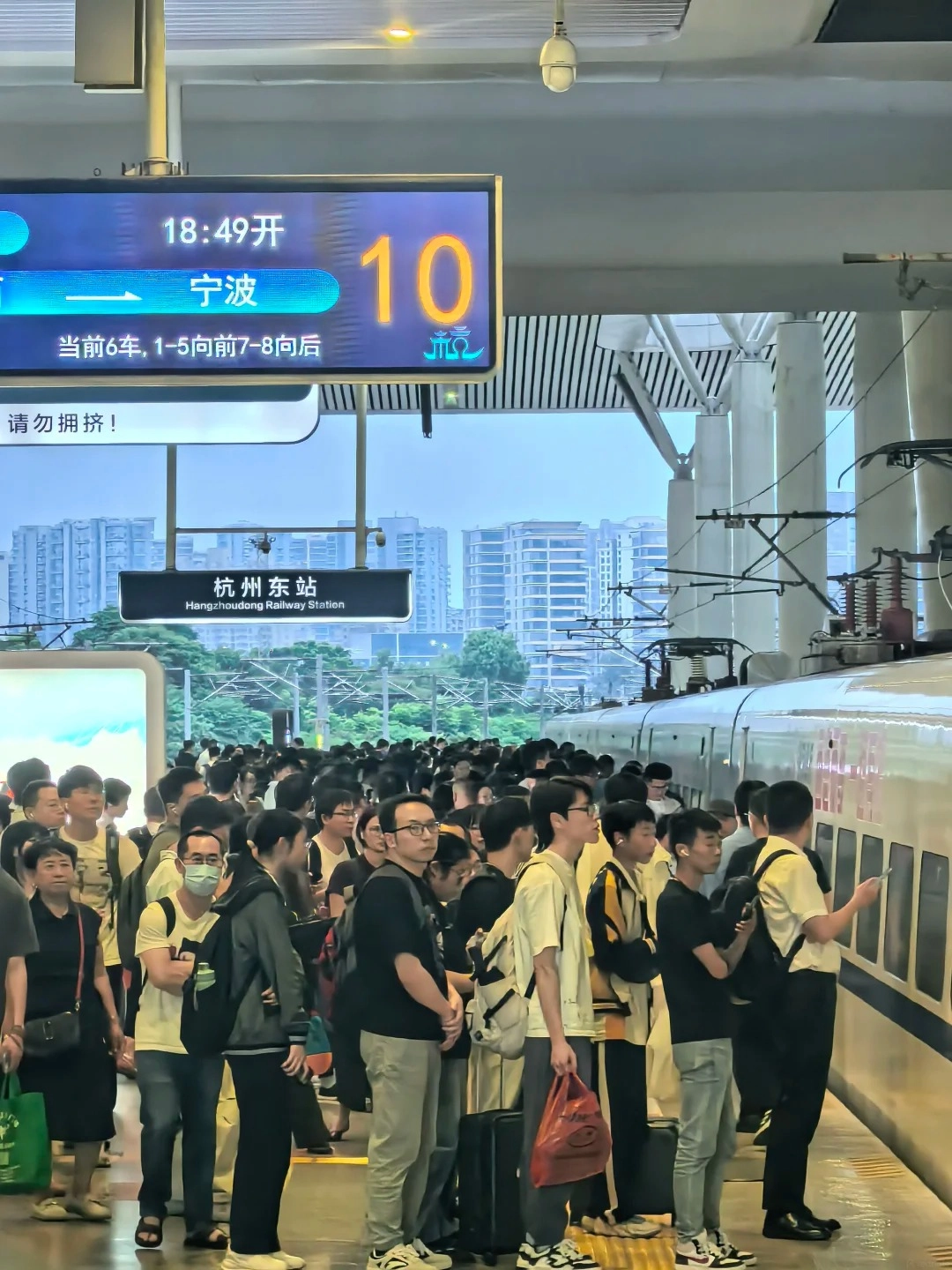
A crowded platform at a Chinese railway station, with a digital display showing train departure information and destination 'Ningbo' and platform '10'. Many passengers are standing with luggage, waiting to board a train.

Navigating large luggage on busy Chinese high-speed train platforms can be a challenge. This is why services like SF Express baggage forwarding are invaluable for travelers looking to streamline their journey.

How Much Does SF Express Cost in 2026?

SF Express (顺丰速运) is slightly more expensive than standard postal services, but it is the gold standard for speed and reliability. Pricing is calculated based on starting weight plus distance.

  • Short Distance (e.g., Shanghai to Hangzhou): A 20kg suitcase typically costs around 40-60 RMB ($5.50-$8.50 USD). Delivery is often same-day or next-morning.
  • Medium Distance (e.g., Beijing to Xi’an): Expect to pay around 80-100 RMB ($11-$14 USD). Delivery takes about 24 to 36 hours.
  • Long Distance (e.g., Chengdu to Guangzhou): A heavy bag will cost approximately 120-150 RMB ($16-$21 USD), taking around 48 hours to arrive.

Pro Tip: Always notify your receiving hotel in advance. Send them an email or WeChat message stating: “I have a suitcase arriving via SF Express under the name [Your Passport Name]. Please hold it at the concierge.”


Frequently Asked Questions About China Travel

Can I use SF Express to ship luggage if I don't speak Mandarin?

Yes, you can. Simply show the hotel front desk staff the written Chinese phrase for shipping luggage, or use a translation app. Hotel staff are accustomed to assisting foreign guests with these logistics.

Couriers strictly prohibit lithium power banks, laptops, and flammable items. Always pack these essential electronics in your carry-on bag, as couriers will X-ray your luggage and reject packages containing these items.

You can pay the hotel staff directly using Alipay or WeChat Pay, or choose the ‘pay on delivery’ (dào fù) option. With the latter, your destination hotel pays the courier and adds the charge to your room bill.

Yes, official China Railway policy limits adult passengers to 20kg (44 lbs) of carry-on baggage. Total dimensions must not exceed 130cm, making professional baggage forwarding a much better option for heavy suitcases.

Conclusion

Forwarding your luggage with SF Express is one of the smartest decisions you can make while navigating China’s massive transportation hubs. By leveraging the helpfulness of hotel front desk staff and the efficiency of local couriers, you can focus on enjoying the sights rather than wrestling with heavy bags.

Ready to streamline your Asian adventure? Read our complete guide to setting up Alipay and WeChat Pay as a foreigner so you can easily pay for couriers, street food, and high-speed rail tickets on your next trip!

Similar posts to this one

A modern hotel self-service laundry room in China, featuring two front-loading washing machines with chrome doors, a dark red tiled backsplash, and light wood cabinetry. A sign on a wooden wall to the left reads 'CITY LAUNDRY' and '洗衣'. The laundry area is enclosed by glass walls with decorative red and green wavy patterns, and a red upholstered waiting bench is visible in the foreground.

Doing Laundry in China: Deciphering Washers, Dryers, and Hotel Services

Traveling across China for more than a week means you will eventually face a universal traveler's hurdle: dirty clothes. Whether [...]

A modern bathroom featuring grey marble-patterned tiles on the walls and floor. On the left, a walk-in shower with a glass partition and a rainfall showerhead actively spraying water. In the center, a white Western-style smart toilet is positioned next to a small white waste bin. To the right, a floating white vanity with a rectangular sink and a wooden shelf underneath. The bathroom is illuminated by recessed ceiling lights, LED strip lighting in wall niches, and a circular backlit mirror. Various toiletries are arranged on the shelves.

Chinese Public Toilets: A Practical Guide for Travelers (Squat vs. Western)

For many travelers, the biggest source of anxiety isn't the language barrier or the spicy food—it's the restroom situation. If [...]

Get the China Arrival Survival Kit

Planning a trip here has a steep learning curve. Join our newsletter and receive our free “Day One Checklist” covering everything from setting up Alipay and WeChat to bypassing the internet firewall.