


What is the 144-Hour Visa-Free Transit?
The 144-hour visa-free transit policy allows citizens from 54 eligible countries to stay in designated Chinese regions (like Shanghai, Beijing, and Guangdong) for up to six days without a pre-approved visa, provided they hold confirmed onward tickets to a third country or region.
Essential Tech Prep: Apps and Connectivity
Before you even step off the plane, your digital survival kit must be ready. China’s transport infrastructure is almost entirely cashless in 2026. You will need a reliable data connection to load your payment apps the moment you clear customs.
I highly recommend setting up an eSIM before departure so you connect to local networks instantly, avoiding the frustrating airport Wi-Fi registration kiosks that often require SMS verification.
💡 Editor’s Pick: We recommend Nomad eSIM for China because it reliably bypasses the Great Firewall with stable speeds.
Once connected, link your foreign Visa or Mastercard to Alipay. This app is your golden ticket. It contains a built-in Didi ride-hailing mini-program and city-specific transit QR codes that you simply scan at subway turnstiles.
Beijing: Capital (PEK) vs. Daxing (PKX)
Beijing’s two massive airports require entirely different transit strategies. Capital (PEK) is closer to the traditional downtown, while the futuristic star-shaped Daxing (PKX) sits far to the south.
Navigating Daxing’s High-Speed Rail
If you fly into PKX, skip the standard subway. According to the official 12306 China Railway policy, you can book a high-speed bullet train ticket directly from Daxing Airport to Beijing West Station. It costs around 30 RMB for a second-class seat.
The train cabins smell faintly of green tea and ozone, offering a quiet, spacious contrast to the humid, crowded subway cars. Insider Tip: Book your ticket on the 12306 app while waiting for your luggage, as these intercity trains frequently sell out during peak afternoon hours.
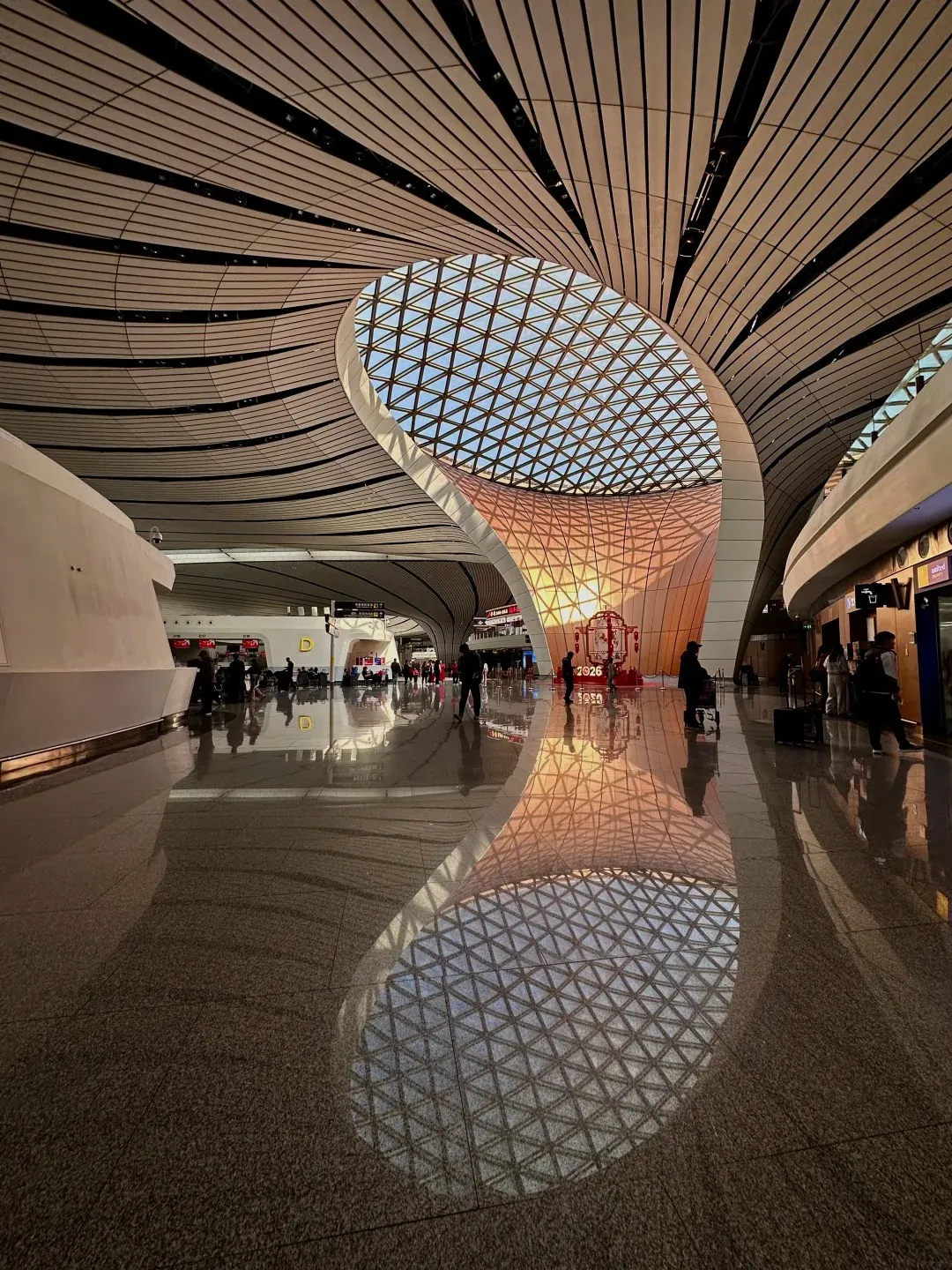
Step into the future of travel at Beijing Daxing International Airport. This architectural marvel is not just a gateway to the city, but also a hub connecting you seamlessly to high-speed rail networks, making your journey from airport to city center effortless.
Capital Airport (PEK) Express
For PEK, the Airport Express Line is your best friend. For 25 RMB, it connects Terminals 2 and 3 to Dongzhimen Station in about 30 minutes. Be warned: the transfer at Dongzhimen requires a long, echoing walk underground with your luggage to reach Subway Line 2.
Shanghai: Pudong (PVG) & Hongqiao (SHA)
Shanghai’s transport network is a marvel of modern engineering, but choosing the wrong option can easily add two hours to your transit time.
The Shanghai Maglev: Is it Worth It?
Yes, absolutely. Arriving at Pudong (PVG), follow the signs for the Maglev Train. It costs 50 RMB (or 40 RMB if you show your boarding pass). You will feel the carriage vibrate as it hits 431 km/h, covering 30 kilometers to Longyang Road Station in a blistering 8 minutes.
However, Longyang Road is not the city center. You must transfer to Metro Line 2 or grab a Didi from there to reach the Bund. If you have heavy luggage, skip the Metro transfer—the rush hour crush of bodies on Line 2 is notoriously unforgiving.
Hongqiao (SHA): The Domestic Hub
If you arrive at SHA, you are already close to downtown. Simply take Metro Line 10 (5 RMB) straight to Xintiandi or East Nanjing Road. It is cheap, efficient, and completely avoids the notorious elevated highway traffic jams.
Guangzhou (CAN) and Shenzhen (SZX): Southern Gateways
The Greater Bay Area airports are heavily integrated into their respective metro systems. At Guangzhou Baiyun (CAN), Metro Line 3 takes you directly to Tianhe district. A word of caution: Line 3 is arguably the most crowded subway line in all of China.
If you land in Shenzhen (SZX), Metro Line 11 is the express route to Futian and Nanshan. It features unique “Business Class” carriages for a few extra RMB, offering comfortable seating and dedicated luggage racks—a godsend after a long flight.
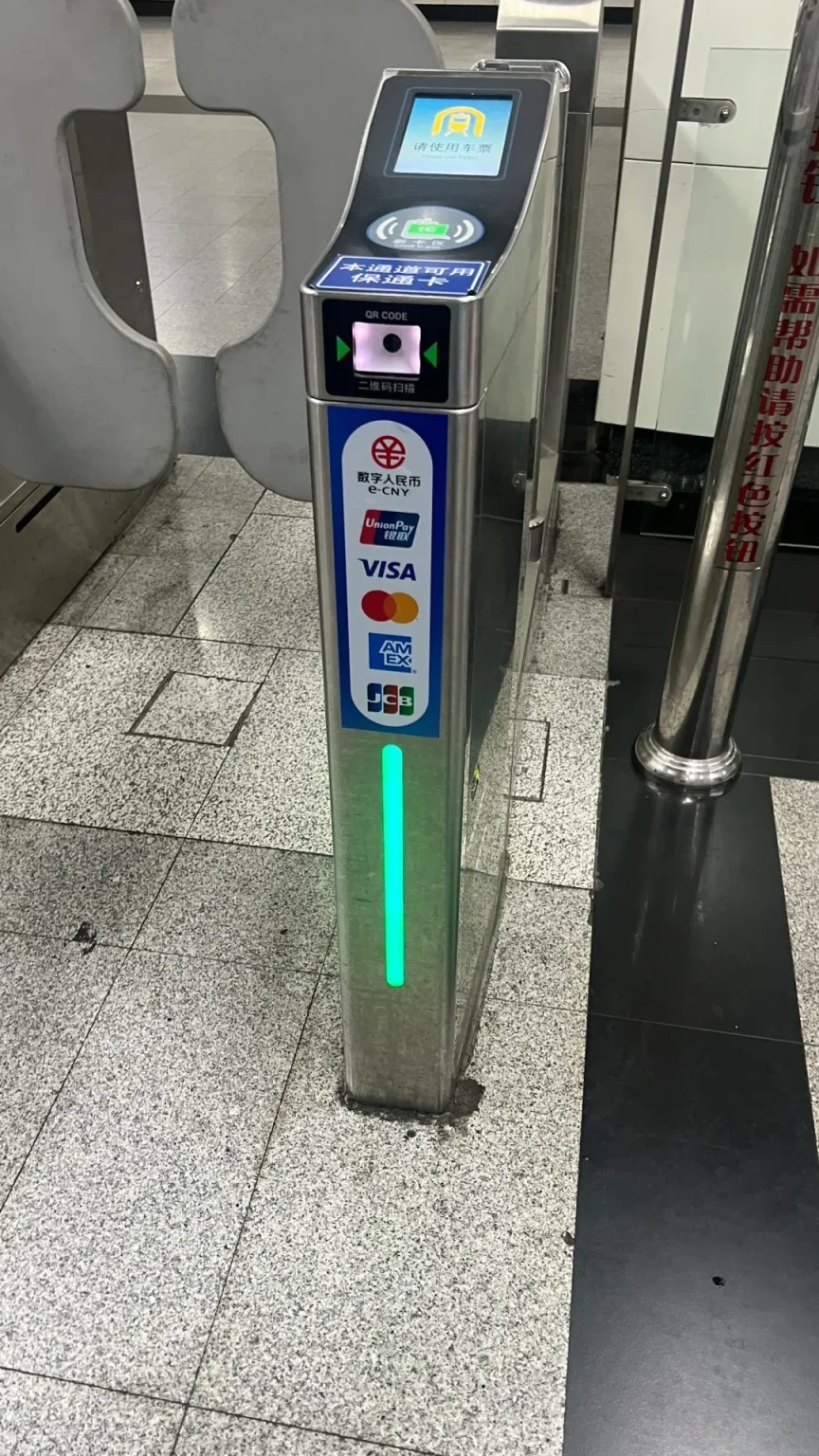
Navigate Shanghai’s public transport with ease! Modern turnstiles accept a variety of payment methods, including convenient QR code scanning, making your journey from the airport to the city center seamless.
Honest Advice for the Final Mile
Getting from the airport to a major transit hub is easy; the “final mile” to your hotel is where foreign travelers usually stumble.
- Avoid the “Black Cabs”: Never follow individuals whispering “taxi” in the arrivals hall. Official taxis have meters and designated queues. A standard bottle of water at the airport costs 3 RMB—if a driver asks for 500 RMB for a ride, you are being scammed.
- Use Didi via Alipay: This bypasses the language barrier entirely. The app auto-translates your messages to the driver, and payment is deducted automatically. Ensure you select the specific Ride-Hailing Pick-Up Point (网约车上车点) in the airport parking garage.
- Hotel Addresses: Always have your hotel’s address written in Chinese characters and the local phone number saved. English street names are largely useless to local drivers.