


What is the 144-hour visa-free transit?
The 144-hour visa-free transit is an official Chinese immigration policy allowing citizens from 54 eligible countries to enter specific regions of China, including Kunming, for up to 6 days without a pre-approved visa, provided they hold confirmed onward international tickets to a third country.
If you are utilizing this policy in Kunming in 2026, relying on regional buses is the most efficient way to maximize your limited time exploring nearby natural wonders like the Shilin Stone Forest.
Booking Bus Tickets Without a Chinese ID
Foreign travelers often panic when they realize they cannot use the automated ticket machines at Chinese bus stations. According to official Ministry of Transport policies, foreign nationals must purchase long-distance bus tickets at the manual counters using a valid passport.
To check schedules, use the mini-programs inside WeChat or the Trip.com app. However, you will need a reliable internet connection to load your payment QR codes at the counter. If you are using an international eSIM to stay connected and bypass the Great Firewall, ensure it is activated before you reach the station.
💡 Editor’s Pick: We recommend Nomad eSIM for China because it reliably bypasses the Great Firewall with stable speeds.
Once connected, simply show the ticket agent a screenshot of your destination in simplified Chinese characters. A standard regional ticket, like the 3-hour journey from Dali to Jianchuan (the gateway to Shaxi), costs roughly 50 to 80 CNY.
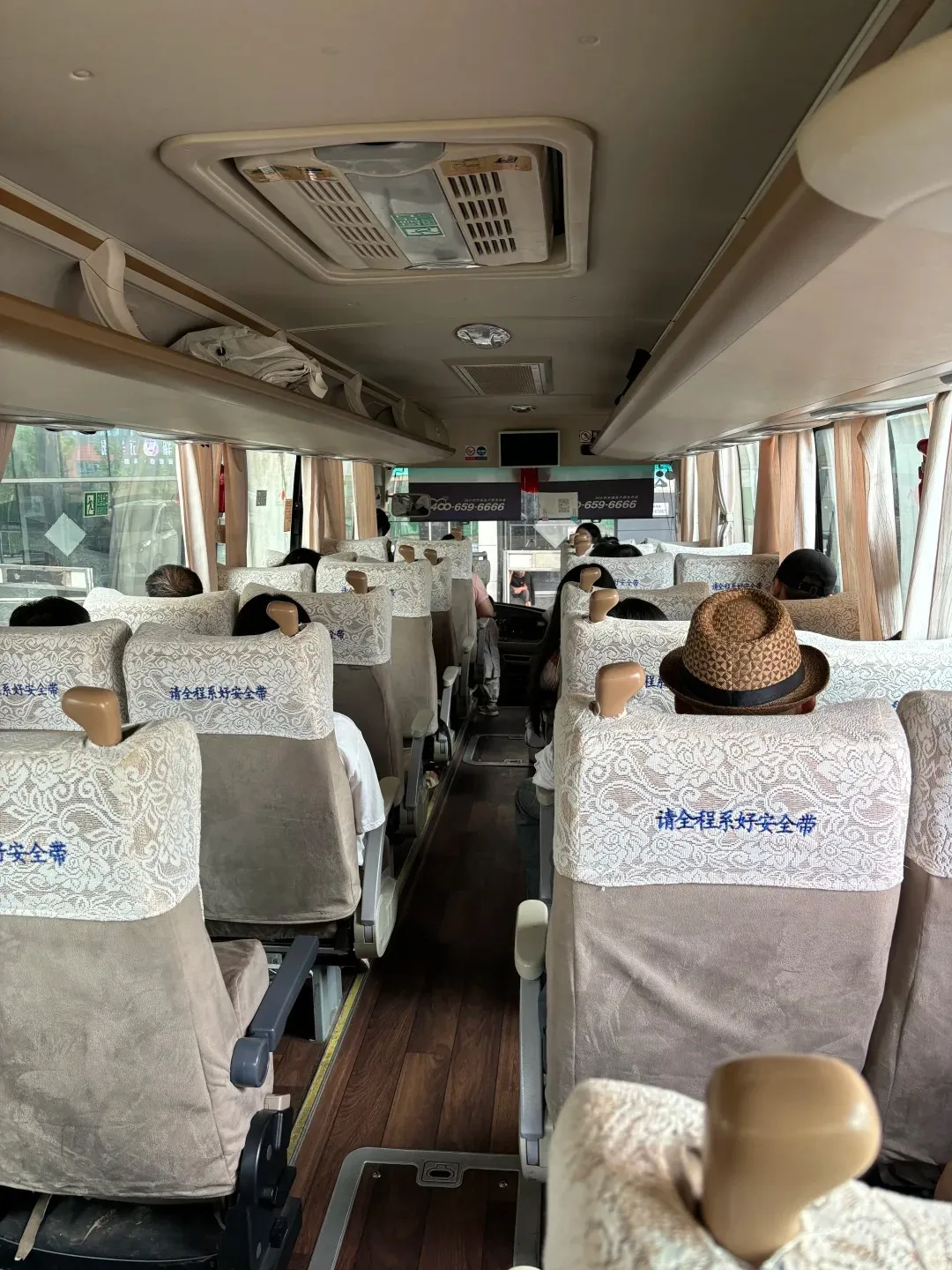
While the bullet train offers speed, sometimes the scenic route through Yunnan is best experienced on a comfortable regional bus. Notice the thoughtful seat covers, adorned with the reminder ‘Please fasten your seatbelt throughout the journey’.
How to Navigate Yunnan’s Mega-Stations
In major transit hubs like Kunming, dedicated long-distance bus stations are massive and spread out. Kunming operates four main stations based on compass points. If you are heading south to Jinghong or the Yuanyang Rice Terraces, you must depart from the Kunming South Bus Station (南部客运站).
Navigating these stations is an intense sensory experience. You will push through thick clouds of cigarette smoke near the entrances, smell the sharp, salty aroma of instant noodles from the waiting areas, and hear the echoing shouts of drivers trying to fill their minibuses.
A bottle of cold mineral water at the station kiosk will cost you exactly 3 CNY, but make sure to buy it before boarding. Unlike the pristine high-speed trains, older regional buses rarely offer complimentary water, snacks, or onboard toilets.
What to Know Before You Go: Skip the “Sleeper Bus” Experience
Many outdated travel forums romanticize the Chinese sleeper bus (卧铺客车) for overnight journeys to remote areas like the Nujiang Valley. We highly recommend avoiding them.
The cots are extremely cramped for anyone over 5’8″, the blankets are rarely washed between trips, and you are entirely at the mercy of the driver’s irregular rest stops. Instead, break your journey into shorter daytime segments on standard seated express buses, which are well-ventilated and far more hygienic.
Essential Routes: Dali to Shaxi and Kunming to Yuanyang
While the bullet train zips from Kunming to Dali in a breezy two hours, reaching the ancient trading post of Shaxi requires an overland transfer. You must take a local bus from Dali North Bus Station to Jianchuan, followed by a green rural minibus into Shaxi town. The entire leg takes about three hours.

While this image showcases the breathtaking beauty of Yunnan’s terraced landscapes, it’s a reminder of the journeys you might take to reach these remote gems. Discover how to navigate Yunnan’s countryside by regional bus in our guide!
For photographers chasing the sunrise at the Yuanyang Rice Terraces, expect a 7-hour journey from Kunming South Bus Station. Tickets cost approximately 147 CNY. Always board your bus 20 minutes early, as rural drivers have a habit of leaving the exact minute the bus is full, regardless of the official departure time printed on your ticket.