


What Exactly is a Siheyuan?
A siheyuan is a historical Chinese courtyard house featuring buildings positioned on four sides—north, south, east, and west—enclosing a central outdoor space. Designed according to strict feng shui principles, these south-facing compounds served as multi-generational family homes and form the structural foundation of Beijing’s famous winding hutong alleyways.
The layout is deeply symbolic. The front house (zheng fang) always faces south to capture the best sunlight and was reserved for the head of the household. The side wings housed younger generations, while the central courtyard served as a private sanctuary for family gatherings, far removed from the chaos of the streets outside.
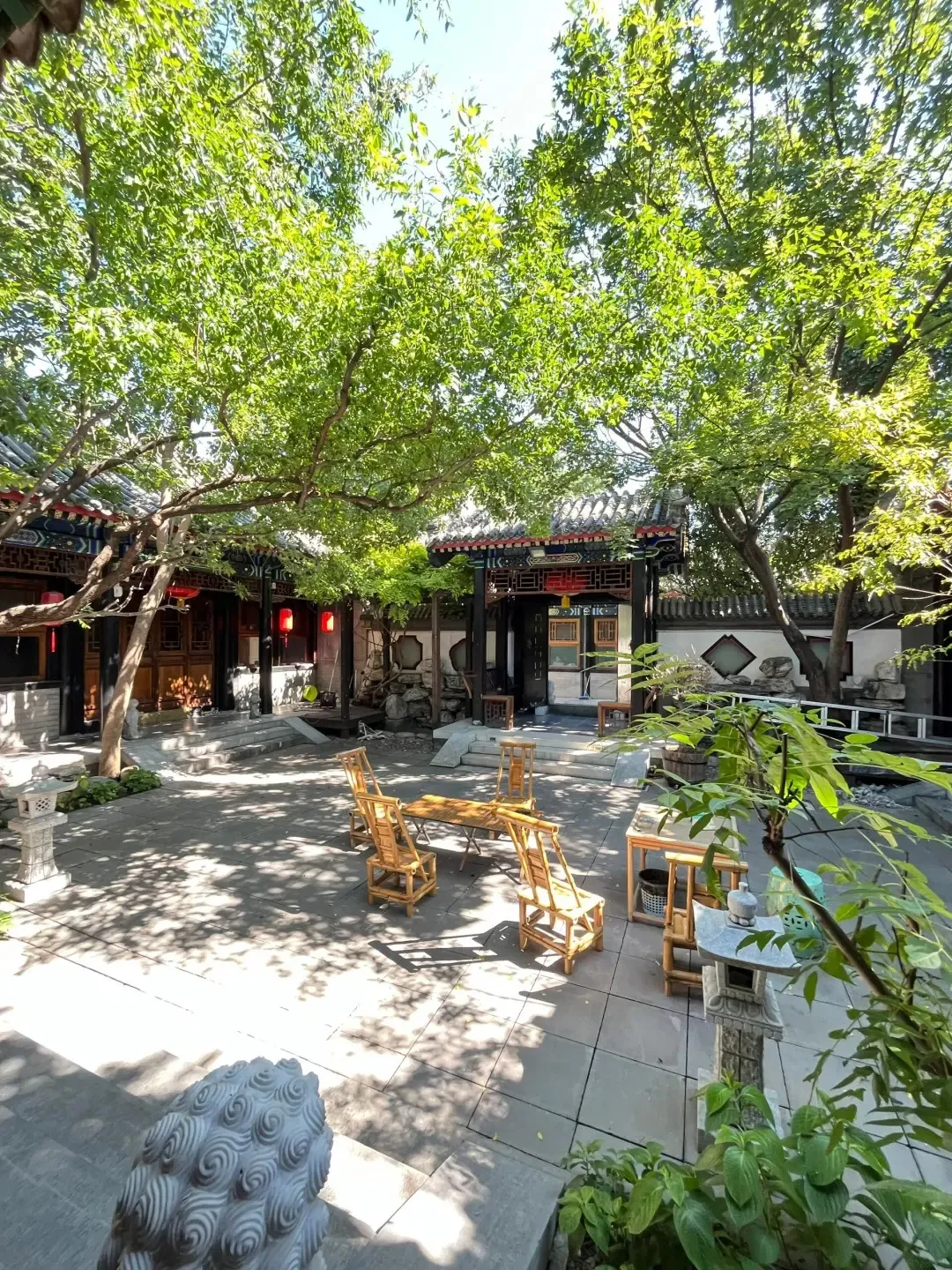
Escape the bustling city and step into the serene tranquility of a traditional Beijing siheyuan. This charming courtyard, complete with antique dining sets, offers a glimpse into the architectural heart of old Beijing, a perfect spot for quiet contemplation or a traditional meal.
Where to Find the Best-Preserved Siheyuan in 2026
Not all courtyards are created equal. Over the last century, many traditional siheyuan were divided into multi-family dwellings known as da-za-yuan, leading to overcrowding and structural decline. Today, finding a fully intact, traditional courtyard requires knowing exactly where to look.
The Shijia Hutong Museum (The Authentic Choice)
If you want to see a flawlessly restored courtyard without paying a hefty entrance fee, the Shijia Hutong Museum is an absolute must-visit. Located near Wangfujing Street, this museum is housed in an actual historic siheyuan.
Stepping inside, you’ll immediately notice the sudden drop in city noise. The air often carries the faint, earthy scent of old timber. It offers a rare, uncrowded look at vintage Beijing life, complete with original roof tiles and traditional lattice windows.
Prince Gong’s Mansion (The Royal Experience)
For a look at how the ultra-wealthy lived during the Qing Dynasty, Prince Gong’s Mansion is the most extensively conserved imperial mansion in China. It features over 30 buildings and a massive private garden.
What to Know Before You Go: This site gets incredibly crowded. By 10:00 AM, the courtyards are packed with loud, flag-waving tour groups. Arrive exactly when the gates open at 8:30 AM if you want to experience the serenity these gardens were actually designed for.
How to Stay in a Siheyuan Hotel
Booking a few nights in a courtyard hotel is the ultimate way to experience old Beijing. However, first-time visitors often have valid concerns about the amenities in these centuries-old buildings.
In 2026, the best boutique siheyuan hotels have completely retrofitted their interiors. You can expect modern western toilets, powerful air conditioning, and reliable floor heating—crucial if you are visiting during the winter when sharp, biting winds funnel between the grey brick walls.
Insider Tip: Soundproofing in historic wooden buildings is notoriously poor. If you are a light sleeper, request a room in the rear house (hou zhao fang), which is furthest from the alleyway entrance and significantly quieter.
Navigating the Hutongs: Connectivity and Payments
Getting lost in the hutongs is part of the charm, but finding your way out requires a solid data connection. Western mapping apps are highly unreliable in China, so you will need to download Apple Maps (which uses local data in China) or Baidu Maps.
To keep these apps running, you need a reliable internet connection that bypasses local network restrictions.
💡 Editor’s Pick: We recommend Nomad eSIM for China because it reliably bypasses the Great Firewall with stable speeds.
When you stop at a local hole-in-the-wall kiosk for a bottle of water, expect it to cost exactly 2 RMB (about $0.30 USD). Do not hand the vendor cash. You must have Alipay or WeChat Pay linked to your foreign credit card, as physical currency is almost universally rejected by small vendors today.
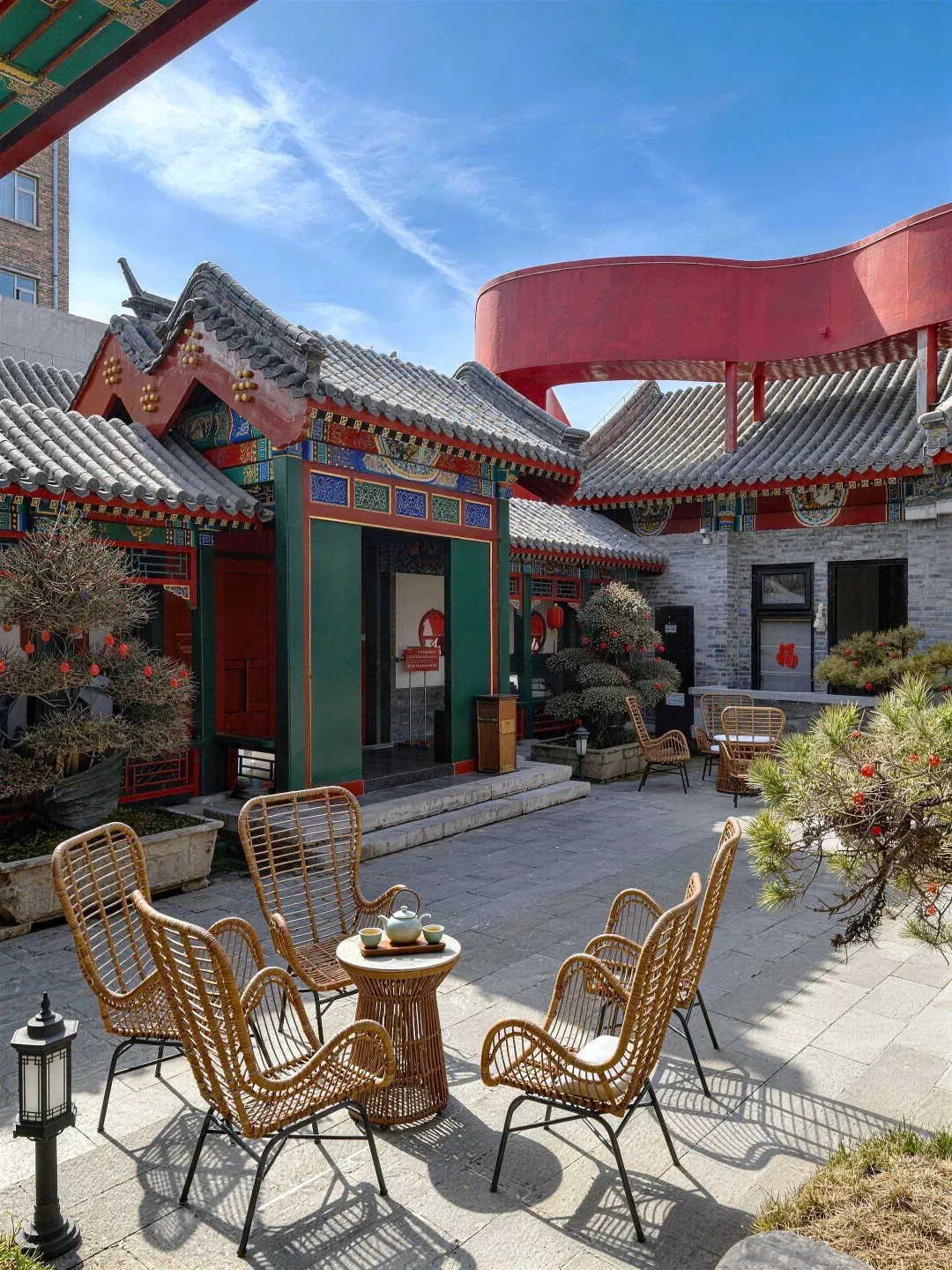
This tranquil siheyuan courtyard, set against a backdrop of modern architecture, offers a peaceful oasis to enjoy a traditional tea ceremony, a perfect escape from the bustling streets of Beijing.
Cultural Etiquette: Visiting Like a Local
It is easy to forget that these photogenic alleys are living, breathing residential neighborhoods. Locals still sit outside playing chess, airing out their laundry, and eating steaming bowls of Lu Zhu (pork stew).
Never push open a closed red door, even if it looks like a beautiful temple. These are private homes. If a door is slightly ajar, you can admire the Yingbi (spirit wall) just inside the entrance—a brick screen traditionally built to block bad energy and protect the family’s privacy—but do not step over the threshold.
Keep an eye out for the Men dun (drum stones) sitting at the base of the entrance gates. Historically, the carvings on these stones indicated the social status of the family inside, with round drums representing military officials and square blocks representing scholars.
Practical Logistics for Your 2026 Visit
What is the 144-Hour Transit Visa?
The 144-hour visa-free transit policy allows travelers from 54 eligible countries to exit the airport and explore Beijing for up to six days without a pre-approved tourist visa. You must hold a valid passport and a confirmed onward flight ticket to a third country or region.
Getting There via Subway
Beijing’s subway system is the fastest, cheapest, and most efficient way to reach the historic center. To explore the popular Shichahai hutong area, take Subway Line 8 and exit at Shichahai Station (Exit A2).
Is the Rickshaw Tour Worth It? You will be aggressively approached by drivers offering pedicab tours near the subway exits. Skip them. They are heavily overpriced, and the drivers rush through the alleys. Walking at your own pace is free and allows you to notice the intricate architectural details.