


What is the Tibet Travel Permit (TTP)?
The Tibet Travel Permit is a mandatory official document issued by the Tibet Tourism Bureau, required for all foreign passport holders entering the Tibet Autonomous Region. In 2026, you cannot board a train or flight to Lhasa without it, and it must be arranged through a registered travel agency.
Note: The popular 144-hour transit visa exemption does not allow travel to Tibet. You must hold a standard Chinese tourist (L) visa to apply for the permit.
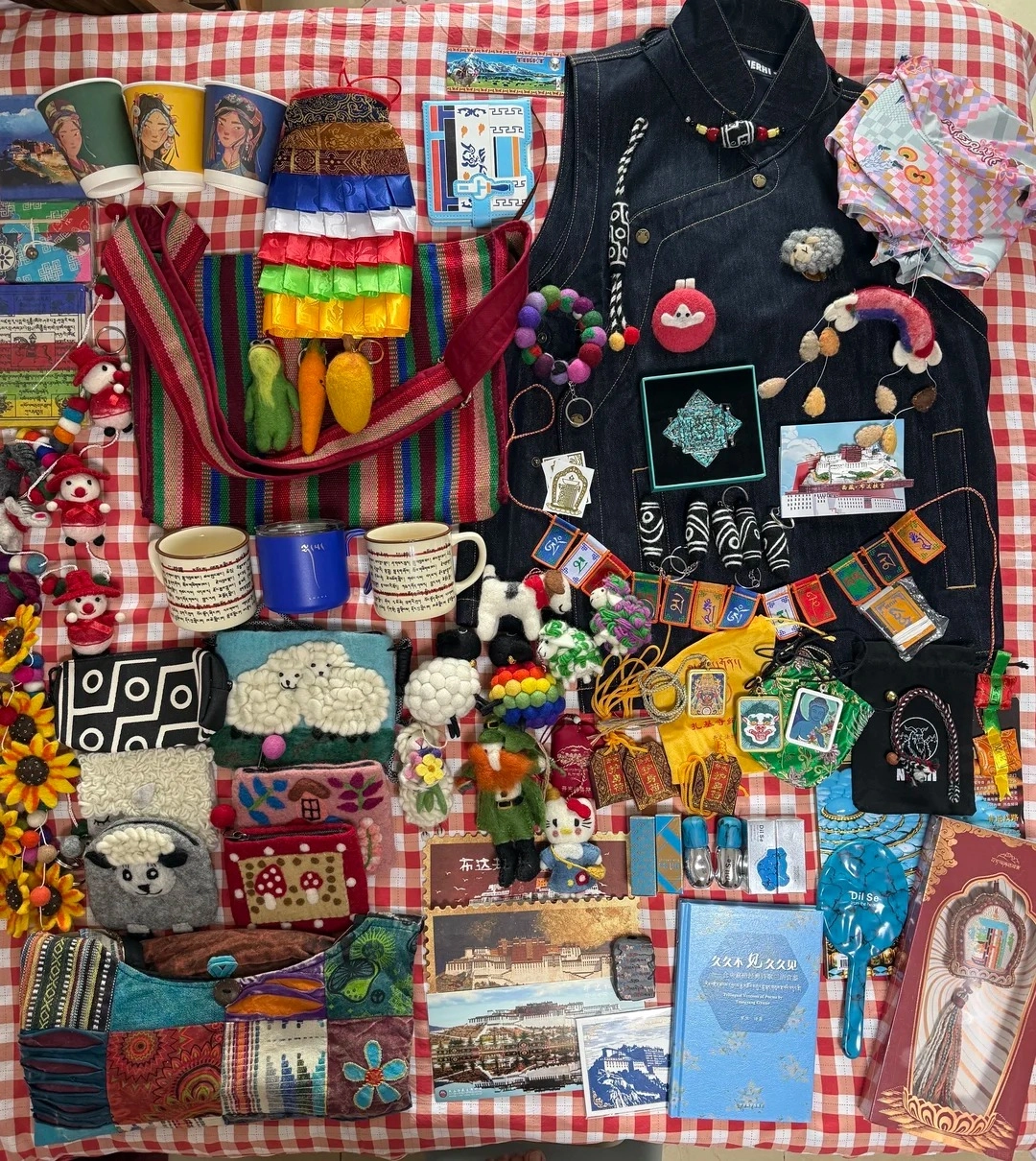
A vibrant collection of authentic Tibetan treasures, reminiscent of the diverse offerings found on Lhasa’s iconic Barkhor Street. From handcrafted felt charms to traditional textiles and meaningful books, these items capture the essence of Tibetan culture and make perfect keepsakes.
What to Buy in Lhasa: The Ultimate Authenticity Checklist
Thangkas (Sacred Scroll Paintings)
Thangkas are intricate Buddhist paintings on cotton or silk. True thangkas are painted using mineral pigments, like crushed turquoise and coral, mixed with gold dust. This traditional method ensures their vibrant colors will not fade for centuries.
What to Know Before You Go: Look closely at the canvas texture and the fine line work. Mass-produced fakes from factories are often printed on canvas, with a few strokes of real paint added on top to create a textured illusion. A genuine, hand-painted thangka takes months to complete and will rarely cost less than 1,500 RMB ($210 USD) for a small piece.
Tibetan Singing Bowls
Traditionally used for meditation, singing bowls produce a resonant, mystic hum when a wooden mallet is rotated around the outer rim. They are allegedly made from a secret mix of seven different metals.
The Insider Test: Authentic bowls are hand-hammered. If a bowl is perfectly smooth, lightweight, and uniformly thick, it was machine-cast in a factory. Look for slight irregularities and visible hammer marks. When struck, a genuine bowl’s vibration should linger in the air for at least 15 to 20 seconds.
Yak Wool and Cashmere Garments
Tibet’s high-altitude sheep and yaks produce incredibly warm, soft wool. You will find scarves, blankets, and sweaters hanging from almost every stall in the old town.
The Insider Test: The “burn test” is your most reliable tool. Ask the vendor to pull a single loose thread and light it with a lighter. Authentic wool smells like burnt hair and crumbles to ash. If it smells like burning plastic or melts into a hard bead, it is an acrylic fake.
Overrated Tourist Trap: “Antique” Dzi Beads
While walking the Barkhor, you will see street hawkers aggressively pushing Dzi beads—distinctive black and white agate beads with “eye” patterns—and chunky turquoise necklaces.
Is it Worth It? Skip these entirely. Genuine antique Dzi beads are sacred heirlooms that cost tens of thousands of dollars. The ones sold to tourists for 100 RMB are glass or cheap dyed agate. Unless you are a certified gemologist, only buy these items as cheap costume jewelry, never as authentic investments.
Where to Shop for Genuine Handicrafts in Lhasa
Dropenling Handicraft Center
If you hate haggling and want guaranteed authenticity, head to Dropenling (11 Chaktsalgang Lam). This impressive nonprofit enterprise supports Tibetan artisans directly, fighting back against cheap imported replicas.
You will find Wangden carpets, leather appliqué bags, and impossibly soft yak-cashmere scarves. Prices are fixed, but the premium ensures fair wages for the creators and high-quality, natural materials for you.
Tromsikhang Market
For a raw, sensory experience, navigate the chaotic Tromsikhang Market. This bazaar is where local Tibetans shop. It is the absolute best place to buy edible souvenirs.
Pick up authentic Tibetan specialties like dried yak cheese (churpi), roasted barley flour (tsampa), or high-quality imported saffron. Just be prepared for thick crowds and intense smells.

Witnessing the creation of a genuine Tibetan Thangka is an unforgettable experience. These intricate religious artworks, often made with mineral pigments, are more than just souvenirs; they are windows into Tibetan culture and spirituality. When searching for authentic pieces in Lhasa, keep an eye out for the meticulous detail and sacred artistry like that seen here.
Logistics: Payments, Shipping, and Staying Connected
Navigating Lhasa’s markets in 2026 requires a smartphone. Cash is practically obsolete; even the oldest vendors selling prayer flags outside the Jokhang Temple expect payment via Alipay or WeChat Pay. Ensure you have these apps downloaded, identity-verified, and linked to your foreign credit card before you arrive.
To keep your payment apps working and access translation apps for bargaining, you need reliable internet. Public Wi-Fi in Tibet is notoriously slow and requires a Chinese phone number to log in. I highly recommend using a travel eSIM to bypass the Great Firewall and maintain a stable connection.
💡 Editor’s Pick: We recommend Nomad eSIM for China because it reliably bypasses the Great Firewall with stable speeds.
If you buy something heavy, like a Tibetan carpet or a large copper statue, do not worry about lugging it to Mount Everest Base Camp. Reputable shops can arrange international shipping via China Post. It is surprisingly reliable, though it may take 4-6 weeks to reach North America or Europe.
Final Thoughts on Shopping in Tibet
Bringing home a piece of Tibet should be about honoring the incredible craftsmanship of the plateau, not scoring the cheapest factory-made trinket. By knowing how to test materials and choosing reputable shops, you ensure your money supports the local Tibetan economy.