


How to Set Up Your Phone for the Beijing Subway
To ride the subway like a local in 2026, you need to ditch cash. Download Alipay or WeChat before you arrive and link your international Visa or Mastercard. Inside the Alipay app, search for “Transport” and generate a Beijing Subway QR code. You simply scan this code at the turnstile—no fumbling for loose change while wrangling a toddler.
Of course, these apps require a constant internet connection to generate the QR code. Do not buy a physical SIM card at the airport; the lines are notoriously long, and the registration process requires a passport scan that tests the patience of any jet-lagged child.
Instead, download an eSIM before you board your flight so you have data the second you land.
💡 Editor’s Pick: We recommend Nomad eSIM for China because it reliably bypasses the Great Firewall with stable speeds.
What is the 144-Hour Visa-Free Transit Policy?
The 144-hour visa-free transit policy allows citizens from 54 eligible countries to explore Beijing without a traditional visa for up to six days. You must hold a valid passport and a confirmed onward ticket to a third country or region departing within 144 hours.
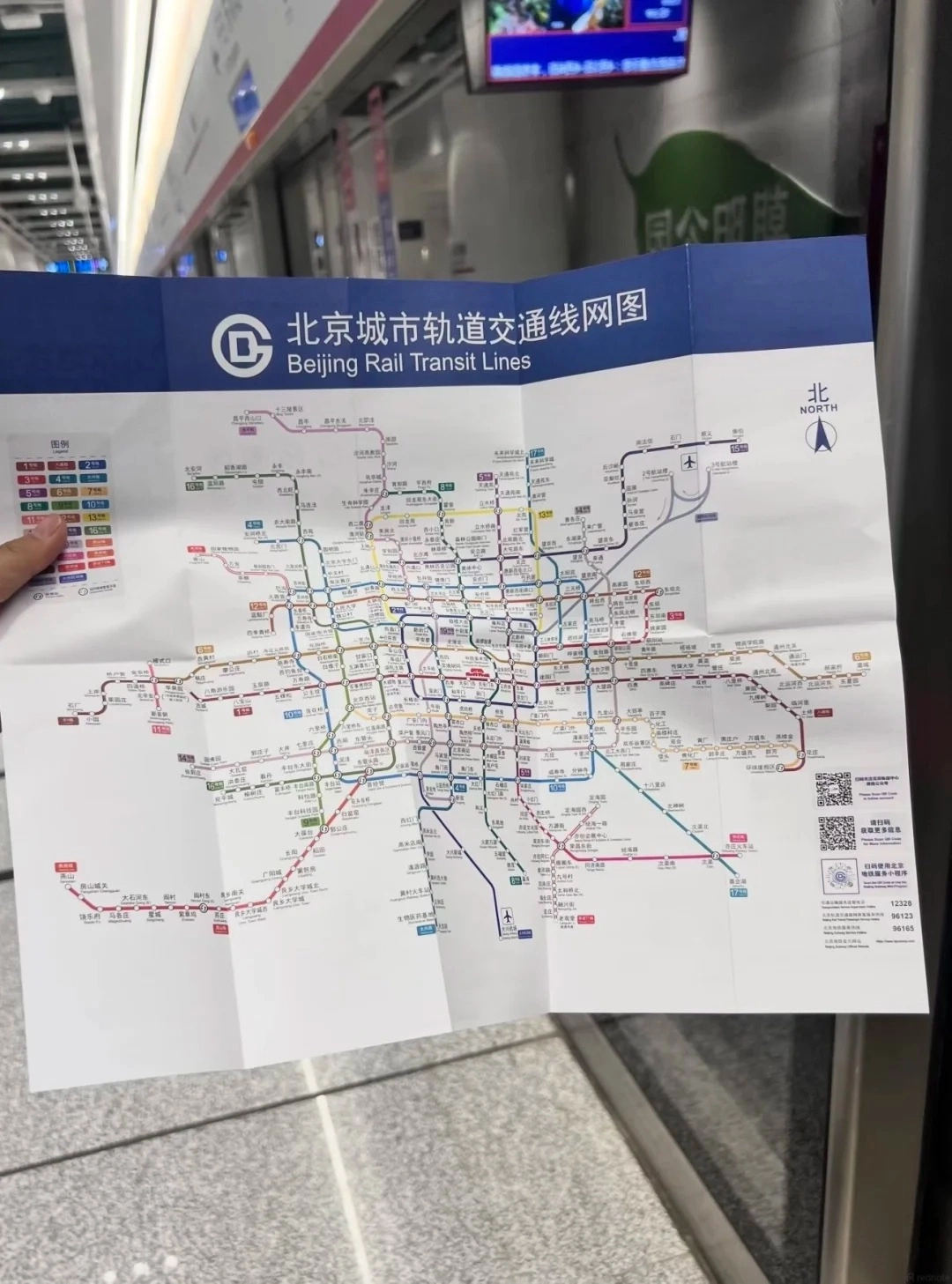
A handy Beijing rail transit map is essential for navigating the city’s vast subway network with confidence.
Best Stroller-Friendly Lines for Family Sightseeing
Beijing has 27 subway lines, but not all are created equal when it comes to accessibility. Older routes like Line 1 and Line 2 often lack direct street-to-platform elevators, forcing parents to haul strollers up steep, crowded escalators.
Line 4: The Animal and Imperial Route
Line 4 is arguably the most useful route for families. It connects directly to the Beijing Zoo (北京动物园). The elevator at the Beijing Zoo station (Exit B) drops you mere steps from the ticket gate, making it incredibly easy to go see the giant pandas without exhausting your toddler first.
Further north on Line 4 is the Summer Palace (Beigongmen Station). While the palace grounds have uneven cobblestones in certain areas, the subway exit features a wide, ramped pathway perfect for prams and strollers.
Line 8: The Olympic Park Express
Known as the “Central Axis Line,” Line 8 is a newer, highly accessible route. Take this line to Olympic Green (奥林匹克公园) to see the Bird’s Nest stadium and the Water Cube, which features a fantastic indoor water park for kids.
The platforms on Line 8 are wider, the elevators rarely break down, and the air conditioning is noticeably stronger—an absolute lifesaver during Beijing’s sweltering July summers when the underground humidity spikes.
What to Know Before You Go: The Real Subway Experience
Let’s be brutally honest: the Beijing subway is a sensory overload. The distinct smell of ozone, steamed baozi from nearby breakfast carts, and damp concrete is unforgettable. The crowds move with a relentless, fast-paced rhythm that can startle young children if they aren’t prepared.
If you need a quick break to calm a fussy toddler, look for the station vending machines. A bottle of cold Nongfu Spring water costs exactly 2 RMB (about $0.30 USD), instantly payable via your Alipay QR code.
Insider Tip: The Xizhimen Transfer Trap
Many guidebooks and apps suggest transferring at Xizhimen Station (Lines 2, 4, and 13) because it looks incredibly convenient on the map. Do not do this with a stroller.
Xizhimen is a notoriously massive, sprawling labyrinth. Transferring between lines here requires a 10-minute walk through endless underground tunnels, multiple escalator rides, and navigating a sea of aggressive commuters. If your route requires a transfer at Xizhimen, it is often easier and less stressful to exit the subway entirely and hail a DiDi (China’s Uber) for the last leg of your journey.
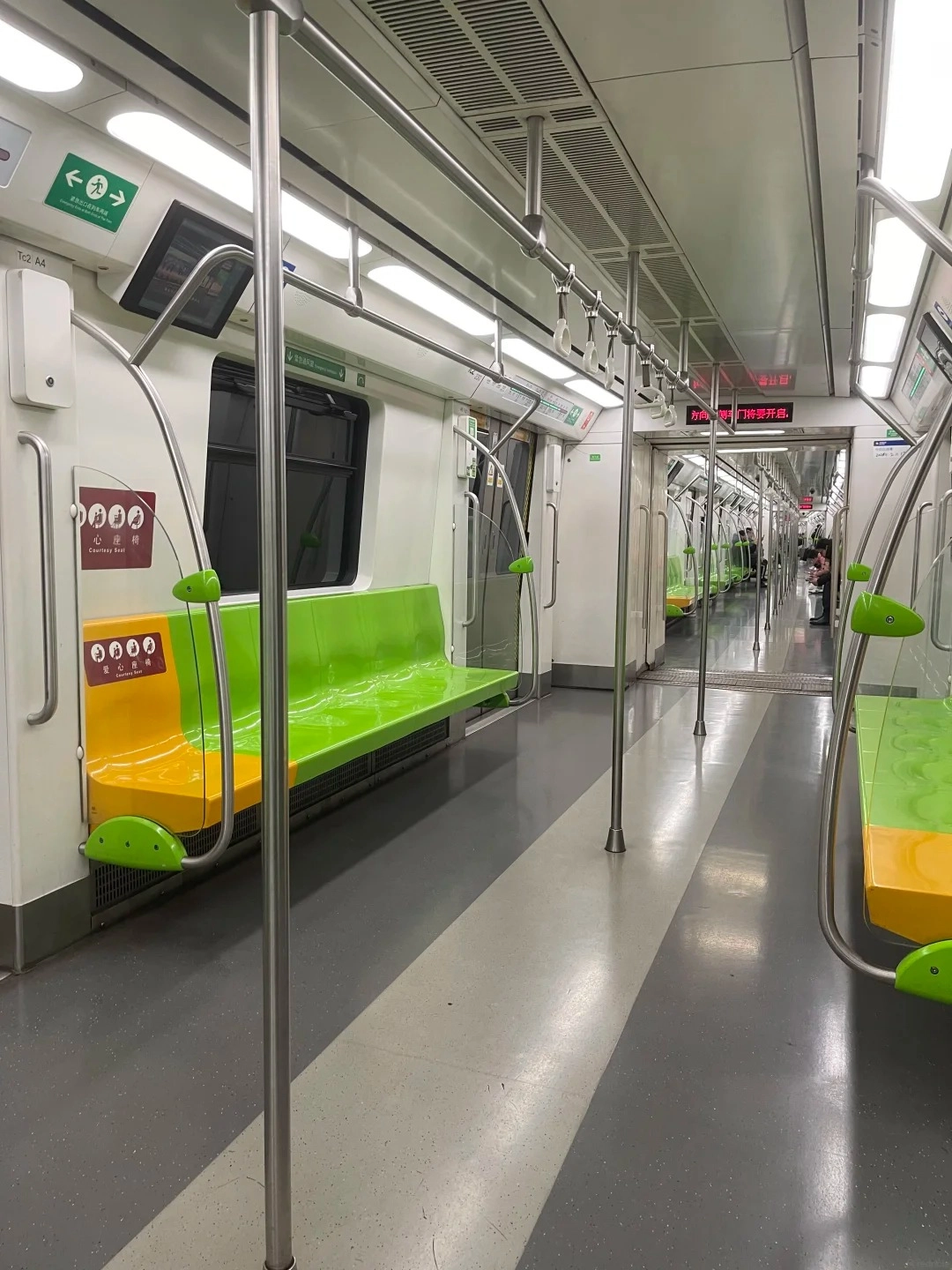
A clean, quiet subway car like this highlights the practical design and commuter-friendly seating often featured in modern urban transit systems.