
Guangzhou Subway Guide: Fares, Apps, and Top Tourist Stops

Welcome to the humid, bustling heart of southern China. Navigating this 15-million-strong megacity above ground means battling gridlock traffic and the infamous subtropical heat. That’s why mastering the underground network is your lifeline. This Guangzhou subway guide will help you bypass the chaos, pay seamlessly with your phone, and reach every major attraction without breaking a sweat.

TL;DR: Trip Essentials

  • Payment: In 2026, foreign tourists can scan in and out using the Guangzhou Metro mini-program directly within Alipay or WeChat (linked to international credit cards).
  • Fares: Rides are incredibly cheap, starting at 2 RMB ($0.28 USD) for the first 4 kilometers and capping around 14 RMB for long suburban hauls.
  • Airport Access: Line 3 (North Extension) connects Baiyun International Airport directly to the city center in about 40 minutes.
  • Operating Hours: Most trains run from 6:00 AM to 11:30 PM. Always check the last train schedule if you are out late enjoying the Pearl River nightlife.

Summarize with :

How to Pay for the Guangzhou Metro in 2026

Gone are the days of fumbling for coins at ticketing machines. While you can still buy single-journey plastic tokens with 5 or 10 RMB notes, the fastest way to ride is by using your smartphone.

Foreign travelers can now link their Visa or Mastercard directly to Alipay or WeChat Pay. Simply search for the “Guangzhou Metro” (广州地铁) mini-program within either app to generate a dynamic QR code. Swipe this code over the glass scanner at the turnstile, and the gate will open instantly.

To ensure your QR codes load fast and you don’t get stuck at the turnstile blocking a wave of impatient commuters, you need reliable internet. Public Wi-Fi requires a Chinese phone number, making an eSIM mandatory.

💡 Editor’s Pick: We recommend Nomad eSIM for China because it reliably bypasses the Great Firewall with stable speeds.

Understanding Ticket Fares

Guangzhou’s subway pricing is distance-based and highly economical. According to the official Guangzhou Metro pricing policy, fares break down as follows:

  • 0–4 kilometers: 2 RMB
  • 4–12 kilometers: +1 RMB for every 4 km
  • 12–24 kilometers: +1 RMB for every 6 km
  • Over 24 kilometers: +1 RMB for every 8 km

If you plan on taking more than 5-6 rides in a single day, stop by the customer service booth to purchase a 24-Hour Day Pass for 20 RMB or a 72-Hour Pass for 50 RMB.
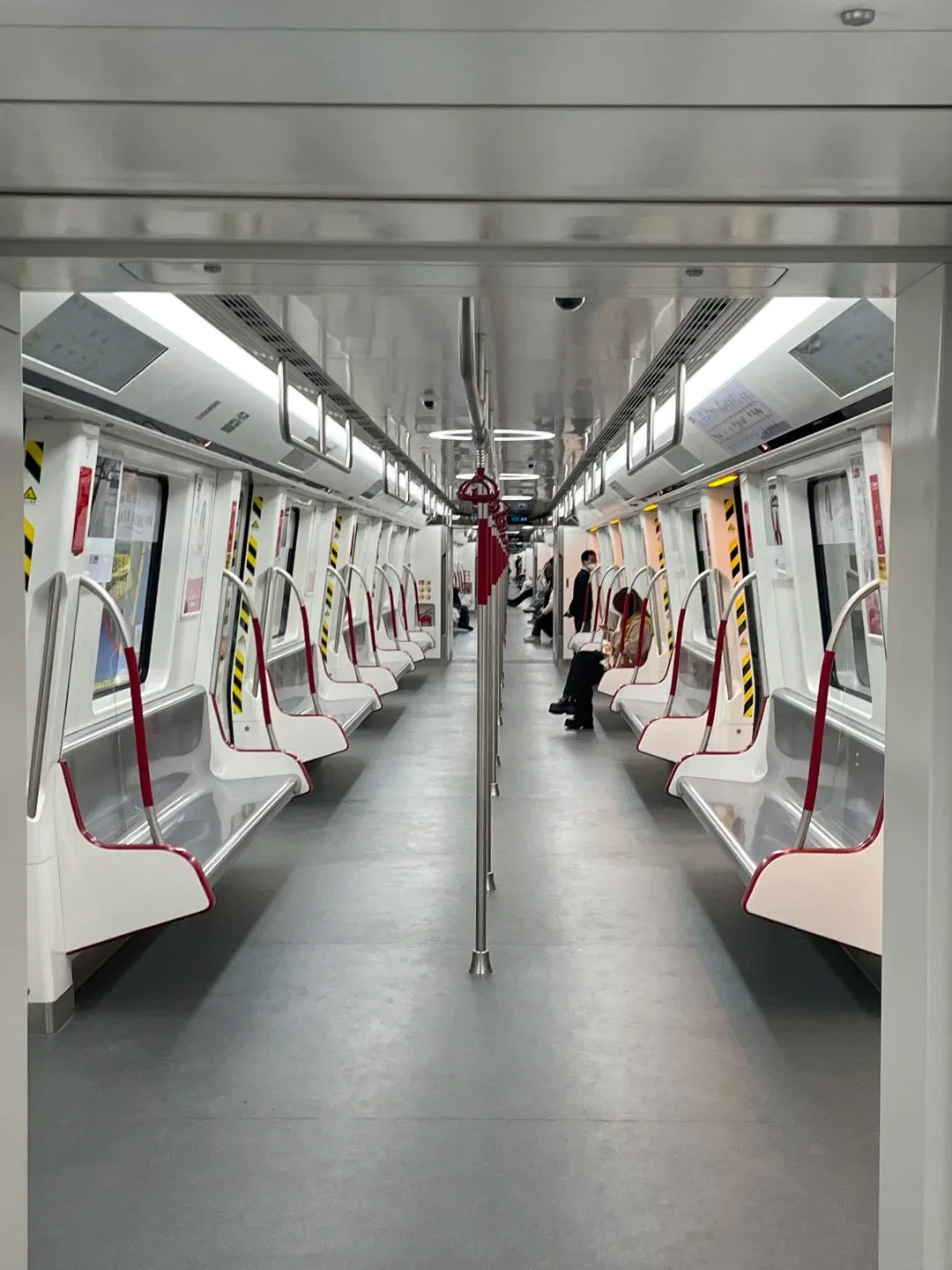
Interior view of a modern, clean Guangzhou Metro train carriage with rows of white and red seats lining both sides. Several passengers are seated, and a few are standing near the doors. The floor is gray, and the ceiling has bright white lighting and silver handles.

Traveling through Guangzhou is a breeze with its extensive and efficient metro system. Many lines feature modern carriages like this one, designed for comfort and convenience.

Navigating Major Hubs: Airports and Trains

Guangzhou is a massive transit hub for the Greater Bay Area. Knowing which line connects to your onward travel is crucial for a stress-free trip.

Baiyun International Airport (Line 3)

If you are flying into Guangzhou, head to the lower levels of Terminal 1 or Terminal 2 to catch the Line 3 North Extension. For just 7 RMB, this line whisks you straight into the Tianhe Central Business District (Tiyuxilu Station) in about 45 minutes.

Guangzhou South Railway Station (Line 2 & Line 7)

According to the official 12306 China Railway scheduling, most high-speed bullet trains to Hong Kong, Shenzhen, and Guilin depart from Guangzhou South. You can reach this massive station via Line 2 or Line 7.

What to Know Before You Go: The Line 3 Crush

Insider Tip: Avoid Line 3 between 7:30 AM – 9:00 AM and 5:30 PM – 7:00 PM at all costs. It is notorious nationwide as the “Line of Death” for its suffocating crowds. You will be physically pushed into the carriage by station guards amidst the heavy smell of steamed baozi and morning sweat. If you have luggage, take a DiDi (ride-hailing app) during these hours instead.

Top Tourist Stops on the Guangzhou Subway

The metro network makes sightseeing incredibly efficient. Here is how to reach the city’s best attractions using the underground.

Canton Tower (Line 3 / APM Line)

To see the iconic 600-meter “Slender Waist” tower, take Line 3 or the automated APM Line to Canton Tower Station. Exit the station just before sunset to watch the tower light up in a dazzling rainbow of LEDs against the Pearl River.

Shamian Island (Line 1 / Line 6)

For a taste of 19th-century European architecture, ride to Huangsha Station. Take Exit F, cross the pedestrian bridge, and you will step onto Shamian Island. The contrast between the quiet, banyan-shaded colonial avenues and the roaring traffic of the city is jarring but beautiful.

Chen Clan Ancestral Hall (Line 1 / Line 8)

Get off at Chen Clan Academy Station to witness the pinnacle of Lingnan architecture. The intricate wood, brick, and plaster carvings on the roof of this 1894 complex are mesmerizing. Entry is only 10 RMB, making it one of the best value stops in the city.
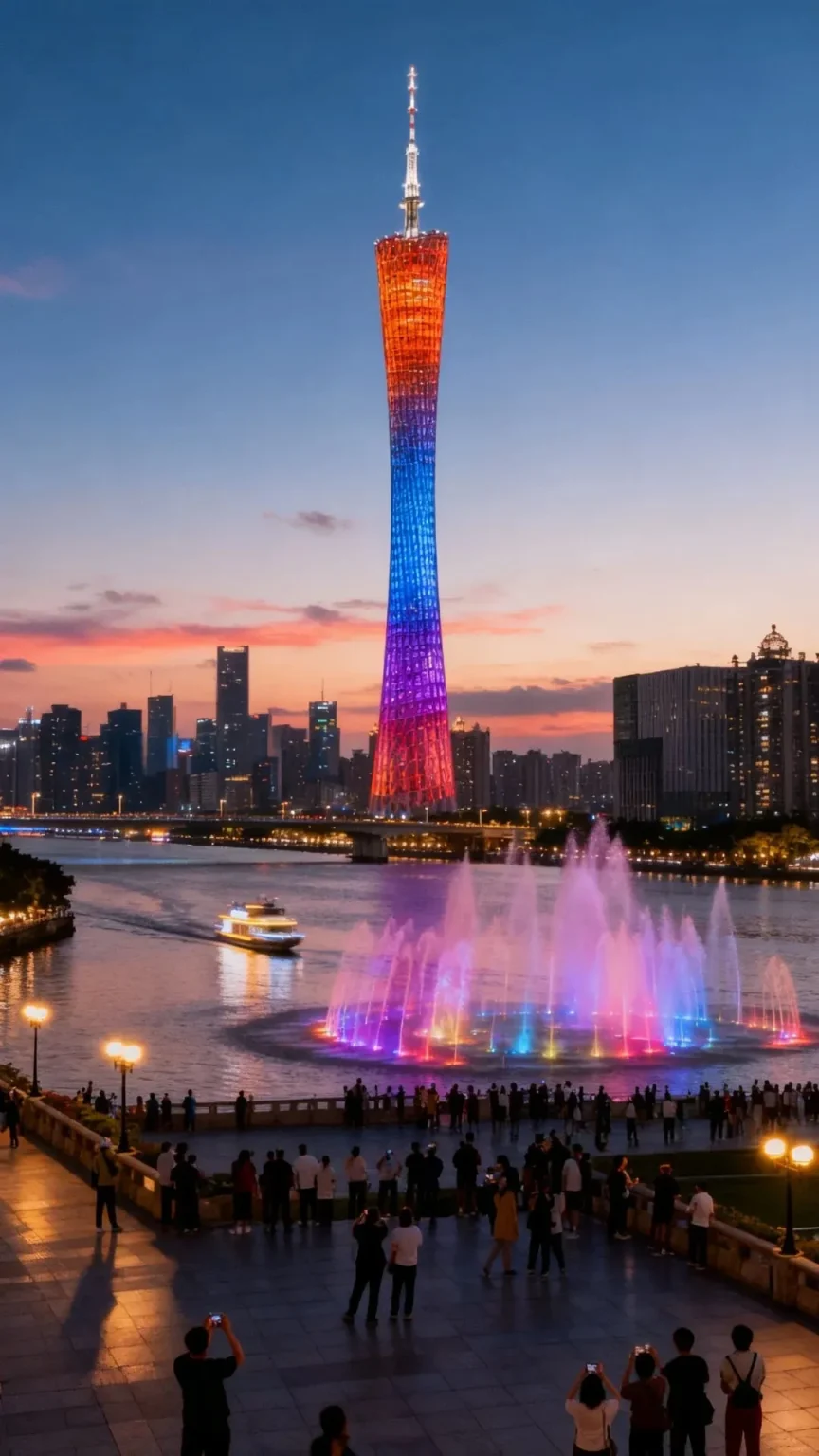
The Canton Tower illuminated with red, purple, and blue lights stands tall against a twilight sky. Below, the Pearl River flows, featuring a vibrant, colorful water fountain show. A boat cruises on the river, and a pedestrian walkway lined with lampposts is filled with people observing the scene. The Guangzhou skyline is visible in the background.

Don’t miss the dazzling spectacle of the Canton Tower at night! It’s a stunning landmark visible from many of Guangzhou’s best viewing spots, easily accessible via the city’s efficient subway system.

What is the 144-Hour Visa-Free Transit?

The 144-hour visa-free transit policy allows citizens from 54 eligible countries to explore Guangdong province for up to six days without a Chinese visa, provided they hold a confirmed onward ticket to a third country or region departing from an eligible port.

If you are utilizing this policy to explore the city, the subway is your absolute best tool for maximizing a short layover.
Frequently Asked Questions About Guangzhou Metro

How do I pay for the subway in Guangzhou as a tourist?

The easiest way is to use the ‘Guangzhou Metro’ mini-program within Alipay or WeChat. You can link your international credit card to these apps to generate a dynamic QR code for seamless scanning at station turnstiles.

No, it is very affordable. Fares are distance-based, starting at 2 RMB (approx. $0.28 USD) for short trips and capping at around 14 RMB for longer suburban journeys.

You can take Line 3 (North Extension) directly from Terminal 1 or 2. It takes about 40–45 minutes to reach the Tianhe Central Business District for a fare of approximately 7 RMB.

Yes, the subway is the most efficient way to maximize a short layover. It provides easy access to major attractions like the Canton Tower, Shamian Island, and the Chen Clan Ancestral Hall without the need for a taxi.

Conclusion

Mastering the Guangzhou metro transforms an overwhelming megacity into an accessible, exciting playground. By setting up your Alipay QR codes in advance, avoiding the rush hour crush, and plotting your route to hubs like Guangzhou South, you will travel like a local.

Ready to explore more of the Greater Bay Area? Check out our comprehensive guide to navigating the Shenzhen Metro or book a private walking tour of Guangzhou’s historic Xiguan district today!

Similar posts to this one

A white and blue high-speed train travels on tracks elevated on a bridge, passing in front of a steep, mist-covered hillside covered in lush green tea terraces. A traditional multi-tiered Chinese pagoda sits atop the hill in the distance.

Chengdu to Zhangjiajie by Train: How to Plan the Journey & What to Pack

Swapping the spicy, laid-back teahouses of Chengdu for the towering, mist-shrouded sandstone pillars of Zhangjiajie is a classic Chinese adventure. [...]

An elevated blue BRT bus travels on a dedicated lane above a multi-lane road and train tracks in Xiamen. A high-speed train is visible on the lower tracks. In the background, numerous modern skyscrapers and buildings form a dense cityscape under a cloudy sky. Green foliage covers the supports of the elevated busway.

Navigating Xiamen's BRT System: A Fast-Track Guide to the City

Sweating in the back of a taxi while stuck in gridlock on Xiahe Road is a frustrating rite of passage [...]

An aerial view of a busy Guangzhou night market at night, with numerous illuminated street food stalls lining a street. People are seen walking, eating, and interacting at the stalls, with trees and lights overhead. Some stalls have colorful signs and displays of food, while others are equipped with cooking equipment. Small tables and chairs are set up for diners. Several motorized carts, including a blue three-wheeled vendor vehicle, are also present on the street.

Guangzhou's Best Night Markets: A Guide to Evening Street Food and Local Life

The humid evening air in southern China carries an unmistakable scent: a mix of sizzling garlic, sweet soy sauce, and [...]

Get the China Arrival Survival Kit

Planning a trip here has a steep learning curve. Join our newsletter and receive our free “Day One Checklist” covering everything from setting up Alipay and WeChat to bypassing the internet firewall.