
Macau's East-Meets-West Charm: A Cultural Travel Guide

Most travelers treat Macau as a day-trip afterthought from Hong Kong—a place to lose a few hundred dollars at a baccarat table before catching the late ferry back. This is a mistake. While the “Vegas of the East” moniker is earned, the real magic of Macau lies in its cobblestoned alleyways, where incense from A-Ma Temple mixes with the scent of freshly baked Portuguese egg tarts.

In 2026, Macau remains one of the world’s most fascinating geopolitical anomalies: a place where street signs are in Portuguese and Cantonese, and where colonial baroque churches sit in the shadow of neon-lit mega-casinos. Whether you are navigating the humid hills of the Peninsula or exploring the reclaimed glitz of the Cotai Strip, this guide cuts through the noise to help you experience the authentic side of the city.

Quick Summary: Key Takeaways for Your Trip

  • Visa Policy: Most Western travelers (US, UK, EU, Aus) enter visa-free for 30–90 days. If transiting to mainland China, the 144-hour visa-free transit policy applies at specific entry points.
  • Currency Hack: Hong Kong Dollars (HKD) are accepted everywhere at a 1:1 rate with the Macanese Pataca (MOP). Do not change money into MOP; it is useless outside Macau.
  • Best Time to Visit: October to December offers lower humidity and clear skies. Avoid the “Golden Week” holidays (early October and Lunar New Year) when crowds are unmanageable.
  • Getting There: The Hong Kong-Zhuhai-Macau Bridge bus (the “Golden Bus”) is faster and cheaper (approx. 65 HKD) than the ferry, running 24/7.

Summarize with :

Getting to Macau and Logistics

For most travelers in 2026, the journey begins in Hong Kong. While the high-speed TurboJET and Cotai Water Jet ferries are the traditional nostalgic choice (taking about 60 minutes), the Hong Kong-Zhuhai-Macau Bridge offers a seamless bus connection that takes about 40 minutes from the Hong Kong port. If you are prone to seasickness, take the bus.

Connectivity and The Great Firewall

Unlike mainland China, Macau has uncensored internet (Google, Instagram, and WhatsApp work freely). However, if you plan to cross the border into Zhuhai or want seamless connectivity across the Greater Bay Area, you need a reliable connection.

Insider Tip: Public Wi-Fi in Macau is spotty at best outside of the casinos. Relying on hotel Wi-Fi is a recipe for navigation frustration.

💡 Editor’s Pick: We recommend Nomad eSIM for China because it reliably bypasses the Great Firewall with stable speeds. Use code JORICAQLKF at checkout to get $5 USD off your first data plan.

The Historic Peninsula: More Than Just Ruins

The Macau Peninsula is the beating heart of the old city. It is dense, humid, and hilly. Wear your most comfortable walking shoes; the Portuguese calçada (mosaic pavement) is beautiful but slippery when wet.
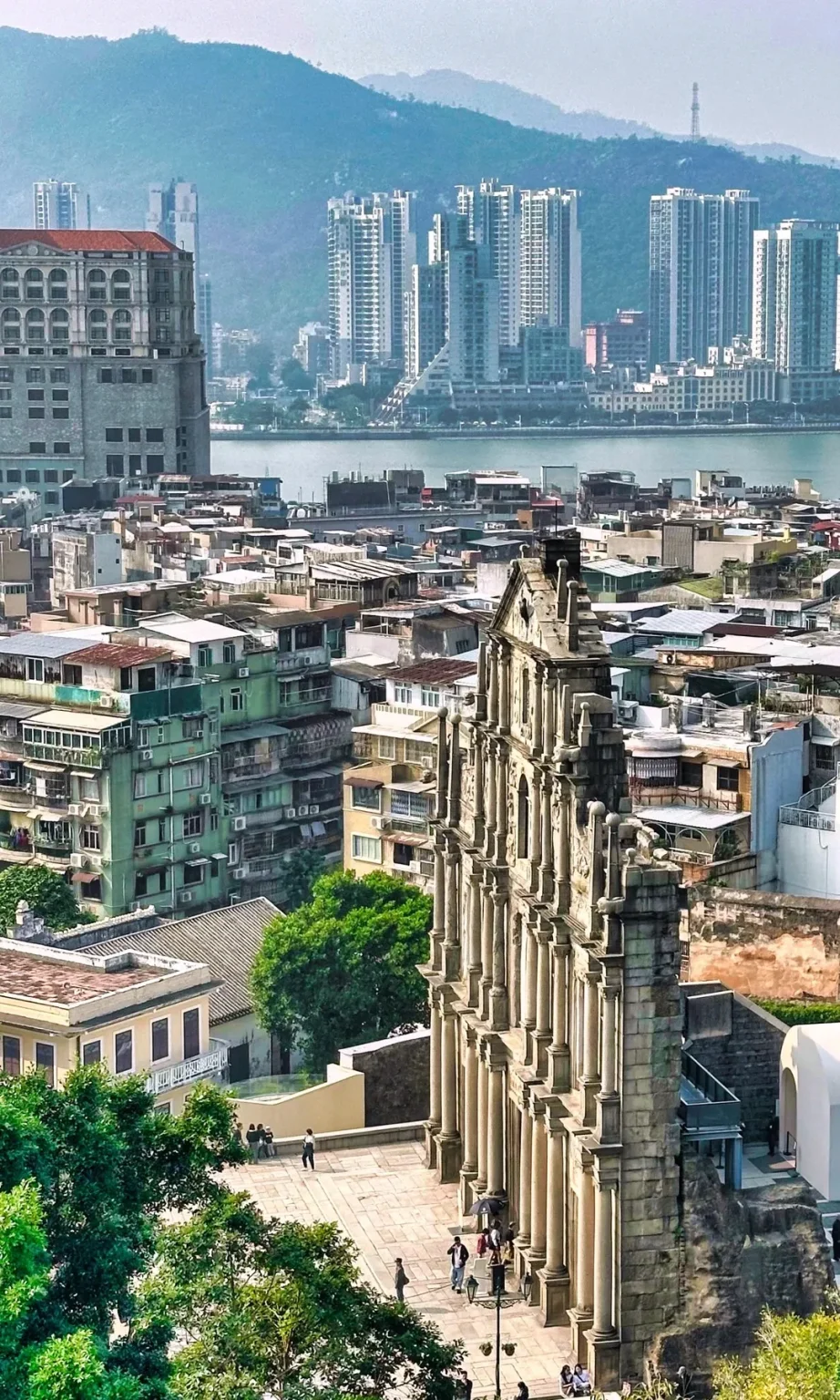
The stone facade of the historic Ruins of St. Paul in Macau, with people walking on the paved plaza below. Behind it, a dense cityscape of traditional and modern buildings stretches towards a body of water and distant hazy mountains.

The iconic Ruins of St. Paul, a UNESCO World Heritage site, beautifully symbolize Macau’s profound East-meets-West cultural heritage, standing proud amidst its evolving cityscape.

Ruins of St. Paul’s (and How to See Them)

The Ruins of St. Paul’s are the undisputed icon of the city. This 17th-century facade is all that remains after a fire in 1835. The mistake most tourists make is arriving at 11:00 AM. By then, the stairs are a sea of selfie sticks.

Arrive at 8:30 AM. You will have the steps largely to yourself. After snapping your photo, walk immediately to the right of the ruins up to Monte Fort. It offers a panoramic view of the city where you can see the jarring contrast of the ancient cannons pointing directly at the garish Grand Lisboa casino.

Senado Square and Hidden Courtyards

From the ruins, flow down towards Senado Square. While the square itself is touristy, the side streets are gold. Duck into Lou Kau Mansion. It is often free to enter and offers a stunning example of a traditional Chinese courtyard house (Siheyuan) with Portuguese decorative influences—a physical manifestation of Macanese culture.

What is Macanese Cuisine?

Macanese cuisine is widely considered the world’s first fusion food, dating back over 400 years. It blends Portuguese techniques with ingredients collected along the spice routes of Africa, India, and Malaysia. Key ingredients include turmeric, cinnamon, coconut milk, and bacalhau (salted cod), adapted to local Chinese palates.

The Cotai Strip: The “Vegas” Experience

Cross the bridge to the islands of Taipa and Coloane, now fused together by the reclaimed land known as Cotai. This is where the mega-resorts live. Even if you despise gambling, the architecture is worth a walk-through.

The Venetian Macao recreates Venice with terrifying accuracy, including indoor canals and gondoliers singing ‘O Sole Mio’. It is kitschy, air-conditioned, and impressive. Across the street, The Londoner features a life-sized Big Ben replica.

Is it worth it? If you have been to Las Vegas, you can skip the interiors unless you want to escape the heat. The casinos here focus heavily on baccarat and lack the rowdy party atmosphere of Vegas; the gaming floors are serious, smoky, and intense.

Food Guide: Where to Eat Like a Local

You cannot leave Macau without eating. The food scene here rivals Hong Kong, often at a better price point.
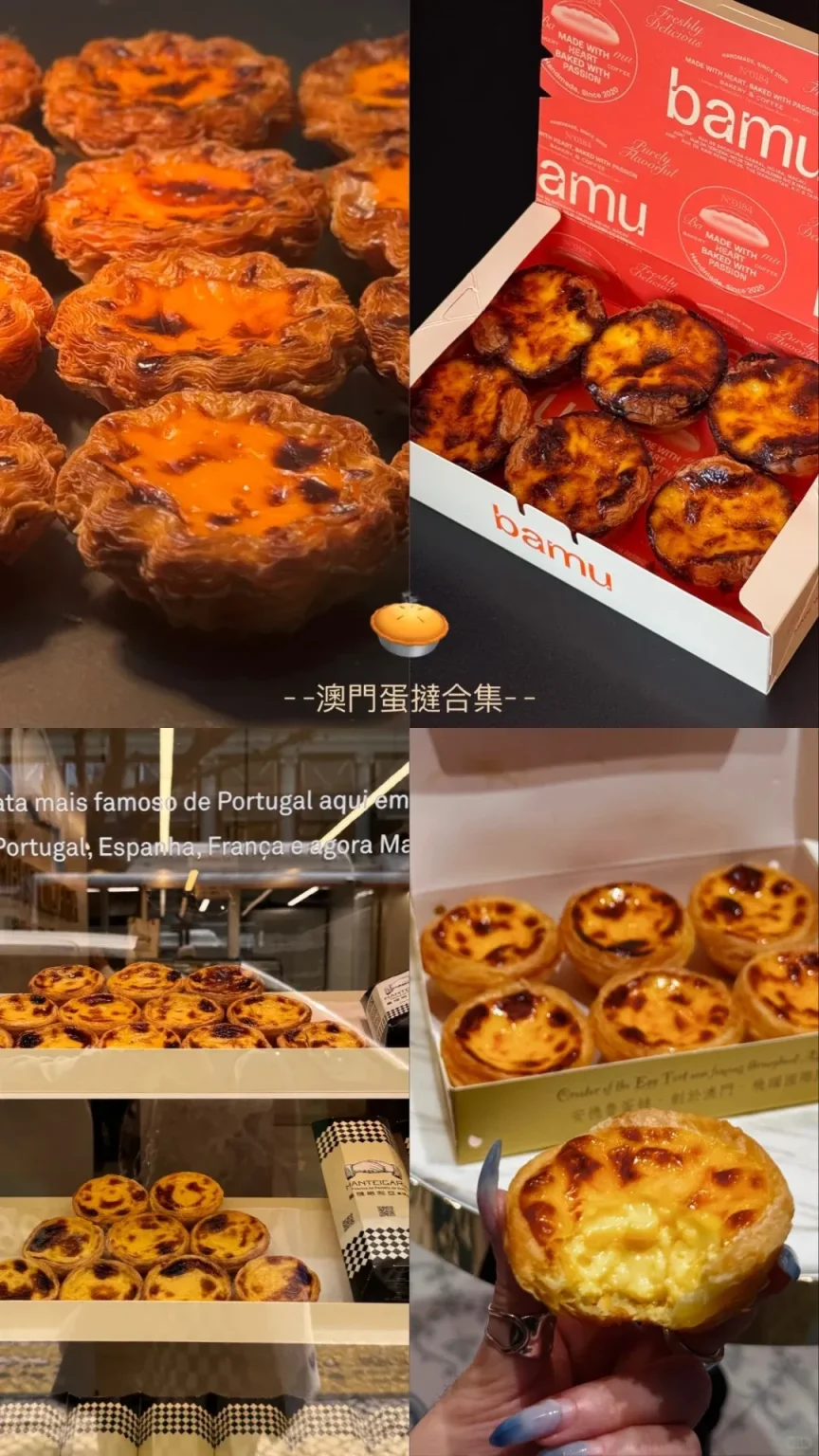
A collage of Portuguese egg tarts (Pastéis de Nata) in various settings. It features a close-up of many tarts with dark caramelized tops, tarts packaged in branded bakery boxes (including 'Bamu'), tarts displayed in a bakery case, and a hand holding a bitten tart revealing its creamy custard filling.

No visit to Macau is complete without savoring its iconic Portuguese egg tarts (Pastéis de Nata)! These golden, creamy delights are a delicious testament to the city’s unique East-meets-West heritage, offering a taste of its rich cultural fusion for any traveler.

The Egg Tart Wars

The Portuguese Egg Tart (Pastel de Nata) is the city’s edible emblem. The custard is scorched on top (crème brûlée style) and the crust is flaky, not shortcrust.

  • Lord Stow’s Bakery (Coloane): The original. It is worth the trek to Coloane Village to eat one fresh from the oven by the seaside.
  • Margaret’s Café e Nata (Peninsula): Founded by Lord Stow’s ex-wife. The crust is slightly saltier. Expect a long line and grumpy service—it’s part of the charm.

Authentic Macanese Dinner

Skip the hotel buffets and head to Riquexó or A Lorcha. These are institutions.

  • Must-Order: Minchi (minced meat with potatoes and a fried egg), African Chicken (roasted with piri-piri and coconut), and Serradura (sawdust pudding) for dessert.

Street Snacks in Taipa Village

Rua do Cunha in Taipa is a narrow pedestrian street packed with vendors. It is crowded and chaotic. Here, you must try a Pork Chop Bun from Tai Lei Loi Kei. It is bone-in pork, fried and slapped on a crispy bun. No lettuce, no sauce, no nonsense.

Insider Practical Tips for 2026

  • Payment Apps: While cash is accepted, AlipayHK and WeChat Pay are the standards. Ensure your apps are linked to your credit card before arrival.
  • The Taxi Situation: Taxis can be scarce during shift changes (around 4:00 PM). Use the Macau Taxi app or the free casino shuttle buses, which form a surprisingly efficient public transport network connecting the ferry terminals to the major hotels.
  • Language: Don’t expect widespread Portuguese fluency. Cantonese is the lingua franca. English is spoken in hospitality, but a translation app is essential for local dining.
Common Questions About Visiting Macau

Do I need a visa for Macau in 2026?

Most Western travelers (including those from the US, UK, EU, and Australia) can enter Macau visa-free for 30–90 days. However, if you plan to transit into mainland China, specific visa rules or the 144-hour transit policy will apply.

Yes, Hong Kong Dollars (HKD) are accepted almost everywhere in Macau at a 1:1 exchange rate with the Macanese Pataca (MOP). It is better not to change money into MOP, as the local currency is not accepted outside the city.

While traditional ferries like TurboJET take about 60 minutes, the ‘Golden Bus’ across the Hong Kong-Zhuhai-Macau Bridge is a faster, cheaper option (approx. 65 HKD). The bus runs 24/7 and is ideal for those prone to seasickness.

No, unlike mainland China, Macau has uncensored internet access, meaning Google, Instagram, and WhatsApp work freely. However, public Wi-Fi is spotty, so securing a reliable eSIM or mobile connection is highly recommended.

Conclusion

Macau is a city of dualities that rewards the curious traveler. It is easy to get blinded by the flashing lights of the Cotai Strip, but the soul of the city resides in the quiet squares of the Peninsula and the sleepy coastline of Coloane. Whether you are there for the history, the fusion food, or the spectacle, Macau offers a cultural depth that justifies far more than a simple day trip.

Similar posts to this one

A nighttime view of a multi-tiered traditional Chinese village built into the side of a steep, rocky karst mountain. Numerous wooden buildings with illuminated windows and intricate dark roofs cling to the cliff face, connected by a network of wooden staircases and elevated walkways. Bright orange and yellow square lanterns are strung across a lower section, some appearing to float over lush green foliage. A large, bright yellow full moon is prominent in the dark blue sky above the mountain, with faint stars visible.

Ultimate Guizhou Karst Route: Kaili Villages, Huangguoshu Falls & Zhenyuan

While the crowds flock to Beijing’s Great Wall or Shanghai’s Bund, China’s most dramatic landscapes quietly await in the southwest. [...]

A multi-story building in Yanji, China, illuminated at night with a multitude of glowing neon signs displaying both Chinese and Korean text. A large, dark, circular coin-shaped structure is mounted on the top of the building. Below, a bustling street scene shows pedestrians crossing a crosswalk under the colorful light spill from the signs, with more illuminated shops and street activity visible at ground level.

A Taste of Korea in China: Yanji and the Yanbian Border Region Guide

Tucked away in the eastern reaches of Jilin Province lies a city where street signs glow in two languages and [...]

A wide, frontal view of Labrang Monastery's Great Sutra Hall, a multi-story building with reddish-brown stone walls. Its central section features dark fabric hangings adorned with white auspicious Buddhist symbols and a golden Dharma wheel flanked by two deer above the main entrance. A broad stone staircase, guarded by stone lions, leads to the entrance. The building is set against a bright blue sky.

Labrang Monastery Guide: Exploring the Heart of Amdo Tibet in Gansu

The scent of burning juniper and fermented yak butter hits you the moment you step onto Renmin West Road in [...]

Get the China Arrival Survival Kit

Planning a trip here has a steep learning curve. Join our newsletter and receive our free “Day One Checklist” covering everything from setting up Alipay and WeChat to bypassing the internet firewall.