
Art on a Budget: A Practical Guide to Shenzhen's Dafen Oil Painting Village

Stepping into the labyrinth of alleys in Shenzhen’s Longgang District, the thick, earthy scent of linseed oil and turpentine immediately hits you. Canvases line the narrow walkways, and the rhythmic sound of brushes striking easels echoes from open-air studios. If you are searching for a practical, up-to-date Shenzhen Dafen Village guide, you need more than just a list of shops; you need to know how to navigate this massive, evolving art ecosystem in 2026.

Once responsible for 60% of the world’s replica oil paintings, Dafen has transformed. While the rise of AI art has shifted the global market, this village remains the undisputed capital of budget-friendly art, custom portraits, and hands-on creative experiences.

Quick Summary: Key Takeaways for Your Trip

  • Location & Transit: Take Shenzhen Metro Line 3 to Dafen Station (Exit A1); the village entrance is a short 10-minute walk away.
  • Best Time to Visit: Arrive on a Tuesday or Wednesday morning before 11:00 AM to avoid the suffocating weekend crowds of domestic tourists.
  • Pricing Expectations: Ready-made replica canvases start around ¥100 ($14 USD), while high-quality custom 50x60cm portraits cost roughly ¥1200 ($165 USD).
  • Shipping Logistics: Most large studios will roll your canvas in a PVC tube and arrange international shipping via DHL or FedEx directly to your home.
  • Payment Methods: Cash is rarely accepted; you must have Alipay or WeChat Pay linked to your foreign credit card before arriving.

Summarize with :

What is the 144-Hour Transit Visa Exemption?

According to the official National Immigration Administration, the 144-hour transit visa exemption is a policy allowing eligible citizens from 54 countries to explore Shenzhen and Guangdong province without a prior visa. You must hold a valid passport and a confirmed onward flight ticket to a third country within 144 hours.

Navigating the Metro and Staying Connected

Getting to Dafen requires navigating the Shenzhen Metro, which is incredibly efficient but relies heavily on mobile connectivity. You will need a stable internet connection to use the Alipay transit QR codes, translate conversations with artists, and navigate the maze-like alleys using Apple Maps or Baidu Maps.

💡 Editor’s Pick: We recommend Nomad eSIM for China because it reliably bypasses the Great Firewall with stable speeds.

Take Metro Line 3 (the light blue line) to Dafen Station. Head out of Exit A1 and walk straight. You will pass a Walmart and several chaotic intersections before seeing the giant hand-holding-a-paintbrush sculpture that marks the village entrance.

Insider Tip: Ignore the aggressive touts loitering outside the metro station offering “VIP art tours.” They will simply march you to overpriced, commission-heavy galleries at the front of the village. The real magic (and the best pricing) is found by getting lost in the back alleys.
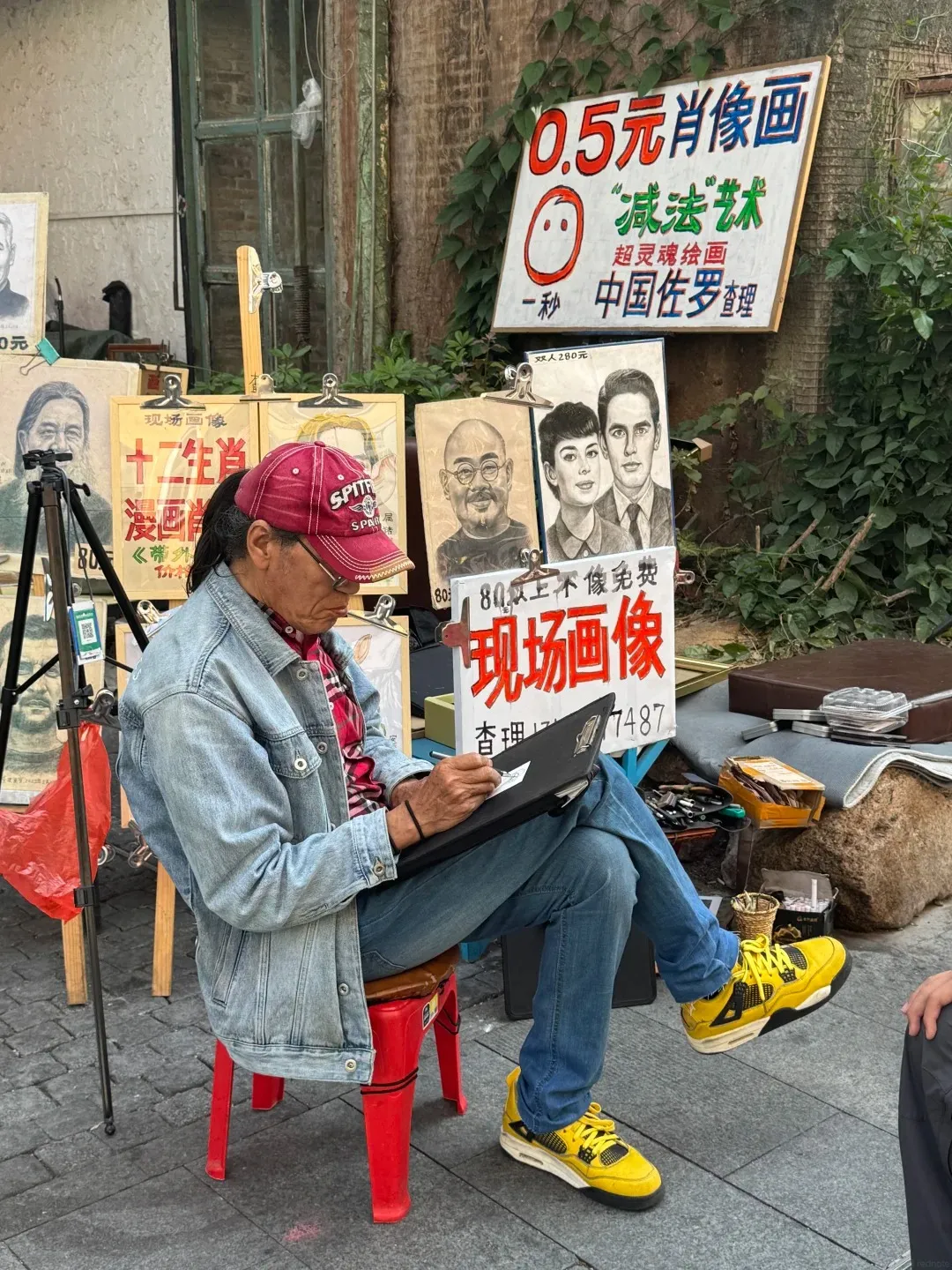
A person with a red baseball cap and denim jacket sits on a red stool, drawing in a black sketchbook. They are surrounded by various portraits and signs, including one advertising '0.5 Yuan Portrait' and another showing a couple. The artist is wearing bright yellow shoes and blue jeans.

In Shenzhen’s Dafen Oil Painting Village, artists offer quick, affordable portraits, showcasing the vibrant and accessible art scene the village is known for.

What to Expect Inside Dafen: Beyond the Canvas

The village is densely packed, and the sheer volume of art can be overwhelming. During the humid summer months, the tight alleys trap the heat, making the air feel heavy with moisture and the sharp tang of wet paint. Stay hydrated—a bottle of cold Nongfu Spring water should only cost ¥2 at local corner stores; do not pay tourist markups.

While the front streets feature mass-produced Van Gogh Starry Nights and Warhol pop art, these are largely overrated. Instead, push deeper into the Laowei alleyways. Here, you will find independent artists working on striking original pieces, traditional Chinese landscapes, and contemporary abstract works.

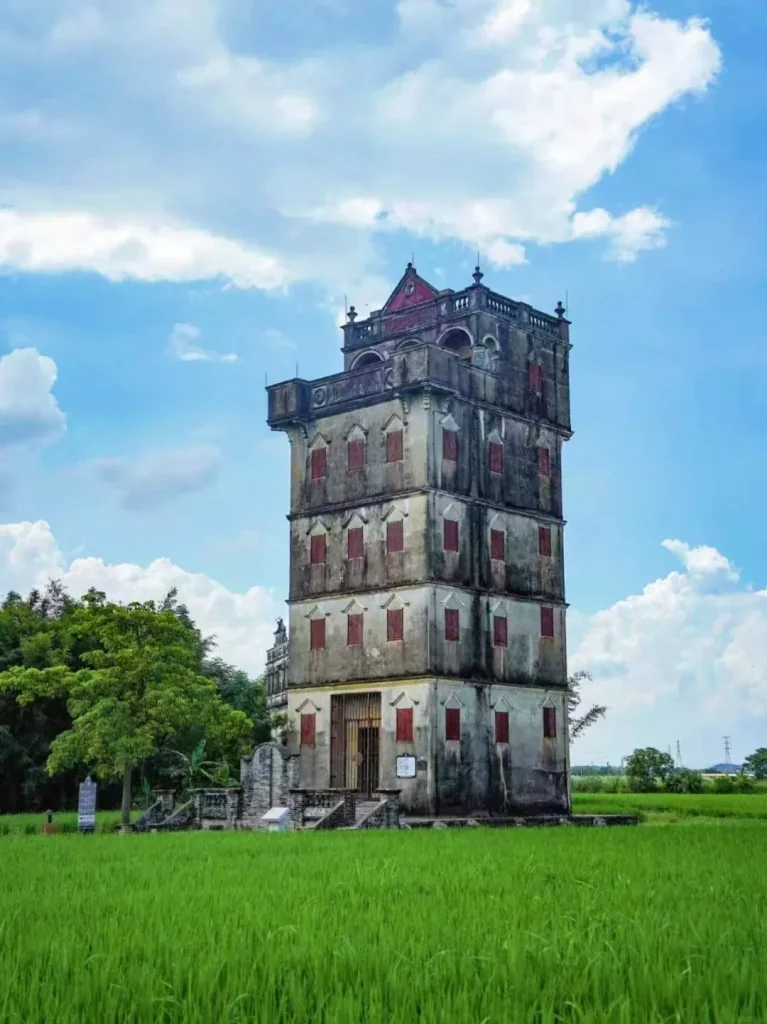
If you need a break from the sensory overload, seek out the Sunrise Art Center (太阳山艺术中心) at 23 Laowei. For a ¥20 entry fee, you can explore a stunning gallery built into the ruins of a century-old Hakka home. It is an architectural marvel and features one of the quietest, most atmospheric cafes in the district.

How to Commission Custom Art and Negotiate Prices

One of the biggest draws of Dafen in 2026 is commissioning custom artwork. Want a museum-quality oil painting of your golden retriever dressed as a Victorian aristocrat? This is the place to get it done.

  • Bring High-Res References: Have your reference photos saved on your phone. The clearer the photo, the better the final result.
  • Understand the Pricing: A standard 50cm by 60cm custom portrait generally costs between ¥900 and ¥1200 depending on the complexity and the artist’s skill level.
  • Timeframes: Custom oils take time to dry. Expect the process to take about a week. If you are leaving China before it is dry, the artist will ship it to you.
  • Negotiation: Haggling is expected, but be respectful. Offer 20% less than the initial quote, but remember that you are paying for hours of skilled manual labor.
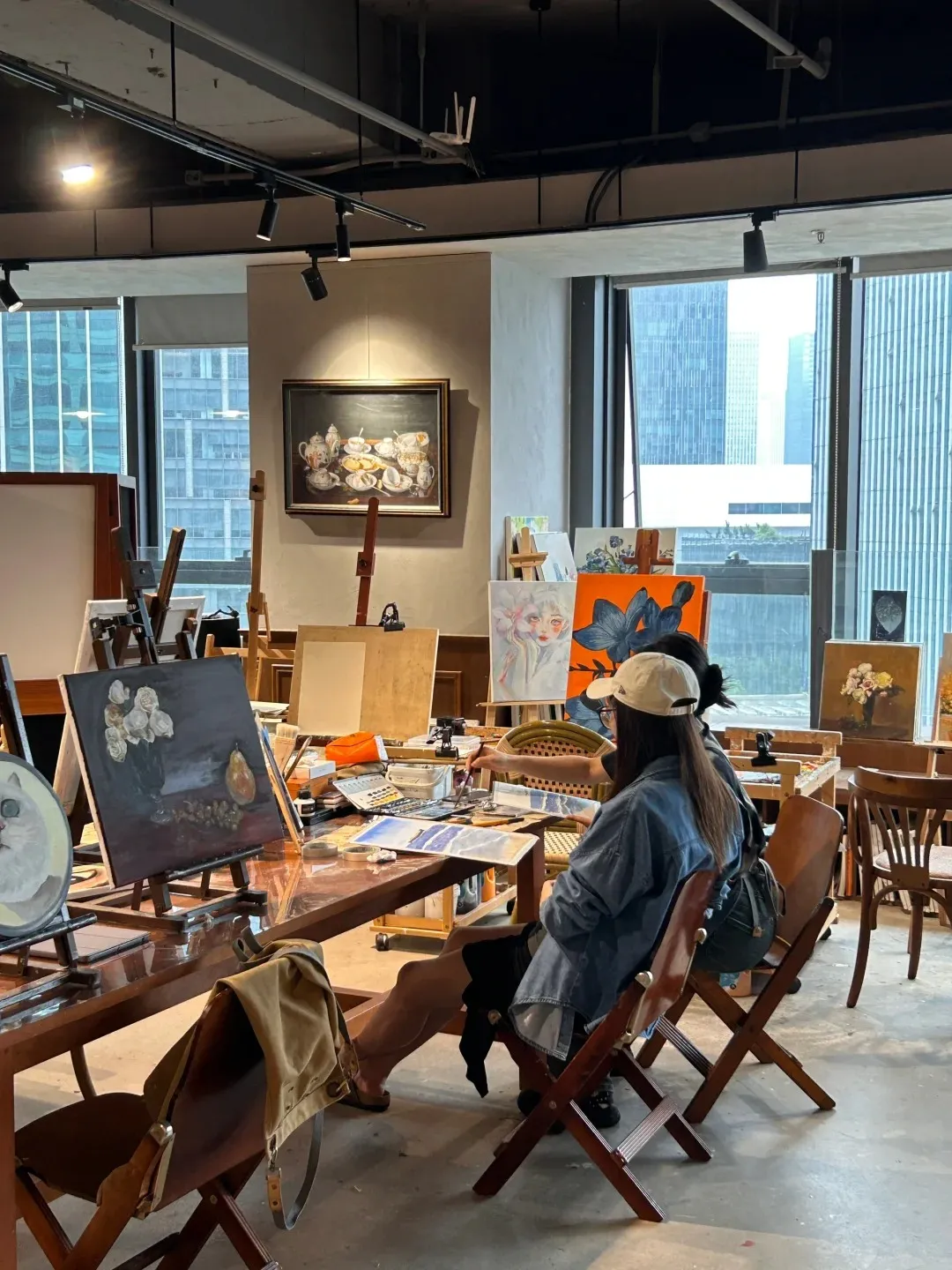
An artist wearing a denim jacket and a baseball cap sits at a wooden table in an art studio, working on a painting. Other easels and paintings are visible in the background, with large windows showing city buildings.

Dafen Village in Shenzhen is a global hub for art, offering affordable oil paintings and a vibrant creative atmosphere. Here, an artist is engrossed in their work, surrounded by the tools of their trade.

Interactive Experiences: Paint it Yourself

If you want a hands-on experience, you don’t need to be a master painter. Throughout the alleys, you will see dozens of small studios offering drop-in painting classes. For just ¥30 to ¥60, you get a blank canvas, an apron, unlimited acrylic paints, and a stool right in the middle of the bustling street.

It is a fantastic, budget-friendly way to spend an hour, especially if you are traveling with children or just want to soak in the creative atmosphere while resting your feet.

Essential FAQs for First-Time China Travelers

Do I need a visa to visit China for a short trip?

Many travelers from 54 eligible countries can utilize the 144-hour visa-free transit policy. This allows you to explore specific regions, like Guangdong province, without a prior visa provided you have a confirmed onward flight to a third country.

Cash is rarely used and often inconvenient in China. It is essential to download and link your foreign credit card to mobile payment platforms like Alipay or WeChat Pay before you arrive to handle daily transactions.

To navigate effectively, you should arrange a travel eSIM or a roaming plan before arrival. A stable internet connection is required to use mapping apps like Baidu or Apple Maps and to facilitate mobile payments via QR codes.

The Shenzhen Metro is the most efficient way to travel. You can use the transit QR code feature within the Alipay app to scan in and out of stations quickly and avoid purchasing individual paper tickets.

Conclusion: Is Dafen Worth the Trip?

Despite the changing global art market, Shenzhen’s Dafen Oil Painting Village remains a fascinating, deeply authentic slice of China’s industrious creative spirit. It offers a rare opportunity to witness thousands of working artists honing their craft in real-time, pick up incredible souvenirs at budget prices, and even commission personalized masterpieces. If you are ready to explore more of the region’s hidden historical gems, check out our complete guide to navigating the ancient walled streets of the nearby Dapeng Fortress.

Similar posts to this one

A display of traditional Chinese cheongsam dresses and jackets on mannequins and shelves. The garments feature various patterns like blue and white plaid, blue stripes, and subtle checkered fabrics. Some have mandarin collars and frog fastenings. A tote bag with a cat pattern hangs on the left, and a quilted fabric bag is also visible.

Beyond the Silk Road: A Practical Guide to Custom Cheongsam in Suzhou

For centuries, the misty canal city of Suzhou has been the undisputed capital of Chinese silk. If you are traveling [...]

Several ancient wooden coffins are affixed to a sheer, weathered limestone cliff face. The coffins are box-like and appear to be suspended on wooden beams jutting out from the rock. The cliff is rough and textured with some vertical streaks of discoloration.

Discovering the Hanging Coffins of the Bo People: A Guide to Gongxian

Deep in the misty karst mountains of southern China, hundreds of ancient wooden coffins defy gravity, suspended on sheer cliff [...]

An aerial view of an ancient stone village complex built on the side of a steep, forested mountain. The architecture features grey tiled roofs, stone walls, and courtyards, with narrow staircases and patios clinging to the cliff face. Lush green trees surround the structures.

Anshun Beyond the Falls: Exploring Guizhou's Ancient Tunpu Villages

If you are piecing together your China itinerary, you need a reliable Anshun travel guide that looks beyond the obvious. [...]

Get the China Arrival Survival Kit

Planning a trip here has a steep learning curve. Join our newsletter and receive our free “Day One Checklist” covering everything from setting up Alipay and WeChat to bypassing the internet firewall.