
Shenzhen for Nature Lovers: The Best Coastal Parks and Hiking Trails

Traveling to China’s “Silicon Valley” usually conjures images of skyscrapers, neon lights, and sprawling tech campuses. But beyond the concrete jungle lies a lush, subtropical paradise waiting to be explored.

Whether you want to conquer steep mountain trails or enjoy a breezy coastal cycling route, this Shenzhen hiking and parks guide provides everything you need to escape the urban grind.

In 2026, navigating these green spaces requires a bit of digital know-how, but the reward is pristine air, stunning South China Sea vistas, and a surprising connection to nature.

TL;DR: Trip Essentials

  • Top Coastal Park: Shenzhen Bay Park offers 15 kilometers of paved, flat trails perfect for sunset cycling and winter birdwatching.
  • Best Hike: Wutong Mountain is Shenzhen’s highest peak (944 meters), requiring 4-5 hours to summit via the steep Lingyun Path.
  • Payment & Navigation: Cash is rarely accepted; you must download Alipay or WeChat Pay and use the built-in mini-programs for Shenzhen Metro.
  • Best Time to Visit: October to April avoids the oppressive summer humidity and heavy typhoon rains.

Summarize with :

What is the 144-Hour Visa-Free Transit?

The 144-hour visa-free transit is an official Chinese immigration policy allowing eligible passport holders from 54 countries to enter Guangdong Province (including Shenzhen) without a pre-approved visa for up to six days, provided they have a confirmed onward flight to a third country or region.

To use this visa exemption and easily navigate local trails, a reliable internet connection is mandatory. I highly recommend setting up an international data plan before you land, as public Wi-Fi requires a Chinese phone number.

Using an eSIM is the easiest way to bypass the Great Firewall and access Google Maps or WhatsApp.

💡 Editor’s Pick: We recommend Nomad eSIM for China because it reliably bypasses the Great Firewall with stable speeds.

Exploring Shenzhen Bay Park: Coastal Cycling and Birdwatching

Stretching across the southern edge of the Nanshan and Futian districts, Shenzhen Bay Park is a massive ecological corridor. Walking out of Shenzhen Bay Park Metro Station (Line 9, Exit D), you are immediately hit by the salty ocean breeze.

The expansive view of the bridge connecting mainland China to Hong Kong is breathtaking. You can rent a shared bicycle directly through Alipay for about 1.50 RMB per half hour.
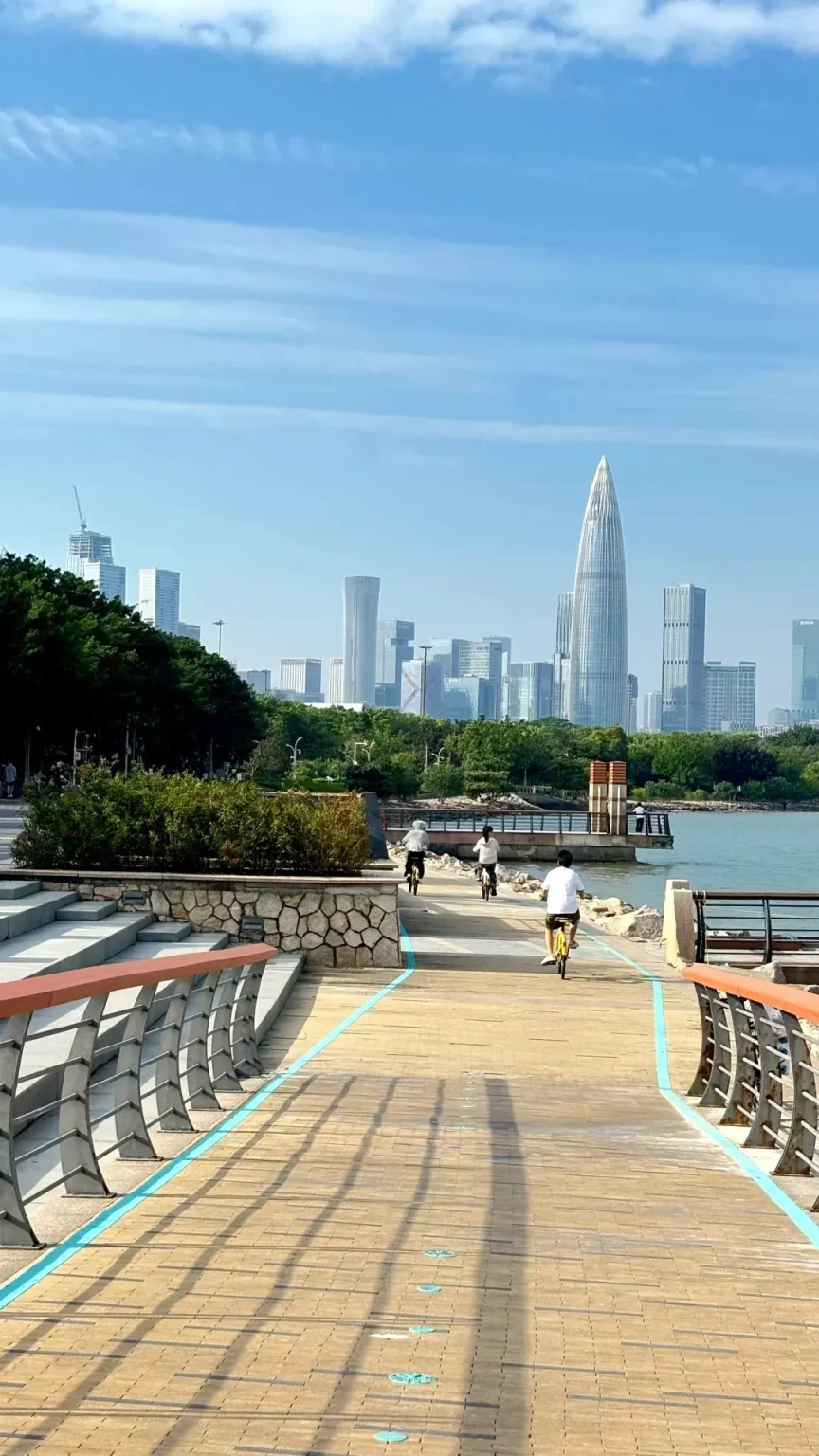
A paved wooden cycling path with blue lane markers curves toward a modern city skyline across a body of water. People are cycling on the path. On the left, there are stone steps and lush green bushes. On the right, there is a railing along the water. The sky is blue with wispy clouds.

Explore Shenzhen’s urban beauty from a new perspective! This scenic cycling path along the coast offers stunning views of the city’s iconic skyline, making it a perfect spot for nature lovers and urban explorers alike.

The paths are immaculately maintained, but expect heavy crowds of families and inline skaters on Sunday afternoons. For a quieter experience, arrive around 7:00 AM when only the local retirees are out practicing Tai Chi.

Is Dameisha Beach Worth It?

While many guidebooks praise Dameisha Beach, it is heavily overrated during the summer months. The sand becomes invisible under the sheer volume of domestic tourists.

The intense humidity mixed with the smell of cheap sunscreen and deep-fried squid creates an overwhelming atmosphere. Instead, head further east to Judiaosha Beach for cleaner water and a more peaceful, secluded vibe.

Conquering Wutong Mountain: Shenzhen’s Highest Peak

If you want a serious physical challenge, Wutong Mountain is the undisputed king of Shenzhen hikes. Standing at 944 meters, the mountain is famous for its rolling mist and dense, subtropical vegetation.

The most popular starting point is Wutong Mountain Village, accessible via Metro Line 8 at Wutong Mountain South Station. The hike is a grueling stair-master workout.
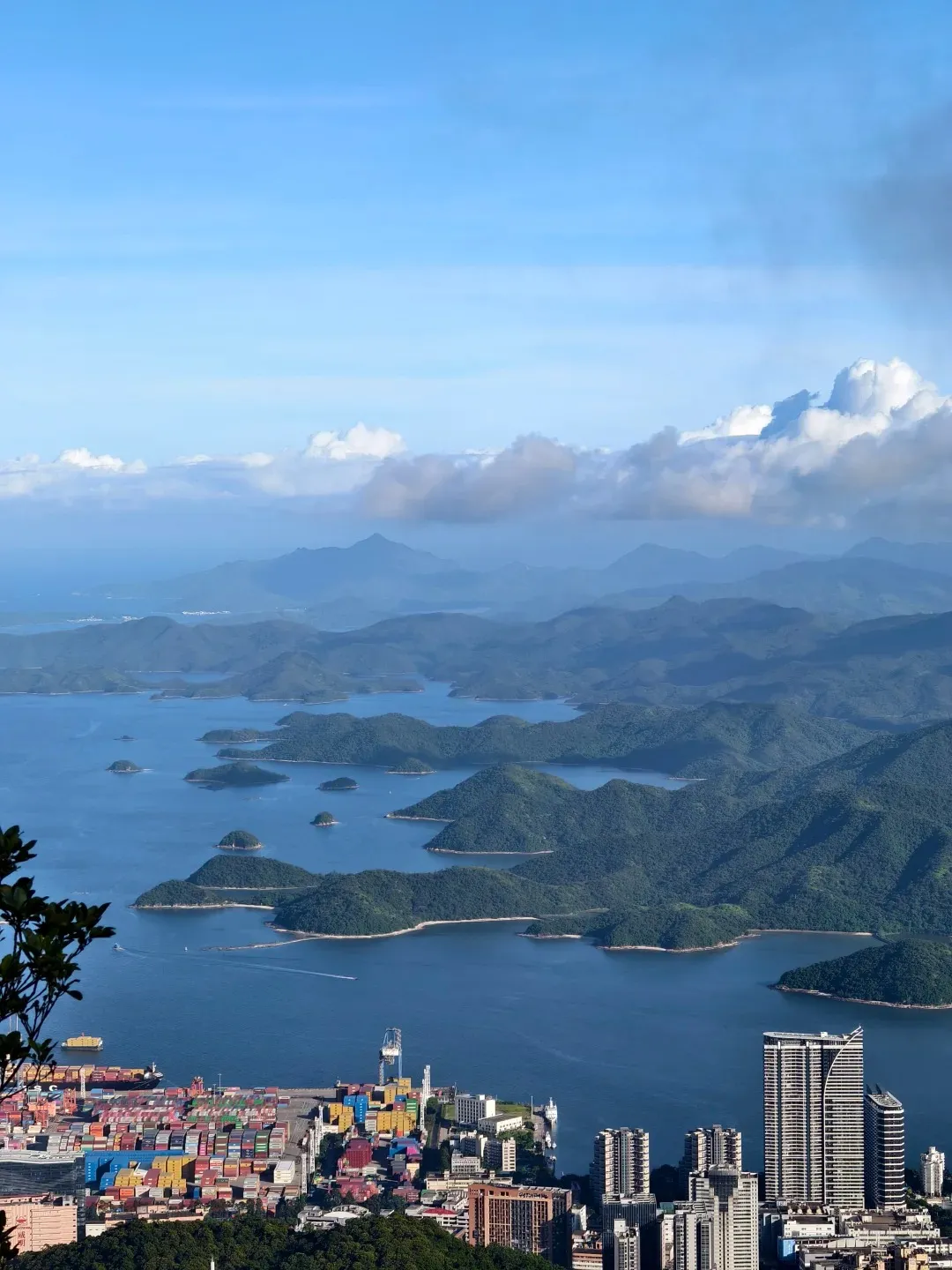
A panoramic view from a high vantage point overlooking a bay filled with numerous green, tree-covered islands. In the foreground, a bustling container port with stacks of colorful shipping containers and cranes is visible, along with several modern high-rise buildings and some foliage in the lower left corner. The sky is blue with scattered white clouds and distant misty mountains.

From the peaks of Shenzhen’s mountains, you can witness the breathtaking juxtaposition of natural beauty and urban dynamism, a perfect spot for nature lovers seeking stunning coastal vistas.

The air here is thick with humidity, and the smell of damp earth and crushed pine needles follows you up the trail. Make sure to buy water at the base.

A standard bottle of Nongfu Spring water costs 2 RMB at the bottom, but the price surges to 10 RMB at the summit kiosks.

How to Navigate Trailheads and Public Transport

Navigating to these trailheads is seamless if you use the official Shenzhen Metro system. Within your Alipay app, search for the “Shenzhen Metro” mini-program to generate a QR code for scanning at the turnstiles.

Do not rely on Google Maps for precise hiking trails. Instead, download the local map app, Amap (Gaode Ditu), which shows accurate, user-updated pedestrian paths that Google misses.

Maluan Mountain: Waterfalls and Hakka Heritage

For nature lovers wanting to escape the intense stair-climbing of Wutong, Maluan Mountain offers a gentler, more culturally rich trek. Located in Pingshan District, this area features cascading waterfalls and preserved 600-year-old Hakka villages.

It is one of the few places in the city where industrial noise is completely replaced by the sound of rushing streams. According to official provincial guidelines, camping is permitted in designated zones like Honghualing Village.

However, you must pack out all trash. The trails here are less marked, so bringing a compass or a downloaded offline map is a critical safety measure.


Common Questions About Traveling to China

What is the 144-hour visa-free transit policy?

This policy allows travelers from 54 eligible countries to enter specific regions in China, like Guangdong, for up to six days without a visa. To qualify, you must have a confirmed onward flight to a third country or region.

Cash is rarely used in China today. It is essential to download Alipay or WeChat Pay before you arrive, as these apps are required for everything from metro tickets and bike rentals to paying for food.

Standard public Wi-Fi often restricts access to many international sites. Using an eSIM is the most reliable way to bypass the Great Firewall and maintain consistent access to your essential apps and maps.

The ideal time to visit is between October and April. This window allows you to avoid the intense summer humidity and the heavy rain associated with the typhoon season.

Conclusion

Shenzhen is far more than just a tech hub; it is a meticulously planned green city that seamlessly blends towering skyscrapers with accessible natural escapes. From the breezy coastline of Shenzhen Bay to the misty peaks of Wutong Mountain, the city rewards travelers who step off the concrete paths.

Ensure your Alipay is loaded, your eSIM is activated, and your hiking shoes are broken in. If you are ready to explore beyond the tech campuses, book a local nature tour today or check out our extended guide to navigating China’s high-speed rail network for your next adventure.

Similar posts to this one

A vast expanse of golden-yellow rice terraces cascading down a lush green mountainside under a clear sky. Numerous layers of terraced fields, sculpted into undulating patterns, dominate the landscape. Patches of dark green trees and bamboo forests are interspersed between the terraces, with a few small traditional Chinese houses and buildings visible on the upper slopes of the mountains. The overall scene captures the majestic beauty of agricultural ingenuity on a grand scale.

Longji Rice Terraces: A Visitor's Guide to Guilin's Dragon's Backbone

Navigating rural China can feel intimidating, especially when trying to decipher bus schedules and mountain trail maps. If you are [...]

A deep blue, still alpine lake is surrounded by snow-dusted green vegetation and rocky shores. In the background, a steep, tree-covered mountain slopes upward, with patches of snow near its rocky peak under a clear blue sky. A wooden boardwalk with railings winds along the left side of the lake, with several people walking on it.

Hiking Dali's Cangshan Mountain: The Jade Belt Cloud Road Guide

Rising sharply behind the traditional grey-tiled roofs of Dali Old Town, the 4,000-meter peaks of the Cangshan range offer some [...]

A steep, narrow stone staircase with a red railing winds up a sheer granite mountain face, crowded with a long line of hikers. Buildings, possibly temples, are visible at the summit of the mountain. Lush green trees and branches frame the lower right and left sides of the image, and a hazy landscape is visible in the distance.

Xi'an to Mount Huashan Day Trip: Train, Cable Cars & Hiking Routes

Staring down a 2,000-meter vertical drop from a wooden plank bolted to a cliff face isn't your average Tuesday. But [...]

Get the China Arrival Survival Kit

Planning a trip here has a steep learning curve. Join our newsletter and receive our free “Day One Checklist” covering everything from setting up Alipay and WeChat to bypassing the internet firewall.