


What Are the Pingtan Blue Tears?
What are the Blue Tears? The “Blue Tears” phenomenon in Pingtan is a natural bioluminescent display caused by Noctiluca scintillans, microscopic marine algae. When disturbed by crashing waves or ocean tides, these microorganisms emit a striking cobalt-blue light, creating the temporary illusion of glowing, starry water along the coastline.
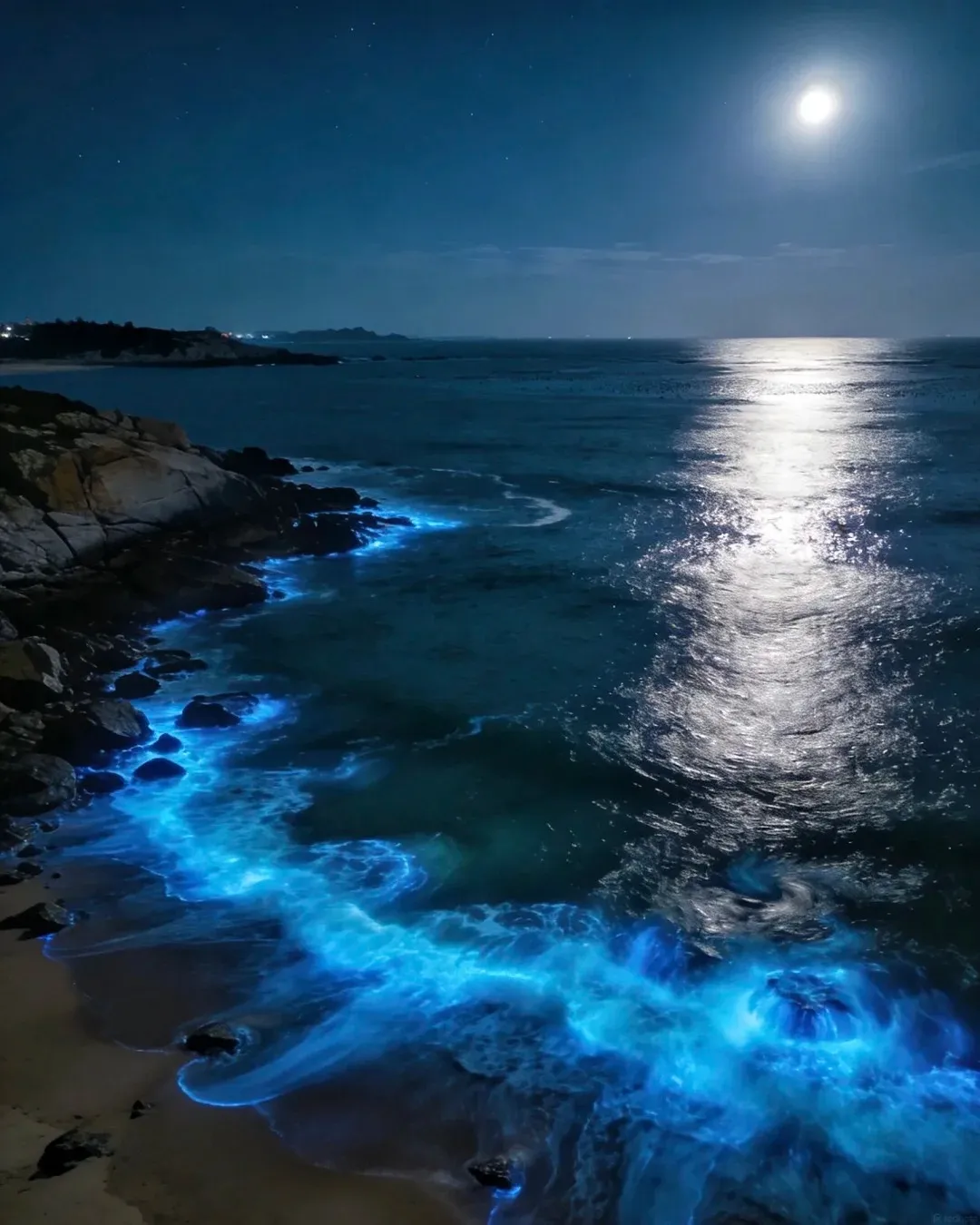
Witness the magic of Pingtan Island’s ‘Blue Tears’ phenomenon, where the ocean comes alive with bioluminescent light under the moonlit sky.
When is the Best Time to Visit?
The glowing algae thrive in specific water temperatures, making the window between April and August the absolute best time to visit. However, you cannot simply walk onto the beach at 8:00 PM and expect a light show. The phenomenon is highly dependent on wind direction, water temperature, and tides.
To avoid disappointment, do not guess. The local Pingtan meteorological office publishes a daily Blue Tears forecast on WeChat, rating the probability from 1 to 5 stars. Always aim for a 4-star or 5-star night, and be prepared to stay out past midnight when the skies are darkest and the tide rolls in.
Top Viewing Spots on Pingtan Island
Beigang Village: Rustic Charm and Dark Skies
Beigang Village is arguably the most famous spot for Blue Tears hunters. Famous for its traditional stone houses with red-tiled roofs, the village offers fantastic elevated viewpoints. Because it is further from the main city center, the light pollution is significantly lower, making the blue glow pop against the pitch-black ocean.
Houyan Island (68 Nautical Miles Scenic Spot)
Known as the closest point in mainland China to Taiwan, this rocky peninsula is stunning by day and highly strategic by night. The crashing waves against the jagged rocks here naturally agitate the algae, creating much brighter flashes of blue than you will see on flat, sandy beaches.
Insider Reality Check: What to Know Before You Go
Social media rarely shows the reality of a 2:00 AM Blue Tears chase. The humidity in Fujian during early summer is thick, and the beaches smell strongly of salty kelp and the diesel fumes of nearby squid boats. You will be navigating unlit, rocky paths in the dark alongside hundreds of other domestic tourists waving flashlights.
A crucial mistake to avoid: Do not rely on the main Longfengtou bathing beach. It is heavily light-polluted by nearby hotels and streetlamps, which washes out the bioluminescence. Furthermore, beware of beachside pop-up vendors during peak glowing hours; a standard bottle of Nongfu Spring water that costs 2 RMB in the city will suddenly cost you 10 RMB on the sand.

Beigang Village, Pingtan Island, offers a glimpse into traditional life with its stone houses and bustling waterfront. While this view is stunning by day, the island truly comes alive at night with the magical ‘Blue Tears’ phenomenon – a must-see for visitors!
How to Get to Pingtan Island from Fuzhou
Getting to Pingtan in 2026 is incredibly efficient thanks to China’s expansive high-speed rail network. You will want to book a train from Fuzhou Station or Fuzhou South Station directly to Pingtan Station, which takes roughly an hour.
According to the official 12306 rail policy, international travelers can now verify their passports entirely online, making ticket booking seamless. Fares run about 50 RMB for a second-class seat. Once you arrive at Pingtan Station, you will need to scan your passport at the manual gate to exit.
Staying Connected in China
You absolutely need mobile data the second you step off the train to hail a ride, pay for snacks via Alipay, and translate signs. Navigating China’s Great Firewall can be a headache, which is why securing a reliable travel eSIM before you land is non-negotiable.
💡 Editor’s Pick: We recommend Nomad eSIM for China because it reliably bypasses the Great Firewall with stable speeds.
Getting Around: Why You Need a Driver
During the day, public buses connect key points on Pingtan Island, but they are agonizingly slow. While you might be tempted to use the DiDi ride-hailing app, it is a massive gamble at night. Trying to secure a DiDi at 1:30 AM from a remote northern cove like Maotouqian village is nearly impossible.
The smart move: Hire a local driver for the evening through your hotel or guesthouse. Expect to pay around 300 to 400 RMB for a night of “chasing.” These drivers communicate with each other via WeChat groups, sharing real-time updates on which beaches are currently glowing, saving you hours of fruitless searching.