
Beijing’s Western Hills: A Guide to Tanzhe Temple and Beyond

Escaping the concrete density of downtown Beijing requires little more than a subway card and a willingness to head west. Nestled deep within the forested folds of the city’s mountainous edge, Tanzhe Temple predates the capital itself. If you are searching for a reliable Tanzhe Temple Beijing travel guide to navigate the 2026 transit updates and seasonal crowds, you are in the right place.

While most tourists flock to the Forbidden City, the ancient pines and terraced courtyards of the Western Hills offer a distinctly tranquil alternative. This guide breaks down exactly how to execute this day trip flawlessly, from navigating the latest mobile payment systems on rural buses to finding the quietest hiking trails.

Quick Summary: Key Takeaways for Your Trip

  • Transit Logistics: Take Metro Line S1 to Shichang Station, then transfer to the local Bus 931 directly to the temple’s main entrance.
  • Best Time to Visit: Late October to early November is peak season to witness the 1,000-year-old Emperor Tree’s massive golden ginkgo canopy.
  • Time Commitment: Allocate a half-day (4-5 hours) for the temple complex alone, or a full day if you plan to hike the connecting trails in the Western Hills.
  • Payment Prep: Ensure Alipay or WeChat Pay is bound to your foreign credit card before leaving your hotel, as physical cash is rarely accepted at ticket kiosks.

Summarize with :

What is the 144-Hour Visa-Free Transit?

According to the Chinese National Immigration Administration, the 144-hour visa-free transit policy allows eligible passport holders from 54 countries to explore Beijing and the surrounding Jing-Jin-Ji region for up to six days without a pre-approved tourist visa, provided they hold valid onward flight tickets to a third country.

How to Get to Tanzhe Temple: 2026 Transit Logistics

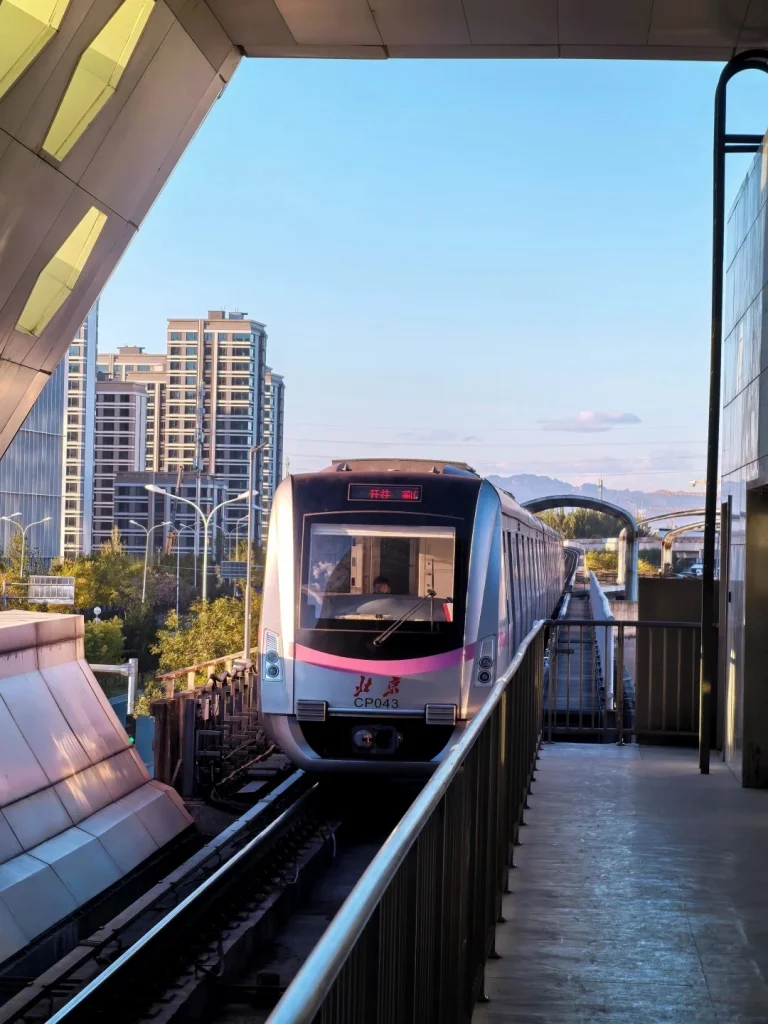
Reaching the Western Hills has become significantly easier with recent expansions to Beijing’s metro network. Your journey begins by taking Metro Line S1 (the Maglev line) all the way to Shichang Station. Stepping out of the station, you will bypass the unofficial taxi drivers and head directly to the right to find the bus depot.

Board Bus 931, which takes about 25 minutes to wind its way up the mountain roads. The fare is a mere ¥2, which you can pay by scanning your Alipay transit QR code. You will need a reliable data connection to generate this code in real-time. If you are using an international eSIM for your trip, ensure it is activated before you lose hotel Wi-Fi.

💡 Editor’s Pick: We recommend Nomad eSIM for China because it reliably bypasses the Great Firewall with stable speeds.

Tanzhe Temple is the final stop on the 931 route, making it impossible to miss. The bus ride itself is part of the experience, offering sweeping views of the Mentougou district as the urban sprawl gives way to dense cypress forests.
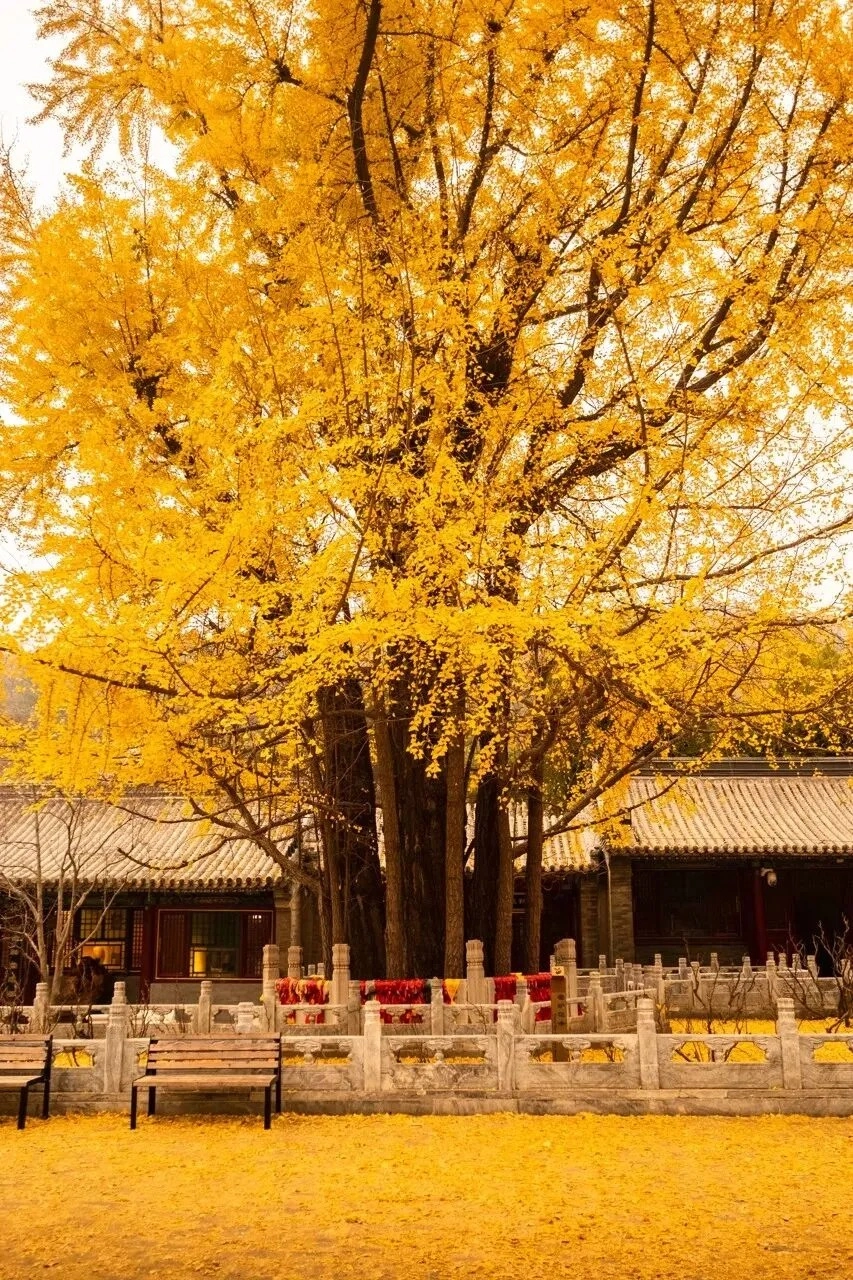
A large ginkgo tree with bright yellow leaves fills the frame, with traditional Chinese temple buildings and a stone fence in the background. Fallen yellow leaves cover the ground.

The vibrant golden canopy of an ancient ginkgo tree casts a stunning autumnal glow over Tanzhe Temple, a breathtaking sight as you explore the Western Hills of Beijing.

Inside the Complex: The Emperor Tree and Floating Cups

You will smell the sharp, earthy scent of burning sandalwood before you even breach the Mahavira Hall. The temple complex is built on an incline, running along three distinct axes. As you climb the steep, uneven stone steps, you will pass centuries of history dating back to the Jin dynasty.

The undisputed centerpiece of the middle axis is the Emperor Tree. This colossal ginkgo tree, planted over a millennium ago, was a favorite of the Qing dynasty emperors. If you visit in autumn, the ground is carpeted in a thick layer of fan-shaped yellow leaves, though you will be sharing the view with hundreds of local photographers.

On the eastern axis, seek out the Floating Cups Pavilion. This ingenious Qing-era water feature was designed for a traditional drinking game where cups of wine were floated down a winding stone channel. It is a fascinating glimpse into the leisure activities of visiting royalty.

What to Know Before You Go: An Honest Take

Skip the heavily commercialized vegetarian restaurant located inside the Jiafu Binshe Hotel near the entrance. While convenient, it is notoriously overpriced and constantly packed with noisy tour groups. Instead, pack your own lunch and eat near the octagonal Lengyan Altar on the western axis, where the crowds thin out and you can actually hear the wind in the pines.

Additionally, bring your own water. A standard bottle of water inside the temple complex will run you about ¥5 to ¥8, whereas the convenience stores near the subway station sell them for ¥2. The steep staircases will leave you thirsty, so come prepared.

Hiking the Western Hills: Beyond the Temple Walls

For those looking to stretch their legs, Tanzhe Temple serves as an excellent trailhead for the broader Western Hills (Xishan). Head to the very rear of the temple complex to the Guanyin Pavilion. Not only does this spot offer the best panoramic views of the temple’s glazed rooftops, but it also sits near the access points for local hiking paths.
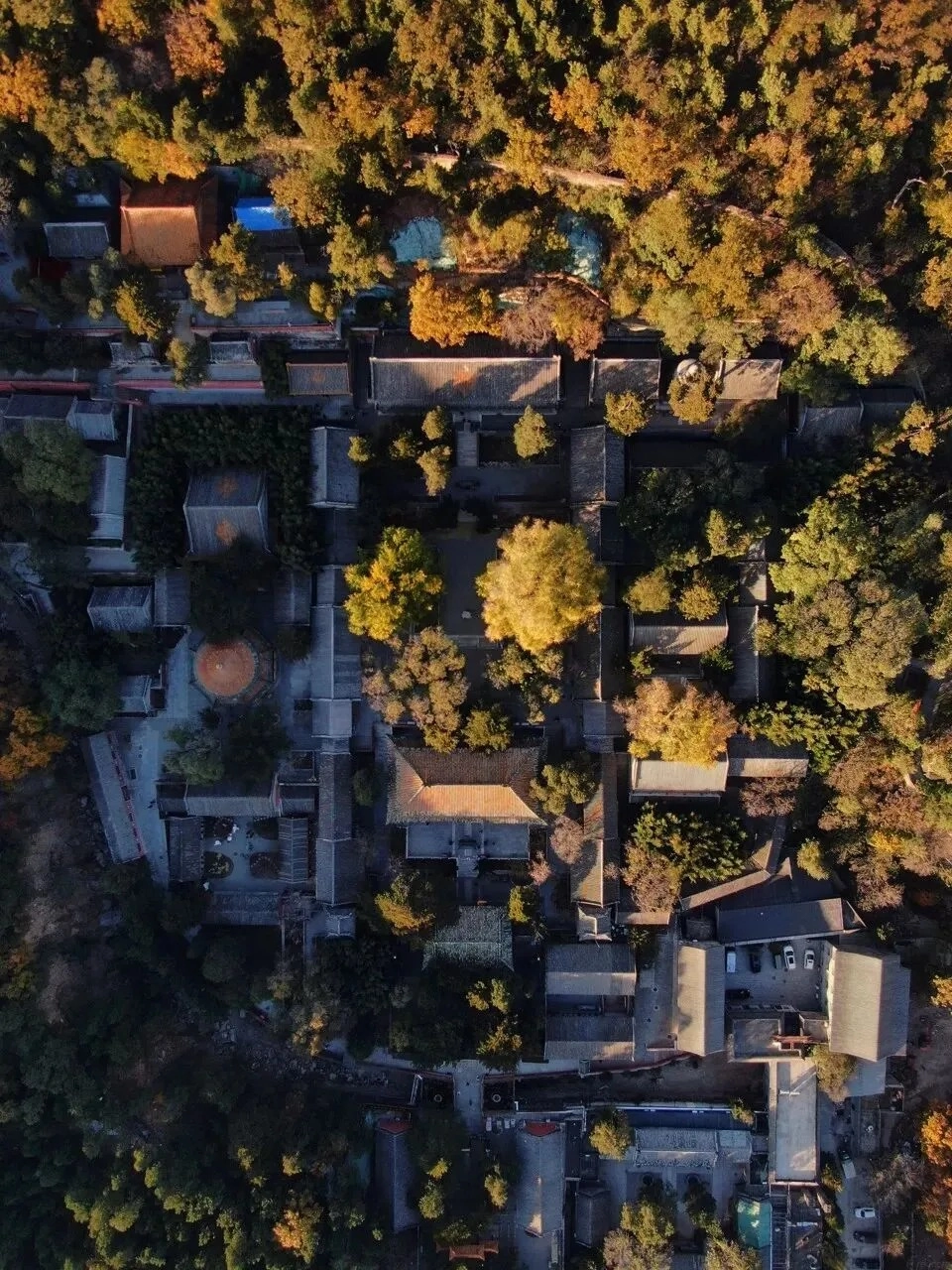
An aerial, top-down view of Tanzhe Temple complex in Beijing, surrounded by trees with autumn foliage in shades of yellow and orange. The image shows the intricate layout of traditional temple buildings with grey tiled roofs, courtyards, and pathways, nestled within a dense forest.

An autumnal aerial perspective reveals the sprawling beauty of Tanzhe Temple, one of Beijing’s oldest Buddhist temples, set amidst the vibrant colors of the Western Hills.

These trails weave through undulating pine-cypress forests, occasionally passing crumbling pagodas and forgotten shrines. Unlike the paved, thigh-burning steps of the nearby Fragrant Hills Park, the trails behind Tanzhe are rugged dirt paths favored by local Beijing hiking clubs.

If you plan to hike deep into the hills, sturdy footwear is non-negotiable. The loose gravel can be treacherous on the descent. Always ensure your phone is fully charged, as signage is entirely in Chinese and trail markers can be sporadic.

Essential 2026 Ticket and Planning Logistics

According to the official Beijing Municipal Bureau of Culture and Tourism, the temple operates from 8:30 AM to 4:30 PM daily. Entry tickets currently cost ¥50 per adult. You must scan your passport at the entrance turnstiles, so do not leave it in your hotel safe.

While tickets can be purchased on-site via WeChat mini-programs, foreign tourists can still buy physical tickets at the foreigner-friendly window using cash or Alipay. Aim to arrive right at opening time to experience the courtyards before the mid-morning tour buses arrive.
Frequently Asked Questions About Visiting Beijing

Do I need a visa to visit Beijing for a short trip?

Eligible passport holders from 54 countries can utilize China’s 144-hour visa-free transit policy. This allows you to explore Beijing and the surrounding region for up to six days without a pre-approved tourist visa, provided you have a confirmed onward flight to a third country.

Most services, including buses and temple entry, now require digital payments. It is highly recommended to link your foreign credit card to Alipay or WeChat Pay before you arrive, as physical cash is increasingly rarely accepted at ticket kiosks and transit terminals.

Yes, you can take Beijing Metro Line S1 to Shichang Station and transfer to Bus 931. The bus ride takes about 25 minutes and drops you directly at the temple entrance, making it a convenient day trip from the city center.

Bring your original passport for ticket verification, comfortable hiking shoes for the temple’s steep stairs and trails, and a portable power bank for your phone. It is also wise to pack your own water and snacks to avoid higher prices and crowds near the main entrance.

Whether you are tracing the footsteps of Kublai Khan’s daughter or simply seeking a quiet mountain breeze, the Western Hills deliver an unforgettable contrast to Beijing’s hyper-modern core. Ready to continue your journey? Book a small-group hiking tour of the surrounding Mentougou district, or check out our guide to navigating Beijing’s high-speed rail network for your next adventure.

Similar posts to this one

A wide, green meadow filled with small yellow and purple wildflowers in the foreground, with a cluster of wooden buildings and trees in the middle ground. Behind the trees, majestic snow-capped mountains rise under a cloudy blue sky.

Beyond the Peaks: A Guide to the Mandalas of Four Sisters Mountain

Finding genuine spiritual solitude in China’s booming outdoor travel scene can feel impossible. Yet, tucked away on the eastern edge [...]

A nighttime aerial view of a sandy beach with bioluminescent waves crashing ashore. The water glows an intense blue and green, creating trails of light along the shore and around rocks. The background shows a rocky coastline with vegetation and distant lights under a dark sky.

Chasing 'Blue Tears': A Guide to Pingtan Island's Bioluminescence

If you are scrolling through Chinese social media in the spring, you have likely seen the ethereal, glowing blue coastlines [...]

An aerial view of the Forbidden City in Beijing during golden hour, featuring its signature golden tiled roofs, red walls, and a flock of birds flying in the hazy sky. In the foreground, several trees with blurred foliage frame the lower part of the image, while a crowd of people and a white bus are visible in the courtyard below the main palace structure.

How to Book Forbidden City Tickets in 2026: A Survival Guide for Foreigners

Traveling to Beijing in 2026 requires military-level planning, especially when it comes to the Palace Museum. If you think you [...]

Get the China Arrival Survival Kit

Planning a trip here has a steep learning curve. Join our newsletter and receive our free “Day One Checklist” covering everything from setting up Alipay and WeChat to bypassing the internet firewall.