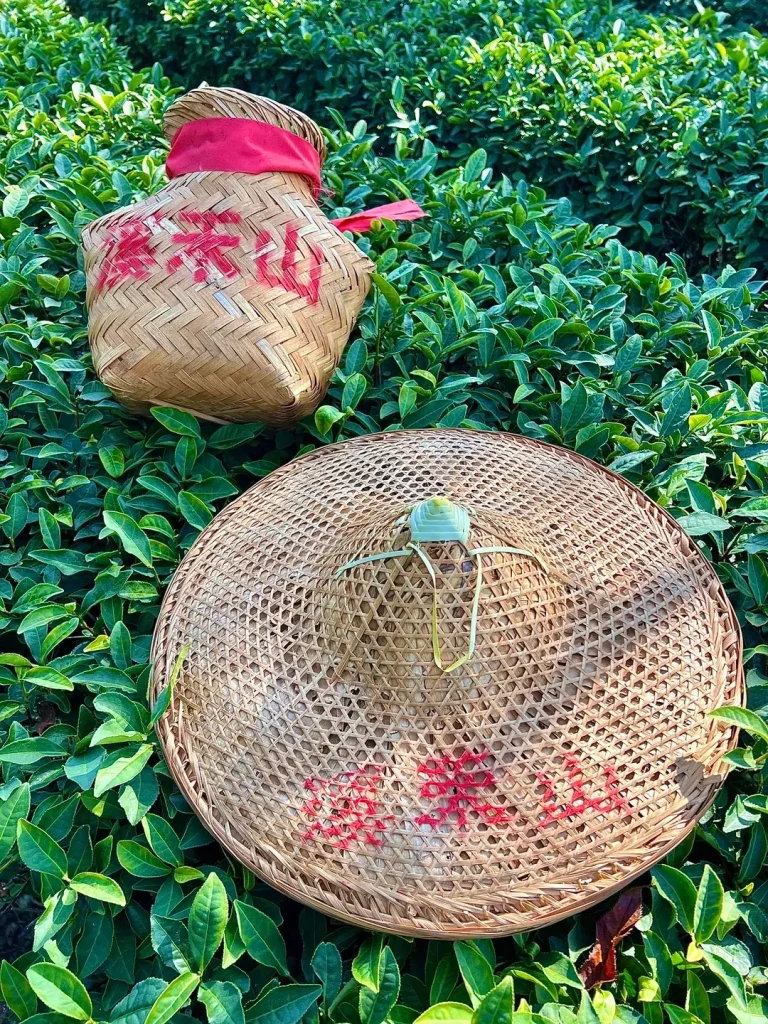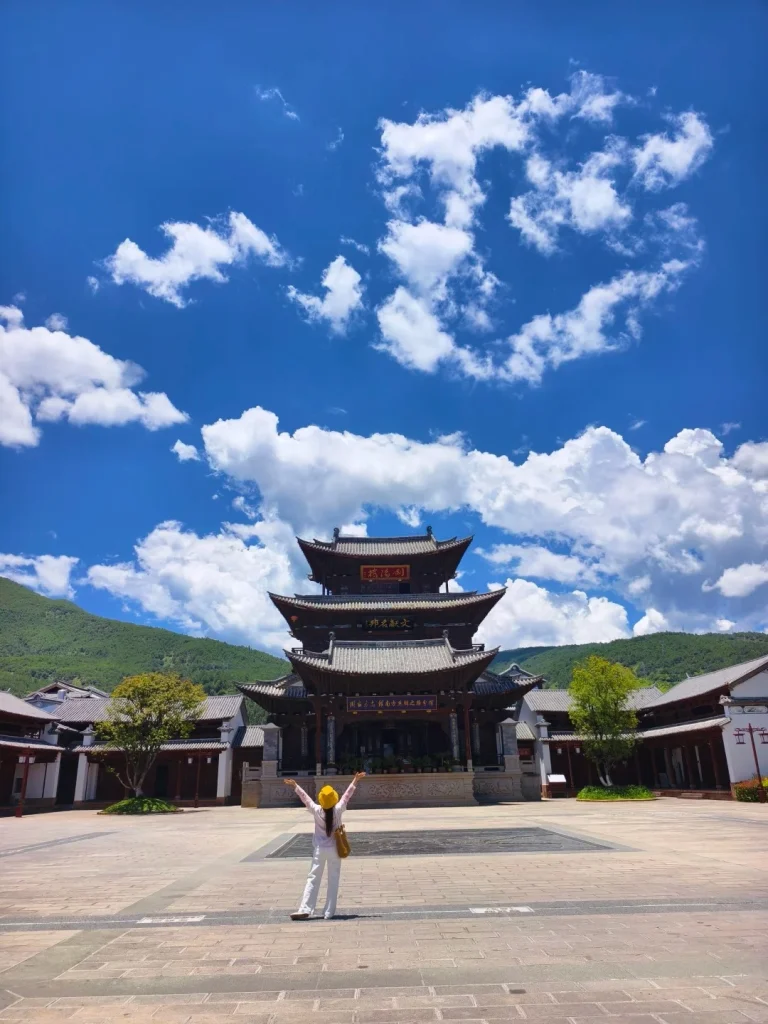



Decoding the Leaves: Raw vs. Ripe Pu’er
What is Pu’er Tea?
Pu’er is a fermented dark tea exclusively produced in China’s Yunnan province from large-leaf Camellia sinensis var. assamica trees. The leaves are sun-dried and typically pressed into cakes or bricks. Unlike standard green or black teas, authentic Pu’er contains living microbes and improves with age, developing deep, earthy, and complex flavor profiles.
Before you step foot in a market, you must understand the two distinct categories of Pu’er. Buying the wrong one is the most common mistake first-time visitors make.
Sheng (Raw) Pu’er is processed similarly to green tea and left to ferment naturally over time. When young, it is bright, floral, and highly astringent. Collectors buy young Sheng to age it for 10 to 30 years, allowing it to mellow into a smooth, plum-like delicacy.
Shou (Ripe) Pu’er undergoes a modernized, accelerated fermentation process called wo dui, invented in the 1970s. The leaves are piled and kept in a warm, humid environment for a few months. This mimics the aging process, resulting in a dark, thick, and earthy brew that is ready to drink immediately.
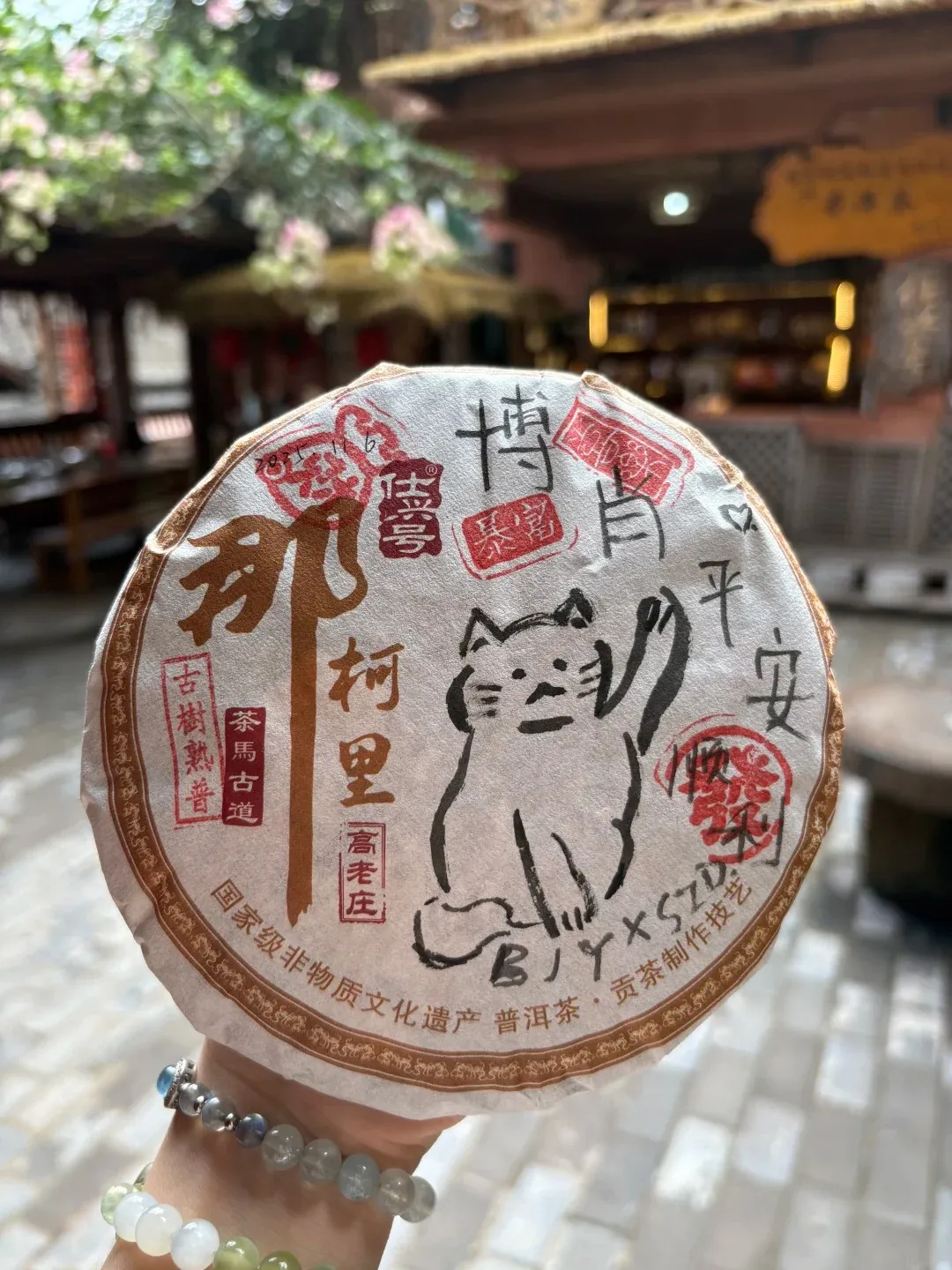
This charming Pu’er tea cake, adorned with a playful cat illustration, represents the artistry and tradition found in Yunnan’s vibrant tea markets. Exploring these markets is key to finding authentic, high-quality Pu’er as highlighted in our guide.
Where to Buy Pu’er in Yunnan
Kunming: Kangle Tea City
If your itinerary only allows for a stop in the provincial capital, skip the overpriced boutique shops near Green Lake Park and head to Kangle Tea City. This sprawling wholesale market is a maze of hundreds of vendor stalls.
The sensory experience here is intense. You will smell the deep, damp earthiness of aged tea mixed with the sharp scent of packing tape. Navigating the narrow alleys can be disorienting, but this is where local restaurant owners and serious collectors come to buy.
Pu’er City & Xishuangbanna: Menghai Market
For those traveling further south along the ancient Tea Horse Road, the Menghai Market in Xishuangbanna is a living piece of history. Here, you aren’t just buying from merchants; you are often buying directly from the Akha and Bulang ethnic minority farmers.
You will see local farmers trading fresh produce right alongside massive piles of loose-leaf and compressed Pu’er. Buying here guarantees a direct link to the source, often at a fraction of the price you would pay in Beijing or Shanghai.
Insider Tip: How to Spot Authentic High-Quality Leaves
Do not buy tea based on a beautiful wrapper. Tourist markets are notorious for wrapping low-tier plantation tea in gorgeous, calligraphy-laden paper claiming the tea is from “1,000-year-old ancient trees.”
Tasting is mandatory. In any reputable shop, the vendor will invite you to sit at their wooden tea table to brew the leaves Gongfu style. If a vendor refuses to let you taste a mid-range tea before buying, walk away immediately.
When inspecting the dry cake, look for whole, distinct leaves rather than a dusty, chopped-up mess. Also, keep an eye out for Huang-pian—these are the larger, older, yellowed leaves sorted out during production. While less pretty, Huang-pian cakes are significantly cheaper and often brew a wonderfully sweet, mild cup.
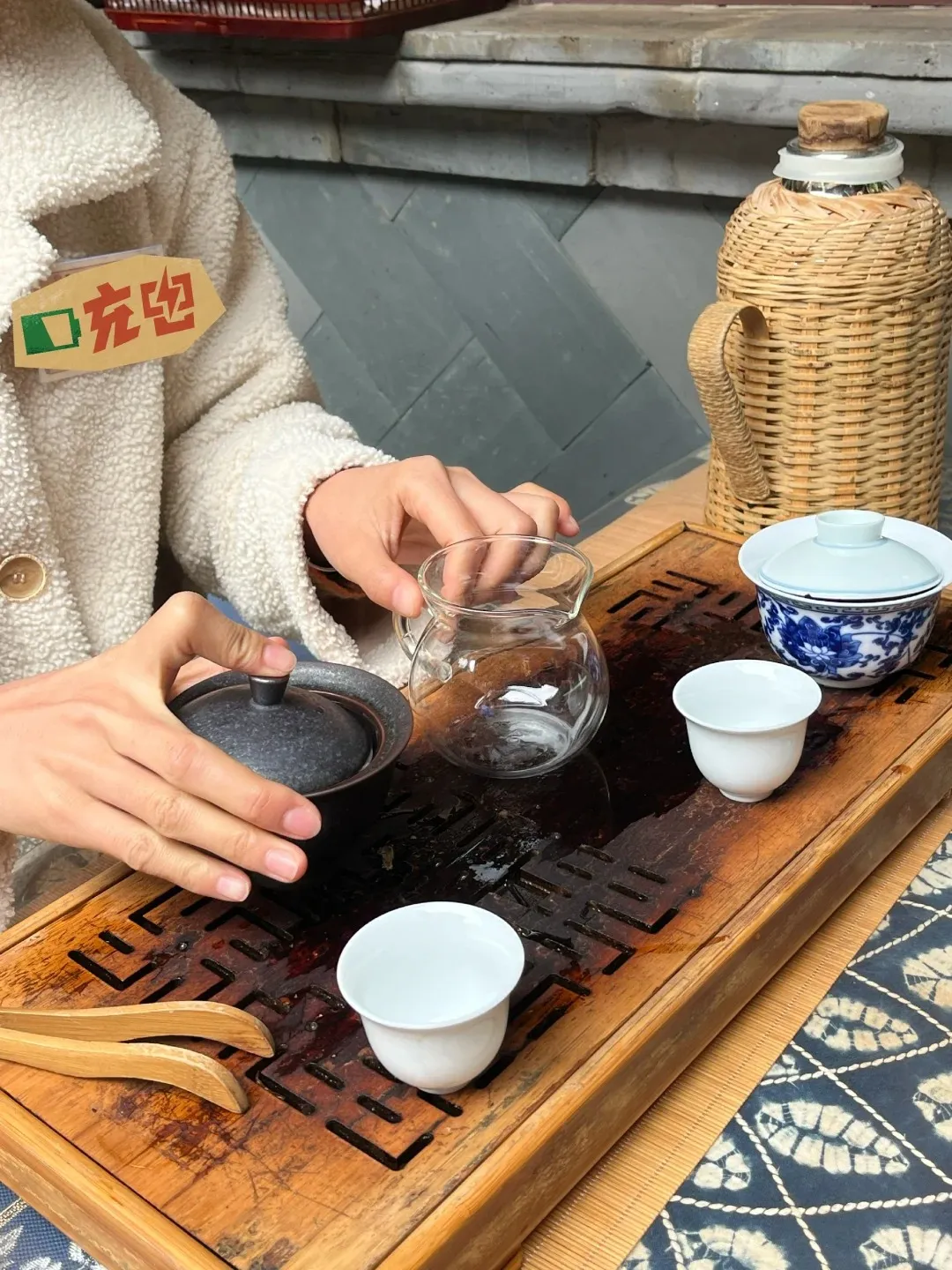
Experience the art of Gongfu Cha in Yunnan, where every pour and sip tells a story of tradition and quality Pu’er.
Navigating Logistics & Payments in 2026
China is a virtually cashless society. Trying to hand a vendor a 100 RMB note for a tea cake will often result in a confused stare, as they likely won’t have change. You must download Alipay or WeChat Pay and bind your foreign credit card before arriving in China.
To use these apps, you need a constant, reliable internet connection. Scanning a merchant’s QR code in the depths of a crowded, concrete tea market requires strong mobile data.
💡 Editor’s Pick: We recommend Nomad eSIM for China because it reliably bypasses the Great Firewall with stable speeds.
If you purchase several heavy 357g tea cakes, carrying them in your luggage can quickly push you over your airline’s weight limit. Most major vendors in Kunming can arrange international shipping via China Post directly from their shop. Expect to pay around 150-200 RMB per kilogram for standard international sea-surface mail, which takes 4-6 weeks.
Visa Regulations: Can You Use the 144-Hour Transit Visa?
What is the 144-Hour Visa-Free Transit?
The 144-hour visa-free transit is a Chinese immigration policy allowing citizens of 54 eligible countries to enter specific regions of China without a visa for up to six days. Travelers must hold a valid passport and a confirmed onward flight ticket to a third country or region.
According to the official China National Immigration Administration (NIA) policies for 2026, you can use this visa-free transit at Kunming Changshui International Airport (KMG). However, there is a massive catch for tea lovers.
Your movement is strictly restricted to the administrative precincts of Kunming. You cannot legally leave the city limits to travel south to Pu’er City, Xishuangbanna, or the famous tea mountains like Jingmai. If your goal is to visit the ancient tea forests, you must apply for a standard L-Visa (Tourist Visa) at your local Chinese consulate before your trip.