


What is the 144-Hour Visa-Free Transit Policy?
The 144-hour visa-free transit is an official Chinese immigration policy allowing citizens from 54 eligible countries to enter designated regions of China without a prior visa for up to six days. Travelers must hold valid, confirmed onward tickets to a third country or region.
Note: As of 2026, Guizhou province is not an entry port for the 144-hour visa. You will need a standard “L” Tourist Visa to visit Anshun, or you must travel domestically from a 144-hour approved cluster if regulations permit cross-provincial travel.
Logistics: How to Get to Anshun and Get Around
Anshun is highly accessible thanks to China’s ever-expanding high-speed rail network. Most travelers arrive at Anshun West Station (安顺西站), which connects directly to Guiyang (30 minutes) and Kunming (2 hours). According to the official 12306 rail platform, trains run almost hourly, but you should book at least three days in advance during the summer peak season.
Once you arrive, navigating the local bus system to the villages can be confusing as schedules change frequently. Renting a local driver for the day via your hotel (usually around ¥300-¥400) is the most time-efficient way to explore the scattered Tunpu settlements. To negotiate with drivers and use Baidu Maps, a reliable internet connection is non-negotiable.
💡 Editor’s Pick: We recommend Nomad eSIM for China because it reliably bypasses the Great Firewall with stable speeds.
For paying your way, cash is practically obsolete. Ensure your foreign credit card is linked to Alipay before you arrive. You will use it for everything from ¥50 village entry fees to buying a ¥3 bowl of local rice congee.
Beyond Huangguoshu: The Ancient Tunpu Villages
The fascinating thing about the Tunpu (屯堡) villages is that they are not ethnic minority settlements. They were established in the 14th century during the Hongwu reign by Ming Dynasty garrison troops sent from the Yangtze River to quell local uprisings. Today, their Han descendants still wear traditional turquoise tops and speak a dialect completely distinct from modern Guizhou Mandarin.
Tianlong Tunpu: A Living Ming Dynasty Fortress
Tianlong (天龙) is the most accessible and well-preserved of the Tunpu villages, located about 40 minutes from Anshun’s east bus station. The architecture here is striking: heavy drystone walls, narrow defensive alleyways, and overlapping stone slate roofs designed to repel invaders.
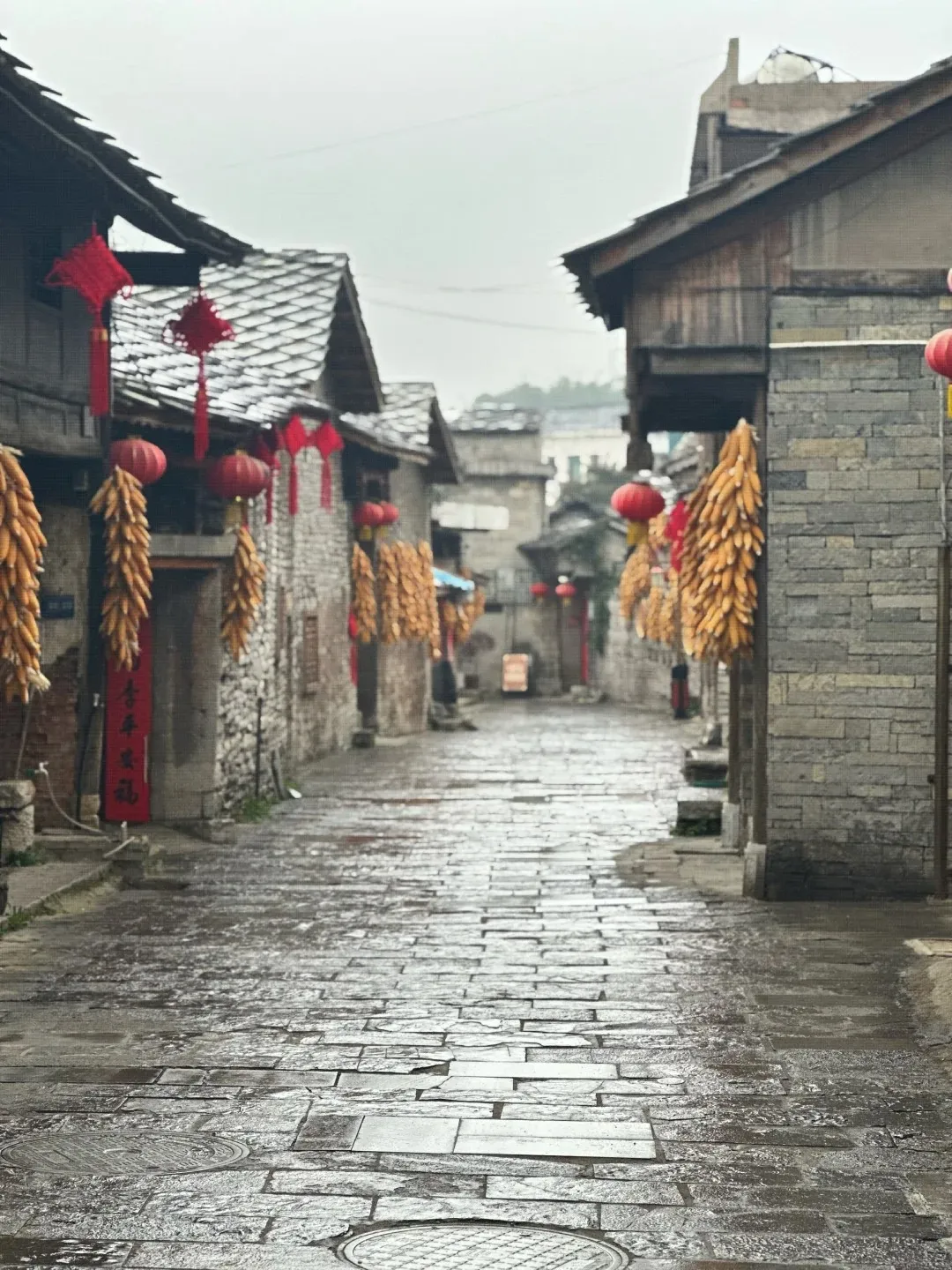
Stepping into the heart of Guizhou’s ancient Tunpu villages is like stepping back in time. This charming alleyway, adorned with traditional decorations like dried corn and vibrant red lanterns, evokes the unique cultural heritage of these historical settlements.
Admission is ¥35, which includes access to the Tianlong Primary School and the dilapidated Three-Religion Temple. Walking through the village, you’ll immediately notice the pungent, earthy smell of local tofu and pig-feet stew simmering in massive iron pots outside family homes.
Insider Tip: Skip the Staged Shows, Seek Out Wulong Temple
Tianlong has leaned heavily into domestic tourism. Throughout the day, performers in Ming army attire put on staged “emperor notice” ceremonies and local dixi (flute) operas. Skip the crowded performances. Instead, pay the extra ¥25 and take the 30-minute forested hike up Tiantai Mountain.
At the 1,138-meter summit sits Wulong Temple (伍龙寺). This astonishing hilltop fortress-temple emerges organically from the limestone peak like a medieval castle. It is whisper-quiet up here. The smell of burning sandalwood incense fills the air, and the panoramic views of the Guizhou countryside are easily the highlight of the region.
Yunshan: The Quieter Alternative
If Tianlong sounds too commercialized, head to Yunshan (云山屯). Protected by a massive main gate and a fortified wall, this settlement is a hauntingly beautiful, almost deserted portrait of rural China. Entry is ¥50, and you’ll likely have the rickety Money God Temple entirely to yourself.
Dragon Palace Cave (Longgong): Is It Worth It?
Located 23km south of Anshun, the Dragon Palace Cave (龙宫洞) is China’s longest water cave. A ¥150 ticket gets you a boat ride on a subterranean river that winds through 20 different karst hills. But is it worth your time and money?
The honest truth: The experience is undeniably tacky. The caves are illuminated by garish neon pink, green, and blue lights, and the boat guides give awkward, booming commentary through crackling loudspeakers. Yet, despite the sensory overload, the sheer scale of the 15-kilometer labyrinth and the massive Longman underground waterfall is genuinely sublime. If you can embrace the kitsch, it’s a fascinating look at how China develops its natural tourism sites.
Surviving Huangguoshu Falls: What to Know Before You Go
You cannot write an Anshun travel guide without addressing the elephant in the room: Huangguoshu Falls (黄果树大瀑布). At 77.8 meters tall and 81 meters wide, it is China’s largest waterfall. From June to October, the cacophony of the crashing water is deafening, and the mist creates permanent rainbows over Rhinoceros Pool.
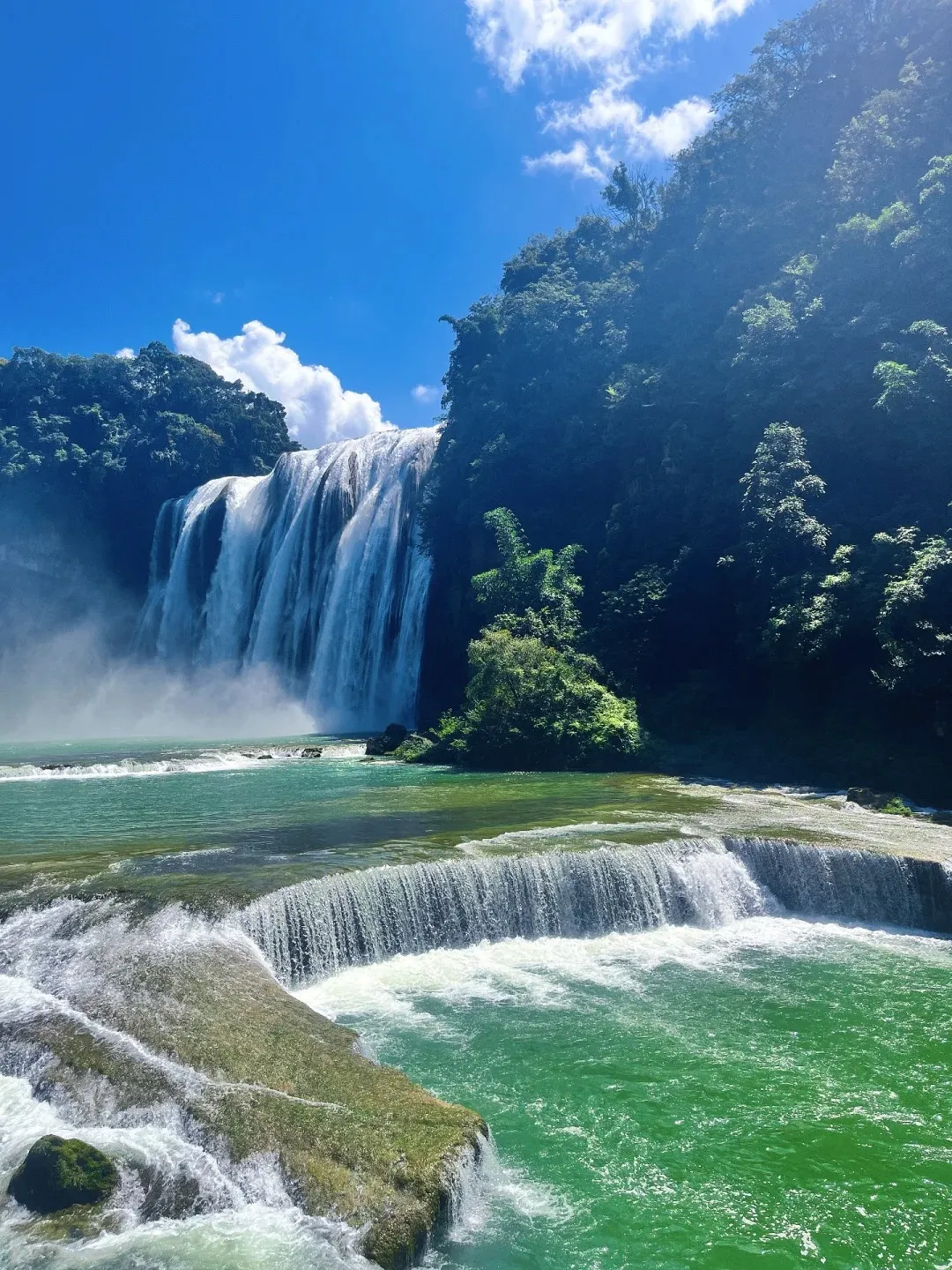
The majestic Huangguoshu Waterfall, a stunning natural wonder in Guizhou, serves as a breathtaking prelude to the ancient history waiting to be discovered in the region’s Tunpu villages.
However, visiting can be a logistical nightmare. The scenic area is a massive 450-square-kilometer complex. Do not attempt to walk between the sites. You must use the park’s one-way shuttle bus system, which stops at the Tianxing Qiao Scenic Area, the main falls, and the Doupotang Waterfall.
What to know before you go:
- The Water Curtain Cave is wet: The 134-meter natural corridor behind the falls is incredible, but the limestone steps are incredibly slippery. Wear shoes with serious grip.
- Price gouging is real: A simple bottle of water costs ¥10 inside the park, compared to ¥2 in downtown Anshun. Bring your own snacks and drinks.
- Avoid weekends at all costs: The narrow walkways behind the falls become a claustrophobic, shoulder-to-shoulder crawl on Saturdays and Sundays. Visit on a Tuesday morning if possible.