
Beyond the Terracotta Army: A Logistical Guide to the Han Yang Ling Museum

If you are planning a trip to Xi’an in 2026, you already know the Terracotta Warriors are a mandatory stop. But what if the best archaeological experience in the city involved zero shoulder-to-shoulder crowds and walking on glass directly above ancient relics? Welcome to the tomb of Emperor Jingdi.

This Han Yang Ling Museum guide provides the exact logistics you need to navigate this underrated gem. While the masses sweat in Pit 1 of the Qin mausoleum, you can quietly explore the fascinating daily life of the Han Dynasty in a climate-controlled, underground sanctuary.

Quick Summary: Key Takeaways for Your Trip

  • Location & Airport Hack: The museum is located halfway between downtown Xi’an and Xi’an Xianyang International Airport (XIY), making it the perfect stop right before a departure flight.
  • Unique Experience: You walk on dimly lit glass floors suspended directly above the excavation trenches, inches away from thousands of miniature terracotta figures.
  • Tickets: Admission is ¥90 (March-November) and ¥65 (December-February), significantly cheaper and easier to book than the Terracotta Army.
  • Connectivity: The underground museum has spotty local cell service, so download offline translation maps or ensure you have a reliable data plan.

Summarize with :

What is the 144-Hour Visa-Free Transit Policy?

The 144-hour visa-free transit policy allows eligible travelers from 54 countries to explore Xi’an without a pre-approved Chinese visa for up to six days. To qualify, you must hold a valid passport and a confirmed onward ticket to a third country or region outside of Mainland China.

Why Skip the Crowds? The Han Yang Ling Experience

When I last visited the Terracotta Army, the sheer volume of tour groups and megaphone-wielding guides made it hard to breathe, let alone appreciate the history. Han Yang Ling is the exact opposite experience.

You descend into a pitch-black, climate-controlled underground museum that smells faintly of damp earth and antiquity. Instead of viewing statues from 50 yards away behind thick barriers, you walk on illuminated glass floors suspended directly over the burial pits.

You are mere inches from the relics. The Han Dynasty figures were originally buried with wooden arms and silk robes that have long since rotted away, leaving them looking delightfully strange, naked, and remarkably human.
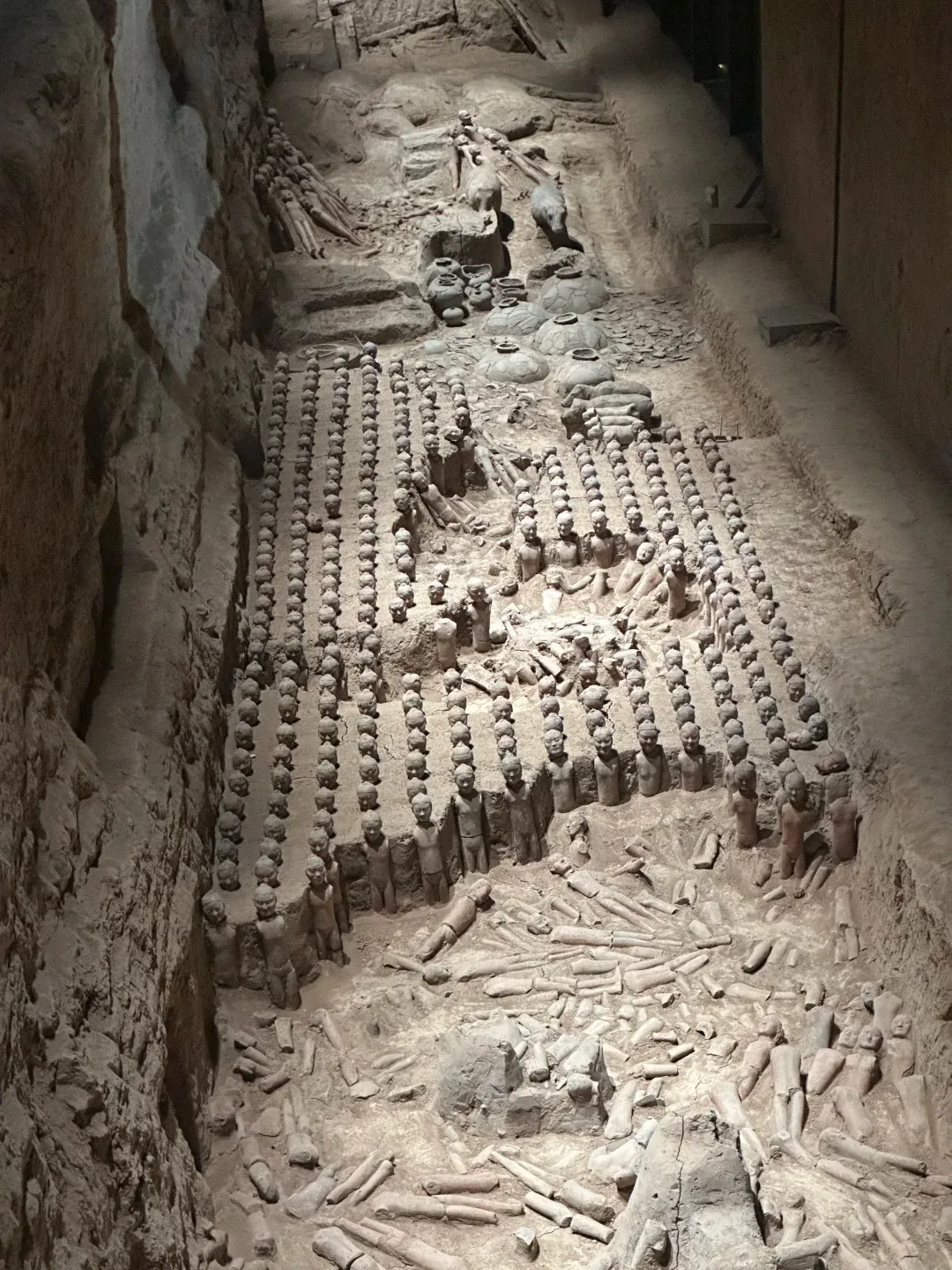
An elevated view of an archaeological excavation pit at the Han Yang Ling Museum, revealing rows of miniature terracotta figures and scattered fragments of pottery and other artifacts. A walkway with a glass floor allows visitors to observe the site from above.

Step onto the glass floor and witness history unfold at the Han Yang Ling Museum. This unique vantage point offers an unparalleled glimpse into the vast scale of the excavation pits, showcasing the intricate details of the miniature terracotta army and the logistical marvels of preserving these ancient relics.

Essential Logistics: How to Get There and Stay Connected

Han Yang Ling is geographically isolated from Xi’an’s city center, sitting about 20 kilometers north near the airport. The smartest logistical move is to visit on your way out of the city. A DiDi (China’s Uber) from central Xi’an to the museum costs around ¥60-¥80.

After your visit, the onward trip to the airport takes just 30 minutes and costs about ¥30. If you are navigating DiDi, Alipay, or WeChat, you need reliable internet. Public Wi-Fi in China requires a local phone number, and this underground museum has notorious dead zones.

I highly recommend setting up an eSIM before you land.

💡 Editor’s Pick: We recommend Nomad eSIM for China because it reliably bypasses the Great Firewall with stable speeds.

Having a stable connection that bypasses the firewall is essential for translating the museum’s Chinese-only placards.

There are public transit options, like taking Metro Line 4 to City Library station and transferring to Tourist Bus No. 4. However, bus schedules can be erratic. Spend the extra few dollars for a ride-hailing app to save hours of frustration.

Tickets, Pricing, and Official Rules

According to the official Shaanxi Provincial Cultural Heritage Administration ticketing policies, admission to the Han Yang Ling Museum operates on a seasonal pricing tier. During the peak season (March through November), tickets are ¥90 per adult.

In the off-season (December through February), the price drops to ¥65. Unlike the Terracotta Warriors, which require booking days in advance via the official WeChat mini-program, you can almost always buy Han Yang Ling tickets at the gate upon arrival.

However, you must bring your physical passport for real-name registration at the ticket booth. Digital copies or photos on your phone will not be accepted by the ticketing staff.
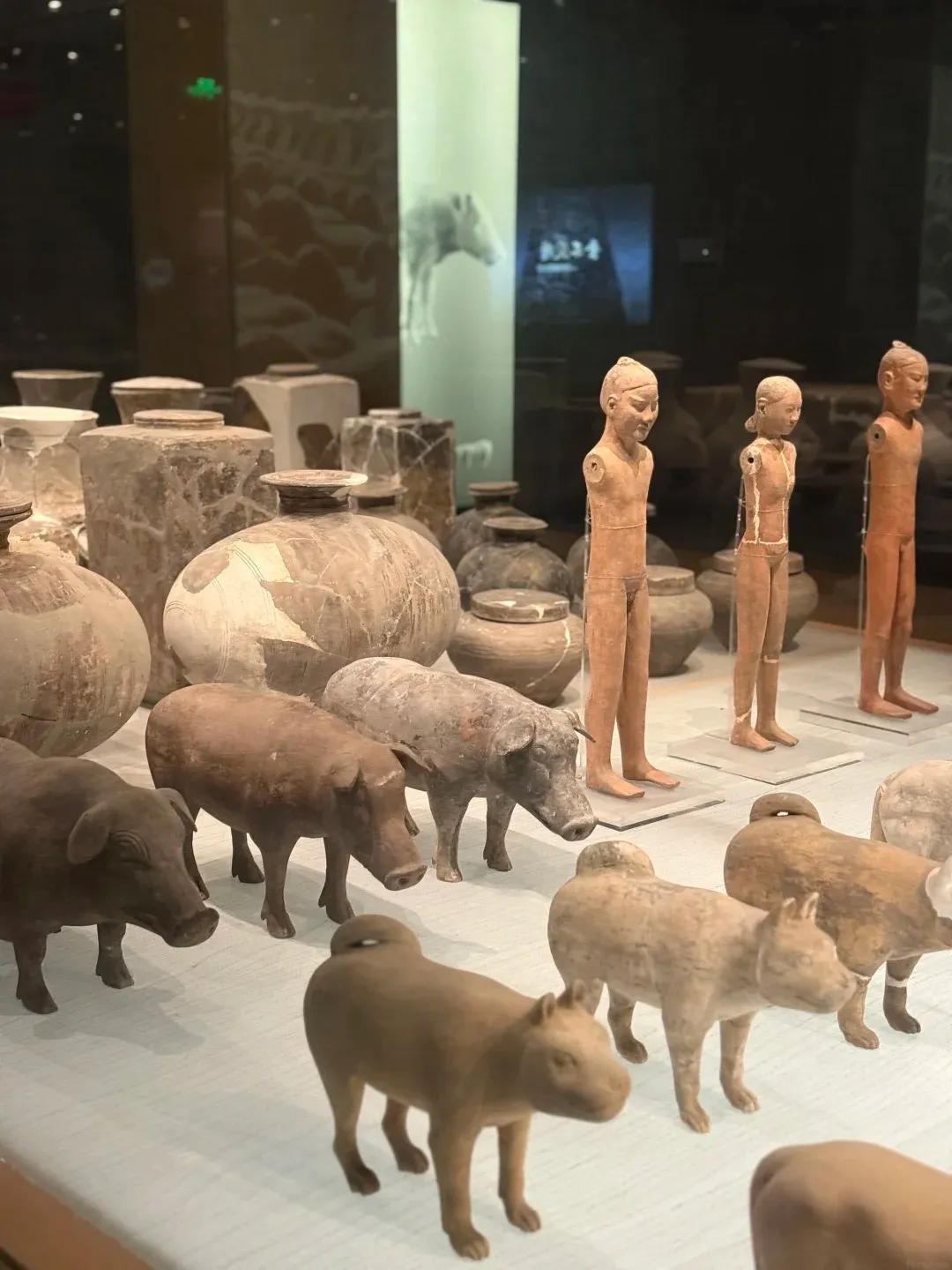
A museum display of Han Dynasty terracotta figures, including several pigs, dogs, and human figures. In the background, large pottery vessels are visible.

While the Terracotta Army often steals the spotlight, the Han Yang Ling Museum offers a fascinating glimpse into the daily life and logistics of the Han Dynasty, as seen in these detailed terracotta figures of farm animals and servants.

Insider Tip: What to Know Before You Go

Eat before you arrive. The commercial infrastructure around Han Yang Ling is practically non-existent. While the Terracotta Army has a sprawling complex of fast food and local noodle shops, Han Yang Ling only has a small, dusty visitor kiosk.

A bottle of warm mineral water will cost you ¥5, but substantial food is nowhere to be found. Bring your own snacks if you plan to spend the whole afternoon exploring the grounds.

Also, skip the outdoor burial mounds if you are short on time. The massive grass-covered hills are historically significant as the resting place of Emperor Jingdi, but visually, they are just large hills. Spend your time entirely inside the underground museum.


Common Questions About Traveling to China

Do I need a visa to visit China in 2026?

Many travelers from 54 eligible countries can utilize the 144-hour visa-free transit policy. This allows you to explore cities like Xi’an for up to six days without a pre-approved visa, provided you have a confirmed onward ticket to a third country.

An eSIM provides reliable mobile data that bypasses the Great Firewall, allowing you to use essential apps like maps, translation tools, and ride-hailing services. Public Wi-Fi in China often requires a local phone number for registration, which can be difficult for tourists to obtain.

The Terracotta Army is a world-famous landmark, but it is often extremely crowded. Han Yang Ling offers a more intimate, peaceful experience where you can walk on glass floors directly above the relics, making it a perfect, less-stressful alternative.

Always carry your physical passport, as it is required for entry to most historical sites. Additionally, pack snacks and water, especially for sites like Han Yang Ling where commercial food options are limited compared to major tourist hubs.

Conclusion

Navigating Xi’an’s historical sites doesn’t have to mean fighting through seas of tour flags and aggressive vendors. By taking the time to visit Emperor Jingdi’s tomb, you can experience one of China’s most innovative archaeological sites in total peace. It provides a stark, necessary contrast to the military bombast of Qin Shi Huang’s army, focusing instead on the quiet, daily life of the Han Dynasty. It is the perfect final memory to make before catching your flight out of Xi’an. Ready to plan the rest of your itinerary? Check out our complete guide to navigating China’s high-speed rail network for your next stop.

Similar posts to this one

A person in a yellow hat and white clothing stands with their arms outstretched in a large, paved courtyard in front of a multi-tiered traditional Chinese temple with dark wood and gray tiled roofs. Mountains are visible in the background under a bright blue sky with scattered white clouds.

Jianshui Travel Guide: Ancient Gates, Tofu, and Confucian Culture in Yunnan

Traveling through Yunnan often means battling intense crowds in Dali and Lijiang. If you want to experience authentic Ming and [...]

A large golden stupa rises above the yellow, blue, and red tiled roof of Lhagong Monastery, with snow-capped mountains in the background under a bright blue sky with white clouds.

Kangding, Tagong and Tibetan Sichuan: Easy Starter Route for First‑Timers

Kangding, Tagong and Tibetan Sichuan: Easy Starter Route for First‑Timers TL;DR: Trip Essentials The Route: A 4 to 5-day loop [...]

A display of traditional Chinese cheongsam dresses and jackets on mannequins and shelves. The garments feature various patterns like blue and white plaid, blue stripes, and subtle checkered fabrics. Some have mandarin collars and frog fastenings. A tote bag with a cat pattern hangs on the left, and a quilted fabric bag is also visible.

Beyond the Silk Road: A Practical Guide to Custom Cheongsam in Suzhou

For centuries, the misty canal city of Suzhou has been the undisputed capital of Chinese silk. If you are traveling [...]

Get the China Arrival Survival Kit

Planning a trip here has a steep learning curve. Join our newsletter and receive our free “Day One Checklist” covering everything from setting up Alipay and WeChat to bypassing the internet firewall.