


Traveling to the Venice of the East isn’t just about classical gardens; it’s about bringing home a piece of its 4,000-year-old textile heritage. But navigating the city’s labyrinth of boutiques and factory tours can quickly feel overwhelming. If you want to avoid overpriced polyester blends, you need a reliable Suzhou silk shopping guide. This post will walk you through exactly where to go, what to skip, and how to spot genuine Su embroidery without falling victim to the dreaded tourist markup.
What is Suzhou Silk?
Suzhou silk is a premium textile made primarily from 100% mulberry silk, renowned worldwide for its luminous sheen, durability, and softness. Historically reserved for Chinese royalty, it is the foundation for Song brocade and intricate Su embroidery, making it a culturally significant art form and highly sought-after souvenir.
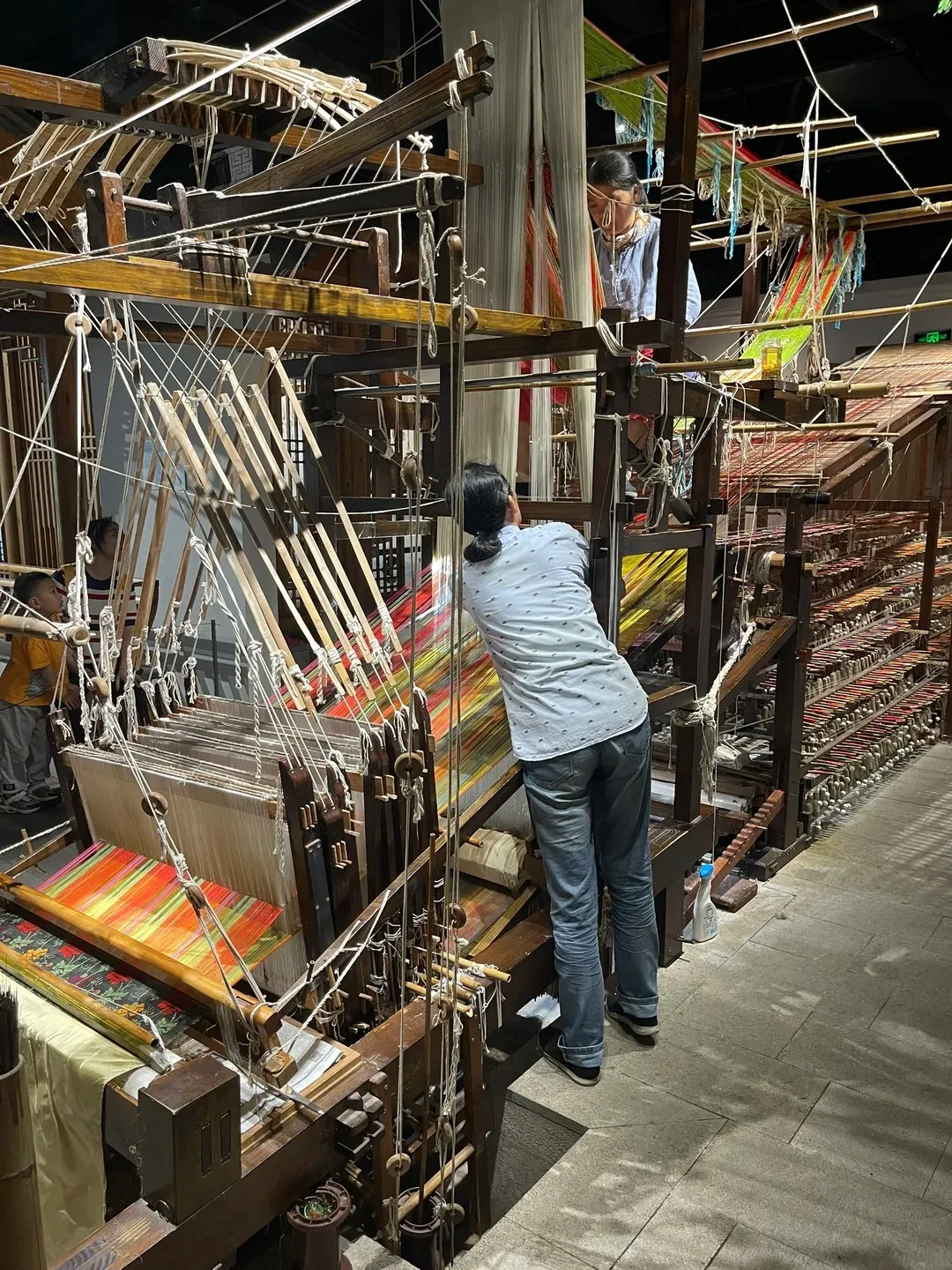
Witnessing the art of Suzhou silk firsthand: this intricate, traditional loom is where centuries of weaving expertise come to life, shaping the authentic silk you’ll learn to identify in our guide.
Navigating the Suzhou Silk Museum and Factory Tours
The Suzhou Silk Museum: History First, Shopping Second
Located at 2001 Renmin Road, the Suzhou Silk Museum is an absolute must-visit for historical context. Admission is free, but you must bring your physical passport to enter.
Inside, the smell of aged wood from functioning ancient looms fills the air. You can watch staff meticulously weaving large brocades, creating a mesmerizing rhythm. However, skip the museum gift shop. The items here, while authentic, carry a significant premium.
Suzhou No. 1 Silk Factory: Insider Tips on the Tourist Markups
Almost every organized tour in Jiangsu Province stops at the Suzhou No. 1 Silk Factory. Is it worth it? Yes and no.
The educational walkthrough is fantastic. You get to see live silkworms munching on mulberry leaves and watch the fascinating cocoon-sorting process. The sensory experience—the humid air and the mechanical clatter of the reeling machines—is unforgettable.
What to Know Before You Go: The factory showroom is notoriously overpriced. A basic silk duvet insert that costs ¥1,500 RMB here can often be found for ¥900 RMB at independent retailers just a few blocks away. Enjoy the tour, but keep your wallet in your pocket.
Logistics: Staying Connected and Paying Like a Local
By 2026, cash is virtually obsolete in China. You will need Alipay or WeChat Pay linked to your international credit card to buy anything, from a ¥3 bottle of Nongfu Spring water to a ¥3,000 silk dress.
To ensure these apps work flawlessly while navigating the crowded alleys of Guanqian Street, you need reliable internet. Public Wi-Fi requires a Chinese phone number, which most travelers don’t have.
💡 Editor’s Pick: We recommend Nomad eSIM for China because it reliably bypasses the Great Firewall with stable speeds.
Using a reliable eSIM ensures you can quickly translate price tags, verify store locations on Baidu Maps, and scan QR codes without dealing with the Great Firewall.
Where to Actually Buy Authentic Suzhou Silk
For the best balance of quality and price, head to Pingjiang Road. This historic cobblestone street is lined with independent boutiques. Yes, it gets incredibly crowded by 10:00 AM, so arrive early.
Look for stores displaying Intangible Cultural Heritage certificates. Brands like Qiantaixiang, established in 1884, are excellent choices for real silk shirts and scarves.
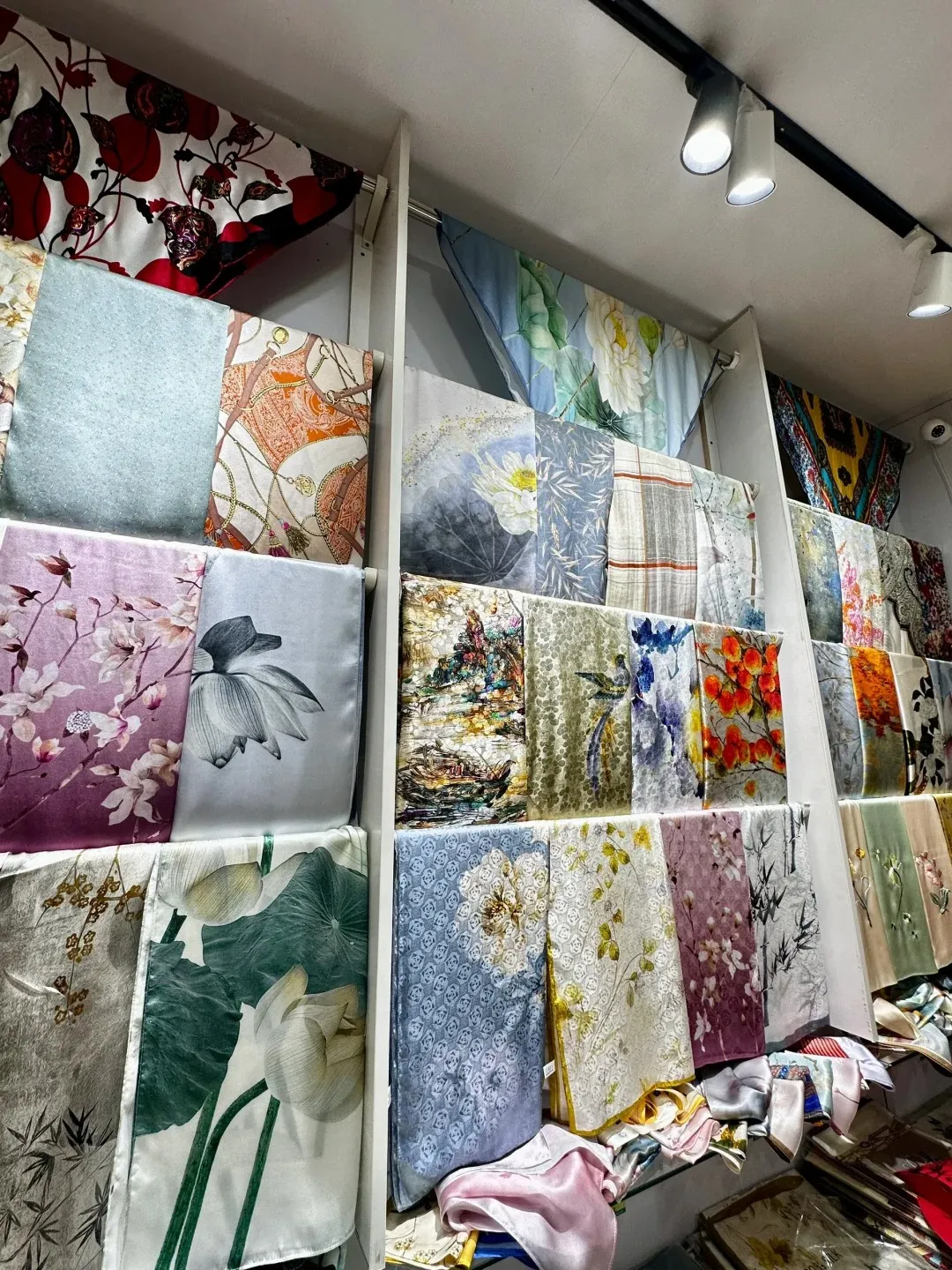
Discover the exquisite artistry of Suzhou silk, where tradition meets contemporary style. These vibrant mulberry silk scarves, showcased in a charming boutique along Pingjiang Road, are a testament to the region’s rich heritage in silk craftsmanship. Learn how to identify authentic pieces in our guide to buying Suzhou silk.
How to Identify Genuine Silk: Avoiding the Polyester Trap
Street vendors near major attractions will aggressively push “silk” scarves for ¥50. These are almost certainly synthetic. Here is how to spot the real deal:
- The Touch Test: Real silk feels soft, smooth, and springy—like baby skin. Fake silk feels slippery but flat, and wrinkles easily.
- The Crunch: Scrunch the fabric in your fist. Real silk slowly returns to shape and makes a faint “crunching” sound, often called the “silk cry.”
- The Shine: Genuine mulberry silk has a soft, pearl-like glow that changes in different light angles. Polyester is shiny all over, like plastic.
- The Burn Test: If a vendor allows it (only on spare threads), burn a tiny piece. Real silk smells like burning hair and leaves fragile black ash.
Current Pricing: What Should You Pay in 2026?
According to consumer guidelines from the Suzhou Market Regulation Bureau, prices for authentic silk have stabilized. Here is a realistic baseline:
- Everyday Silk Scarf: ¥200 to ¥800 RMB.
- 100% Silk Summer Pajamas: ¥500 to ¥1,500 RMB.
- Framed Su Embroidery (Small): ¥1,000 to ¥4,000 RMB.
- Song Brocade Bags: ¥800 to ¥2,000 RMB.
If a price seems too good to be true, it is. Always check the label for “100% Mulberry Silk” (100% 桑蚕丝).