
Beyond the Silk Road: A Practical Guide to Custom Cheongsam in Suzhou

For centuries, the misty canal city of Suzhou has been the undisputed capital of Chinese silk. If you are traveling to China with dreams of bringing home a custom-tailored traditional dress, you need a reliable Suzhou silk and qipao guide to navigate the modern markets.

Getting a bespoke cheongsam (qipao) made here is an unforgettable cultural experience. However, the sheer volume of shops, aggressive street touts, and varying fabric grades can easily overwhelm first-time visitors. This guide cuts through the noise so you can commission a masterpiece.

TL;DR: Trip Essentials

  • Timeframe: A custom qipao requires a minimum of 3 to 5 days for measurements, tailoring, and final fittings.
  • Cost Expectation: Quality bespoke mulberry silk qipaos start around 1,500 RMB ($210 USD), with heavily embroidered pieces exceeding 5,000 RMB.
  • Payment: Cash is rarely accepted. You must set up Alipay or WeChat Pay linked to your international credit card before arriving.
  • Best Locations: Skip the main tourist thoroughfares; head to the specialized tailoring studios near Guanqian Street or the No. 1 Silk Factory.

Summarize with :

What is the 144-Hour Visa-Free Transit Policy?

According to the official China National Immigration Administration, the 144-hour visa-free transit policy permits citizens from 54 eligible countries to stay in the Jiangsu-Zhejiang-Shanghai region without a prior visa, provided they hold confirmed connecting flight tickets to a third country.
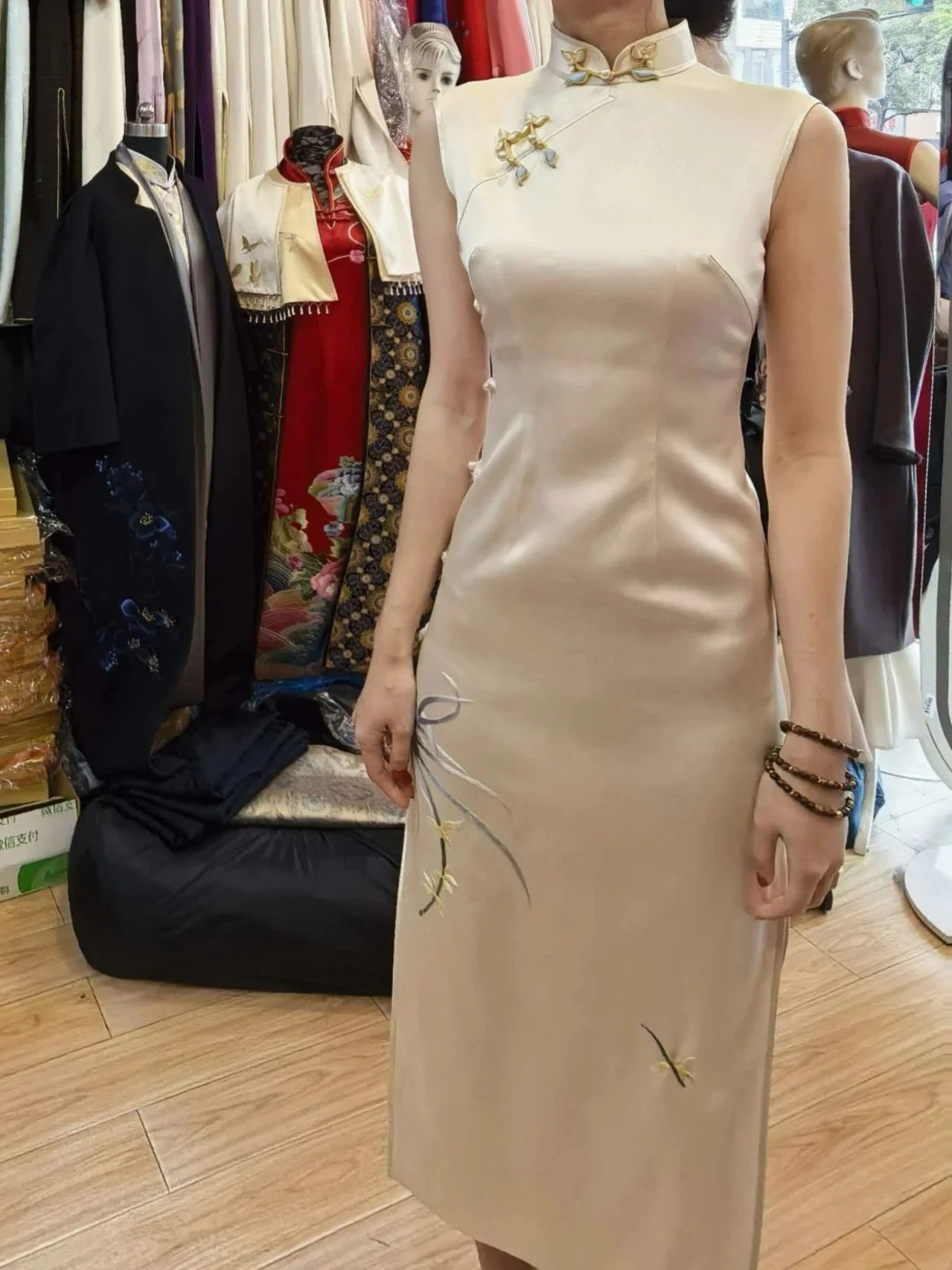
A woman wearing a sleeveless, knee-length, champagne-colored silk cheongsam dress with a high Mandarin collar fastened with decorative frog buttons. The dress features subtle embroidery of dragonflies and floral designs on the skirt. She is also wearing a stack of dark beaded bracelets on her right wrist. The background shows a retail setting with various garments on display, including traditional Chinese robes on mannequins and racks of fabric.

Discover the art of custom cheongsam in Suzhou, where traditional craftsmanship meets modern elegance. This exquisite silk dress showcases intricate dragonfly embroidery, a detail that brings the garment to life with delicate artistry.

Logistics: Getting There and Getting Connected

Suzhou does not have its own commercial airport. Most travelers arrive via high-speed rail from Shanghai, which takes just 25 to 30 minutes. According to the official 12306 rail policy, foreign passports can now be verified directly online, allowing you to scan your passport at the turnstile instead of printing paper tickets.

Navigating Suzhou’s labyrinth of canals requires reliable internet. China’s Great Firewall blocks Google Maps, WhatsApp, and Western social media. You will need a reliable travel eSIM to stay connected and use local translation apps.

💡 Editor’s Pick: We recommend Nomad eSIM for China because it reliably bypasses the Great Firewall with stable speeds.

Once connected, download Amap (Gaode Ditu) for accurate walking directions. You will quickly notice the humid summer air clinging to you as you dodge silent electric scooters. When the heat hits, duck into a convenience store for a ubiquitous 2 RMB red-capped bottle of Nongfu Spring water.

Understanding Silk Quality: Don’t Get Scammed

Not all silk in Suzhou is created equal. The market is flooded with “imitation silk” (polyester) that looks shiny but feels flat and traps body heat. Authentic mulberry silk feels incredibly soft, breathable, and features a pearl-like, multidimensional glow.

When shopping, always check the label for “100% mulberry silk” (100% 桑蚕丝). If a shop owner offers you a “silk” qipao for 200 RMB, it is guaranteed to be a synthetic blend.

Insider Tip: The Burn Test. Reputable tailors will often burn a tiny stray thread of the fabric to prove its authenticity. Real silk smells exactly like burning hair and turns into a brittle black ash. Fake silk smells like burning plastic and melts into a hard lump.

Where to Buy: The Best Silk Markets in Suzhou

Suzhou offers everything from wholesale markets to high-end luxury boutiques. Knowing where to look is the difference between a cheap souvenir and a generational heirloom.

The Overrated Trap to Skip

Avoid buying custom garments from the heavily trafficked souvenir shops directly outside the Humble Administrator’s Garden or the main drag of Pingjiang Road. The rent here is astronomical, meaning you pay a massive markup for rushed, machine-made garments targeted at domestic tour groups.

Where the Locals Go

For authentic tailoring, head to the side streets radiating off Guanqian Street. Here, you will find multi-generational tailors operating out of modest storefronts. The air smells faintly of sweet osmanthus and machine oil, and the whir of sewing machines is constant.

Alternatively, visit the Suzhou No. 1 Silk Factory. While it is a popular stop for tourists to see the silkworm-to-thread process, their in-house showrooms offer certified, high-quality fabrics where you can purchase raw silk yardage to take to an independent tailor.
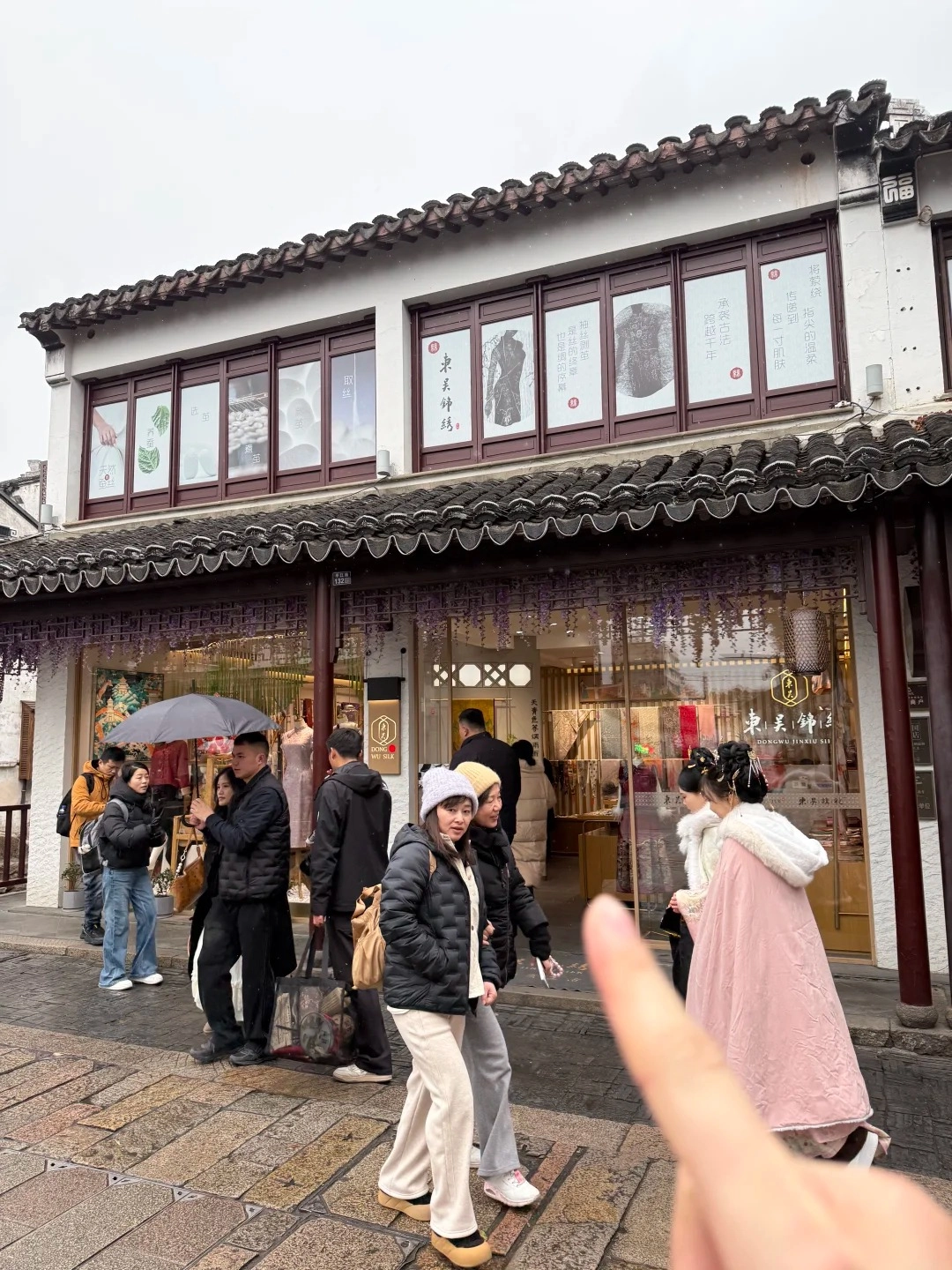
A group of people walk on a cobblestone street in front of a traditional Chinese building with ornate dark brown wooden window frames and tiled roofs. The building has multiple windows displaying artwork and fabric. Some people are carrying umbrellas, and it appears to be lightly raining or snowing. In the foreground, a person's hand is gesturing towards the building.

Discover the artistry behind custom cheongsams as you explore the traditional silk shops lining Suzhou’s historic streets, offering a glimpse into centuries of craftsmanship.

The Tailoring Process: Step by Step

Commissioning a qipao is a collaborative art. The fit of a cheongsam is paramount; it should hug your silhouette without restricting your breathing or movement. Here is what to expect over your 3 to 5-day stay in Suzhou.

1. Fabric and Style Selection

You will first choose your fabric. Song Brocade is thicker, features intricate woven patterns, and is excellent for cooler weather. Standard mulberry silk is lighter and better for summer. You must also decide on the collar height, sleeve length, and the style of the “frog” buttons (traditional knotted fasteners).

2. The Measurement

A master tailor will take over 20 different measurements. Do not suck your stomach in during this process. A proper qipao needs to accommodate sitting and eating. Be honest about your comfort levels regarding the height of the side slits.

3. The Fitting

About 48 hours later, you will return for a “baste fitting.” The dress will be temporarily stitched together. The tailor will pinch and pin the fabric to perfect the curve around your waist and hips. Final adjustments are made before the permanent stitching and hemming are completed.


Common Questions About Your China Trip

Do I need a visa for a short trip to China?

You may qualify for the 144-hour visa-free transit policy if you are from one of 54 eligible countries and have a confirmed flight to a third country. This allows for a short stay in specific regions like Jiangsu, Zhejiang, and Shanghai without a traditional visa.

Cash and international credit cards are rarely accepted in local shops. You must set up Alipay or WeChat Pay on your smartphone and link your international credit card before you arrive in China.

China’s Great Firewall blocks many Western apps and websites. To stay connected, purchase a reliable travel eSIM before you arrive and download local apps like Amap for navigation and translation tools.

Authentic mulberry silk feels soft, breathable, and has a multidimensional glow. You can perform the ‘burn test’ on a small thread; real silk smells like burning hair and leaves brittle ash, while synthetic fabric smells like burning plastic.

Conclusion

Navigating Suzhou’s silk scene requires patience, a discerning eye, and a willingness to step off the main tourist paths. By understanding fabric quality and allowing enough time for proper tailoring, you will leave China with a stunning, custom-made qipao that embodies centuries of craftsmanship. If you are continuing your journey, be sure to read our complete guide to navigating high-speed trains in China to ensure a smooth trip to your next destination.

Similar posts to this one

A woman wearing a black beret and jacket walks away from the camera through a narrow alleyway lined with numerous colorful oil paintings displayed on easels and walls. A black camera hangs from her hand. The paintings vary in size and style, featuring portraits, abstract designs, and detailed scenes. Some paintings are on wooden stands in the foreground, while others are hung higher up on the building's facade. The alley floor is concrete with painted graffiti and a manhole cover. An air conditioning unit is visible on the building to the left.

Art on a Budget: A Practical Guide to Shenzhen's Dafen Oil Painting Village

Stepping into the labyrinth of alleys in Shenzhen's Longgang District, the thick, earthy scent of linseed oil and turpentine immediately [...]

Several ancient wooden coffins are affixed to a sheer, weathered limestone cliff face. The coffins are box-like and appear to be suspended on wooden beams jutting out from the rock. The cliff is rough and textured with some vertical streaks of discoloration.

Discovering the Hanging Coffins of the Bo People: A Guide to Gongxian

Deep in the misty karst mountains of southern China, hundreds of ancient wooden coffins defy gravity, suspended on sheer cliff [...]

An aerial view of an ancient stone village complex built on the side of a steep, forested mountain. The architecture features grey tiled roofs, stone walls, and courtyards, with narrow staircases and patios clinging to the cliff face. Lush green trees surround the structures.

Anshun Beyond the Falls: Exploring Guizhou's Ancient Tunpu Villages

If you are piecing together your China itinerary, you need a reliable Anshun travel guide that looks beyond the obvious. [...]

Get the China Arrival Survival Kit

Planning a trip here has a steep learning curve. Join our newsletter and receive our free “Day One Checklist” covering everything from setting up Alipay and WeChat to bypassing the internet firewall.