


What is the 144-hour Transit Visa?
The 144-hour Transit Without Visa (TWOV) allows eligible international travelers to explore specific Chinese regions for six days without a prior visa. However, Datong is located in Shanxi Province, which falls strictly outside the permitted Beijing-Tianjin-Hebei transit zone. You must obtain a standard Chinese tourist visa to visit Datong.
How to Get to Datong and Stay Connected
The days of taking a brutal 7-hour slow train from Beijing are over. Today, the high-speed rail is your best friend. According to the official 12306 China Railway policy, foreign passports can be verified directly within the app, allowing you to book e-tickets instantly. Trains depart frequently, but book at least three days in advance during the summer peak.
Once you step off the train, you will immediately notice that China operates on a completely separate digital ecosystem. Google Maps is wildly inaccurate here, and Western social media is blocked. You will need a reliable eSIM to bypass the Great Firewall and use local navigation apps like Baidu Maps or Apple Maps.
For seamless internet, we highly recommend setting up your eSIM
💡 Editor’s Pick: We recommend Nomad eSIM for China because it reliably bypasses the Great Firewall with stable speeds.
Day 1: Shanhua Temple and the Ancient City Walls
Start your first morning in the Ancient City area. While many tourists rush straight to the outskirts, the city center holds quiet magic if you arrive early. Grab a quick breakfast of deep-fried dough sticks (youtiao) from a street vendor—usually costing about 3 RMB—and head to your first stop.
Step into the Tranquility of Shanhua Temple
Hidden just inside the southern wall, Shanhua Temple is an authentic Tang and Liao dynasty masterpiece. Unlike the heavily commercialized temples in bigger cities, Shanhua offers a raw, peaceful atmosphere. The air here carries the faint, earthy scent of aged sandalwood and old timber.
The undisputed highlight is the Bodhisattva Lakshmi (Jixiang Tianü) statue. When you stand before her, you will notice grooves on her wooden cheeks that catch the dim light, closely resembling tear stains. It is a profoundly moving piece of ancient artistry. There are rarely large tour groups here, allowing you to explore the weathered courtyards in total silence.
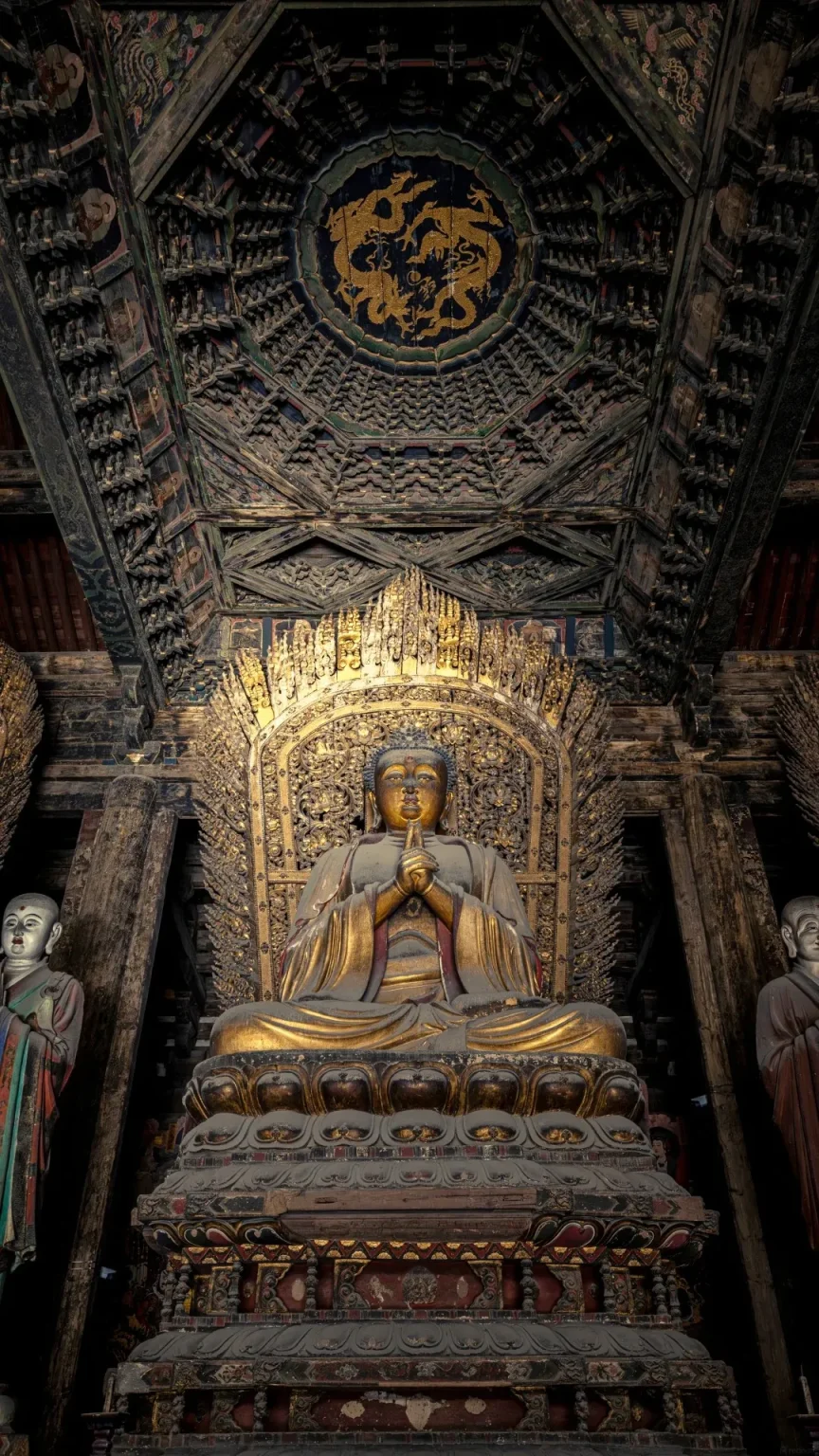
The awe-inspiring Grand Hall of Shanhua Temple houses this magnificent ancient Buddha statue, a testament to Datong’s rich Buddhist heritage, which you’ll discover on our 2-day itinerary exploring the city’s ancient wonders.
Is It Worth It? The Truth About the City Walls
In the late afternoon, make your way to the Datong City Wall. Let’s be completely honest: this is not an ancient ruin. It was built from scratch in the early 2000s by former mayor Geng Yanbo at a staggering cost. It feels a bit like an unfinished movie set, with pristine brickwork and a massive 7.2-kilometer circumference.
Despite its modern origins, it is absolutely worth your time. Rent a bicycle at the East Gate (around 30 RMB per hour) and ride along the 14-meter-high ramparts. As the sun sets, the crisp, dry northern wind kicks up, and the 54 watchtowers are illuminated with golden floodlights. It offers the best panoramic views of the city’s contrasting skyline—ancient-style roofs against distant brutalist apartment blocks.
Day 2: Huayan Temple and Shanxi Culinary Delights
Your second day focuses on Datong’s grandest central monument and the incredible local cuisine that defines Shanxi Province. Wear comfortable walking shoes; the stone pavements can be unforgiving.
Feel the Echoes of History at Huayan Temple
Just a 10-minute walk from Shanhua, Huayan Temple is a massive complex divided into upper and lower sections. Originally built by the Khitan-led Liao Dynasty, it faces east rather than the traditional south, reflecting the sun-worshiping traditions of its founders.
Step inside the Grand Hall, and your eyes will need a moment to adjust to the dim lighting. Entire walls are covered in vivid, floor-to-ceiling Buddhist murals depicting celestial beings and mythical creatures. Underneath the wooden pagoda lies the underground Thousand Buddha Palace, crafted entirely from pure copper. It is visually overwhelming in the best way possible.
Insider Tip: Do not buy bottled water inside the temple grounds where prices are inflated. A standard bottle of Nongfu Spring water costs just 2 RMB at the convenience stores right outside the main gate.
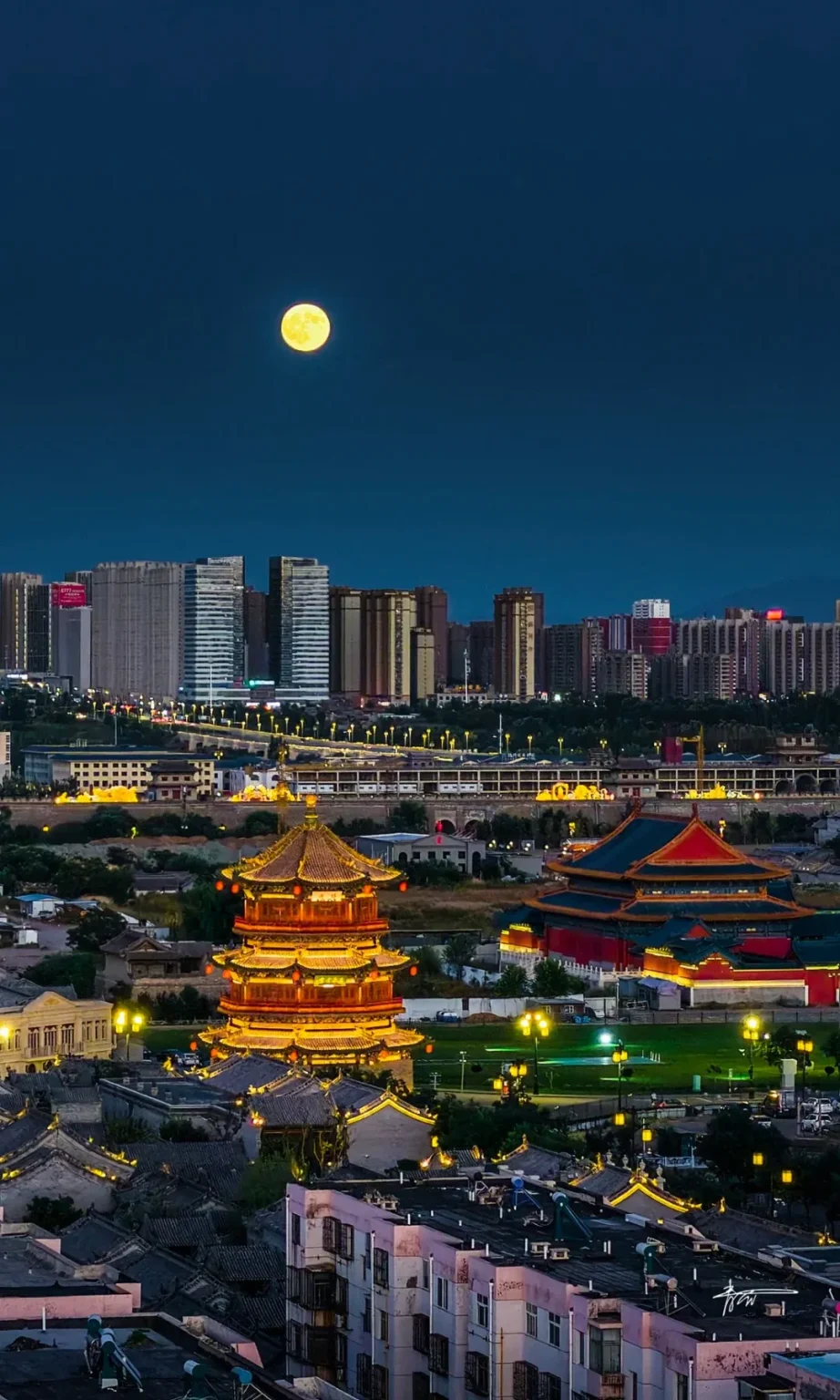
Datong’s ancient pagoda glows under the full moon, a beacon of history amidst the modern city. This breathtaking sight sets the perfect tone for exploring the city’s rich heritage over two days.
What to Know Before You Go: Navigating Local Food
By lunchtime, you will have worked up an appetite. Shanxi is the undisputed noodle capital of China. Head to a local eatery on Beidu Street and order a steaming bowl of sliced noodles (Daoxhaomian). The broth is rich, slightly spicy, and heavy on the black vinegar.
For dinner, you cannot leave Datong without trying traditional Shaomai (steamed meat dumplings) at Longjuxiang. Be prepared for a chaotic dining experience—you will likely have to hover near tables waiting for locals to finish, and the noise level is deafening. But when those steaming bamboo baskets of translucent, pork-filled dumplings arrive, the hassle is instantly forgotten.
Where to Base Yourself: Accommodation Pitfalls
Choosing the right hotel in Datong can make or break your 2-day itinerary. Avoid the Dongxin Commercial District. While it has modern malls, the traffic congestion is a nightmare, and you will waste precious time in DiDi cabs trying to reach the historical sites.
Instead, book a courtyard-style boutique hotel directly inside the Ancient City Area. Staying within the city walls means you are within walking distance of Huayan Temple, Shanhua Temple, and excellent late-night street food. Just pack earplugs, as the lively night markets can stay noisy well past midnight.