


Pre-Trip Logistics & 2026 Travel Updates
What is the 144-hour visa-free transit?
The 144-hour visa-free transit policy allows travelers from 54 eligible countries to stay in designated Chinese regions for up to six days without a prior visa, provided they hold connecting tickets to a third country. However, Guizhou is outside these approved transit zones, requiring a standard L-Visa or applicable national visa-exemption.
Because Guizhou requires standard entry, ensure your documentation is sorted well before booking flights into Guiyang Longdongbao International Airport (KWE). Once you land, your immediate hurdle will be the Great Firewall.
Do not rely on hotel Wi-Fi to access Google Maps or WhatsApp. You must install a reliable travel eSIM before your plane touches down in China to maintain seamless connectivity and access vital translation apps.
💡 Editor’s Pick: We recommend Nomad eSIM for China because it reliably bypasses the Great Firewall with stable speeds.
Securing High-Speed Rail Tickets
Guizhou’s mountainous terrain makes driving painfully slow. High-speed rail (HSR) is your lifeline. According to the official China Railway 12306 policy, foreign travelers can now seamlessly verify their passports directly within the English version of the 12306 app. A second-class ticket from Guiyang to Kaili costs roughly ¥60, while the route to Anshunxi (for Huangguoshu) sits around ¥45.
Day 1-2: Basing in Guiyang & Conquering Huangguoshu Falls
Guiyang is a rugged, working-class city that serves as the perfect logistical hub. Book a hotel near Guiyangbei (Guiyang North) Railway Station. You will save hours of navigating morning traffic.
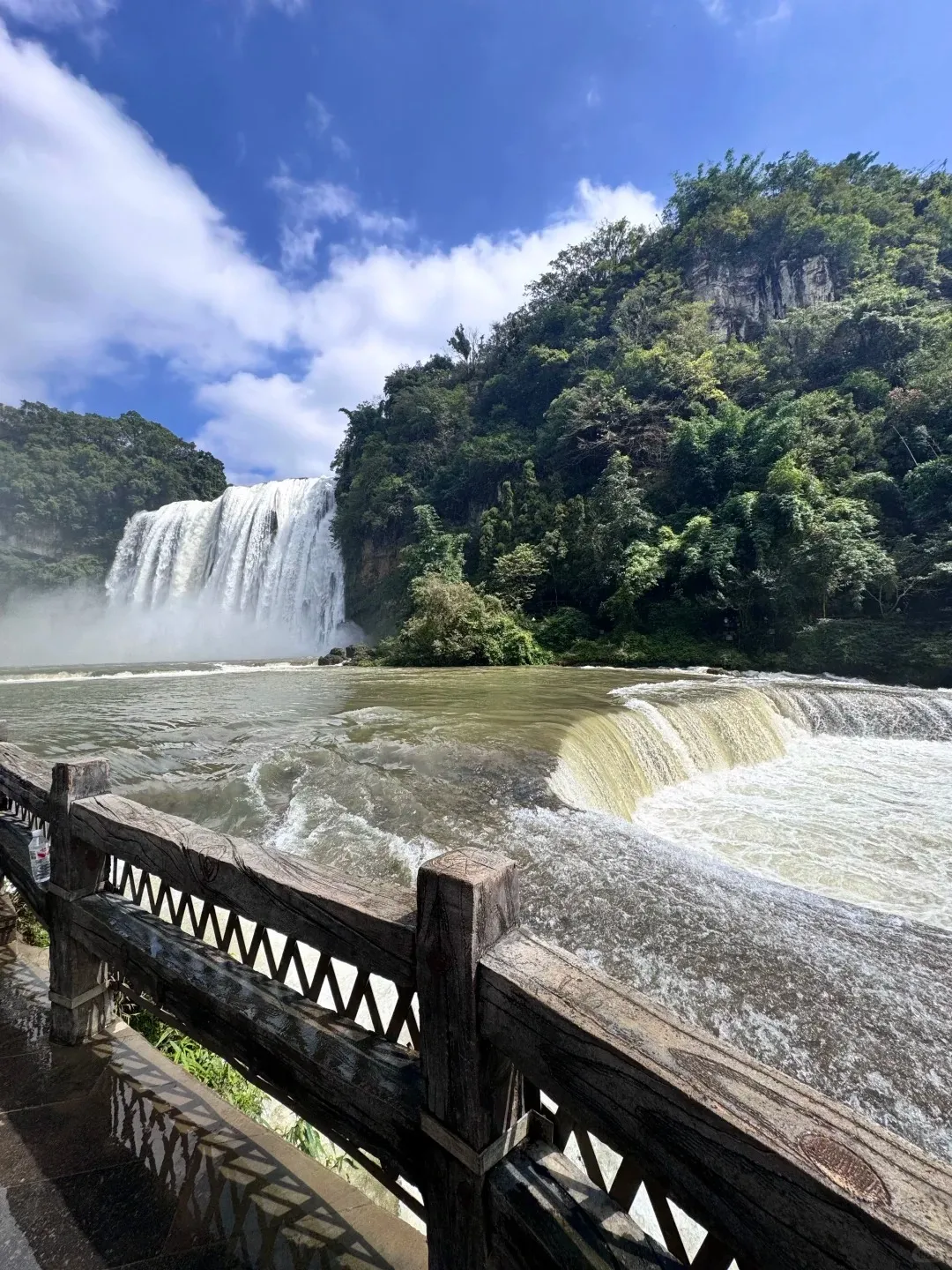
No Guizhou Karst Route is complete without experiencing the breathtaking Huangguoshu Waterfall, one of Asia’s largest, whose thundering roar will stay with you long after your visit.
The Huangguoshu Day Trip
Take the morning HSR from Guiyangbei to Anshunxi (30 minutes), then grab a Didi (ride-hailing via Alipay) to the Huangguoshu National Park entrance. China’s largest waterfall is a 77.8-meter-tall, 81-meter-wide force of nature. During the peak summer wet season (June to August), the deafening roar of the falls shakes the ground, and the resulting mist will completely soak your shirt.
Insider Tip: Navigating the Crowds
Most domestic tour groups follow a strict clockwise route, hitting the Tianxing Qiao Scenic Area right after lunch. To avoid the agonizing shoulder-to-shoulder crawl through narrow limestone corridors, do the reverse. Hit the 134-meter-long Water Curtain Cave (behind the main falls) first thing in the morning when the air is still cool.
Inside the park, a basic ¥3 bottle of Nongfu Spring water inflates to ¥10. Bring your own snacks and water from Anshun. The internal park shuttle buses are mandatory (¥50) and efficiently move you between the three main zones: Doupotang, Tianxing Qiao, and the Great Waterfall.
Day 3-4: Kaili and the Miao Hinterland
Pack your bags and take the 40-minute HSR east from Guiyang to Kaili South (Kailinan) Station. Kaili itself is an unpretentious city famous for its fiery street food. Head to the Zhong Bo night market area and order a bowl of Suantang Yu (Sour Soup Fish). The broth, fermented with local tomatoes and chilies, is intensely tangy and pairs perfectly with a cold local beer.
What to Know Before You Go: The Village Trap
Most itineraries push tourists toward Xijiang Qianhu Miao Village, the largest Miao settlement in the world. Is it worth it? Honestly, no. While the view of thousands of wooden stilt houses cascading down the valley is visually stunning, the village has become a crowded theme park. By 9:00 PM, the serene mountain air is shattered by loud karaoke bars and aggressive street hawkers.
Instead, hire a local driver from Kaili to take you to Jidao or Langde. Located just 20 kilometers south of the city, these villages offer the authentic Qiandongnan experience. You will walk on uneven cobblestones, smell drying corn and chilies, and watch 12th-generation silversmiths hammering intricate dragon motifs into bridal dowries without a single tour megaphone in sight.
Day 5-6: The Jade Waters of Zhenyuan Ancient Town
From Kaili, catch a train further east to Zhenyuan. Unlike the high-altitude Miao villages, Zhenyuan sits in a deep gorge along the Wuyang River. It was once a crucial military and trade outpost on the route connecting Yunnan to Hunan.

Zhenyuan Ancient Town, often dubbed the ‘Venice of the East,’ captivates visitors with its stunning night views and ancient charm, a true jewel on your Guizhou Karst Route journey.
Zhenyuan’s magic reveals itself in the late afternoon. Start at the historic Zhusheng Bridge and wander the narrow, steep alleyways climbing up the northern bank. The stone steps are slippery in the region’s frequent drizzle, so wear shoes with excellent grip.
Climbing Shiping Mountain
For the definitive view of the town’s S-shaped river bend, pay the ¥30 entry fee to climb Shiping Mountain. The hike takes about 45 minutes of steep, sweat-inducing stair climbing. Time your ascent for 5:00 PM. You can watch the sunset over the karst peaks and wait for the town below to ignite with thousands of traditional red lanterns.
For dinner, grab a riverside table and order the local specialty: crispy potato patties fried in shallow oil, served with a dry spice dip of roasted chili powder and ground Sichuan peppercorns. It is cheap, filling, and perfectly cuts through the humid evening air.
Budgeting and Best Time to Visit
Guizhou remains significantly cheaper than China’s eastern seaboard. You can comfortably travel on $60-80 USD per day, including mid-range hotels, HSR tickets, and local meals. Luxury boutique inns in Zhenyuan might push that slightly higher, but street food remains incredibly affordable.
When to go: The karst landscapes are greenest from June to August, and the waterfalls are at their most violent. However, this coincides with peak domestic summer holidays and oppressive humidity. For the best balance of comfortable hiking weather, fewer crowds, and clear skies, target September to late October (strictly avoiding the October 1-7 Golden Week holiday).