


Logistics: Getting In and Staying Connected
Before you arrive, you need to solve the two biggest hurdles in China travel: payment and connectivity.
Visas and Entry
As of 2026, travelers from many European and Asian nations enjoy 15-day visa-free entry. However, if you are transiting, Fujian province (including Xiamen and Quanzhou) is part of the 144-hour visa-free transit policy. Always verify the latest entry requirements with your local Chinese Visa Application Service Center before booking.
Trains and Transport
Quanzhou is on the major coastal high-speed rail line. According to the official 12306 China Railway schedule, trains run frequently from:
- Xiamen: 25–45 minutes (approx. 45 RMB)
- Fuzhou: 1 hour (approx. 85 RMB)
- Shanghai: 6 hours (approx. 320 RMB)
Insider Tip: When booking via the 12306 app or Alipay, pay close attention to the station name. You want Quanzhou (泉州). Avoid “Quanzhou East” or “Quanzhou South” unless you want a long, expensive taxi ride into the city center.
Internet and Apps
Your credit cards (Visa/Mastercard) will rarely work at local shops. You must download Alipay or WeChat and link your foreign card to their “TourCard” or international wallet features. For navigation, Apple Maps works well in 2026, but the Gaode Maps (Amap) app is superior if you can recognize basic Chinese characters.
To access Western apps (Gmail, Instagram, WhatsApp) and bypass the Great Firewall, you cannot rely on hotel Wi-Fi. You need a reliable eSIM.
💡 Editor’s Pick: We recommend Nomad eSIM for China because it reliably bypasses the Great Firewall with stable speeds.
Day 1: The Heart of the Silk Road
Morning: The Twin Pagodas at Kaiyuan Temple
Start your trip at the city’s crown jewel, Kaiyuan Temple (Entry: Free). Built in 686 AD, it is the largest Buddhist temple in Fujian. The main draw is the pair of 13th-century stone pagodas that have survived catastrophic earthquakes that leveled the rest of the city.
What to look for: Walk around the base of the East Pagoda. You will see carvings of monkey-headed figures that historians believe represent the Hindu god Hanuman, proving the heavy influence of Indian traders in Quanzhou centuries ago. Also, visit the on-site museum to see the hull of a Song Dynasty ship excavated from the harbor.

Glimpse the vibrant daily life in Quanzhou, where the majestic Kaiyuan Temple pagodas stand as enduring symbols of the city’s rich history, overlooking a bustling market street that echoes its past as a key port on the Maritime Silk Road.
Afternoon: Surviving West Street (Xi Jie)
Exiting the temple puts you directly onto West Street. This pedestrian thoroughfare is chaotic, loud, and packed with tourists. It is the best place to sample local snacks like fried vinegar pork and frozen stone flower jelly.
Insider Tip: The street level is overwhelming. For the best photo of the pagodas without the crowds, look for the sign for You Li Coffee near number 129. You have to pay about 20 RMB (deductible if you buy a drink) to access their rooftop. It offers the definitive panoramic view of the red-tiled roofs and the pagodas that you see on Instagram.
Day 2: A Melting Pot of Faiths
Quanzhou’s UNESCO status is largely due to its religious diversity. In the Song and Yuan dynasties, this was one of the few places on earth where mosques, temples, and churches stood side-by-side.
Morning: Qingjing Mosque and Guandi Temple
Walk down Tumen Street to see the Qingjing Mosque. Established in 1009 and modeled after mosques in Damascus, it is the oldest Arab-style mosque in China. While the roof collapsed long ago, the stone walls and gatehouse remain poignant reminders of the city’s Arab merchant history. Entry is a nominal 3 RMB.
Just 100 meters away is the Guandi Temple, dedicated to the God of War and Wealth. The contrast is jarring. While the mosque is silent and somber, Guandi Temple is an explosion of sensory details: massive clouds of incense smoke, roaring furnaces burning spirit money, and intricate dragon carvings on the roof that are typical of southern Fujian architecture.
Afternoon: The Maritime Museum
Take a taxi (approx. 15 RMB) to the Quanzhou Maritime Museum. This is the academic anchor of your trip. The “Islamic Culture” hall contains hundreds of stone grave markers from ancient Arab, Persian, and Christian merchants found in the city walls. It provides the context needed to understand why Quanzhou matters globally.
Day 3: Living Heritage and Coastal Villages
Morning: The Oyster Shell Houses of Xunpu
Located about 10km southeast of the city center, the fishing village of Xunpu has exploded in popularity on Chinese social media. The local women act as guardians of tradition, wearing flowered headpieces known as zanhua.
The architecture here is unique: the walls of the traditional homes are built from thousands of large oyster shells mixed with mud. These shells were originally used as ballast on returning trade ships. While it is becoming more commercialized, wandering the back alleys away from the main photo spots still offers a glimpse into the life of the “sea people.”
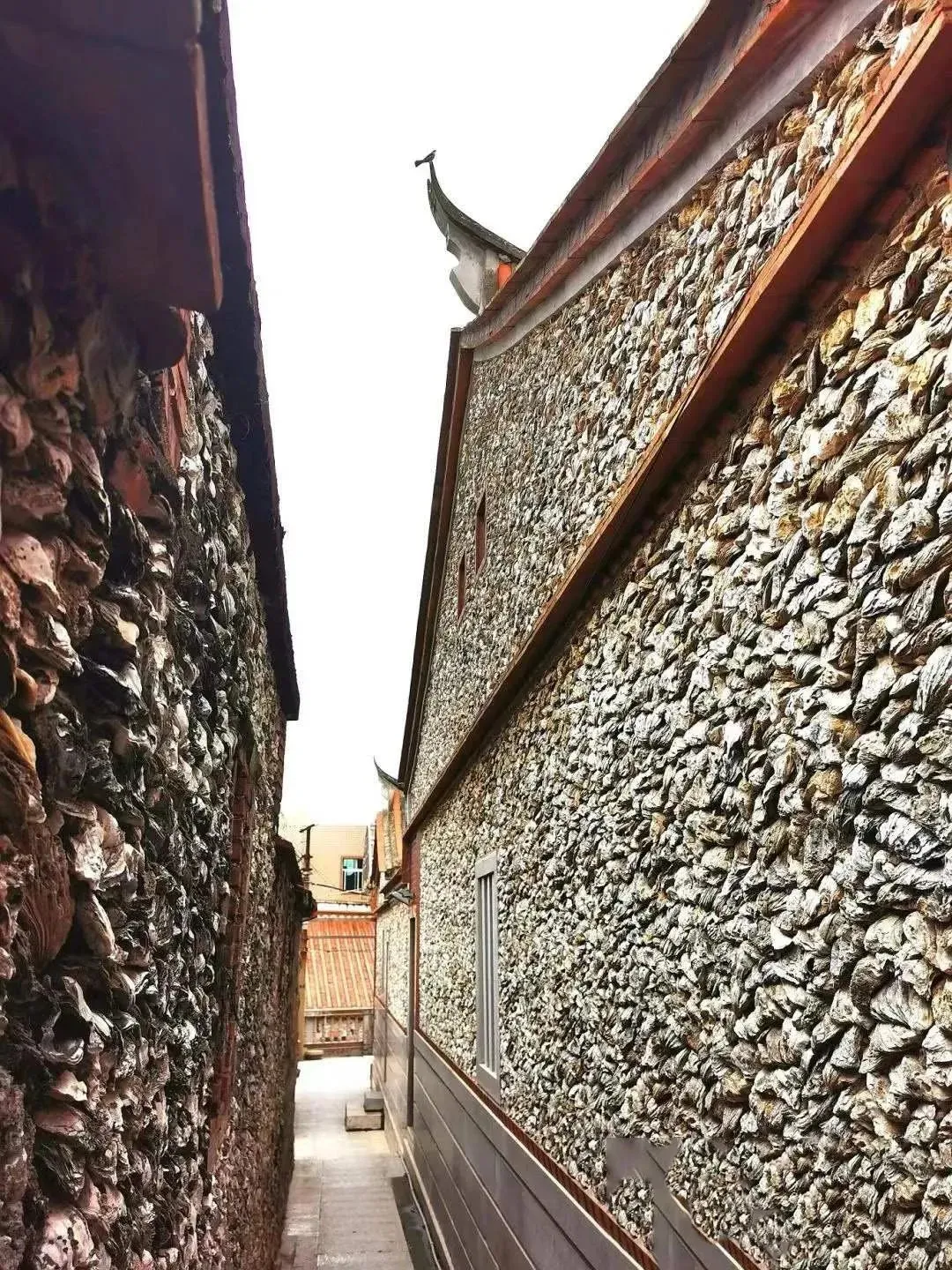
Step into a unique piece of history within Xunpu Village, Quanzhou, where traditional houses boast walls remarkably constructed from oyster shells. This ancient building technique, a testament to the city’s coastal heritage and ingenuity along the Maritime Silk Road, offers a fascinating glimpse into local culture and sustainable architecture.
Afternoon: Puppetry and Tea
Return to the old town for a slower pace. Fujian is famous for Oolong tea (specifically Tieguanyin). Visit the Shangqinglou Qing Dynasty Courtyard Inn hidden in Huitong Lane. Even if you aren’t staying there, the courtyard is a perfect example of traditional architecture, and the owners often host tea ceremonies.
If time permits, catch a show at the Quanzhou Marionette Troupe. Quanzhou puppetry is an Intangible Cultural Heritage art form. The complexity of the string movements is mesmerizing, even if you don’t understand the dialogue.
Where to Eat: The Flavor of Minnan
Food in Quanzhou is sweeter and lighter than the spicy cuisine of Sichuan. Do not leave without trying:
- Mian Xian Hu (Face Thread Paste): A savory soup with thread-thin noodles, usually eaten for breakfast with fried dough sticks.
- Tu Sun Dong (Sandworm Jelly): The ultimate challenge. These are marine worms boiled until their natural gelatin forms a clear jelly. It tastes like the ocean and is served with garlic, vinegar, and soy sauce.
- Sugarcane Juice: Visit Xian Lai Yin near Kaiyuan Temple. The elderly owner hand-presses the juice, a refreshing antidote to the humid Fujian weather.