



Setting Up Alipay and WeChat Pay for Foreigners
For daily spending, Alipay and WeChat Pay are non-negotiable. Almost every shop, taxi, and restaurant has a QR code ready to scan. Fortunately, the setup process for international visitors is much smoother now than it was a few years ago.
Before leaving home, download both apps from official app stores. You will need your passport, a working mobile number (foreign numbers work for SMS verification), and an international bank card. Insider Tip: Ensure the name you enter matches your passport exactly, down to the middle name, or the bank verification will fail.

Navigating street food in China doesn’t require cash anymore! Whether you’re in Shanghai or anywhere else, most vendors are ready to accept mobile payments. This scene perfectly illustrates how easy it is to grab a delicious bite while staying completely cashless.
Foreigners can now spend up to $5,000 per transaction. Even better, the 3% service fee is entirely waived for purchases under ¥200. This means you can buy steaming baskets of xiaolongbao or hail a DiDi ride without worrying about hidden micro-charges eating into your travel budget.
How to Stay Connected: eSIMs and Bypassing the Firewall
There is nothing more panic-inducing than standing at a busy subway turnstile with a line of impatient commuters behind you, only to realize your payment QR code won’t load. In China, data is your lifeline.
Because of the Great Firewall, standard roaming often fails, and local public Wi-Fi requires a Chinese phone number for SMS verification. The most efficient solution is installing a travel eSIM before you land.
💡 Editor’s Pick: We recommend Nomad eSIM for China because it reliably bypasses the Great Firewall with stable speeds.
A high-quality eSIM will route your data through servers outside of mainland China. This means you can access Google Maps, WhatsApp, and Instagram while ensuring your Alipay app connects instantly to local payment gateways.
Do You Still Need Physical Cash in China?
While digital payments dominate, carrying a small amount of physical RMB (Renminbi) is a smart safety net. By law, merchants cannot refuse cash, though many simply lack the change for a ¥100 note.
Plan to carry about ¥200–¥500 for emergencies. Break your large bills at a hotel front desk or a convenience store so you have ¥1, ¥5, and ¥10 notes. You will need these for older street vendors, rural bus fares, or buying a ¥2 bottle of Nongfu Spring water at a remote scenic spot.
What is the e-CNY (Digital Yuan)?
The e-CNY is China’s official digital currency issued by the People’s Bank of China. For travelers in 2026, it functions via a standalone app that links to foreign cards, serving as a reliable government-backed alternative to Alipay and WeChat Pay for tap-to-pay transactions across major pilot cities.
If you need to withdraw cash, look for ATMs inside major bank branches like the Bank of China or ICBC. They offer English menus and accept international cards, though you should decline Dynamic Currency Conversion (DCC) to avoid terrible exchange rates.
Navigating Transport and Attractions
Booking logistics in China requires knowing which platforms to trust. You can no longer just show up at a train station with cash and expect to get a seat on a high-speed train.
How to Buy High-Speed Train Tickets
China’s high-speed rail network is a marvel, connecting cities at 350 km/h. According to the official 12306 rail policy, foreign travelers must verify their passports before booking. You can do this directly within the English version of the 12306 app or via the Trip.com mini-program inside WeChat.
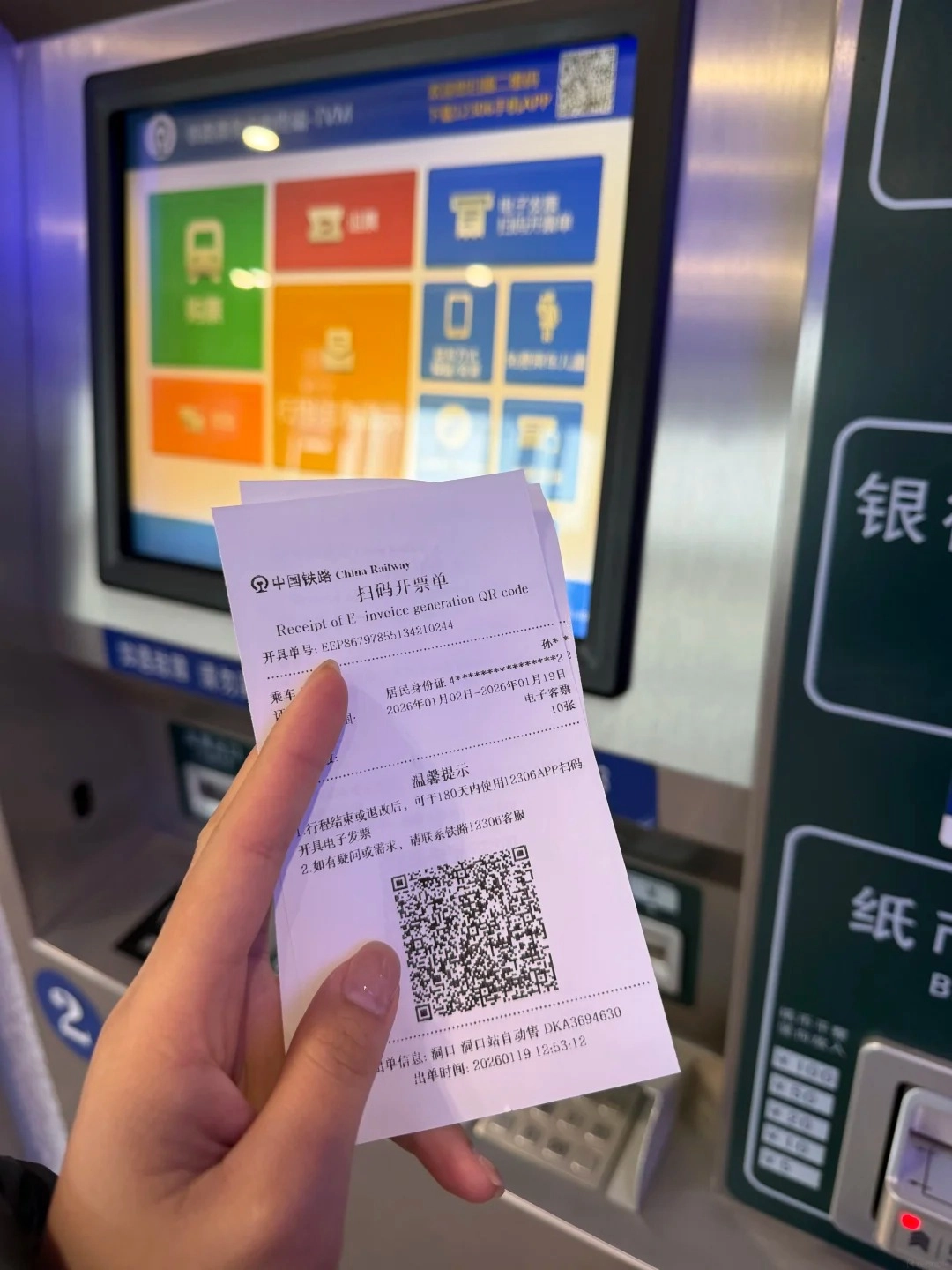
Navigating payments in China often involves QR codes, even for something as simple as a train ticket receipt! This guide will help you understand how to handle currency, small change, and payment methods during your travels.
Your passport is your ticket. Once booked, you simply swipe your physical passport at the automated station turnstiles. What to Know Before You Go: Train stations operate like airports. Arrive at least 45 minutes early to clear security and navigate the massive departure halls.
Understanding Visa-Free Travel
If you are planning a short layover or a quick regional trip, you might not even need to pay for a traditional tourist visa.
What is the 144-hour visa-free transit?
It is an official policy allowing citizens from 54 qualifying countries to explore designated Chinese regions for up to six days without a prior visa, provided they hold confirmed onward tickets to a third country or region within the strict 144-hour window.
Is Wangfujing Snack Street Worth It?
Many outdated guides tell you to bring cash to Beijing’s Wangfujing Snack Street for exotic food. Skip it entirely. It is an overcrowded, overpriced tourist trap famous for scorpion skewers that locals never actually eat.
Instead, take your newly configured Alipay app to a local morning market, like Sanyuanli Market. Here, you can scan QR codes to buy authentic jianbing (savory crepes) for ¥8, rubbing shoulders with actual residents buying their daily groceries.