
- No direct trains exist: You must book a two-leg journey, transferring at either Changsha South or Huaihua South Railway Station (total travel time is 8 to 10 hours).
- Booking timeline: According to official 2026 China Railway rules, high-speed tickets open exactly 15 days before departure. They sell out fast, so book immediately.
- Digital integration: Physical tickets are obsolete. Your passport is your ticket; simply swipe it at the electronic turnstiles.
- Pack smart: Bring your own toilet paper, a high-capacity power bank, and download Alipay for seamless mobile payments across both provinces.


How to Navigate the Route: Transfers and Timings
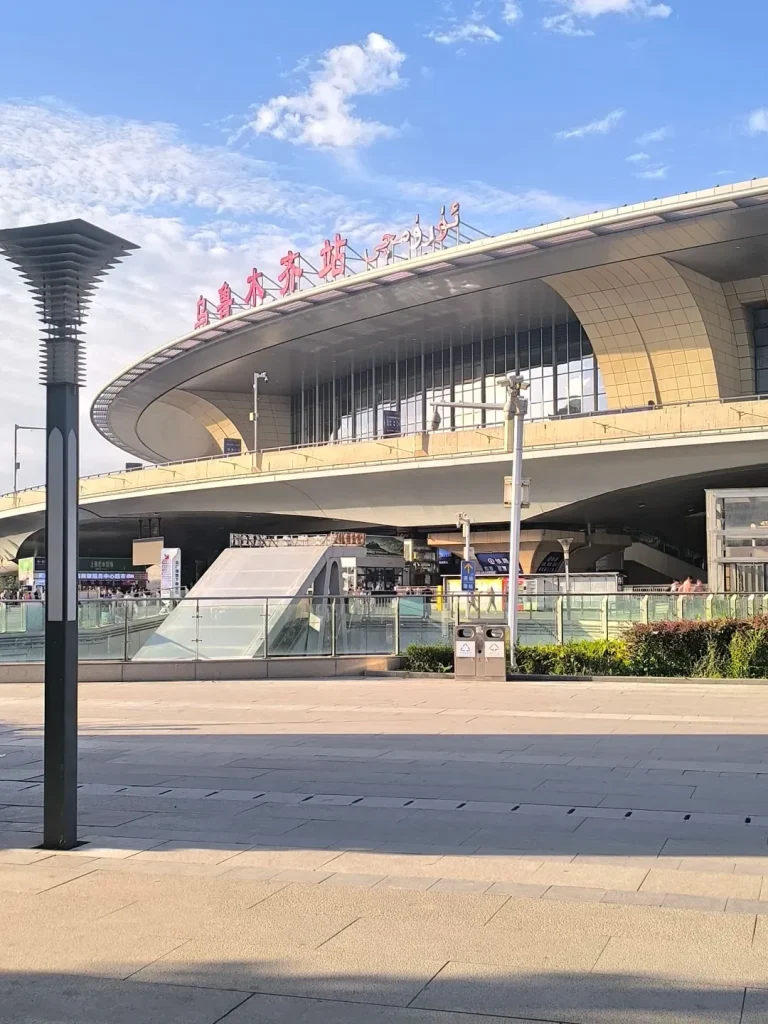
Since you cannot book a direct ticket, you need to split your journey into two segments. Both routes depart from the massive Chengdu East Railway Station and arrive at Zhangjiajie West Railway Station. Here are your two most efficient options.
Option 1: The Changsha Transfer (Most Popular)
This is the route most travelers take because Changsha serves as a massive high-speed hub. You will catch a morning bullet train from Chengdu East to Changsha South, which takes about 7 to 7.5 hours. From Changsha South, you’ll board a second train to Zhangjiajie West, adding another 2 to 3 hours to your trip.
Insider Tip: Changsha South is notoriously chaotic. When you step off your first train, do not follow the crowds to the exit. Look up for the blue signs pointing to “Transfer” (便捷换乘). This allows you to skip the security re-check and head directly to the departure hall for your connecting train.
Option 2: The Huaihua Transfer (Slightly Faster)
If you want to shave an hour off your transit time, route your trip through Huaihua South Railway Station. The first leg from Chengdu East to Huaihua South takes about 6 hours. The connecting train from Huaihua South to Zhangjiajie West is a quick 2-hour sprint.
What to expect: Huaihua is a smaller, quieter station than Changsha. If you have less than 40 minutes to make your connection, the Huaihua route is significantly less stressful to navigate.
How to Buy Train Tickets in China
According to the official 12306 rail policy, tickets become available exactly 15 days prior to your travel date. Because this route connects two massive tourist hubs, second-class seats (around $85 USD total for both legs) vanish within hours during peak seasons.
You have two reliable options for booking in 2026. You can use the official 12306 app, which now fully supports foreign credit cards and English interfaces. Alternatively, use Trip.com; they charge a small convenience fee but allow you to place a “waitlist” order weeks in advance, automatically securing your ticket the second the booking window opens.
Essential Tech: Staying Connected on the Move
China’s digital ecosystem is highly insulated. Without a reliable internet connection, you won’t be able to pay for your train snacks, translate signs, or show your digital hotel booking.
You must have a VPN or a specialized eSIM to bypass the Great Firewall. For reliable 5G coverage that works flawlessly on the high-speed rail network, we highly recommend setting up an eSIM before you land.
💡 Editor’s Pick: We recommend Nomad eSIM for China because it reliably bypasses the Great Firewall with stable speeds.
Beyond connectivity, ensure you have Alipay or WeChat Pay downloaded and linked to your foreign Visa or Mastercard. In 2026, finding a vendor on the train or in Zhangjiajie who accepts physical cash is incredibly rare. Even the dining carts on the bullet trains operate entirely via QR code scans.
What is the 144-Hour Visa-Free Transit?
The 144-hour visa-free transit policy allows citizens from 54 eligible countries to explore specific Chinese regions for up to six days without a traditional visa, provided they hold a valid passport and an onward ticket to a third country or region outside mainland China.
Important Note: This visa is strictly regional. If you enter via Chengdu (Sichuan Province), you cannot legally travel to Zhangjiajie (Hunan Province) using this specific transit exemption. You will need a standard L-class Tourist Visa for this cross-provincial train journey.
What to Know Before You Go: An Insider’s Perspective
Taking the train in China is a deeply sensory experience. As soon as the train departs Chengdu, the carriages fill with the distinct, savory aroma of braised beef instant noodles and spicy sunflower seeds. Hot water dispensers are located at the end of every carriage—bring your own tea leaves or noodle bowls to join in.
Pricing reality check: A bottle of mineral water costs about 2 RMB ($0.30 USD) at the convenience stores outside Chengdu East, but jumps to 5 RMB or more from the train’s dining cart. Stock up on snacks before passing through station security.
Overrated Attraction Alert: Once you reach Zhangjiajie, you’ll see endless advertisements for the Grand Canyon Glass Bridge. Skip it. It’s severely overcrowded, expensive, and takes you away from the actual natural beauty. Spend your limited 3 days entirely inside the Zhangjiajie National Forest Park (Wulingyuan) instead.
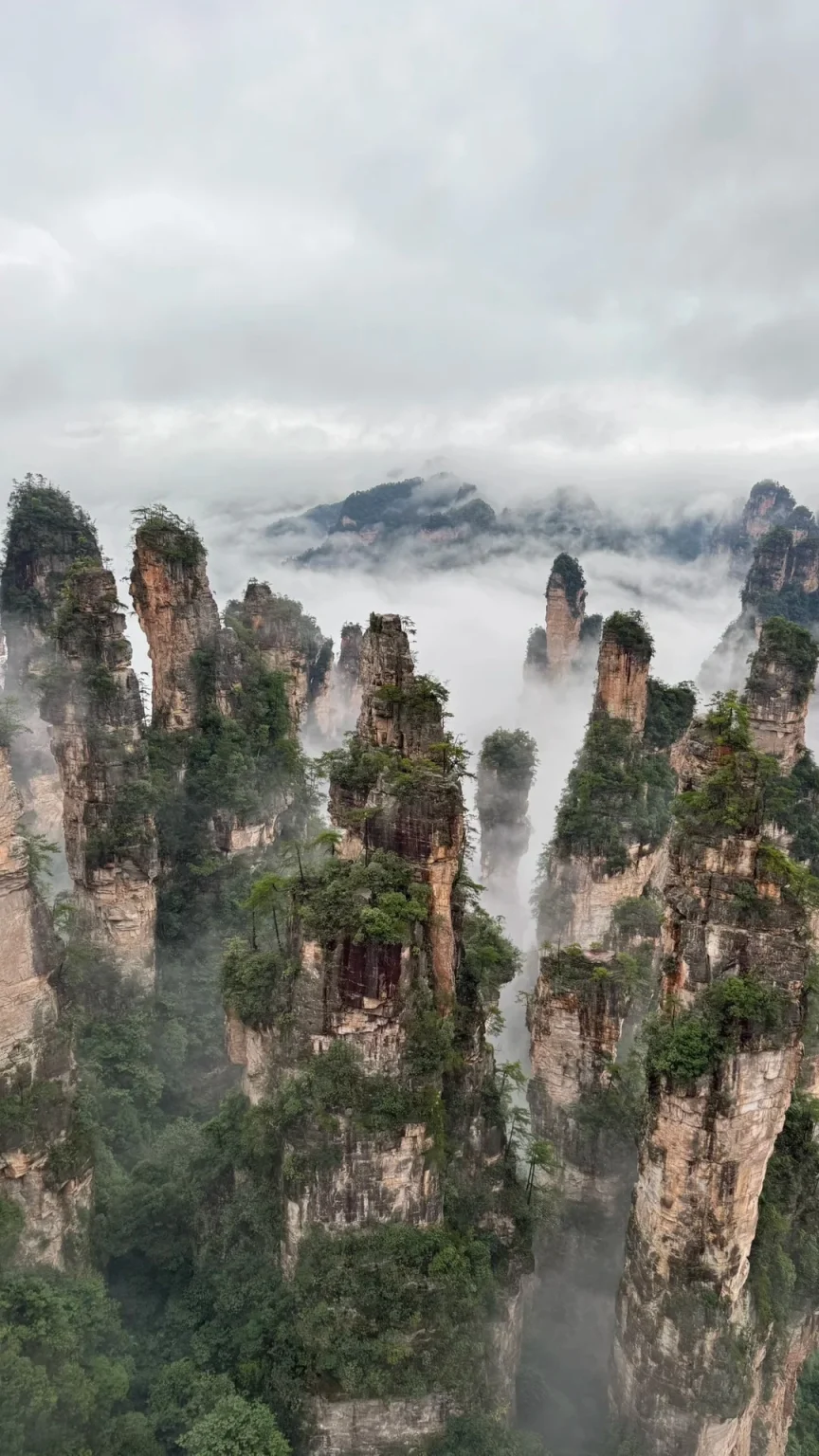
Witnessing the breathtaking Zhangjiajie National Forest Park, often called the ‘Avatar Mountains,’ is a truly unforgettable experience that makes the train journey from Chengdu entirely worthwhile.
What to Pack for a 3-Day Zhangjiajie Adventure
Packing for this trip requires balancing the confinement of a 10-hour train ride with the rugged, humid reality of mountain hiking. Keep your luggage light—navigating train station stairs with massive suitcases is a nightmare.
For the Train Journey
- Toilet paper and hand sanitizer: Western-style toilets are rare on trains and at transfer stations. Expect squat toilets, and know that toilet paper is almost never provided.
- High-capacity power bank: While newer high-speed trains have outlets under the seats, they are often shared and sometimes faulty.
- Noise-canceling headphones: Chinese train carriages are lively. Between crying children, loud phone conversations, and movies playing without headphones, you will want to block out the noise.
For Zhangjiajie National Forest Park
- Aggressively grippy hiking shoes: The stone steps in Zhangjiajie are notoriously slick, especially in the misty mornings. Leave the flat-soled sneakers at home.
- Breathable, moisture-wicking layers: The humidity in Hunan province is oppressive, even in autumn. You will sweat through cotton quickly.
- A lightweight rain shell: Mountain weather is unpredictable. A sudden downpour is common, and umbrellas are frustrating to manage on narrow, crowded cliffside walkways.