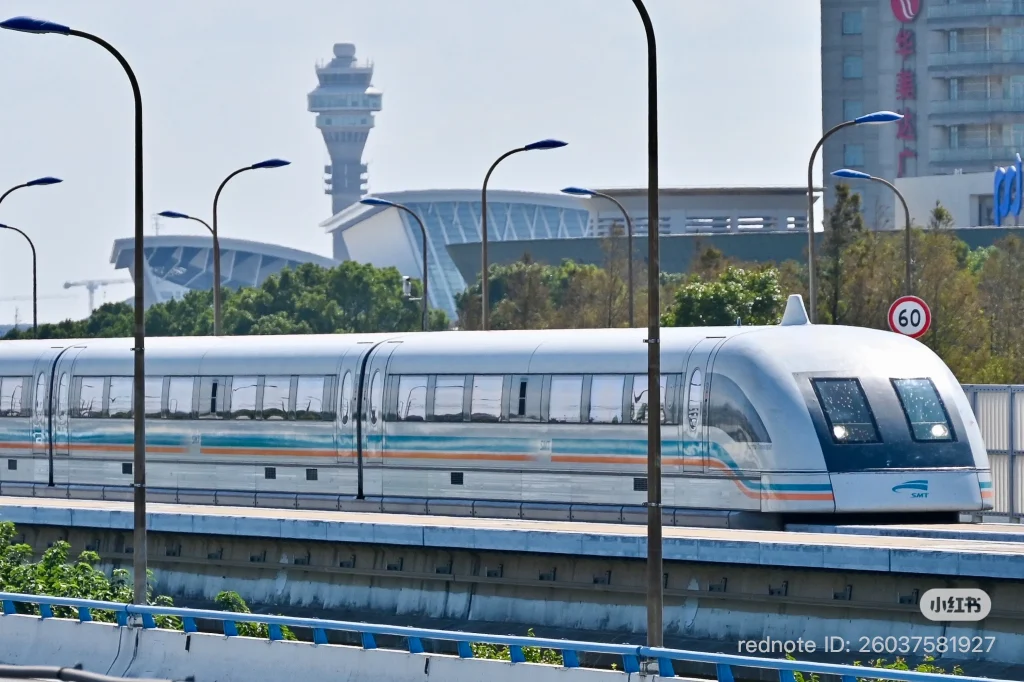



What is the 10-Minute Rule?
The 10-minute rule refers to the strict boarding cutoff enforced across China’s high-speed railway network. According to the official 12306 rail policy, platform access gates automatically lock 5 to 10 minutes before the train’s scheduled departure time, meaning latecomers will be denied entry and forced to rebook.
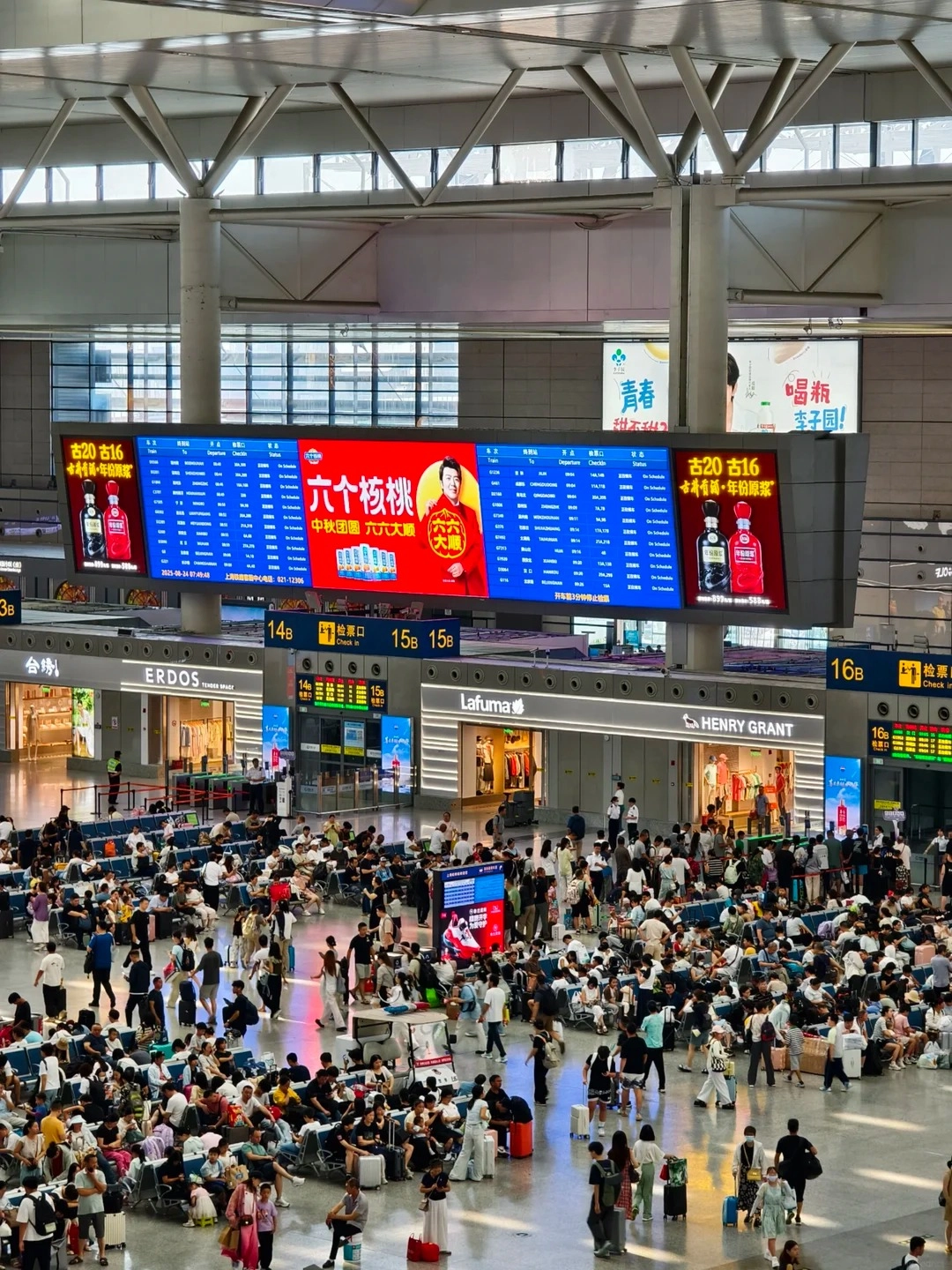
Navigating China’s vast railway stations, like this one at Shanghai Hongqiao, requires a keen eye on the departure boards. With the ’10-minute rule’ in effect, knowing your platform is crucial to avoid missing your high-speed train.
Logistics: Navigating the Station Step-by-Step
1. Arrival and Security Checks
When your DiDi (rideshare) drops you off, you will immediately face your first hurdle: station security. Much like an airport, all luggage must go through an X-ray scanner, and you will walk through a metal detector. During Chinese public holidays, this line alone can take 30 minutes. Always have your passport in hand before you reach the front of the line.
2. ID Verification and The Manual Lane
While Chinese citizens swipe their ID cards at automated turnstiles, foreign travelers usually cannot use these machines. You must look for the manual check lane (人工通道), usually located at the far left or right of the entrance gates. A staff member will type your passport number into their system to verify your digital ticket.
3. Finding Your Waiting Room
Once inside, you will be hit by the sensory overload of a Chinese train station: the echoing bilingual announcements, the smell of instant noodles from the hot water dispenser stations, and the massive LED departure boards. Check the main screen for your train number (e.g., G123) to find your specific boarding gate (检票口). Do not wait to find your gate—these stations are vast, and walking from the security checkpoint to Gate 24B can take a brisk 15 minutes.
Tech and Connectivity: Don’t Get Stranded Offline
In 2026, China is a virtually cashless, app-driven society. You will need a reliable internet connection to check your digital ticket on the official 12306 website, order a coffee via WeChat, or pay for a 3 RMB bottle of Nongfu Spring water using Alipay. Relying on public station Wi-Fi is a mistake, as it requires a Chinese phone number to receive a verification SMS.
To ensure you have seamless data that bypasses the Great Firewall the moment you step off the plane, you need a reliable travel eSIM.
💡 Editor’s Pick: We recommend Nomad eSIM for China because it reliably bypasses the Great Firewall with stable speeds.
Once connected, make sure you have the Alipay app bound to your foreign credit card. You can use it to scan QR codes at the station’s convenience stores to grab snacks for your journey.
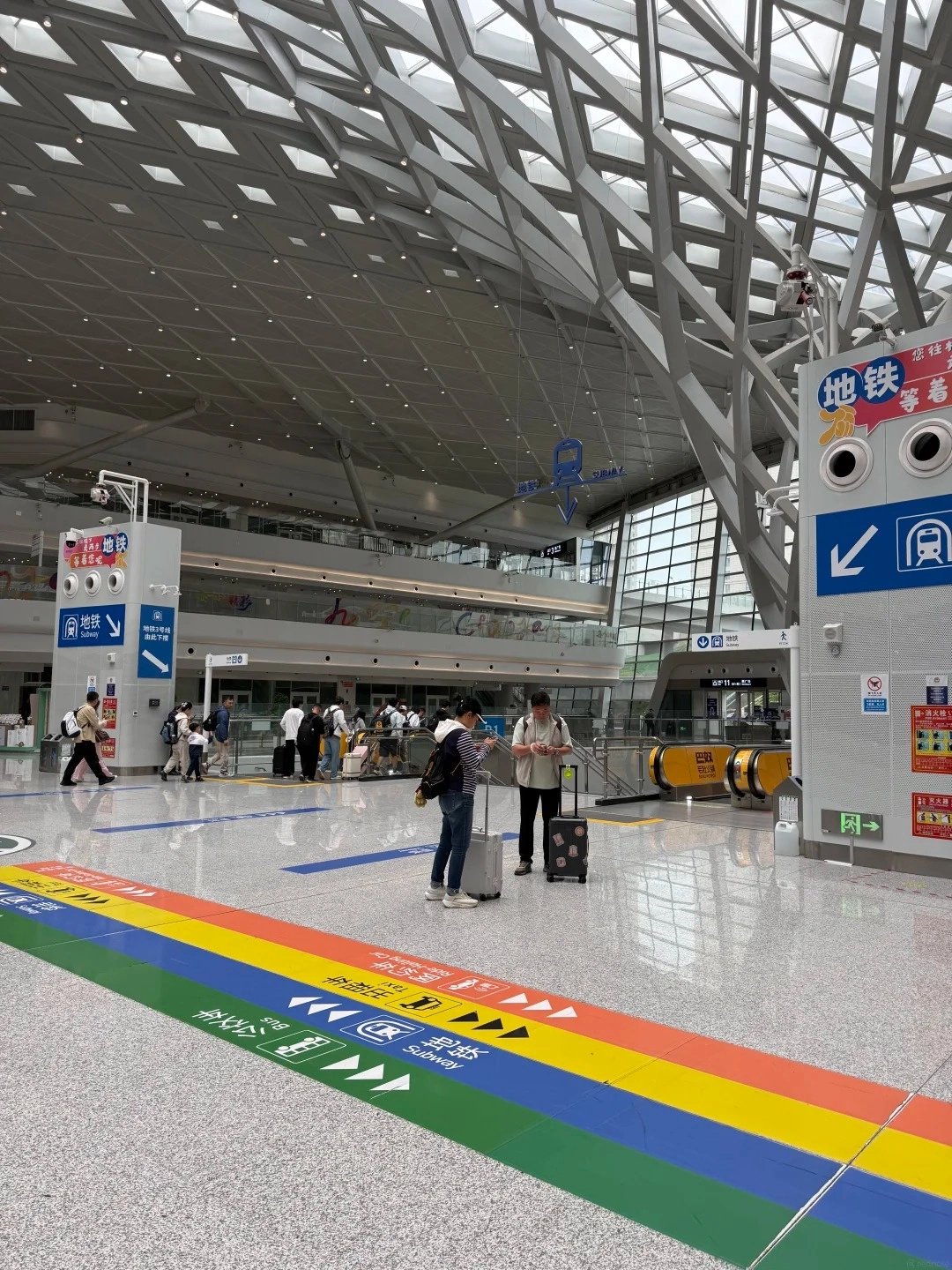
Navigating China’s massive train stations can feel overwhelming, but clear visual cues like this rainbow-colored floor guide help travelers find their way to the platform quickly and efficiently, especially when adhering to the ’10-minute rule’.
Insider Tips: What to Know Before You Go
Avoid the “Wrong Station” Trap
The most common and devastating mistake foreign travelers make is showing up to the wrong station. Beijing has seven passenger railway stations; Shanghai has four main ones. If your ticket says “Guangzhou South” (广州南) and you show up at “Guangzhou East” (广州东), you cannot simply hop on a quick subway to fix it—they are an hour apart. Always hand your driver the exact Chinese characters for your specific station.
What is the 144-Hour Visa-Free Transit?
The 144-hour visa-free transit is a policy allowing citizens of 54 countries to enter specific Chinese regions for up to 6 days without a pre-approved visa, provided they have a confirmed onward flight to a third country. You can use high-speed trains to travel within your permitted region (e.g., from Shanghai to Hangzhou).
The Reality of Train Station Food
Skip the overpriced KFC and McDonald’s inside the waiting halls if you want a better local experience. Instead, follow the locals: buy a bowl of instant noodles at the station convenience store and use the free boiling water dispensers (located at the end of every train car and in the waiting halls). It is cheap, filling, and a quintessential part of the Chinese rail experience.
Boarding Etiquette and Seat Finding
When boarding is announced (usually 15 to 20 minutes before departure), a massive rush of people will form a line. Do not panic. As long as you are in line before the 10-minute cutoff, you will get on. Once on the platform, look at the colored numbers painted on the ground—they indicate where the doors for your specific carriage number will open. High-speed trains only stop for 2 to 3 minutes at intermediate stations, so you must be waiting at the correct carriage door before the train arrives.