


What is the 144-Hour Visa-Free Transit?
The 144-hour visa-free transit is an official Chinese immigration policy allowing passport holders from 54 qualifying countries to explore Chongqing without a prior visa for up to six days. You must present a valid passport and a confirmed onward flight ticket to a third country or region.
According to the National Immigration Administration, you can enter via Chongqing Jiangbei International Airport (CKG) and must remain within the Chongqing municipality for the duration of your layover.
Why Chongqing Built These Air Raid Shelters
Between 1938 and 1943, Chongqing served as the wartime capital of China. To protect citizens from heavy aerial bombardment, the city mobilized a massive effort to carve over 10,000 air raid shelters directly into the surrounding mountainsides. It was one of the largest civil defense networks ever constructed.
For decades after the war, these tunnels sat abandoned, collecting dust and dripping groundwater. But as Chongqing’s population exploded and real estate prices soared, resourceful locals began reclaiming these naturally climate-controlled spaces. Today, they are a vibrant part of the city’s urban fabric.
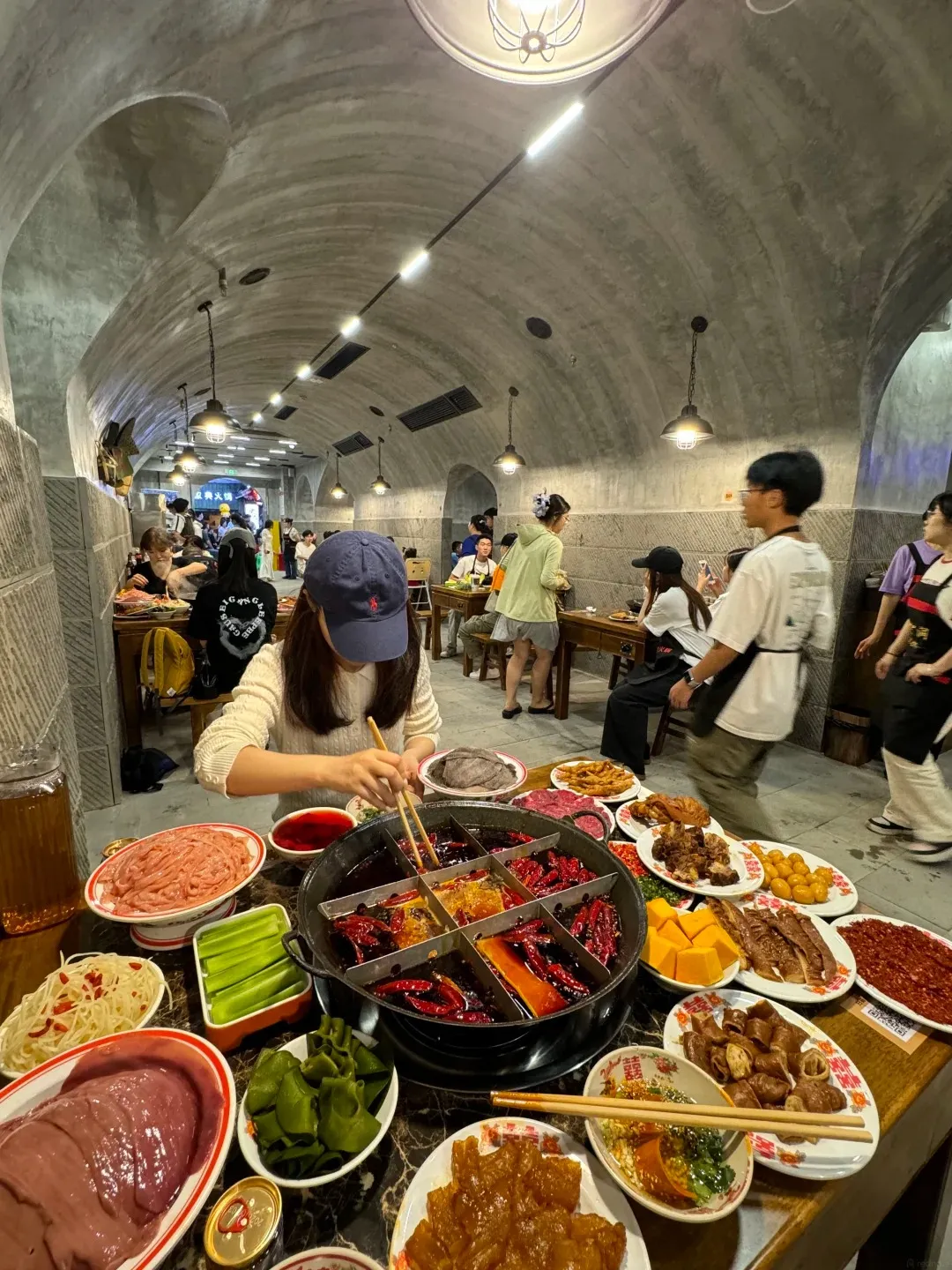
Experience a unique dining adventure in Chongqing by savoring authentic hot pot within the atmospheric embrace of a former civil defense air raid shelter. This unusual setting offers a memorable fusion of history and culinary delight.
Top Converted Air Raid Shelters to Visit
The Subterranean Hot Pot Experience
You haven’t truly experienced Chongqing until you’ve eaten Cave Hot Pot (Dongtian Huoguo). These restaurants are built directly into the raw, arched concrete of old bunkers. The moment you step inside, you are hit with the heavy, mouth-watering scent of boiling beef tallow and numbing Sichuan peppercorns.
Expect a loud, chaotic, and incredibly humid environment. Condensation often drips from the ceiling while industrial fans push the spicy air around. A standard meal of tripe, duck intestines, and lotus root will run you about 80 to 120 RMB per person. Pro tip: Buy a cold 2 RMB bottle of Nongfu Spring water from a street vendor before heading in to cool the chili burn.
Underground Bookstores and Tea Houses
If hot pot is too intense, seek out the city’s underground cultural hubs. Junge Bookhouse in the Jiulongpo District is a prime example. The owner converted a forgotten shelter into a sprawling, quiet sanctuary filled with thousands of vintage books, old maps, and retro Chongqing memorabilia.
It costs just 10 RMB for a bottomless cup of green tea. You can sit for hours in the cool, 20°C (68°F) air, escaping the blazing summer sun above. The musty smell of old paper mixed with damp limestone gives the space an incredibly nostalgic atmosphere.
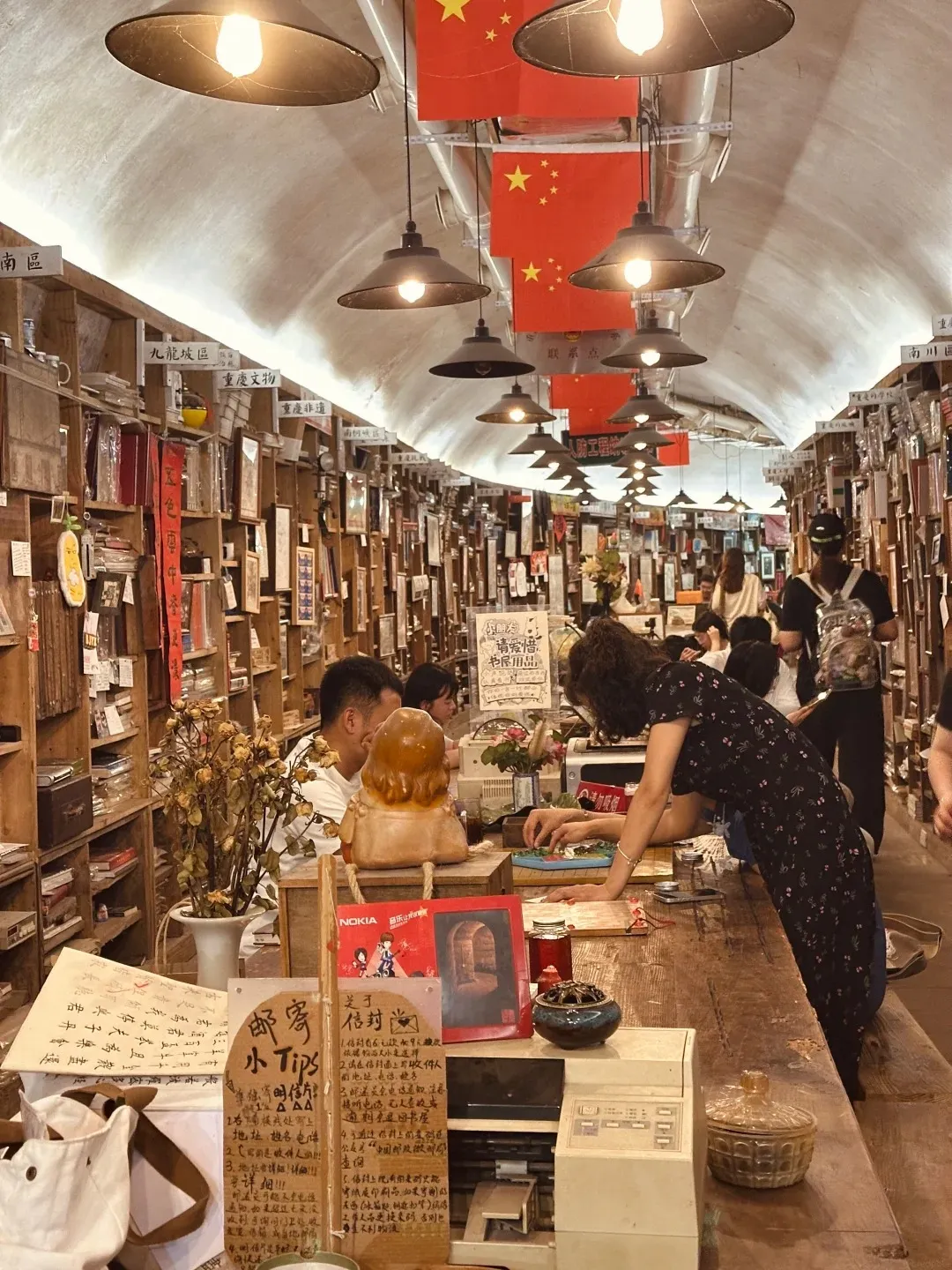
Inside Chongqing’s unique converted civil defense architecture, this bookstore offers a cozy escape filled with literary treasures and a touch of nostalgic charm.
The Air Raid Shelter Gas Stations
One of the most bizarre sights in Chongqing is watching cars pull directly into a mountain to refuel. Several active gas stations operate entirely inside reinforced air raid shelters. While not a traditional “tourist attraction,” walking past the Kuilong Cave Gas Station offers a fantastic photo opportunity of Chongqing’s utilitarian cyberpunk aesthetic.
How to Navigate Chongqing’s Underground
Getting around Chongqing requires patience. This is a city where taking an elevator to the 10th floor might lead you to a street-level road. Google Maps and Apple Maps are essentially useless here; they cannot process the extreme verticality. You must download Baidu Maps or Apple’s localized maps via a Chinese SIM.
Because the Great Firewall blocks most Western apps, securing reliable internet is mandatory for translating menus and paying via QR codes.
💡 Editor’s Pick: We recommend Nomad eSIM for China because it reliably bypasses the Great Firewall with stable speeds.
If you are arriving from another Chinese city, high-speed rail is the best option. According to the official 12306 rail policy, foreign travelers can now seamlessly book tickets to Chongqing North or West stations using just their passport number, skipping the paper ticket lines entirely.
Insider Tip: What to Know Before You Go
Skip the “Fake” Tourist Caves. In recent years, highly commercialized “air raid shelters” have popped up near the famous Hongya Cave tourist zone. These are often flooded with neon lights, expensive souvenir stalls, and fake historical props. They are completely overcrowded and lack authenticity.
For a real experience, take the Metro Line 2 to Liziba Station (the famous train that goes through a residential building) and walk the back alleys of the Yuzhong peninsula. The authentic shelters have heavy metal doors, a distinct musty smell of old concrete, and are filled with locals playing Mahjong in the damp, cool air.
Finally, dress appropriately. Even if it is 42°C outside, the deep shelters remain a brisk 18°C to 20°C year-round. The transition can be a shock to the system, and the floors are notoriously slick with condensation and spilled hot pot oil. Wear shoes with excellent grip.