
Jianshui Travel Guide: Ancient Gates, Tofu, and Confucian Culture in Yunnan

Traveling through Yunnan often means battling intense crowds in Dali and Lijiang. If you want to experience authentic Ming and Qing dynasty architecture without the elbow-to-elbow tour groups, this Jianshui travel guide is your blueprint. Located just a few hours south of Kunming, Jianshui is a living museum of ancient wells, scholarly heritage, and some of the best street food in southwestern China.

Unlike heavily commercialized ancient towns, Jianshui still belongs to its locals. You will find grandmas washing vegetables by centuries-old wells and scholars practicing calligraphy in tranquil temple courtyards. This guide covers the exact logistics, hidden gems, and culinary must-dos for a flawless 2026 trip.

TL;DR: Trip Essentials

  • Getting there: High-speed trains from Kunming take about 2 hours and cost roughly 60 RMB.
  • Top Attractions: Jianshui Confucian Temple, Zhu Family Garden, and Chaoyang Gate.
  • Must-Eat: Authentic Jianshui roasted tofu (Jianshui Doufu) cooked over charcoal on the street.
  • Best Time to Visit: September to November, or March to May, to avoid the heavy summer monsoon rains.
  • Payment: Cash is rarely used; set up Alipay or WeChat Pay before arriving.

Summarize with :

How to Get to Jianshui (2026 Logistics)

Reaching Jianshui is incredibly straightforward thanks to China’s expansive high-speed rail network. Most travelers arrive via Kunming. According to the official 12306 railway booking platform, trains depart from Kunming South Railway Station to Jianshui Station over a dozen times daily.

Once you arrive at Jianshui Station, a local taxi to the Old Town takes about 15 minutes. Ride-hailing via the DiDi mini-program inside Alipay is the most reliable way to secure a fair price. To ensure these apps work seamlessly, you must have a reliable internet connection that bypasses the Great Firewall.

We highly recommend downloading an eSIM before you land in China.

💡 Editor’s Pick: We recommend Nomad eSIM for China because it reliably bypasses the Great Firewall with stable speeds.

What is the 144-hour visa-free transit?

The 144-hour visa-free transit is a Chinese immigration policy allowing travelers from 54 eligible countries to explore designated regions, including Yunnan via Kunming Changshui International Airport, for up to six days without a prior visa, provided they hold valid onward tickets to a third country.

Top Things to Do in Jianshui Old Town
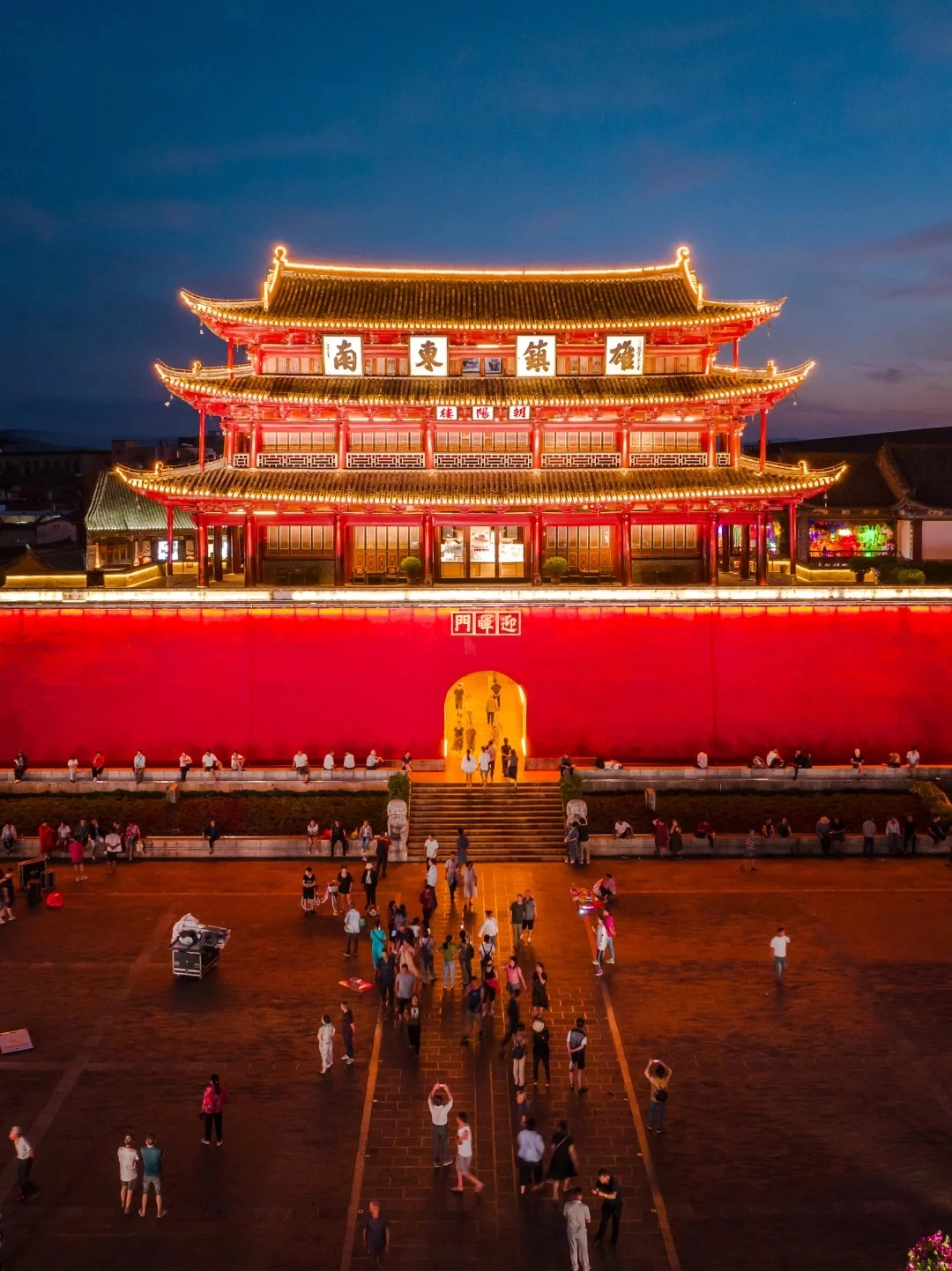
A wide-angle, elevated shot of the Chaoyang Gate tower in Jianshui Old Town at dusk. The traditional multi-tiered Chinese architectural structure is brightly illuminated with golden lights outlining its eaves and roofs. The building's facade is predominantly red, with intricate latticework on the second and third levels. A large, vibrant red wall forms the base of the structure, featuring an arched entryway leading to a set of stone stairs. Numerous people are visible walking up the stairs, entering the gate, and gathered in the large paved plaza in front of the wall. The sky above is a deep twilight blue.

The magnificent Chaoyang Gate stands as a symbol of Jianshui’s rich history, welcoming visitors into its ancient heart as dusk settles over Yunnan. Imagine exploring this historic gateway after immersing yourself in the local Confucian culture and savoring authentic Jianshui tofu!

Marvel at Chaoyang Gate (East Gate)

Your exploration should start at Chaoyang Lou, the imposing East Gate tower. Built in 1389 during the Ming Dynasty, it actually predates Beijing’s Tiananmen Square. The massive red facade against the morning sun is a photographer’s dream.

In the mornings, the plaza beneath the gate comes alive. You will hear the sharp clacking of Mahjong tiles and the melodic chirping of pet birds in bamboo cages brought out by local elders. It is a sensory immersion into everyday Yunnan life.

Get Lost in the Zhu Family Garden

Located on Jianxin Street, the Zhu Family Garden is a sprawling 20,000-square-meter private estate built during the late Qing Dynasty. Navigating its labyrinth of 42 courtyards and 214 rooms is a mesmerizing experience.

Watch your step on the uneven, centuries-old cobblestones as you wander through the bamboo groves. The air here carries the faint, sweet scent of blooming orchids and aged cedar wood. It is a brilliant showcase of southern Chinese residential architecture.

Find Peace at the Jianshui Confucian Temple

Standing for over 700 years, the Jianshui Confucian Temple is one of the largest in China, second only to the one in Qufu (Confucius’s hometown). The scale of the main hall, supported by massive solid timber pillars, is breathtaking.

Unlike crowded Buddhist temples in bigger cities, this complex is incredibly serene. You can easily spend two hours walking around the tranquil Pan Pool, shaded by ancient cypress trees, absorbing the scholarly atmosphere of ancient Lin’an.

What to Know Before You Go: Skip the Swallow Cave

Many local tour operators will push you to visit the nearby Swallow Cave (Yanzidong). We suggest skipping it. While the cave is large, the interior is heavily commercialized with garish neon lights that ruin the natural aesthetic.

Instead of paying the inflated entrance fee for the cave, spend your afternoon hunting down Jianshui’s ancient wells. The Daban Well (Large Slab Well) is the most famous. You can watch locals drawing incredibly pure water, which is the secret ingredient to the town’s famous culinary export.

Tasting Authentic Jianshui Roasted Tofu
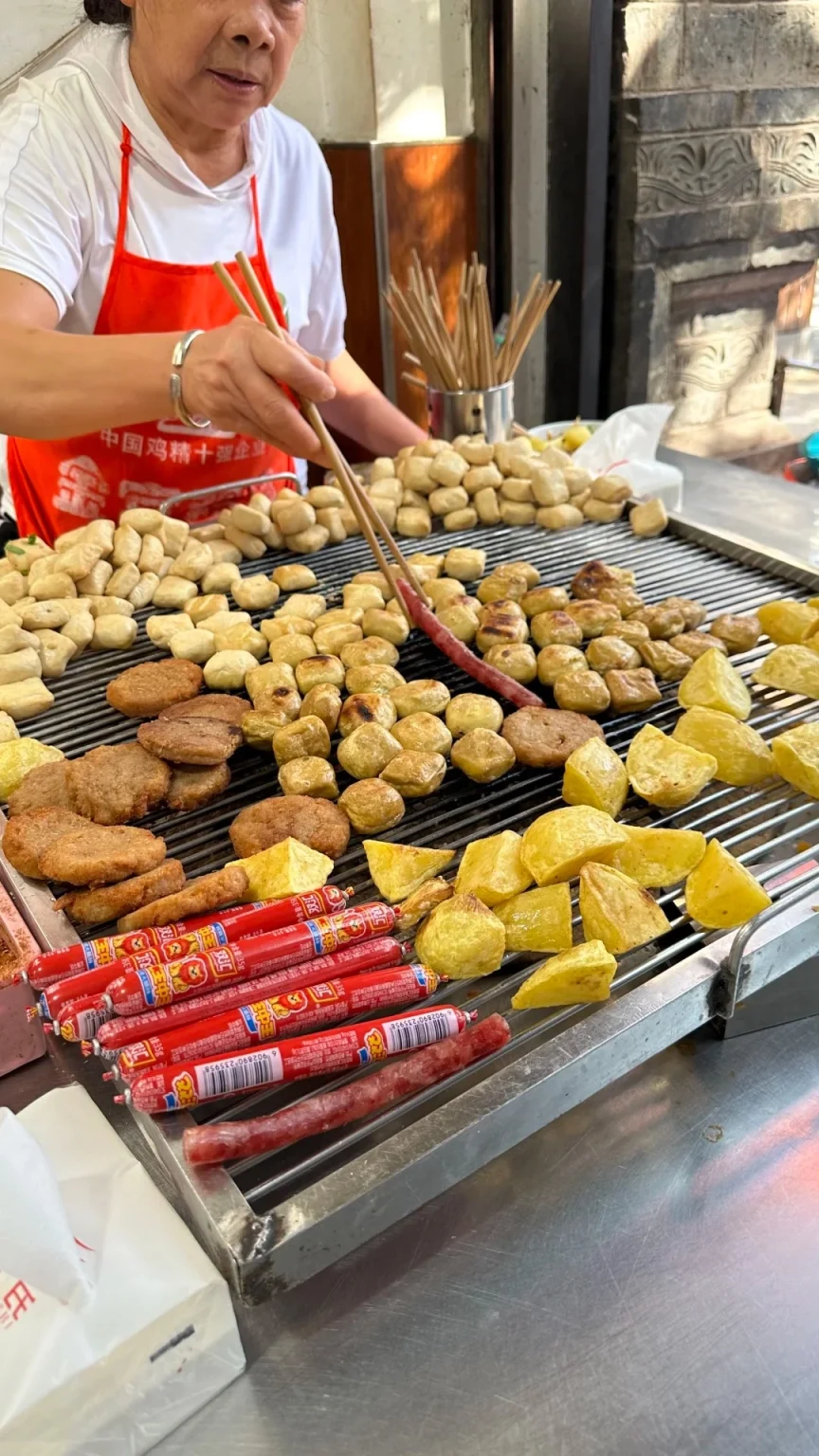
An older Asian woman wearing an orange apron uses chopsticks to turn pieces of grilled food on a metal grate. The grate holds many small, golden-brown fried tofu cubes, round meat patties, and some yellow potato chunks. Below the grill are rows of red packaged sausages and one unpacked sausage on the grill. In the background, more tofu is stacked. A metal container of wooden skewers is also visible.

A street vendor in Jianshui, Yunnan, grills an array of local specialties, including the region’s famous roasted tofu, alongside sausages and meat patties. This scene captures the vibrant street food culture that complements the ancient architecture and Confucian heritage of the city.

You cannot leave this town without eating Jianshui roasted tofu. The experience is incredibly communal. You will find vendors set up in narrow alleys, fanning smoking charcoal grills covered in puffy, golden-brown squares of fermented tofu.

Pull up a tiny, knee-high wooden stool and join the locals. The smell is earthy and slightly pungent, but the taste is spectacular—crispy on the outside, creamy and molten on the inside. Dip it in the provided dry chili and ground pepper mix.

Vendors keep track of how many pieces you eat by tossing a dried corn kernel into a small bowl for every piece you take. It is incredibly cheap; a hearty snack will only cost you around 10 to 15 RMB. Pair it with a cold bottle of Nongfu Spring water, which costs just 2 RMB at local corner stores—a stark contrast to the inflated prices in larger tourist hubs.

Common Questions About Traveling to China

What is the 144-hour visa-free transit in China?

The 144-hour visa-free transit allows travelers from 54 eligible countries to visit specific regions, such as Yunnan, for up to six days without a visa. You must hold a valid onward ticket to a third country to qualify.

Cash is rarely used in China today. It is highly recommended to set up Alipay or WeChat Pay before your arrival to handle payments for everything from transport to street food.

To bypass the Great Firewall and access essential apps, you should download an eSIM before landing. This ensures your navigation and payment apps work seamlessly throughout your trip.

China’s high-speed rail network is the most efficient way to travel. You can book tickets via the official 12306 platform and use local ride-hailing apps like DiDi to get from train stations to your destination.

Conclusion

Jianshui offers a rare, unfiltered glimpse into China’s imperial past, free from the overwhelming commercialization found in other parts of Yunnan. From the architectural splendor of the Zhu Family Garden to the simple joy of eating roasted tofu on a street corner, it is a destination that rewards slow, mindful travel. If you are building your 2026 itinerary, make sure this historic gem is on your list. Ready to explore more of the region? Read our complete guide to navigating Yunnan’s high-speed rail network to plan your next stop.

Similar posts to this one

A large golden stupa rises above the yellow, blue, and red tiled roof of Lhagong Monastery, with snow-capped mountains in the background under a bright blue sky with white clouds.

Kangding, Tagong and Tibetan Sichuan: Easy Starter Route for First‑Timers

Kangding, Tagong and Tibetan Sichuan: Easy Starter Route for First‑Timers TL;DR: Trip Essentials The Route: A 4 to 5-day loop [...]

A life-sized bronze chariot pulled by four horses, with a terracotta figure of an attendant seated on the chariot under a large umbrella. The chariot and horses are displayed on a dark gray surface with theatrical lighting, and a glimpse of museum visitors can be seen in the background.

Beyond the Terracotta Army: A Logistical Guide to the Han Yang Ling Museum

If you are planning a trip to Xi'an in 2026, you already know the Terracotta Warriors are a mandatory [...]

A display of traditional Chinese cheongsam dresses and jackets on mannequins and shelves. The garments feature various patterns like blue and white plaid, blue stripes, and subtle checkered fabrics. Some have mandarin collars and frog fastenings. A tote bag with a cat pattern hangs on the left, and a quilted fabric bag is also visible.

Beyond the Silk Road: A Practical Guide to Custom Cheongsam in Suzhou

For centuries, the misty canal city of Suzhou has been the undisputed capital of Chinese silk. If you are traveling [...]

Get the China Arrival Survival Kit

Planning a trip here has a steep learning curve. Join our newsletter and receive our free “Day One Checklist” covering everything from setting up Alipay and WeChat to bypassing the internet firewall.