


Navigating China in 2026: Logistics and Connectivity
What is the 144-hour visa-free transit?
The 144-hour visa-free transit policy allows citizens from 54 eligible countries to enter specific Chinese regions, including Guilin, without a prior visa for up to six days. You must hold valid travel documents and a confirmed onward ticket to a third country.
According to the official National Immigration Administration, Guilin Liangjiang International Airport is an approved entry port for this policy. This makes a quick, food-focused layover incredibly easy to plan.
Digital Payments and Internet Access
You cannot eat street food in China without a smartphone. Vendors selling 2 RMB steamed buns do not carry change. Download Alipay and complete the identity verification process at home. To ensure these apps work seamlessly, you must have an uncensored internet connection. We highly recommend installing an eSIM before your flight lands.
💡 Editor’s Pick: We recommend Nomad eSIM for China because it reliably bypasses the Great Firewall with stable speeds.
For intercity travel to Guilin, always book your high-speed rail tickets directly through the official 12306 China Railway platform. Third-party agencies often charge unnecessary markup fees and complicate the refund process.
The Holy Trinity of Guilin Street Food
1. Authentic Guilin Rice Noodles (Mifen)
If you pay more than 10 RMB (about $1.40 USD) for a bowl of Guilin rice noodles, you are in a tourist trap. The authentic experience happens at unassuming, stainless-steel counters. The silky fresh noodles are topped with golden crispy pork belly, braised beef, and a deeply savory, sticky gravy known as lushui.
Insider Tip: A common tourist mistake is immediately pouring soup over the noodles. Do not do this! Locals eat them “dry-tossed” to savor the rich gravy coating the noodles. Once you finish the noodles and meat, take your bowl to the communal pot and ladle in the hot bone broth to finish.
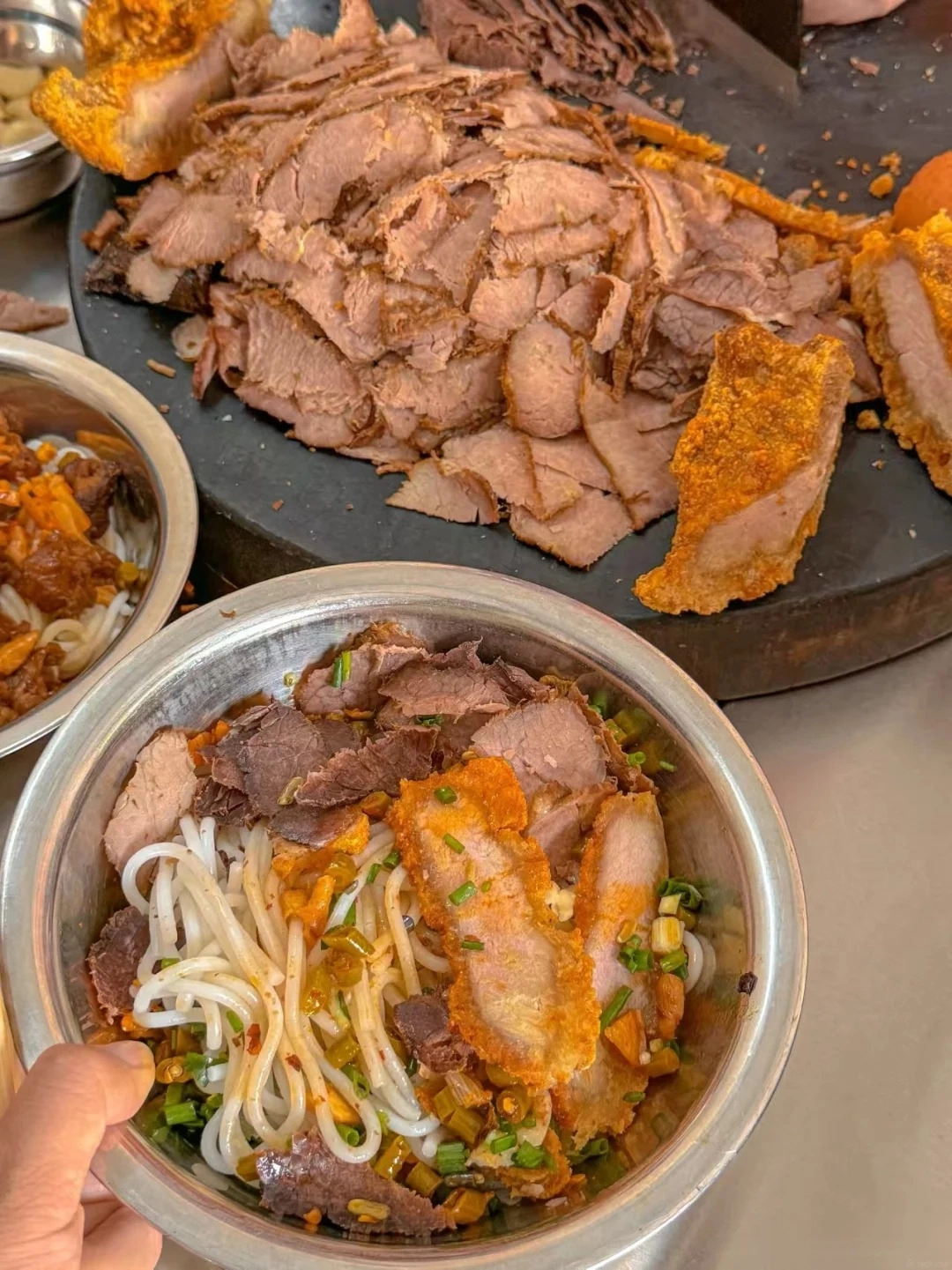
Beyond the iconic dry-tossed noodles, Guilin street food offers an incredible array of roasted meats and crispy pork belly that are simply unmissable.
2. Oil Tea (You Cha): The “Chinese Coffee”
Originating from the Yao ethnic minority, oil tea is an acquired taste that you absolutely must try. Vendors stir-fry fresh tea leaves with aged ginger and garlic in an iron wok, pounding them with a wooden pestle before adding water. The resulting amber broth is pungent, bitter, and intensely aromatic.
Served with puffed rice, crispy peanuts, and scallions, it cuts right through the heavy humidity of southern China. Your first sip will be shocking, but by the third sip, the sweet, earthy aftertaste becomes highly addictive.
3. Water Chestnut Cake and Osmanthus Sweets
For dessert, look for street carts selling translucent, bouncy squares of water chestnut cake (mati gao). Unlike heavy Western cakes, this traditional treat is made from locally ground water chestnuts and brown sugar, offering a refreshing, sandy texture that isn’t overly sweet.
You will also smell Osmanthus cake before you see it. Guilin is famous for its golden osmanthus flowers. Freshly steamed in wooden bamboo baskets on the street corners, these chewy, floral rice flour cakes cost around 5 RMB and pair perfectly with a cup of bitter oil tea.
Where to Find the Best Local Markets
What to Know Before You Go: Zhengyang vs. Shangshui
Zhengyang Pedestrian Street is Guilin’s most famous commercial hub, but it is highly overrated for authentic food. The main drag is filled with generic, overpriced snacks you can find in any Chinese city. Instead, turn down the narrow alleyway of Shangshui Food Street.
Here, the crowds are denser, the plastic stools are lower, and the woks are roaring. You can find everything from sizzling Li River squid on iron plates to 5-yuan suan ye—tart local fruits like papaya and mango tossed in chili salt. It is a flavor explosion unique to the Guangxi region.

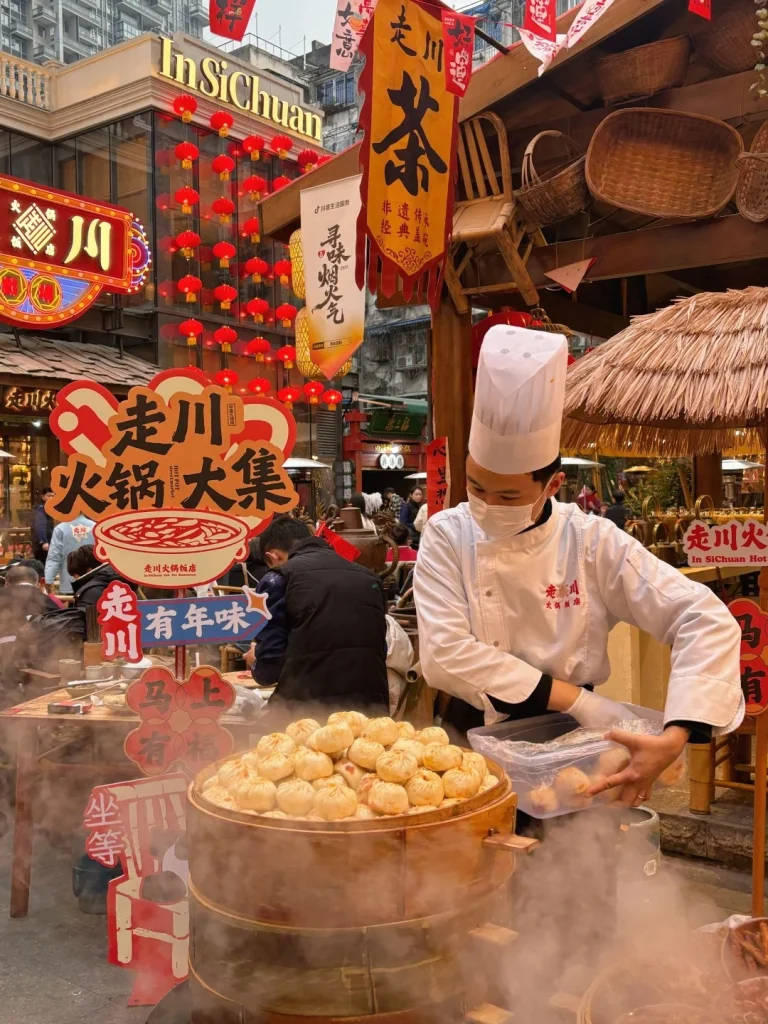
Step into the vibrant night market of Guilin, where the aroma of sizzling street food fills the air! This lively scene captures the essence of a foodie’s paradise, with countless stalls offering delicious local treats as you wander through.
Morning Markets: Heishan Market
To truly prove your foodie credentials, set your alarm for 6:30 AM and head to Heishan Market in the Xiangshan District. This is where local grandmothers do their daily shopping. The sensory experience is incredible: vendors air-drying fresh river fish, the rhythmic chopping of crispy pork belly, and the earthy smell of handmade mugwort cakes.
Is it Worth It? Absolutely. Arrive before 9:00 AM, find the stall with the longest line of locals holding shopping baskets, and point to whatever they are ordering. A massive, freshly steamed sticky rice ball stuffed with pickled beans and sausage will cost you about 4 RMB.
Practical Tips for a Flawless Food Tour
While the street food in Guilin is generally very safe, always apply the universal rule of street food: follow the crowds. High turnover means fresh ingredients. If a vendor’s ingredients have been sitting out in the midday sun without a line of customers, skip it.
Tap water in China is not potable. Always buy bottled water to wash down your spicy street snacks. A standard bottle of Nongfu Spring water costs exactly 2 RMB at any convenience store. If a vendor tries to charge you 5 RMB, politely walk away.
Finally, embrace the chaos. You might not always know exactly what you are pointing at, and the translation apps might give you hilarious, nonsensical English names for regional dishes. That is all part of the magic of eating your way through southern China.