
A Guide to 'Wild' Great Wall Camping: Safety, Gear, and Top Locations

Most travelers experience the Great Wall shoulder-to-shoulder with thousands of others at restored sections like Badaling. But if you’re looking for an authentic, rugged adventure, you need a reliable wild great wall camping guide. Sleeping under the stars next to centuries-old Ming Dynasty watchtowers is entirely possible in 2026, but it requires serious preparation. From navigating overgrown trails with loose dolomite stones to managing extreme temperature drops, this isn’t your average weekend backpacking trip. Let’s break down exactly how to safely tackle unrestored sections like Jiankou and Gubeikou without relying on an overpriced private tour.

TL;DR: Trip Essentials

  • Legality & Location: Pitching tents directly on the wall is technically prohibited; camp in designated adjacent basecamps or farmer courtyards (农家院) near Jiankou or Gubeikou.
  • Connectivity: Download Alipay and WeChat for all local payments, and secure a reliable eSIM before arrival to bypass the Great Firewall.
  • Water: There are no facilities on wild sections. You must carry at least 4 liters of water per person (expect to pay 15-20 RMB per bottle from opportunistic trail vendors).
  • Safety: Avoid the rainy season (July-August) due to lightning risks on exposed ridges and slippery, crumbling bricks.

Summarize with :

What is the 144-Hour Visa-Free Transit?

The 144-hour visa-free transit policy allows citizens from 54 eligible countries to enter specific Chinese regions, including Beijing and Hebei, for up to six days without a pre-approved visa, provided they hold confirmed onward tickets to a third country. According to the China National Immigration Administration, this is perfect for short camping itineraries.

Choosing Your Spot: Where to Camp Near the Wild Wall

Not all unrestored sections are created equal. You need a location that balances stunning scenery with safe, accessible camping areas.

Jiankou: The Photographer’s Dream

Jiankou is notorious for its steep, jagged white dolomite ridges. It’s wildly photogenic but physically demanding. Insider Tip: Do not attempt to camp on the “Zhengbeilou” watchtower roof. Not only is it technically illegal and heavily monitored in 2026, but the midnight wind chill drops to a biting 5°C (41°F) even in late spring. Instead, hike down to the adjacent village basecamps where local farmers let you pitch a tent safely for about 50 RMB.
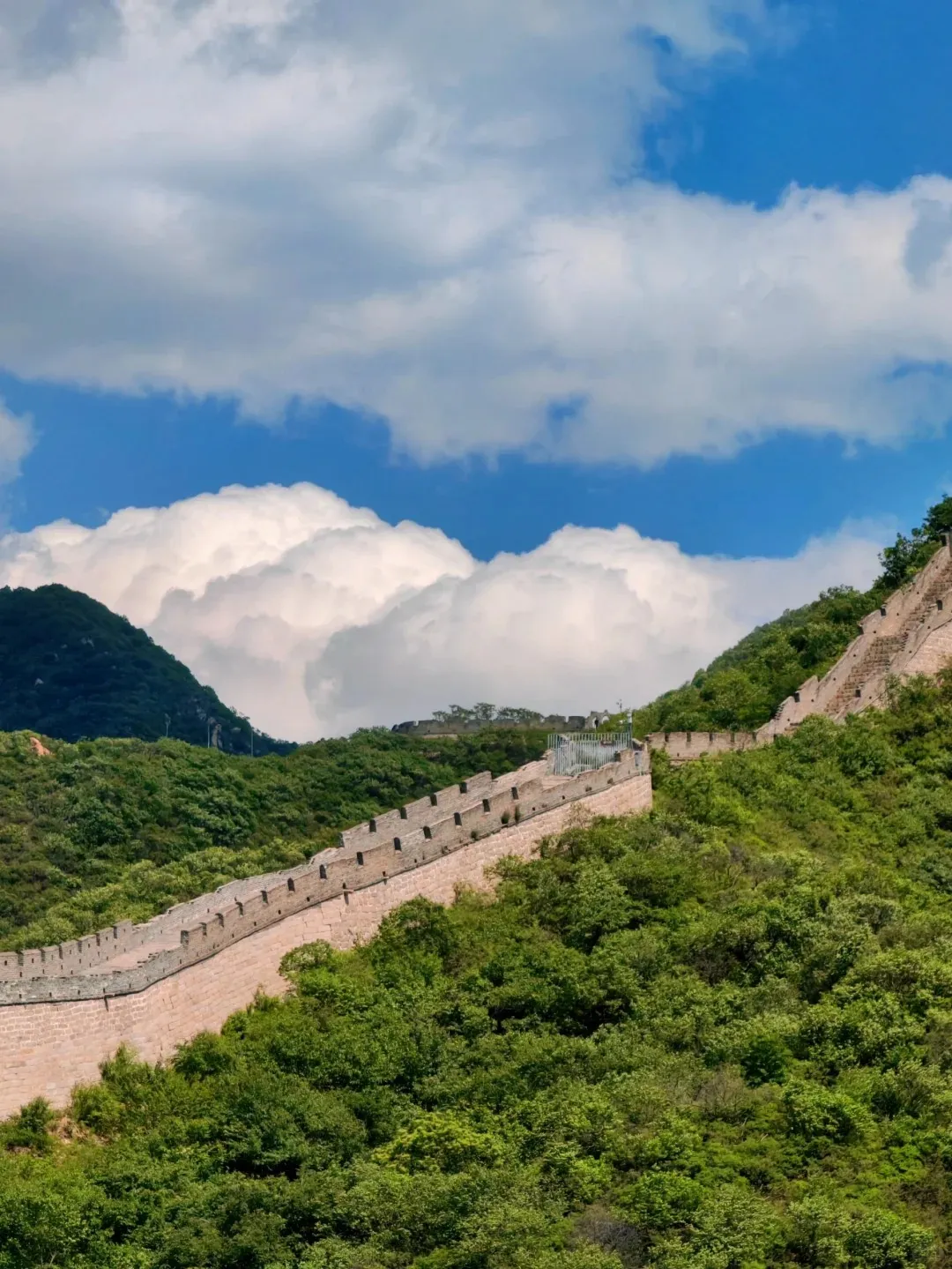
A long, light-colored stone section of the Great Wall of China winding up and down lush green, tree-covered mountains. The wall features several watchtowers and battlements, all set against a bright blue sky filled with large white cumulus clouds.

The majestic Great Wall of China, seen here snaking through verdant mountains, offers endless opportunities for exploration. For those seeking an immersive adventure, discover our guide to safely camping on more remote, ‘wild’ sections of this ancient wonder.

Chenjiapu and Gubeikou: The Uncrowded Alternatives

If you want to skip the intense scrambling of Jiankou, head to Gubeikou. It retains its battle-scarred, un-restored charm without the terrifying vertical drops. Is it Worth It? Absolutely. While tourists are elbowing each other at Badaling, Gubeikou offers miles of silent, rolling hills. The smell of wild jujube bushes and the quiet crunch of gravel under your boots make this the ultimate wilderness escape.

Logistics: How to Navigate and Pay in 2026

Getting to the wild sections without a private guide requires a mix of high-speed rail and local ride-hailing. According to the official 12306 China Railway booking system, you can catch a high-speed train from Beijing Chaoyang to Huairou or Miyun stations for under 40 RMB.

Once at the station, you will need the DiDi ride-hailing mini-app (accessed via Alipay or WeChat) to reach the trailhead. Cash is practically obsolete in rural China today, so ensure your foreign credit card is linked to Alipay before you land.

To keep these apps functioning on the mountains, you need seamless cellular data. I highly recommend using a travel eSIM to bypass the local firewall.

💡 Editor’s Pick: We recommend Nomad eSIM for China because it reliably bypasses the Great Firewall with stable speeds.

With a solid connection, you can use Baidu Maps (Google Maps is highly inaccurate in rural China) to track your hiking routes and translate signs using WeChat’s built-in scanner.

Essential Gear and Safety: What to Pack

Carrying a heavy pack up 45-degree inclines of crumbling stone is exhausting. Your gear needs to be ultralight and highly functional.

  • Footwear: Leave the trail runners at home. You need over-the-ankle hiking boots with deep lugs. The loose rubble on the descents acts like marbles on hard stone.
  • Hydration: Bring a 3-liter hydration bladder plus extra bottles. A bottle of water at a village shop costs 2 RMB, but once you hit the trail, opportunistic vendors (if you see them) charge up to 20 RMB.
  • Shelter: A freestanding 3-season tent is mandatory. You cannot drive stakes into the stone or hard-packed earth around the watchtowers.
  • Leave No Trace (LNT): Pack out all toilet paper and trash. The wild wall has no sanitation facilities, and human waste is becoming a serious issue in the surrounding valleys.
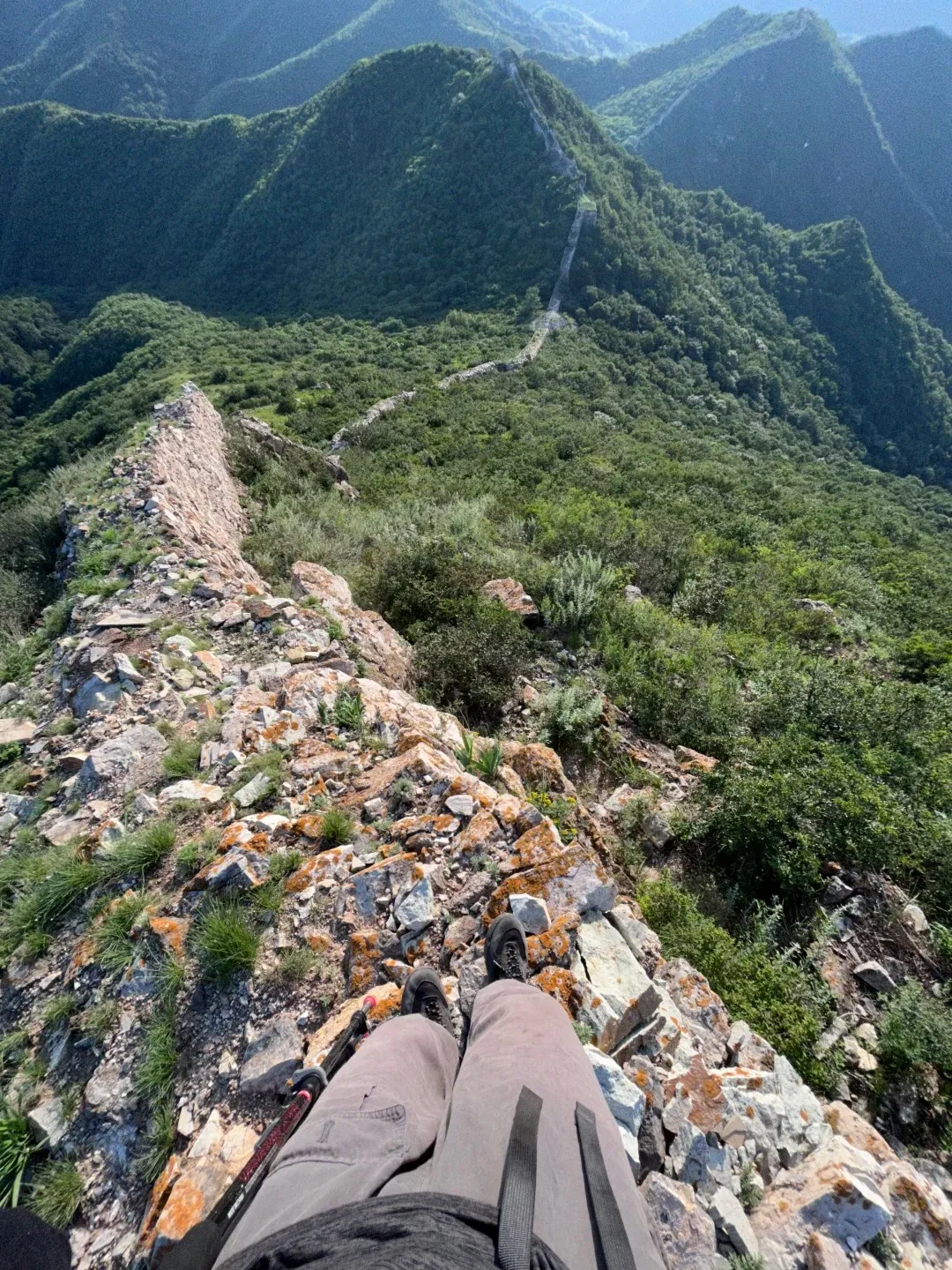
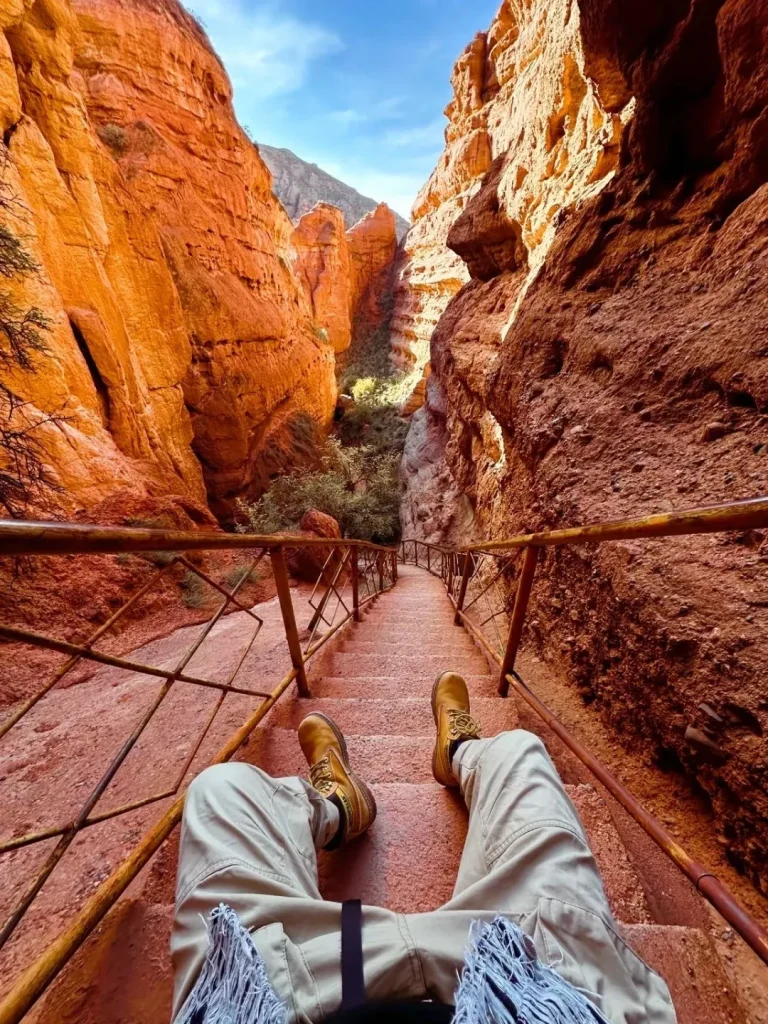
First-person view of a hiker's legs and dark boots resting on the rocky, crumbling edge of an unrestored Great Wall section, overlooking expansive green, forested mountains stretching into the hazy distance.

Perched on an authentic, unrestored section of the Great Wall, soaking in the grandeur of nature and history. For an even deeper immersion, consider the adventure of ‘wild’ Great Wall camping – just be sure you’re fully equipped and understand the safety protocols outlined in our guide!

Your Great Wall Camping Questions Answered

Is it legal to camp on the Great Wall of China?

Pitching a tent directly on the Great Wall is technically prohibited to protect the historical structure. However, you can legally camp in designated basecamps or local farmer courtyards (农家院) immediately adjacent to unrestored sections like Jiankou and Gubeikou.

Yes, the 144-hour visa-free transit policy allows eligible travelers to explore Beijing and Hebei without a pre-approved visa. This provides plenty of time for a short Great Wall camping itinerary, provided you have a confirmed onward ticket to a third country.

Cash is practically obsolete in rural China, so you will need to rely on mobile payments. Download Alipay or WeChat and link your foreign credit card before arriving to easily pay for local transport, basecamps, and trail supplies.

You will need a reliable travel eSIM to bypass the local firewall and maintain internet access. Essential apps include Alipay or WeChat for payments, DiDi for ride-hailing to trailheads, and Baidu Maps for accurate rural navigation.

Conclusion

Tackling the unrestored sections of China’s most famous monument is an unforgettable experience, provided you respect the terrain and the local regulations. By packing smart, using the right digital tools like Alipay, and choosing adjacent village camps over fragile watchtowers, you can pull off the ultimate backpacking trip. Ready to start planning? Check out our complete packing list for rural China or book your high-speed train tickets today to secure your adventure.

Similar posts to this one

A wide, green meadow filled with small yellow and purple wildflowers in the foreground, with a cluster of wooden buildings and trees in the middle ground. Behind the trees, majestic snow-capped mountains rise under a cloudy blue sky.

Beyond the Peaks: A Guide to the Mandalas of Four Sisters Mountain

Finding genuine spiritual solitude in China’s booming outdoor travel scene can feel impossible. Yet, tucked away on the eastern edge [...]

A large, ancient ginkgo tree with vibrant golden leaves dominates the center of the frame against a bright blue sky. In the foreground, traditional Chinese-style buildings with tiled roofs are visible behind a low, ornate stone wall and several wooden benches. Fallen golden ginkgo leaves carpet the ground.

Beijing’s Western Hills: A Guide to Tanzhe Temple and Beyond

Escaping the concrete density of downtown Beijing requires little more than a subway card and a willingness to head west. [...]

A nighttime aerial view of a sandy beach with bioluminescent waves crashing ashore. The water glows an intense blue and green, creating trails of light along the shore and around rocks. The background shows a rocky coastline with vegetation and distant lights under a dark sky.

Chasing 'Blue Tears': A Guide to Pingtan Island's Bioluminescence

If you are scrolling through Chinese social media in the spring, you have likely seen the ethereal, glowing blue coastlines [...]

Get the China Arrival Survival Kit

Planning a trip here has a steep learning curve. Join our newsletter and receive our free “Day One Checklist” covering everything from setting up Alipay and WeChat to bypassing the internet firewall.