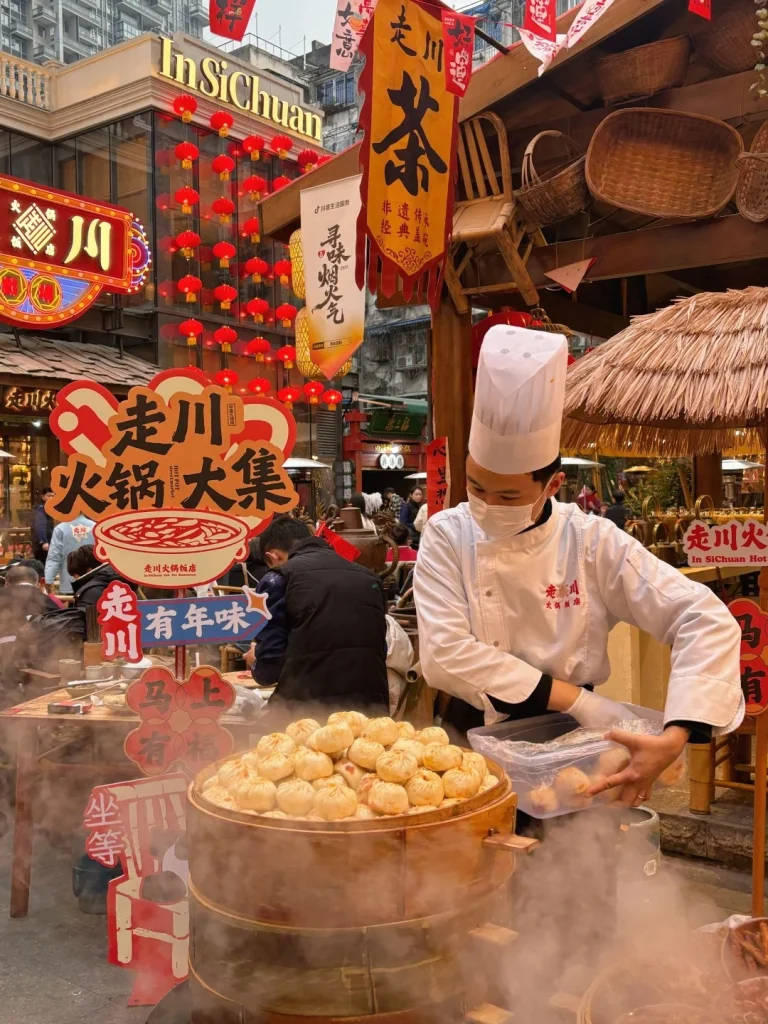



Navigating Nanjing: Visas, Trains, and Connectivity
What is the 144-hour visa?
The 144-hour transit visa exemption allows citizens of 54 eligible countries to explore specific Chinese regions, including the Jiangsu-Zhejiang-Shanghai zone, for up to six days without a pre-approved visa. You must hold a valid passport and a confirmed onward ticket to a third country.
According to the official 12306 rail policy, booking high-speed train tickets requires real-name verification using your passport. Trains from Shanghai Hongqiao to Nanjing South Station run every 15 minutes, cost around ¥140 ($19 USD), and take just 90 minutes. Book at least 3 days in advance during the peak 2026 summer and autumn travel seasons to secure a seat.
To navigate the Nanjing Metro and pay for street food via QR codes, you need reliable internet. Public Wi-Fi requires a Chinese phone number, and foreign roaming plans are often throttled by the Great Firewall. I highly recommend using a travel eSIM to keep Google Maps and translation apps running smoothly.
💡 Editor’s Pick: We recommend Nomad eSIM for China because it reliably bypasses the Great Firewall with stable speeds.
Day 1: Scaling the Ming Walls and Tasting Old Nanjing
Morning: Zhonghua Gate and the Ancient Defenses
Start your morning early at Zhonghua Gate (中华门). Admission is ¥50. Built in the late 14th century, this is the most formidable of Nanjing’s 13 original city gates. It looks less like a wall and more like a massive stone castle with three connected barbican courtyards.
Insider Tip: There is absolutely zero shade on top of the wall. If you visit between June and September, you will be dripping with sweat by 10:00 AM. Buy a ¥2 bottle of icy Nongfu Spring water from the vendor at the base before you climb the steep stone ramps.
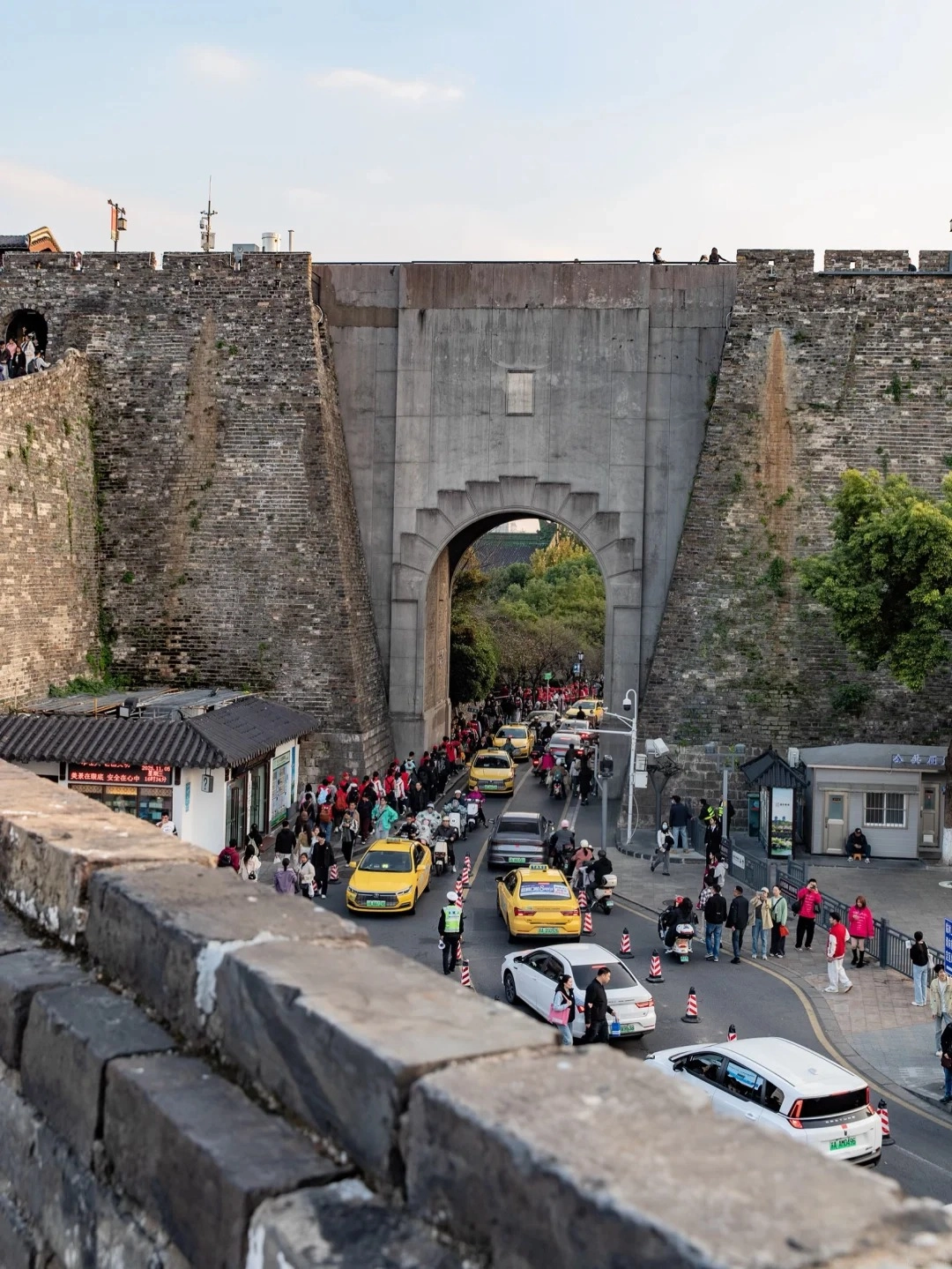
The ancient Zhonghua Gate of Nanjing, a historic city wall, buzzes with activity as modern life flows through its impressive archway. This glimpse of urban exploration is just one of the many sights awaiting you on our 2-day guide!
Once on top, you can walk or rent a clanky mountain bike to ride the 3km stretch east toward Dongshui Pass. Bike rentals require a ¥200 deposit via WeChat, which is refunded when you return the bike. Look closely at the gray bricks beneath your feet—many still bear the stamped names of the Ming-era artisans who fired them.
Lunch: The Duck Capital of China
By noon, head north toward the Qinhuai River area to find lunch. Forget Beijing—Nanjing is the true duck capital of China. Locals here utilize every part of the bird. You are looking for a bustling, slightly chaotic local joint serving Duck Blood Vermicelli Soup (鸭血粉丝汤).
Don’t let the name intimidate you. The broth is deeply savory, perfumed with star anise and white pepper. It’s filled with chewy sweet potato noodles, fried tofu puffs, and tender cubes of duck blood that have the texture of silken tofu. Pair it with a side of Nanjing Salted Duck (盐水鸭), which is served cold, remarkably tender, and perfectly salty.
Evening: Fuzimiao vs. Laomendong
As the sun sets, the area around the Fuzimiao (Confucian Temple) lights up. It is visually stunning, with traditional boats cruising the Qinhuai River under red lanterns. However, it is also notoriously crowded and expensive.
What to Know Before You Go: Skip eating at the main Fuzimiao pedestrian street. Instead, walk 15 minutes south to the Laomendong (老门东) historical block. It has the same beautifully restored Ming and Qing dynasty architecture, but the food scene is far superior. Look for the long lines of locals waiting for crispy plum flower cakes (梅花糕) and pan-fried beef dumplings.
Day 2: Xuanwu Lake, Temples, and Hidden Alleys
Morning: Jiming Temple to Xuanwu Lake
Take Metro Line 3 to Jimingsi Station. Jiming Temple (鸡鸣寺) is Nanjing’s most active Buddhist temple (¥10 entry). The golden-yellow walls and burning incense create a deeply atmospheric experience, though it gets shoulder-to-shoulder crowded by mid-morning.
Climb to the top of the temple complex and exit via the back gate. This leads you directly to the Jiefang Gate section of the city wall. From here, you get a sweeping, elevated view of the towering modern skyline contrasting with the lush, weeping willows lining Xuanwu Lake (玄武湖).
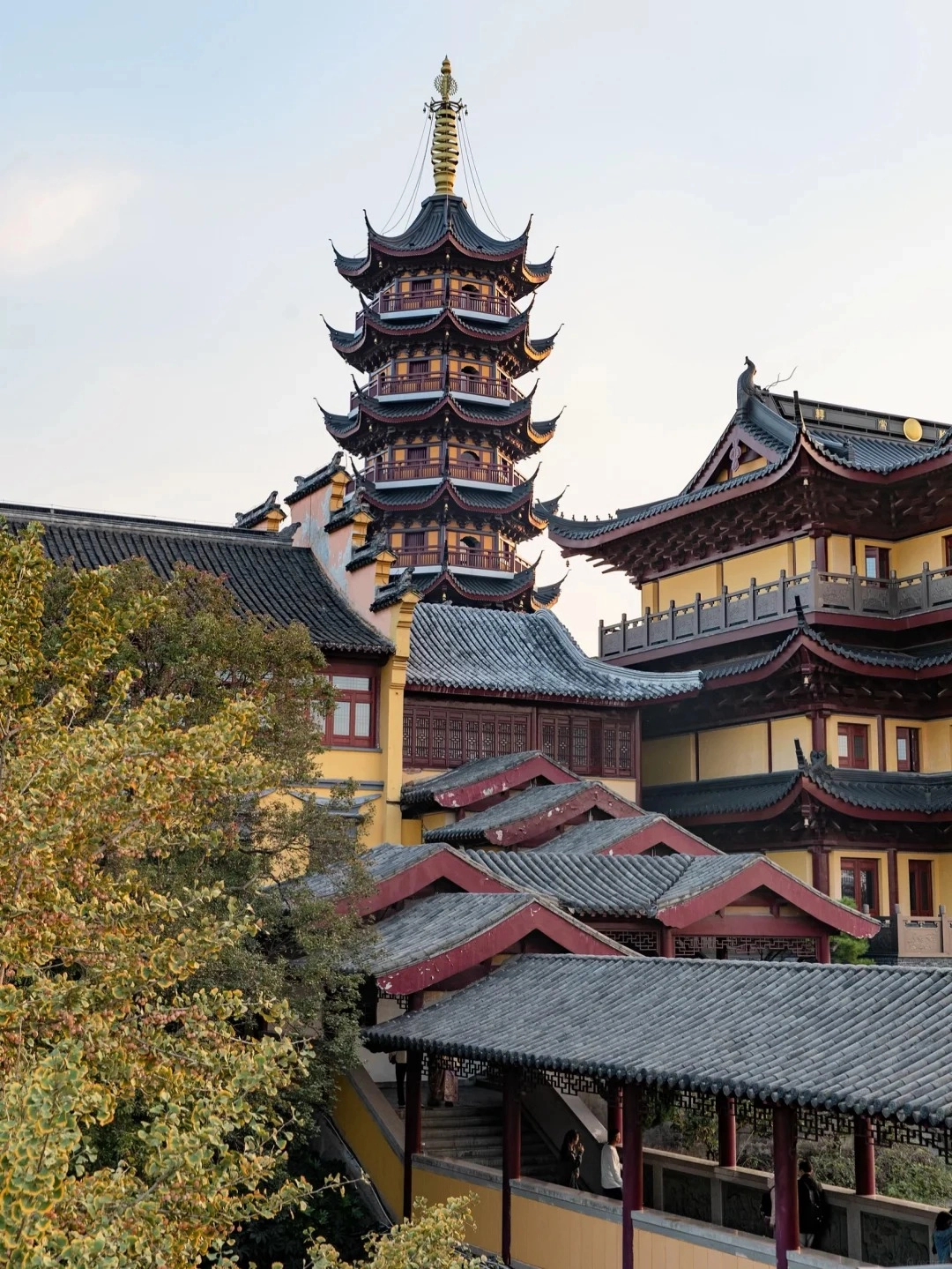
The iconic Jiming Temple, a serene oasis in Nanjing, offers a stunning contrast to the vibrant street food scene explored in this guide. Discover the city’s rich history and modern culinary delights.
Descend from the wall at Xuanwu Gate and take a slow stroll across the lake’s causeways. It’s a massive, peaceful park where you’ll see elderly locals practicing Tai Chi and flying elaborate kites.
Afternoon: Pioneer Bookstore and Xinjiekou
For a dose of modern Nanjing culture, head to the Pioneer Bookstore (先锋书店) on Guangzhou Road. Housed inside a massive, converted underground parking garage, it is widely considered one of China’s most beautiful independent bookshops. The smell of old paper and fresh coffee makes it a perfect mid-afternoon refuge.
Next, dive into the neon-lit chaos of Xinjiekou (新街口), the commercial heart of the city. The metro station here has 24 exits and is a labyrinth of underground food courts. It is the perfect place to grab a quick, cheap bite, like a freshly baked sesame flatbread (烧饼).
Where to Stay and Final Tips
When booking your hotel, location is everything. I highly recommend staying in the Xinjiekou district or near Daxinggong Metro Station. Both areas give you access to Metro Lines 1, 2, and 3, which connect directly to the train stations and all major historical sites.
Remember that Google Maps can sometimes show outdated walking routes in Chinese cities due to rapid development. Download Amap (高德地图) or use the map function inside the Apple Maps app, which uses local data and is highly accurate for walking and public transit directions in Nanjing.