


What is the 144-Hour Visa-Free Transit in Chengdu?
The 144-hour visa-free transit is an official Chinese immigration policy allowing travelers from 54 eligible countries to stay in Chengdu and the surrounding Sichuan province for up to six days without a pre-approved visa, provided they hold confirmed onward flight tickets to a third country.
Navigating Chengdu’s Food Scene in 2026: Apps and Connectivity
Before you can order a single skewer of meat, you need to set up your digital wallet. Cash is virtually obsolete in Chengdu’s local eateries. You will need to download Alipay or WeChat and bind your international Visa or Mastercard before arriving in China.
Because China’s Great Firewall blocks many Western apps, including Google Translate, maintaining a fast, reliable internet connection is non-negotiable for reading menus and paying vendors. We highly recommend using an eSIM to bypass these restrictions seamlessly.
💡 Editor’s Pick: We recommend Nomad eSIM for China because it reliably bypasses the Great Firewall with stable speeds.
Insider Tip for Ordering: When you sit down at a restaurant, look for a QR code taped to the corner of the table. Scan this using the Alipay app. The built-in translation feature within Alipay’s mini-programs will instantly translate the digital menu into English, allowing you to add dishes to your cart and pay without speaking a word of Mandarin.
The Ultimate Chengdu Hotpot Map: Where to Sweat It Out
Chengdu hotpot is a communal, sensory experience. The air is thick with the aroma of boiling beef tallow, garlic, and handfuls of red chilies. To survive and thrive, you must understand the broth and the dipping sauce.
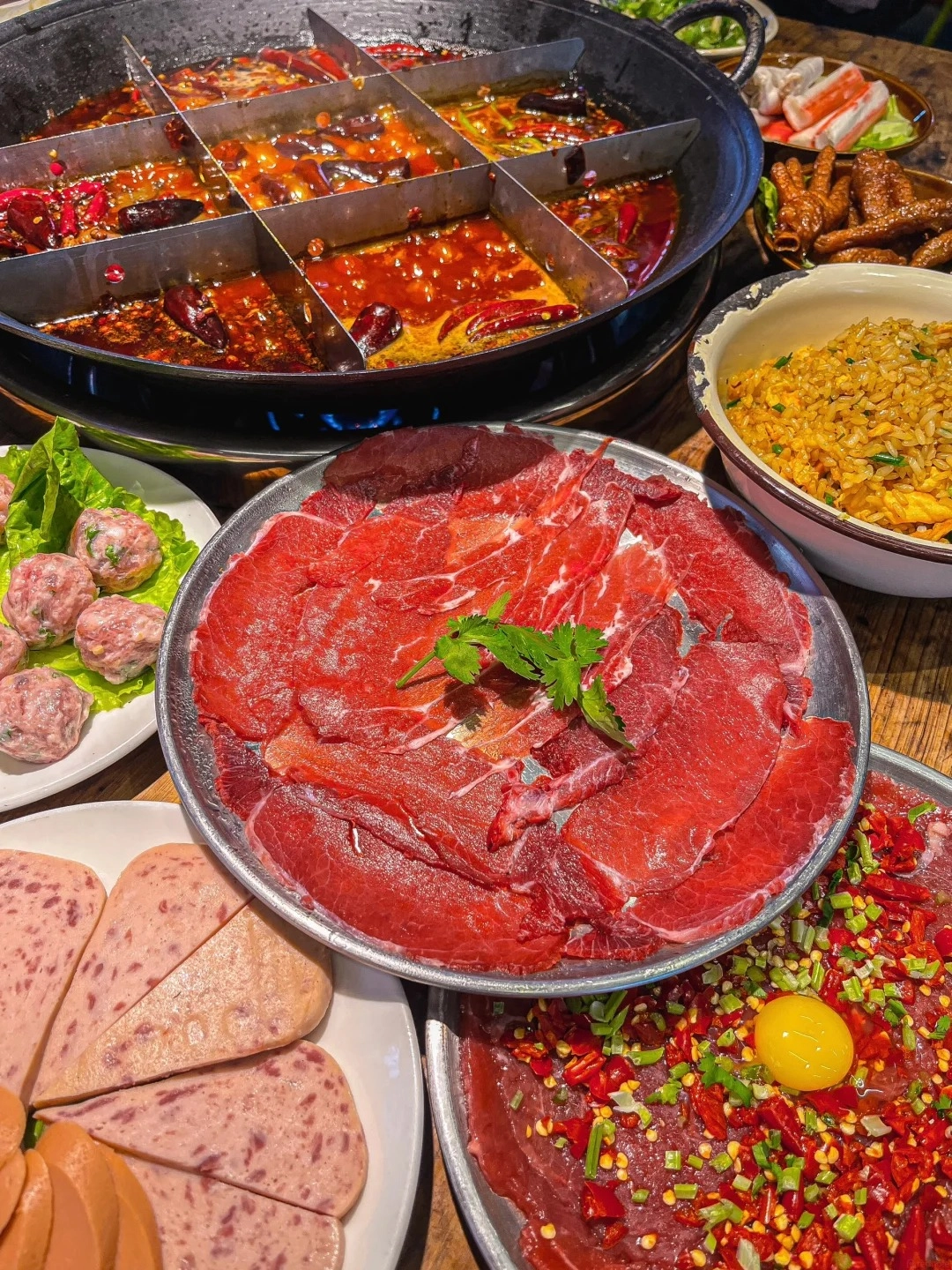
Dive into the heart of Chengdu’s culinary scene with this incredible spread of Sichuan hotpot, featuring a split pot for diverse flavors, alongside essential accompaniments like thinly sliced beef, flavorful fried rice, and spicy minced beef ready for the boil.
Decoding the Spice Levels
Never order “extra spicy” unless you want to ruin your palate for the rest of the trip. The numbing effect comes from Sichuan peppercorns (huājiāo), which create a buzzing sensation on your lips. Always ask for wei la (mild spicy) when ordering the red broth. Better yet, order a Yin-Yang pot (yuānyang guō), which provides a safe haven of clear mushroom or pork bone broth on one side.
Top Hotpot Spots for Travelers
- Huangcheng Laoma (Qintai Road Branch): Perfect for first-timers. The spice levels are manageable, and the traditional wooden architecture is stunning. Expect to pay around 150 RMB ($21 USD) per person. Pair your meal with an iced plum juice to cut the heat.
- Jincheng Impression (Rainbow Bridge): Located near the Wuhou Shrine, this spot is famous for its fresh ingredients. Try the “seven up, eight down” method: dip fresh beef tripe into the boiling broth for exactly 15 seconds for the perfect crispy texture.
- Aibandeng Old Hotpot: Located near Tianfu Square, this is a bustling, loud, and incredibly authentic local favorite. They offer free snacks like fried rice and fresh fruit to help cool your mouth down between bites.
Street Food & Snack Streets: A Neighborhood Breakdown
While hotpot is an event, street food is the daily lifeblood of Chengdu. However, not all snack streets are created equal.
What to Know Before You Go: The Jinli Trap
Many guidebooks will point you to Jinli Ancient Street or Kuanzhai Alley for street food. Is it worth it? Only for the photos. The food here is heavily commercialized, crowded, and priced at a premium for tourists. Go at 8:00 PM to see the red lanterns light up, but save your appetite for the local neighborhoods.
Where the Locals Actually Eat
For an authentic culinary walk, head to the Yulin Community. This neighborhood is a maze of laid-back cafes, dive bars, and sizzling food carts. Alternatively, the Fuqin Night Market opens around 5:00 PM and is a paradise for late-night BBQ skewers and cold beers.
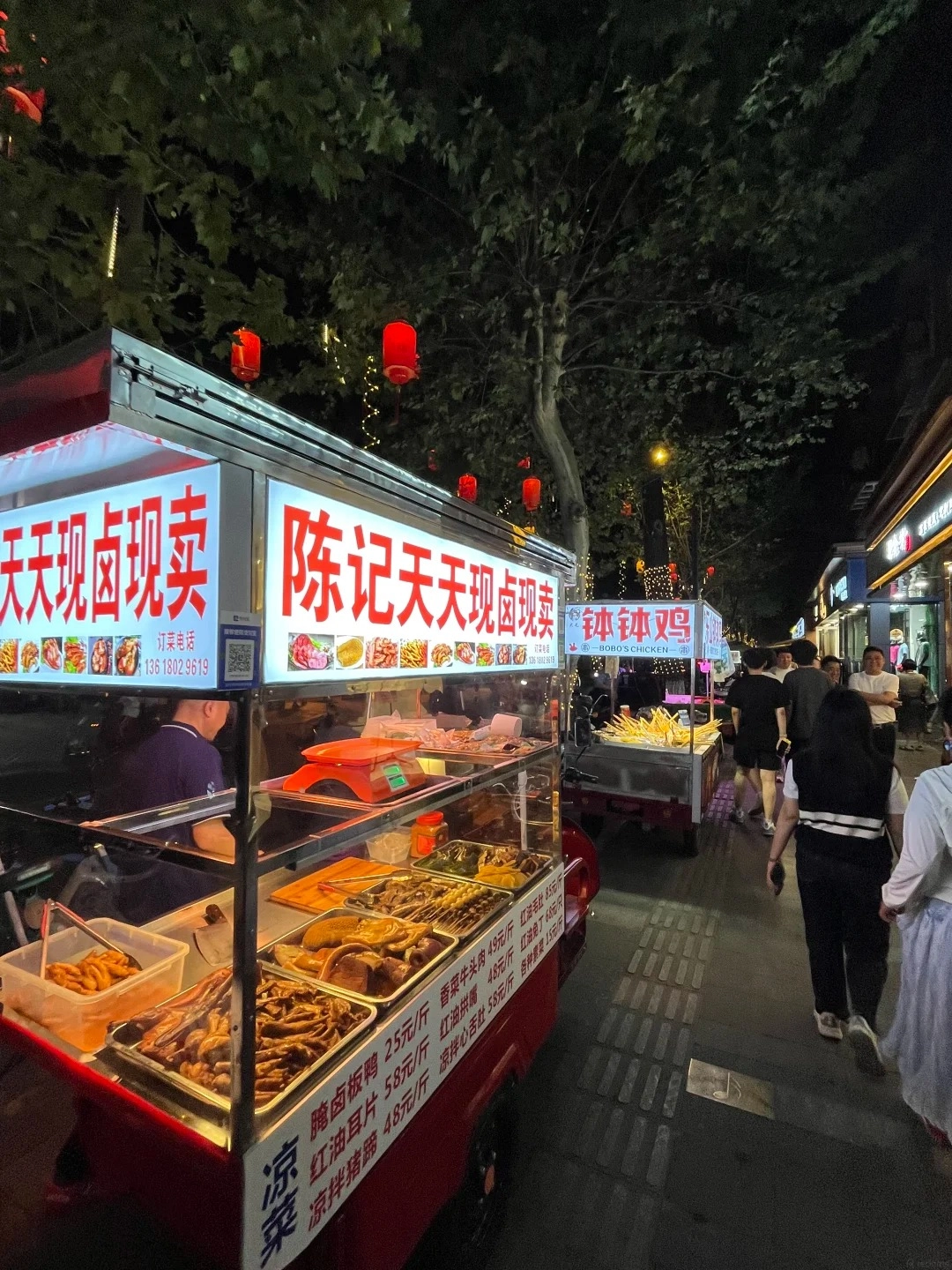
Night falls on Chengdu, but the street food scene is just heating up! This vibrant stall, adorned with traditional red lanterns, offers a tempting array of local delicacies. It’s a perfect example of the delicious and diverse street eats that make Chengdu a foodie paradise, as highlighted in our traveler’s guide.
Must-Try Street Eats
- Dan Dan Noodles (担担面): A small bowl of thin noodles topped with crispy minced pork, yellow soybeans, garlic, and a heavy pour of chili oil and sesame paste. Mix it vigorously before eating.
- Zhong Shui Jiao (钟水饺): These are not your average dumplings. Filled entirely with minced pork, they are bathed in a signature sweet and spicy red soy sauce that is incredibly addictive.
- Chuan Chuan (串串): Think of this as hotpot on a stick. You grab a basket, pick raw skewered ingredients from a massive fridge (mushrooms, beef, quail eggs), and hand them to the vendor to boil in a master spicy broth. You pay by the stick—usually just 1 or 2 RMB each.
- Spicy Rabbit Head (麻辣兔头): A true Chengdu delicacy. It requires getting your hands dirty as you gnaw the tender, highly spiced meat off the bone. It is rich, oily, and fiercely loved by locals.
How to Cool Down: Teahouse Culture
To balance the heavy, oily nature of Sichuan food, you must participate in Chengdu’s legendary tea culture. Head to Heming Teahouse in People’s Park. For about 30 RMB, you get a bamboo chair, a gaiwan (lidded tea bowl) of jasmine green tea, and endless hot water refills. It is the perfect place to digest your meals, watch locals play mahjong, and enjoy the slow pace of Chengdu life.