
Beyond the Wall: A Practical Guide to Visiting Nanjing's Sun Yat-sen Mausoleum

Standing at the base of Purple Mountain, the sheer scale of the 392 stone steps stretching up into the humid canopy is intimidating. If you are planning a trip to Jiangsu province, finding a reliable Sun Yat-sen Mausoleum travel guide is essential to navigating this monumental site.

As the resting place of the “Father of the Nation,” this site draws massive domestic crowds year-round. Surviving the visit requires more than just showing up; you need to master local apps, time your arrival perfectly, and understand the strict ticketing logistics.

TL;DR: Trip Essentials

  • Entry is free, but reservations are mandatory: You must book a time slot up to 7 days in advance via the official WeChat Mini Program.
  • Bring your physical passport: Foreigners cannot scan a Chinese ID card, so your passport is required at the turnstiles for manual verification.
  • Getting there: Take Nanjing Metro Line 2 to Muxuyuan Station, then ride the scenic area shuttle bus (10 RMB) to the base of the mausoleum.
  • Physical preparation: The climb consists of 392 steep steps; bring water and avoid the crushing weekend midday crowds.

Summarize with :

What is the 144-Hour Visa-Free Transit?

The 144-hour visa-free transit is an official Chinese immigration policy allowing eligible foreign passport holders to stay in designated regions, including Nanjing and the wider Jiangsu-Zhejiang-Shanghai area, for up to 6 days without a pre-approved visa, provided they have a confirmed onward ticket to a third country.

Digital Survival: Connectivity and Navigation

China’s digital ecosystem in 2026 is entirely cashless and app-dependent. To book tickets, pay for shuttle buses, or hail a DiDi, you need a stable internet connection that reliably bypasses the Great Firewall.

Relying on public Wi-Fi is a rookie mistake, as most networks require a Chinese phone number to send an SMS verification code. I highly recommend installing a reliable travel eSIM before your plane lands.

💡 Editor’s Pick: We recommend Nomad eSIM for China because it reliably bypasses the Great Firewall with stable speeds.

Once connected, ensure you have Alipay or WeChat Pay set up and bound to your foreign credit card. You will use these apps to scan the QR codes for the red, train-style shuttle buses that zip between the Metro Line 2 Muxuyuan Station and the mausoleum entrance.

How to Secure Your Free Tickets

According to the official Zhongshan Scenic Area administrative policy, while admission to the Sun Yat-sen Mausoleum is completely free, real-name registration is strictly enforced. Walk-ins are routinely turned away during peak seasons.

Search for the “Zhongshan Scenic Area” (钟山风景区) Mini Program on WeChat. You can reserve your entry slot up to a week in advance. Because the system is optimized for Chinese ID cards, foreign visitors must manually enter their passport numbers.

Crucial step: You must bring your physical passport to the site. The automated turnstiles will not read foreign passports, so look for the manual inspection lane or the tourist service center on the right side of the entrance gate.
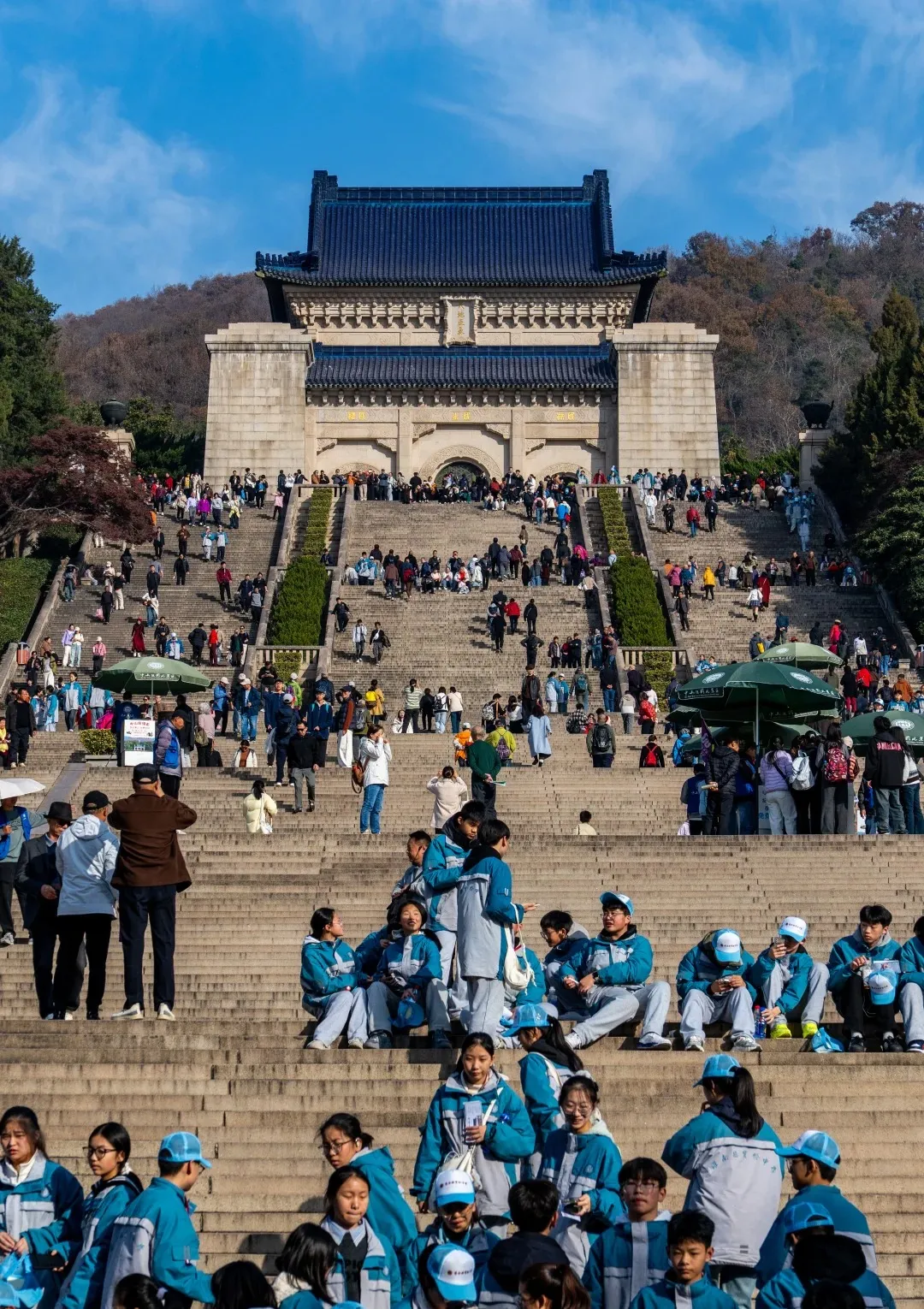
A wide view of the Sun Yat-sen Mausoleum in Nanjing, with a large stone building topped with a dark blue tiled roof at the top of a wide, long staircase. Many people, including a large group of students in matching blue and white uniforms, are visible on the steps leading up to the mausoleum. The surrounding hillside is covered in trees with autumn foliage. The sky is blue with some clouds.

The journey to the Sun Yat-sen Mausoleum is an impressive one, with 392 steps symbolizing the path to his legacy. This scene captures the spirit of visitors, many of whom are students, making their pilgrimage to this significant historical site.

Conquering the 392 Steps

The architectural design by Lu Yanzhi is a masterclass in forced perspective. From the bottom of the grand stairway, you only see the steep, breathless ascent of 392 steps—representing the estimated 392 million people in China at the time of the republic’s founding.

During my last visit in late spring, the humidity was thick, and the scent of damp pine needles hung heavy in the air. Buy your water at the base; a cold bottle of Nongfu Spring water costs about 5 RMB here, but prices jump or become unavailable once you begin the climb.

As you ascend, the steps give way to wide terraces. Once you reach the top and look back, the steps vanish from view, leaving only the flat, open platforms. This optical illusion symbolizes that the path of revolution is arduous, but the resulting peace is smooth and open.

Inside the Memorial Chamber

At the summit, the sacrificial hall features a striking roof of blue-glazed tiles. This blue and white color scheme deliberately mirrors the Kuomintang (KMT) flag, a mosaic of which adorns the vaulted ceiling inside.

You will see the seated marble statue of Dr. Sun Yat-sen. The atmosphere here shifts from the noisy, selfie-stick-wielding crowds outside to a hushed, solemn reverence. Remember to keep your voice down and avoid using flash photography in the inner crypt where his copper coffin rests.
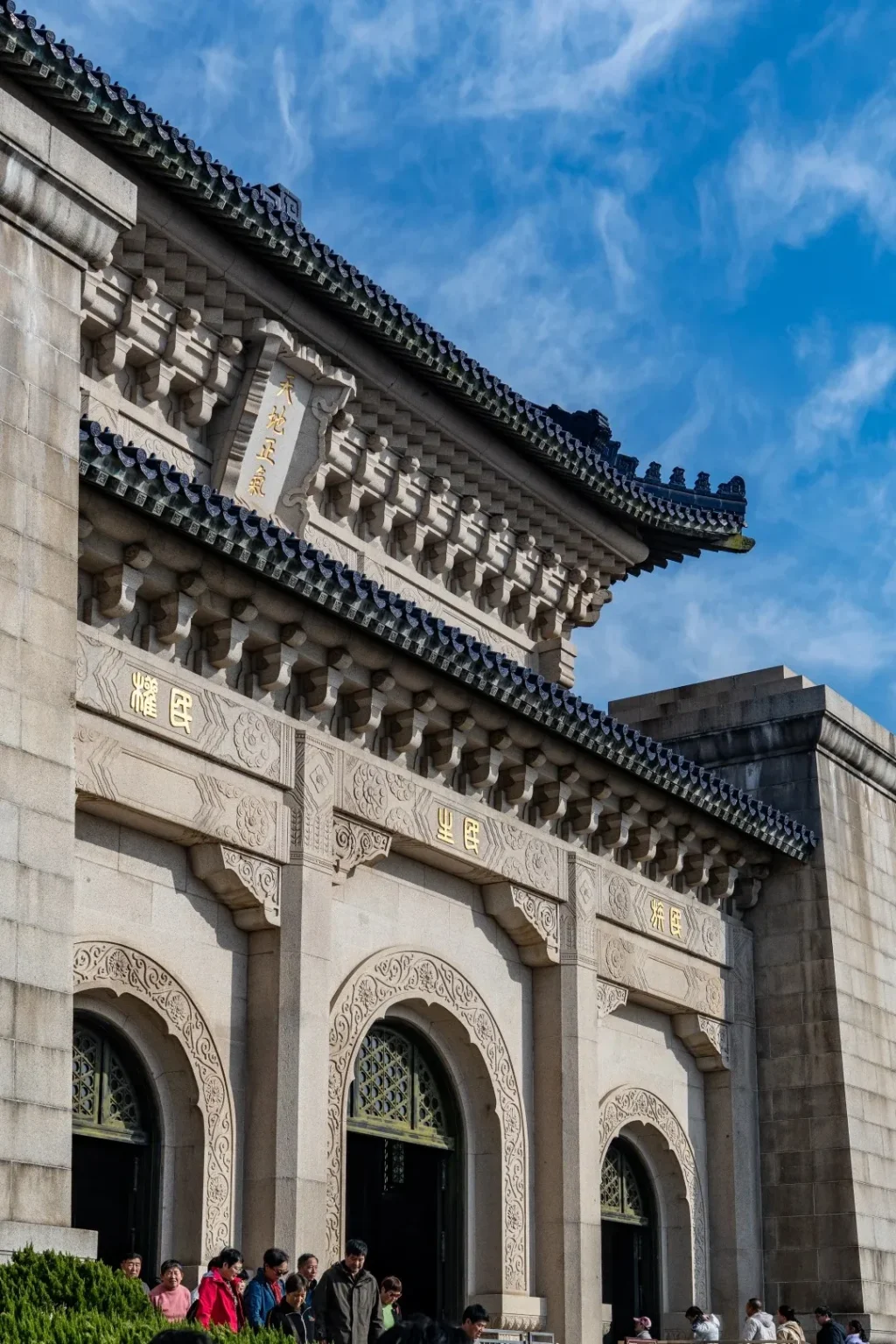
Close-up of the upper section of a large granite building with a traditional dark blue glazed tile roof. Inscriptions in gold Chinese characters are visible on the facade. Arched entrances with ornate carvings are partially visible at the bottom, with a crowd of people entering.

The majestic granite facade of the Sun Yat-sen Mausoleum is adorned with traditional blue glazed roof tiles and golden inscriptions, hinting at the rich history and significance of this iconic Nanjing landmark. Planning your visit? This guide will help you navigate beyond the initial grandeur.

Insider Tip: What to Skip and What to Add

Many tourists make the mistake of spending hours browsing the overpriced, generic souvenir stalls clustered near the exit. Skip these entirely. The jade trinkets and mass-produced fans are identical to those found in any Chinese tourist trap.

Instead, maximize your time on Purple Mountain by walking or taking the shuttle to the nearby Ming Xiaoling Mausoleum. While Sun Yat-sen’s tomb is a marvel of 20th-century republican architecture, Ming Xiaoling offers a deeply atmospheric, 600-year-old stone spirit path that is far less crowded in the late afternoon.

Frequently Asked Questions About Visiting China

Do I need a visa to visit China in 2026?

You may be eligible for the 144-hour visa-free transit if you are traveling to designated regions like Nanjing, Shanghai, or Zhejiang with a confirmed onward ticket to a third country. Always verify your specific nationality’s eligibility and entry requirements before booking your flight.

China is an increasingly cashless society where mobile payments like Alipay and WeChat Pay are the standard for everything from shuttle buses to street food. It is highly recommended to set up these apps and link your foreign credit card before you arrive.

Relying on public Wi-Fi is difficult because many networks require a Chinese phone number for SMS verification. Using a reliable travel eSIM that bypasses the Great Firewall is the best way to ensure constant connectivity for navigation and booking apps.

You must bring your original physical passport, as automated turnstiles usually only accept Chinese ID cards. Always carry your passport for manual verification at the entrance, and ensure you have pre-booked your entry slot via the official WeChat Mini Program.

Conclusion

Visiting the resting place of the “Father of Modern China” is a non-negotiable experience when exploring Nanjing. By securing your digital reservations, arriving early to beat the midday heat, and preparing for the physical climb, you can fully appreciate the historical gravity of Purple Mountain.

Ready to explore more of China’s ancient capitals? Check out our complete itinerary for eating your way through Nanjing’s bustling Confucius Temple district, and secure your high-speed rail tickets for your next adventure today!

Similar posts to this one

A person holds up a newspaper titled 'Chongqing Hotpot Daily' which features a picture of a large spread of hot pot ingredients. The newspaper is in front of a long table laden with various dishes of raw meats, vegetables, seafood, and other hot pot ingredients, arranged around a central divided hot pot. The table is set in a long, arched concrete tunnel with blue and white lights illuminating the background, suggesting it's a converted air raid shelter. Several bottles of yellow liquid and dipping sauces are also visible on the table.

Chongqing's Civil Defense Architecture: A Guide to Converted Air Raid Shelters

Chongqing is famously known as one of China's "Furnace Cities," where summer temperatures regularly push past 40°C (104°F). To truly [...]

An aerial view of a dense collection of traditional European-style buildings with red-tiled roofs nestled amongst lush green trees, overlooking a wide blue bay filled with boats and ships. In the distance, a modern cityscape with tall skyscrapers rises under a clear blue sky with a faint airplane.

Gulangyu Island Walking Tour: Hidden Architecture & Cafes

Xiamen's famous pedestrian-only island can feel like a chaotic theme park if you follow the flag-waving tour groups down Longtou [...]

A close-up, blurred foreground of a stone Buddha statue in profile, with its hand raised in a gesture. In the background, a tall, yellow, multi-tiered pagoda stands against a blue sky with scattered clouds. Green trees are visible at the base of the pagoda.

Hanyangling Museum Guide: Xi'an's Best Kept Secret Underground

Most travelers flock to Xi'an for the Terracotta Warriors, only to find themselves shoulder-to-shoulder with thousands of tourists in sweltering, [...]

Get the China Arrival Survival Kit

Planning a trip here has a steep learning curve. Join our newsletter and receive our free “Day One Checklist” covering everything from setting up Alipay and WeChat to bypassing the internet firewall.