


The Legacy of the Orient’s Moscow: What to Eat
Harbin’s food scene was forever changed in the late 19th century when the China Eastern Railway brought thousands of Russian immigrants to the region. Today, the city’s signature dishes are a testament to this cross-cultural integration.
Dalieba (Khleb) and Hongchang (Smoked Red Sausage)
You cannot discuss Harbin without mentioning Dalieba. Derived from the Russian word “khleb,” these massive, round sourdough loaves can weigh up to 2.5 kilograms. They feature a hard, chewy crust with a soft, fragrant interior flavored with hops.
The perfect pairing for this bread is Hongchang, Harbin’s iconic smoked red sausage. Made with lean pork and smoked over hardwood, authentic Hongchang features a thin layer of charcoal ash on the casing. The garlic-heavy, smoky flavor is intensely savory and distinct from sweeter southern Chinese sausages.
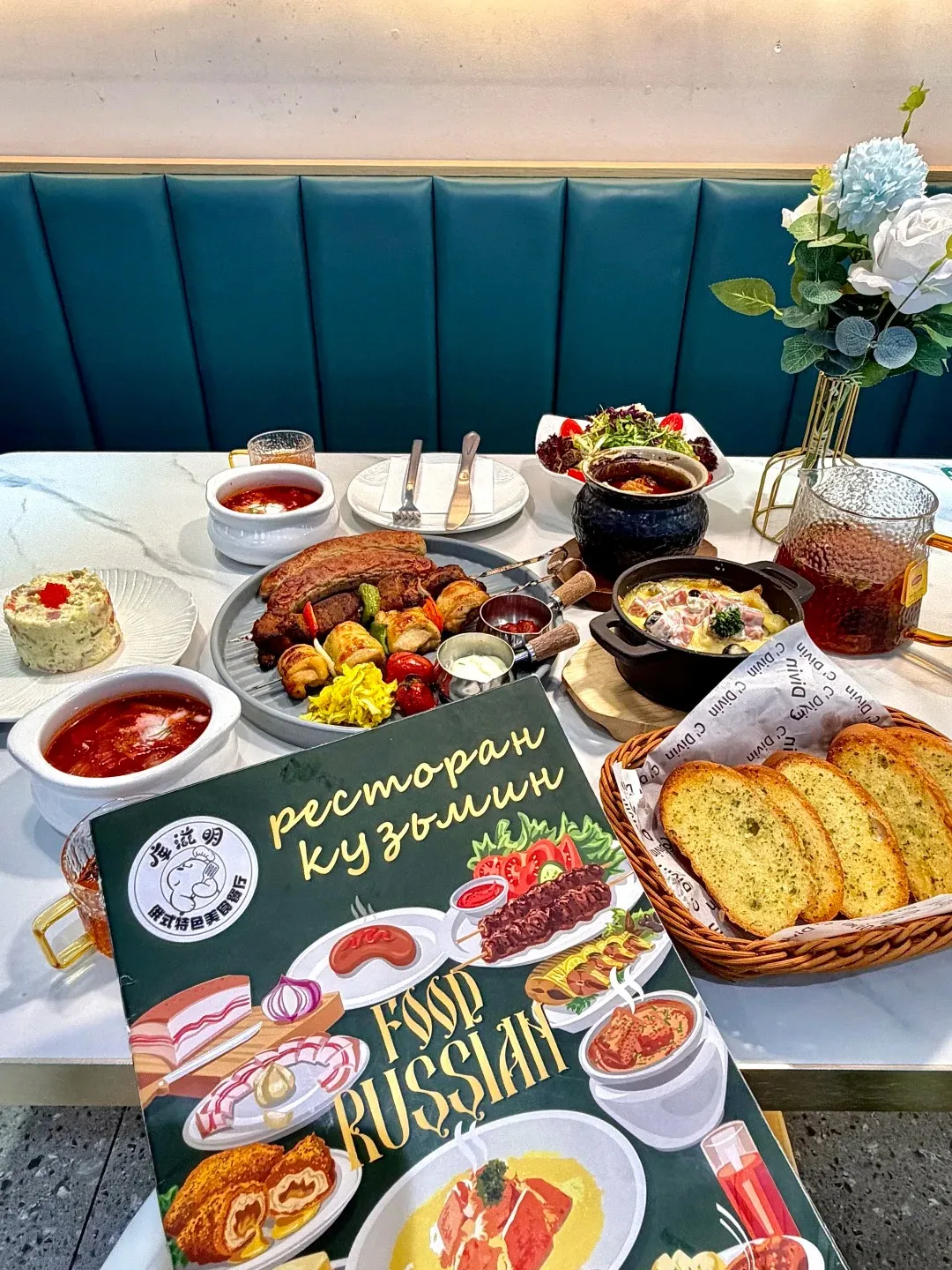
This spread offers a tantalizing glimpse into Harbin’s rich Russian culinary heritage, showcasing hearty dishes from borsch to various grilled specialties, alongside a menu that promises an authentic gastronomic journey.
Madieer Ice Cream: A Freezing Winter Tradition
It feels counterintuitive, but eating Madieer (Modern) Ice Cream while wearing a heavy down jacket is a mandatory Harbin experience. Sold directly on the street along Central Avenue since 1906, these pale yellow ice cream bars are sweet, milky, and incredibly creamy.
Because the ambient temperature is well below freezing, the ice cream never melts over your gloves. Expect to queue behind dozens of shivering locals for this ¥5 treat.
Where to Experience the Best Russian-Chinese Fusion in Daoli District
The Daoli District is the epicenter of Harbin’s historical architecture and culinary heritage. While there are countless eateries, a few century-old establishments stand out for their commitment to traditional flavors.
Portman Western Restaurant
For an upscale dive into Russian comfort food, Portman Western Restaurant remains a local favorite. The atmosphere is undeniably old-world, complete with dark wood panels and live saxophone music.
Their signature Moscow Borscht is a revelation against the winter chill. The slow-cooked broth is tangy, slightly sweet, and packed with tender beef and vibrant beets. Pair it with their pan-fried salmon or braised lamb stew for a heavy, warming meal.
Insider Tip: What to Know Before You Go
Skip the massive queues at Huamei Western Restaurant. While historically significant, the two-hour wait in the freezing cold is punishing, and the food has become highly commercialized. Instead, walk a few blocks over to Bomele 1931 Cafe for incredible Russian pastries and hot coffee without the tourist-trap crowds.
Harbin Logistics: Navigating and Staying Connected in 2026
Traveling to Harbin requires some modern preparation. The days of fumbling with paper maps and cash are entirely gone in 2026.
What is the 144-Hour Visa-Free Transit Policy?
The 144-hour visa-free transit policy allows eligible passport holders from 54 countries to explore Harbin and the wider Heilongjiang region without a pre-approved visa for up to six days. You must hold a confirmed, direct onward flight ticket to a third country to qualify.
Digital Connectivity and Payments
To navigate Harbin’s sprawling districts and translate menus, you need reliable internet. However, China’s strict internet regulations block essential services like Google Maps, WhatsApp, and Instagram.
To bypass the Great Firewall effortlessly, you must install a reliable travel eSIM before your flight touches down.
💡 Editor’s Pick: We recommend Nomad eSIM for China because it reliably bypasses the Great Firewall with stable speeds.
Once connected, rely entirely on Alipay and WeChat Pay. Even the smallest street vendor selling baked sweet potatoes expects a QR code scan. For reference on daily costs, a standard bottle of Nongfu Spring water costs about ¥2 at a local convenience store, though expect to pay ¥5 to ¥10 inside premium tourist zones.
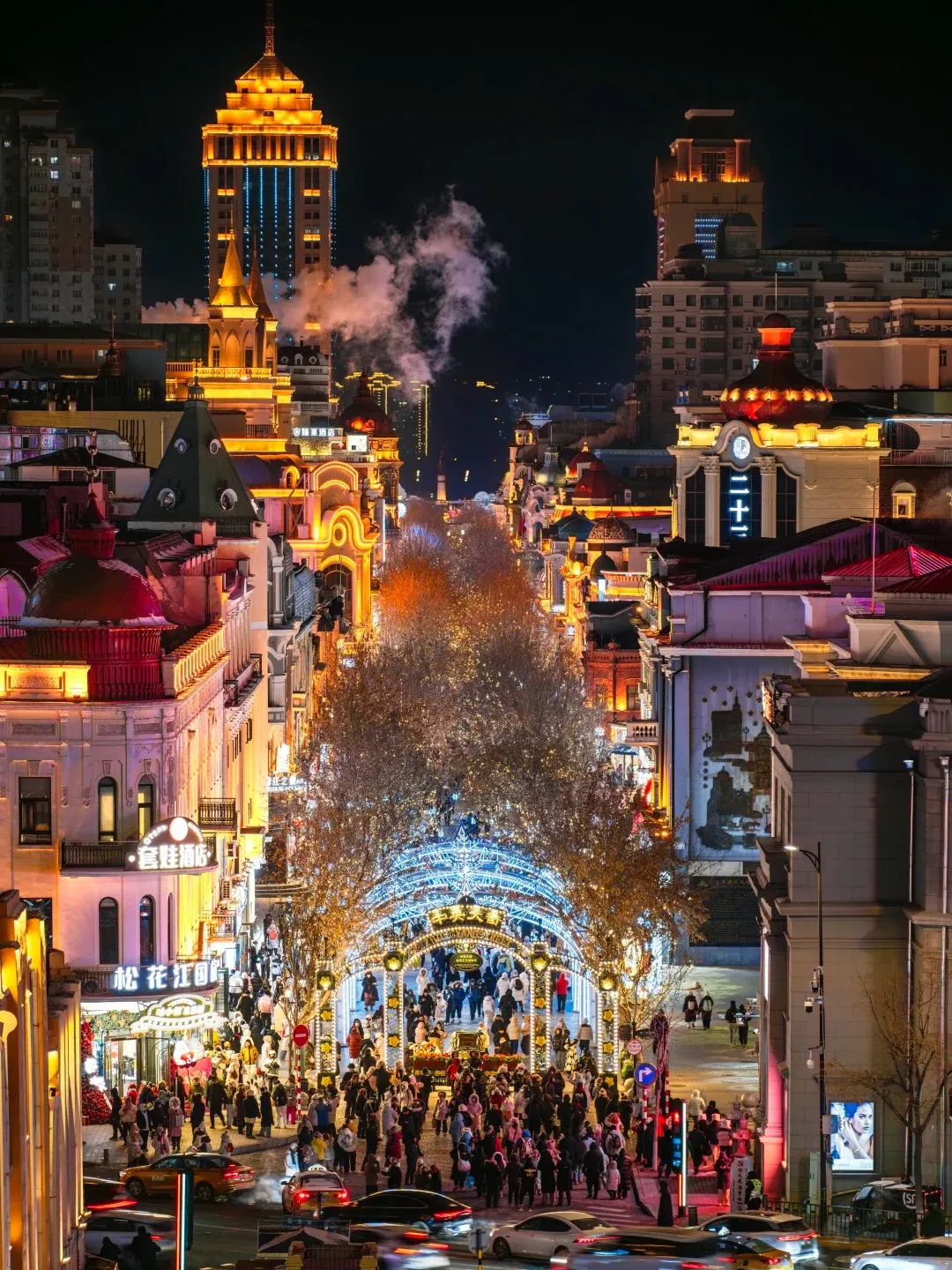
Harbin’s iconic Central Avenue, with its unique Russian architecture ablaze with lights, offers a captivating glimpse into the city’s historic past. Just imagine the delicious food you can discover here after a stroll!
Booking Your Train Tickets
If you are arriving from Beijing, the high-speed rail is the most efficient route. According to the official 12306 China Railway policy for 2026, foreign passport holders can now verify their identity entirely online via the English version of the 12306 app.
Do not use third-party scalper sites. Book directly through the official app to secure the best seats and avoid exorbitant markup fees.
Survival Tips for Harbin’s Food Scene
Eating in Harbin requires a bit of physical endurance. The extreme cold drains smartphone batteries in minutes. Always carry a high-capacity power bank and keep your phone in an inner jacket pocket close to your body heat; otherwise, you won’t be able to pay for your meal.
Furthermore, Northeastern Chinese portions are famously massive. A single order of Guobaorou (sweet and sour crispy pork) or an iron pot stew is often enough to feed three people. Order conservatively to avoid wasting food, as lugging a freezing takeout box through the ice festival is highly impractical.