


How to Get to Harbin from Beijing or Shanghai
Harbin is highly accessible from China’s major hubs. If you are traveling from Beijing, the high-speed bullet train is your best option. According to the official China Railway 12306 platform, the journey from Beijing Chaoyang Station to Harbin West takes roughly 5 to 6 hours. Second-class seats cost around 585 CNY and offer plenty of legroom.
If you are coming from Shanghai or Guangzhou, flying into Harbin Taiping International Airport (HRB) is much more practical. Flights from Shanghai take about 3 hours. Upon arrival, the airport is a 45-minute drive from the city center (Central Street area), which will cost roughly 130-150 CNY by official metered taxi.
What is the 144-Hour Visa-Free Transit Policy?
The 144-hour visa-free transit policy allows citizens from 54 eligible countries to enter specific Chinese regions without a visa for up to six days, provided they have a confirmed onward ticket to a third country or region (like Hong Kong or South Korea) departing from the same designated region.
Note: As of 2026, Harbin (Heilongjiang Province) is included in the 144-hour transit policy, but you must fly directly into and out of Harbin to utilize it. You cannot enter Beijing on a transit visa and take the train to Harbin.
Staying Connected: The Great Firewall
To navigate Harbin, you will rely heavily on Baidu Maps, Alipay, and WeChat. However, Western apps like Google Maps, WhatsApp, and Instagram are blocked in China. You will need a reliable eSIM to bypass the firewall and keep your data flowing so you can translate menus and hail rides.
💡 Editor’s Pick: We recommend Nomad eSIM for China because it reliably bypasses the Great Firewall with stable speeds.
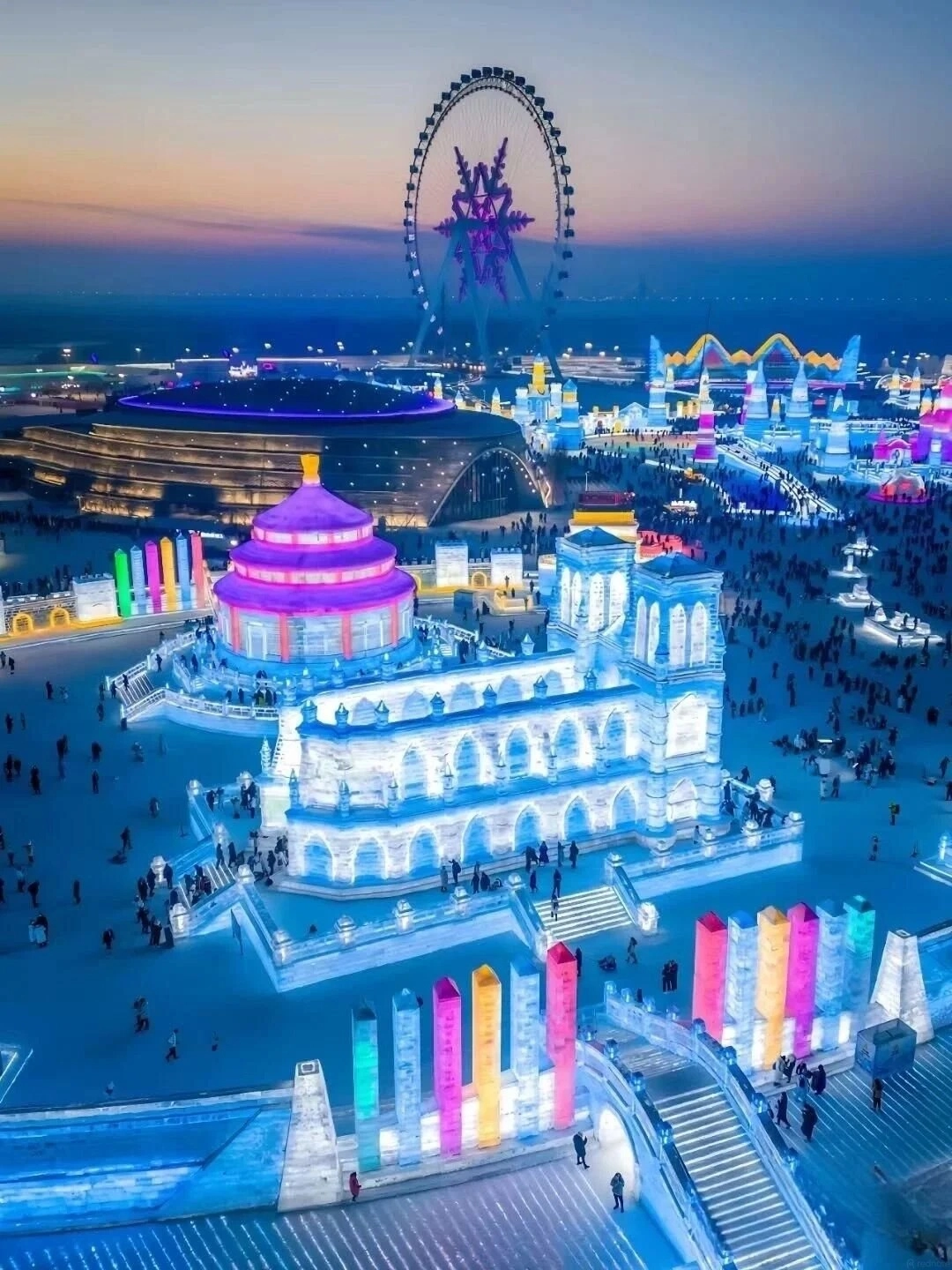
Experience the magic of the Harbin Ice and Snow Festival! This breathtaking night view showcases the illuminated ice castles and the iconic Ferris wheel, offering a glimpse into the wonders that await you. Our guide will help you plan your perfect budget-friendly trip, including a suggested 3-day itinerary and essential clothing tips for braving the cold.
How to Buy Harbin Ice and Snow Festival Tickets in 2026
The ticketing system in China is heavily digitized. While Chinese citizens use the official Harbin Ice and Snow World WeChat Mini Program to buy tickets (priced around 328 CNY), the system requires a Chinese Resident Identity Card.
What to Know Before You Go: Foreign passport holders must purchase tickets in person. Head to the designated “Special Ticket” or “Foreigner” window at the main entrance. You must hand over your physical passport to buy a ticket. Arrive early, as lines can take 30-45 minutes during peak January dates.
What to Wear in Harbin: Surviving -20°C
Do not underestimate the cold. The wind coming off the frozen Songhua River is brutal. To survive Harbin comfortably, you need a strategic approach to layering. A standard winter coat from Europe or North America will not be enough.
- Base Layer: High-quality thermal underwear (merino wool or fleece-lined).
- Mid Layer: A thick wool sweater or fleece jacket, plus fleece-lined trousers.
- Outer Layer: A heavy, windproof down parka that covers your thighs, and waterproof snow pants.
- Footwear: Thick-soled, waterproof snow boots. The cold seeps up through the ice, so thin soles will leave your feet numb in minutes. Buy disposable heated insoles once you arrive.
- Accessories: A windproof hat that covers your ears, a thick scarf, and insulated mittens (not fingered gloves).
Insider Tip on Electronics: Lithium-ion batteries drain incredibly fast in sub-zero temperatures. Your phone might drop from 80% to dead in ten minutes. Keep your phone in an inner pocket close to your body heat, and attach a disposable body-warming patch directly to the back of your phone case.
The Ultimate 3-Day Harbin Itinerary
This 3-day plan is optimized to balance outdoor freezing time with indoor warming breaks, ensuring you don’t burn out on day one.
Day 1: City Highlights and Russian History
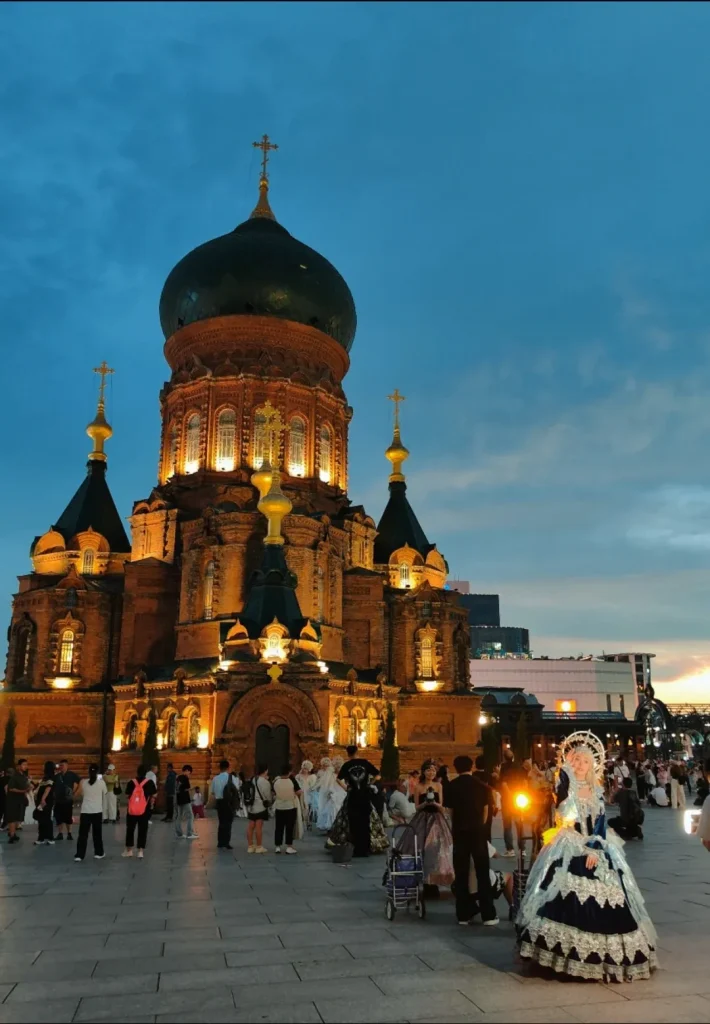
Start your morning at St. Sophia Cathedral, a stunning green-domed former Russian Orthodox church. It is no longer an active church but houses a small museum. The real magic is viewing the architecture from the square outside while eating a steaming roasted sweet potato bought from a street vendor.
In the afternoon, walk down Zhongyang Dajie (Central Street), a cobblestone pedestrian street lined with European-style architecture. This is the perfect place to try a Madier (Modern) ice lolly. Yes, eating ice cream in -20°C is a Harbin tradition, and because the air is so cold, it won’t melt all over your gloves.
End the day by walking down to the frozen Songhua River. Locals turn the frozen river into a massive playground with ice-bicycles, sleds, and dog-sledding (though we recommend skipping animal tourism and opting for the motorized snow tubes instead).
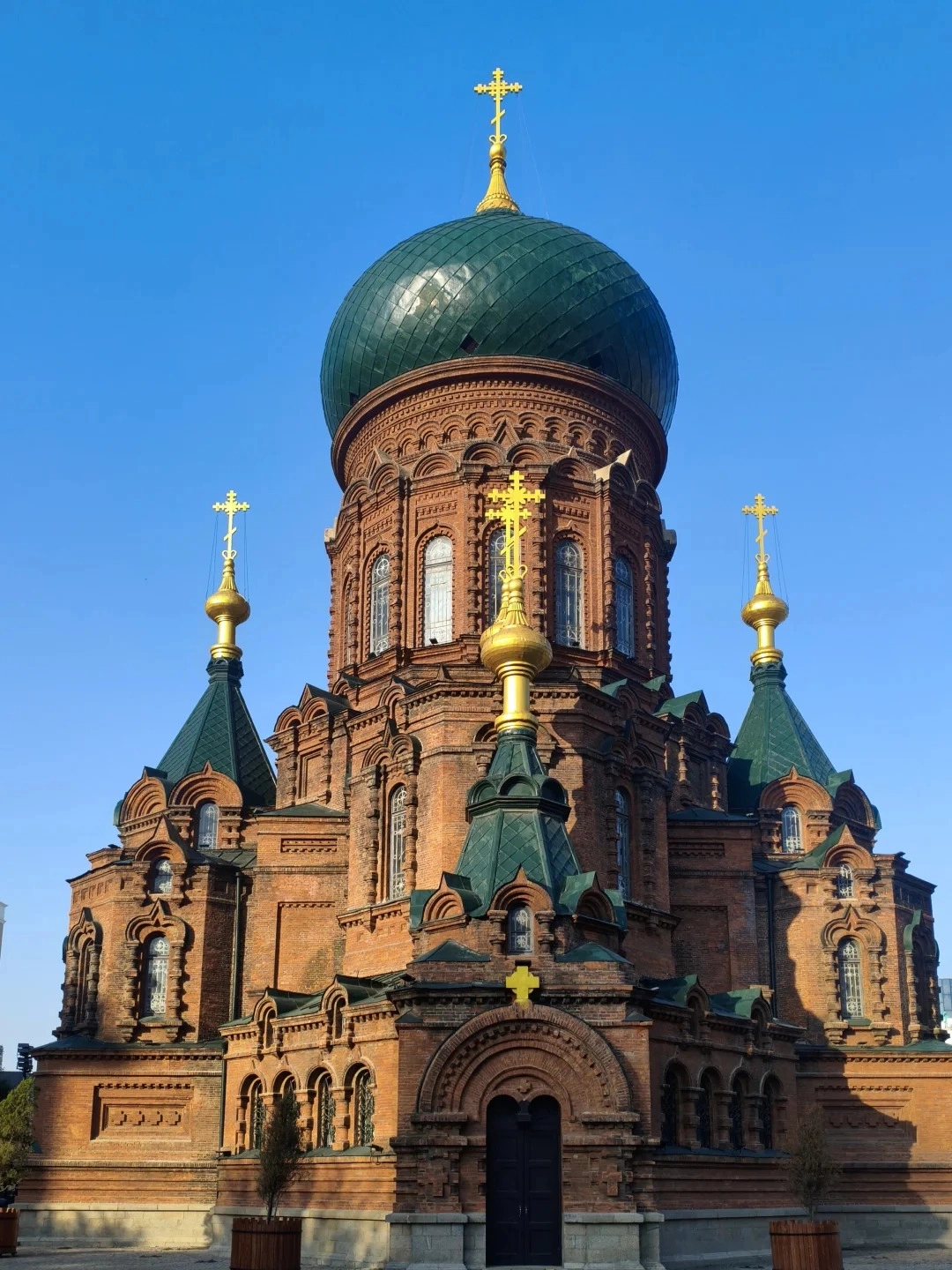
St. Sophia Cathedral in Harbin, a stunning architectural landmark, offers a glimpse of the city’s history even before you experience the magic of its world-renowned Ice and Snow Festival.
Day 2: Sun Island and Ice & Snow World
This is your main festival day. Head to Sun Island (Taiyang Dao) around 10:00 AM. This area focuses on massive, intricately carved snow sculptures. Because snow sculptures aren’t illuminated at night, they are best viewed in the bright morning sun.
Around 2:30 PM, take a taxi across the river to the Harbin Ice and Snow World. Entering mid-afternoon is the ultimate strategy. You get to see the translucent ice sculptures in the daylight, watch the sunset around 4:00 PM, and then witness the entire park light up in neon colors.
Crucial Exit Strategy: Do not stay until the park closes at 9:00 PM. Tens of thousands of people leave at once, and finding a taxi is nearly impossible. Rogue drivers will refuse to use the meter and demand 150+ CNY for a 30 CNY ride. Leave by 7:30 PM to easily secure a Didi (ride-hailing via Alipay) back to your hotel.
Day 3: Siberian Tiger Park or Skiing
If you want to stay near the city, visit the Siberian Tiger Park in the morning. You board a reinforced bus that drives through enclosures where hundreds of tigers roam in the snow. It is a slightly chaotic, uniquely Chinese wildlife experience.
Alternatively, if you want to ski, book a high-speed train to Yabuli Ski Resort (about 1.5 hours away). Yabuli is China’s premier ski destination, offering natural powder and excellent facilities for both beginners and advanced skiers.
Harbin Cuisine: Russian-Influenced Food You Must Try
Harbin’s food scene is a heavy, caloric, and delicious mix of traditional Dongbei (Northeast Chinese) cuisine and Russian influences. You will need these hearty meals to fuel your body in the cold.
- Guobaorou (Sweet and Sour Pork): Harbin is the birthplace of this dish. Slices of pork are double-fried until shatteringly crisp, then coated in a sticky, tangy sauce.
- Dalieba (Russian Bread): Massive, dense loaves of sourdough bread brought over by Russian railway workers a century ago.
- Harbin Red Sausage (Hongchang): A smoked, garlic-heavy sausage that you will smell roasting on street corners all over the city.
- Iron Pot Stew (Tie Guo Dun): A massive cast-iron pot built directly into your table, filled with a bubbling stew of chicken, mushrooms, and potatoes, with cornbread slapped onto the sides of the pot to steam.
2026 Harbin Budget Breakdown
Harbin is highly affordable compared to Beijing or Shanghai, but prices do surge during the Ice Festival in January and February. Here is a realistic daily budget for a mid-range traveler in 2026:
- Accommodation: 400–700 CNY per night for a comfortable, centrally located 4-star hotel near Central Street.
- Food: 100–150 CNY per day. A massive portion of Guobaorou in a sit-down restaurant costs about 50 CNY.
- Attractions: Ice and Snow World (328 CNY), Sun Island Snow Expo (330 CNY), Siberian Tiger Park (110 CNY).
- Transport: 50–80 CNY per day using Didi and local taxis.
Total Estimated Budget: Expect to spend roughly 800-1,000 CNY ($110-$140 USD) per day, including a shared hotel room, meals, and festival tickets.