
A Guide to Guilin Rice Noodles: Where to Eat and How to Order Like a Local

Stepping into a humid Guilin morning, the first thing that hits you isn’t the view of the karst mountains—it’s the pungent, garlicky, and slightly sour aroma of fermented bamboo shoots wafting from corner eateries. For travelers navigating southern China in 2026, finding the perfect bowl is a culinary rite of passage. This comprehensive Guilin rice noodles guide will help you bypass the overpriced tourist traps near West Street and confidently navigate the humble, stainless-steel-bowl shops where locals actually eat.

Quick Summary: Key Takeaways for Your Trip

  • Price: An authentic bowl costs around 5 to 6 RMB (less than $1 USD). If it is priced over 15 RMB, you are likely in a tourist trap.
  • How to Eat: Never add the broth first. Eat them “dry-tossed” with the gravy and meat, then add the pork bone broth at the very end.
  • Key Ingredients: The magic is in the lushui (卤水) master stock, crispy pork belly, and fermented bamboo shoots.
  • Payment Logistics: Cash is rarely accepted in 2026; you will need Alipay or WeChat Pay connected to a working international data plan.

Summarize with :

What Are Authentic Guilin Rice Noodles?

Guilin rice noodles (桂林米粉 or Guilin mifen) are a traditional southern Chinese breakfast dish featuring thick, slippery rice noodles served dry. They are coated in a rich, spiced master gravy (lushui) and topped with crispy fried pork, braised beef, roasted peanuts, scallions, and fermented bamboo shoots.
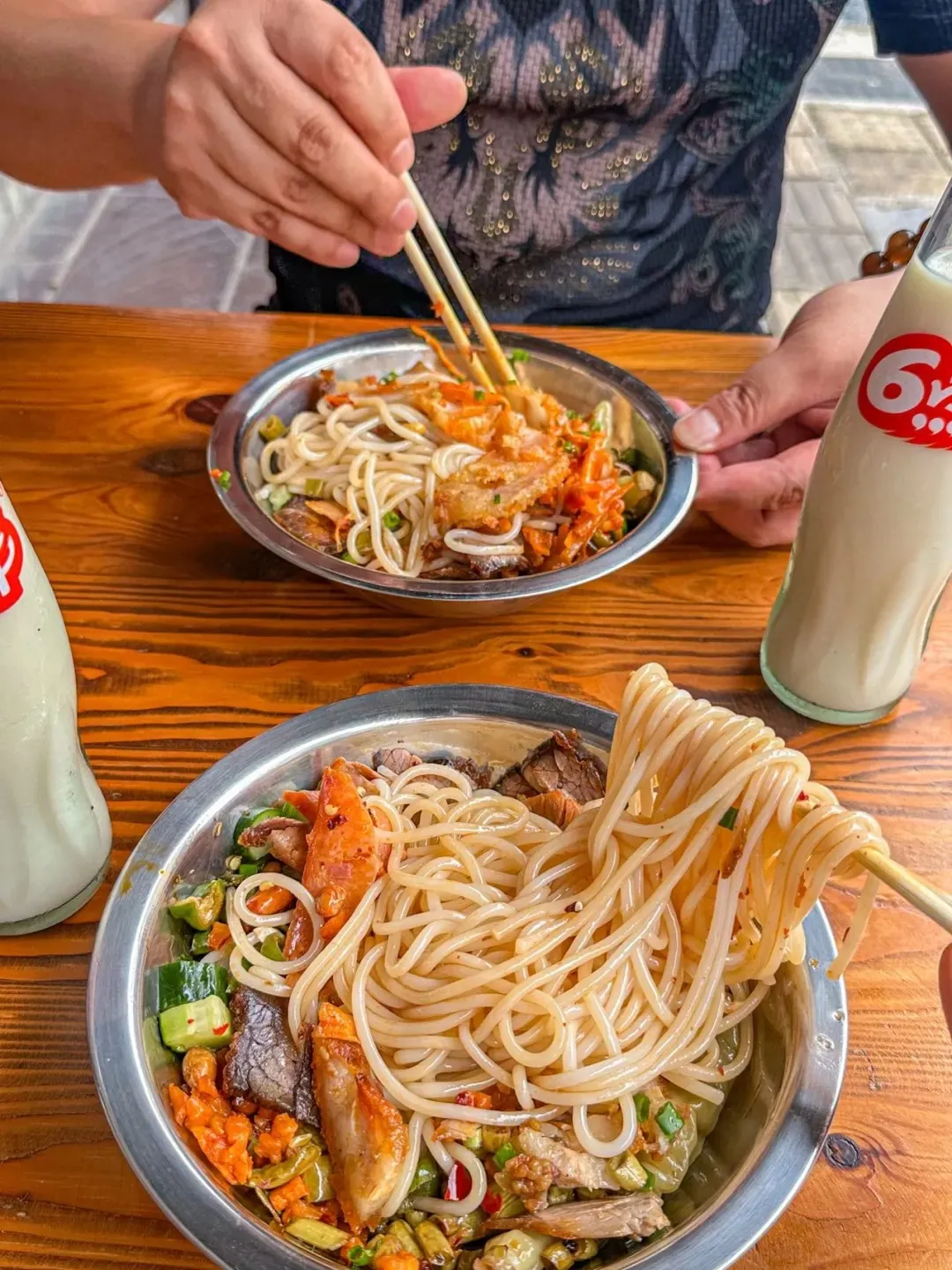
Two stainless steel bowls of Guilin rice noodles mixed with meat and vegetables sit on a wooden table. One bowl has chopsticks lifting noodles. Two glass bottles of a white beverage are on either side of the bowls.

Dive into the authentic flavors of Guilin with these delicious dry-tossed rice noodles. Perfectly paired with a refreshing beverage, this dish is a must-try for any noodle lover looking to experience local cuisine.

The Traditional 3-Step Process: How to Eat Like a Local

Tourist mistake number one is treating this dish like a bowl of ramen. If you immediately pour soup over your noodles, the local grannies sharing your plastic table will definitely shake their heads. Here is the authentic eating ritual.

Step 1: The Dry Toss

When the vendor hands you the bowl, it will only contain noodles, meat, and the sticky, fragrant lushui sauce. Grab your chopsticks and vigorously mix everything together. The goal is to coat every single noodle strand in that savory, slow-simmered gravy.

Step 2: Hit the DIY Topping Bar

Navigate through the morning crowds to the self-serve condiment station. Insider Tip: Do not skip the fermented bamboo shoots (suansun). They smell slightly funky but provide the crucial acidic crunch that cuts through the rich pork fat. Add pickled green beans, fiery Guilin chili sauce, and cilantro to taste.

Step 3: Drink the Broth Last

Eat about 90% of the noodles dry. Once you are left with just a few strands and the flavorful dregs of the gravy, walk over to the large, steaming metal vat near the entrance. Ladle the free pork and beef bone broth directly into your bowl to create a rich, savory soup to finish your meal.

Navigating the Shops: Ordering and Payment Logistics

Most neighborhood noodle shops do not have English menus, and the pace is lightning fast. You will typically order at a small front window, pay, and then hand a paper ticket to the cook. Simply hold up one finger and say “Er Liang” (二两), which means a standard 100-gram portion.

In 2026, China is virtually cashless. You must have Alipay or WeChat Pay set up on your phone before you arrive. Because public Wi-Fi requires a Chinese phone number, having a reliable eSIM is non-negotiable for translating menus and scanning QR codes.

💡 Editor’s Pick: We recommend Nomad eSIM for China because it reliably bypasses the Great Firewall with stable speeds.

Once your payment goes through, the cook will flash-boil the fresh noodles for exactly three seconds before assembling your bowl. The entire process takes less than a minute.

Where to Find the Best Guilin Rice Noodles in 2026

Avoid the heavily packaged, English-branded shops on Zhengyang Pedestrian Street. Instead, look for places with low plastic stools spilling onto the sidewalk and a line of locals at 7:00 AM.

Chongshan Rice Noodle Shop (崇善米粉)

This legendary local chain is an excellent, accessible starting point for first-timers. While they offer incredibly flavorful beef brisket noodles for around 15 RMB, their classic dry-tossed version remains a cheap, authentic favorite that hits the spot every time.

Lao Dongjiang Pingguo Noodle Shop (老东江米粉)

Located near the Seven Star Park, this is where you go for the ultimate crispy pork belly (guotiao). The lines are long, the air is thick with humidity and garlic, and the master stock recipe is a closely guarded family secret.
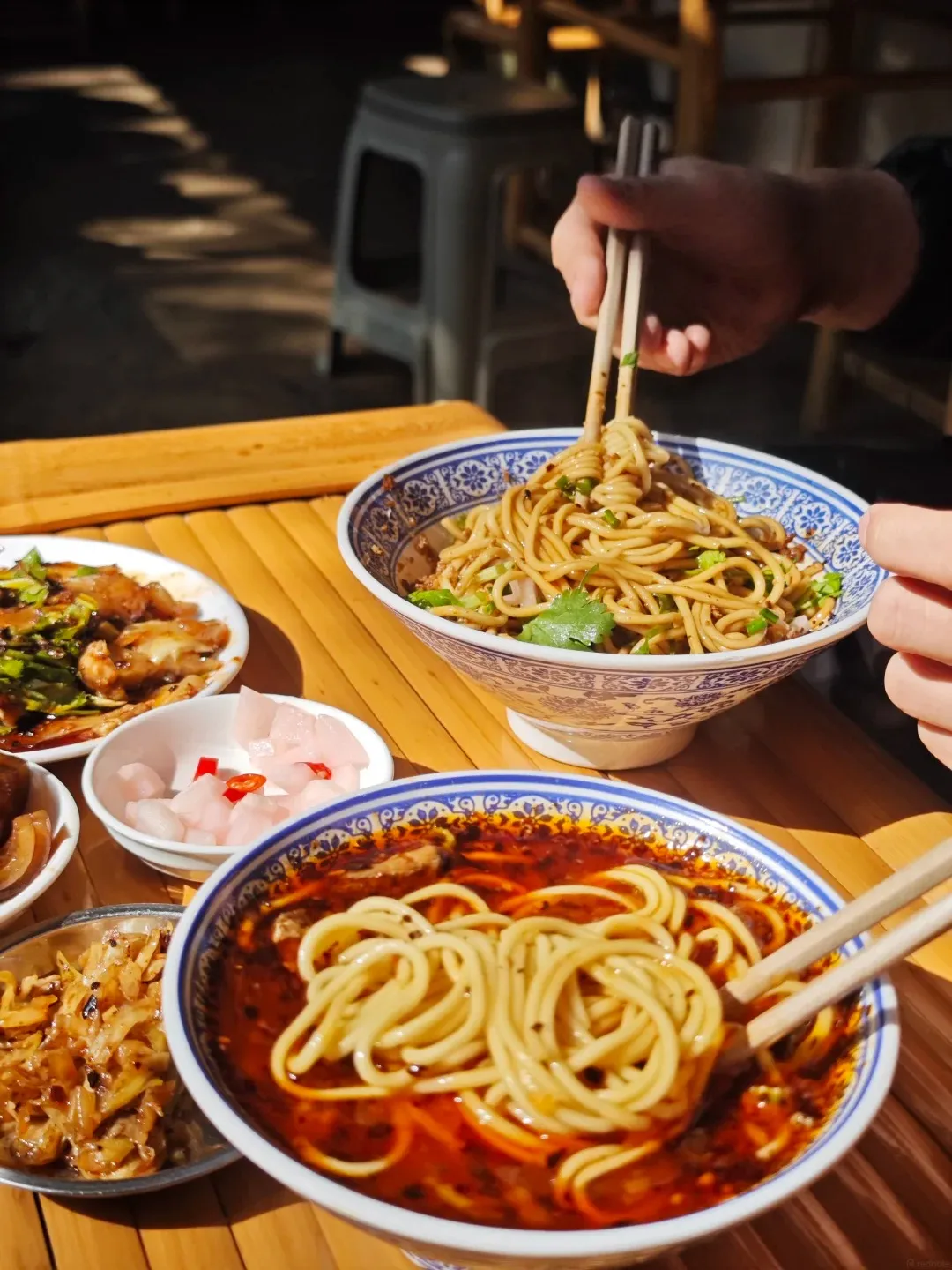
A close-up of two bowls of Guilin rice noodles on a bamboo table. One bowl in the foreground is filled with noodles in a spicy red broth, and is being lifted with chopsticks. A second bowl of noodles with green onions and sauce is behind it. Several small side dishes of pickled vegetables and other toppings are arranged around the bowls.

Dive into the authentic flavors of Guilin with these delicious rice noodle bowls and a selection of traditional side dishes. Learning to order like a local will unlock a whole new level of culinary experience!

What to Know Before You Go: Visas and Crowds

If you are planning to visit the Guangxi region, timing and paperwork matter. According to the official China National Immigration Administration policies, Guilin Liangjiang International Airport (KWL) offers a 144-hour visa-free transit policy for passport holders from 54 countries. This is perfect for a quick culinary detour.

However, be warned: if you visit during the summer months, the heat is sweltering. Eating a steaming bowl of spicy noodles in 95°F (35°C) weather while sitting on a crowded street corner is an intense sensory experience. Dress light, buy a 2 RMB bottle of icy mineral water from a nearby convenience store, and embrace the chaos.


Common Questions About Traveling to Guilin

Do I need a visa to visit Guilin for a short trip?

Guilin Liangjiang International Airport offers a 144-hour visa-free transit policy for passport holders from 54 eligible countries. This allows you to explore the region for up to six days without a formal visa, provided you are transiting to a third country.

China is a virtually cashless society. You must set up Alipay or WeChat Pay with your international credit card before arrival to pay for meals, transportation, and services.

An eSIM is essential because most public Wi-Fi networks in China require a local phone number for SMS verification. Having a reliable data plan ensures you can use translation apps and scan QR codes for payments seamlessly.

Authentic Guilin rice noodles should be eaten ‘dry-tossed’ first. Mix the noodles with the master gravy and toppings, eat about 90% of the bowl, and then add the provided hot pork bone broth at the very end to finish your meal.

Conclusion

Mastering the local noodle joint is the ultimate way to connect with the culture of southern China. By following this Guilin rice noodles guide, you will save money, avoid the diluted tourist versions, and experience the true depth of Guilin’s culinary heritage. Once you have conquered the breakfast rush, you are ready to tackle the rest of the city. Book a bamboo raft down the Li River, or check out our guide to exploring the Longji Rice Terraces for your next adventure.

Similar posts to this one

The upper levels of the Yellow Crane Tower, a traditional Chinese multi-tiered pavilion with orange tiled roofs and red painted columns, are visible against a clear blue sky. Green foliage from trees and branches frame the lower and left sides of the image. A black plaque with Chinese characters is mounted on the central structure.

Wuhan 48-Hour Weekend Guide: Hot Dry Noodles & Yangtze Views

Wuhan is a city that runs on high-octane energy, fueled by rich sesame paste and the relentless current of the [...]

An aerial view of a busy Guangzhou night market at night, with numerous illuminated street food stalls lining a street. People are seen walking, eating, and interacting at the stalls, with trees and lights overhead. Some stalls have colorful signs and displays of food, while others are equipped with cooking equipment. Small tables and chairs are set up for diners. Several motorized carts, including a blue three-wheeled vendor vehicle, are also present on the street.

Guangzhou's Best Night Markets: A Guide to Evening Street Food and Local Life

The humid evening air in southern China carries an unmistakable scent: a mix of sizzling garlic, sweet soy sauce, and [...]

A person wearing a hat and plaid shirt stands on a walkway in front of a traditional multi-tiered pagoda with a modern blue glass skyscraper behind it. A red wooden railing runs along the walkway in the foreground.

Chaozhou Street Food Guide: Best Markets and Local Snacks

Chaozhou (often known as Teochew) is a legendary culinary destination in Guangdong province, recognized by UNESCO as a City of [...]

Get the China Arrival Survival Kit

Planning a trip here has a steep learning curve. Join our newsletter and receive our free “Day One Checklist” covering everything from setting up Alipay and WeChat to bypassing the internet firewall.