
Chongqing's Secret Scenic Bus: Route 501 for a Cheap 3D Experience

Chongqing is internationally famous for its mind-bending, multi-layered urban landscape. While thousands of tourists queue for hours to ride the famous Yangtze River Cableway, locals know a far better way to take in the views. The Chongqing Route 501 scenic bus offers an immersive, ground-level journey through this “8D” mountain city.

If you want to experience the vertical drops, winding cliffside roads, and massive bridges without the crushing crowds, this local transit secret is your best bet for 2026. For less than the price of a bottle of water, you get a front-row seat to China’s most futuristic skyline.

Quick Summary: Key Takeaways for Your Trip

  • Fare: Exactly 2 RMB (about $0.30 USD), payable instantly via the Alipay or WeChat Pay transport mini-programs.
  • Best Seats: Sit on the right side (passenger side) when heading southbound for unobstructed Yangtze River and skyline views.
  • Key Route Segment: Board at the Niujiaotuo Transit Hub and ride across the massive river bridges for the best vantage points.
  • Crowd Control: Avoid the local rush hours (7:30–9:00 AM and 5:30–7:00 PM) to guarantee a window seat.

Summarize with :

What is the 144-Hour Visa-Free Transit?

The 144-hour visa-free transit is an official Chinese immigration policy allowing eligible travelers from 54 countries to explore Chongqing and surrounding areas for up to six days without a pre-approved visa, provided they hold a valid passport and a confirmed onward flight ticket to a third region.

Navigating Logistics: How to Ride Route 501

Finding your way around Chongqing can feel like navigating a concrete labyrinth. Because the city is built on steep mountainsides, your GPS might say a bus stop is right next to you, when it is actually five stories above your head.

Before you attempt to find the bus stop, ensure your phone is connected to the internet. Navigating Chongqing’s complex transit network requires a reliable connection to generate your Alipay Transit QR code.

For seamless connectivity in 2026, I highly recommend using a travel eSIM to bypass the Great Firewall and maintain high-speed 5G.

💡 Editor’s Pick: We recommend Nomad eSIM for China because it reliably bypasses the Great Firewall with stable speeds.

Board the Route 501 bus at the Niujiaotuo Bus Station. According to the Chongqing Public Transport Group’s 2026 tariff policy, standard air-conditioned bus fares remain strictly capped at 2 RMB. Simply open your Alipay app, select “Transport,” switch your city to Chongqing, and scan the QR code at the bus scanner.
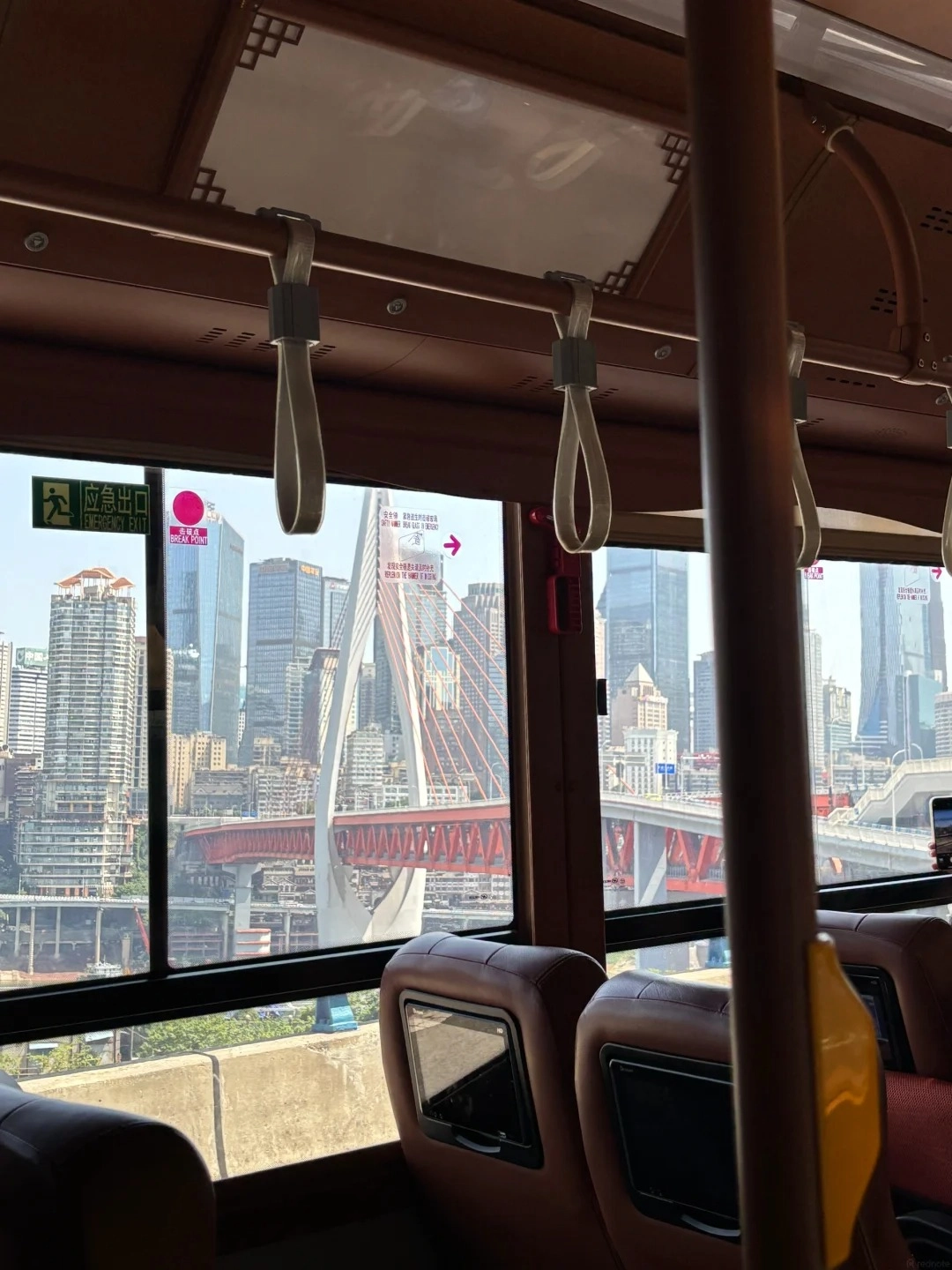
Interior view from inside a bus, looking out the window at a cityscape with tall buildings and a large red bridge. Inside the bus, there are brown leather seats and overhead handrails with white straps.

Hop aboard Chongqing’s Route 501 and enjoy this incredible 3D cityscape without breaking the bank! This unique bus route offers a surprisingly scenic journey through the heart of the city.

The Real Experience: Smells, Sights, and Sounds

Riding a local public bus in Chongqing is a sensory overload in the best way possible. Grab a cold 2 RMB bottle of Nongfu Spring water from a street vendor before boarding—you will absolutely need it when stepping back off into the city’s notorious 38°C (100°F) sticky summer humidity.

As you step onto the bus, you’ll be greeted by the blast of over-cranked air conditioning. Every time the bus doors hiss open at a stop, you’ll catch the distinct, pungent scent of roasted chili and numbing Sichuan peppercorns wafting from nearby street-side hotpot restaurants.

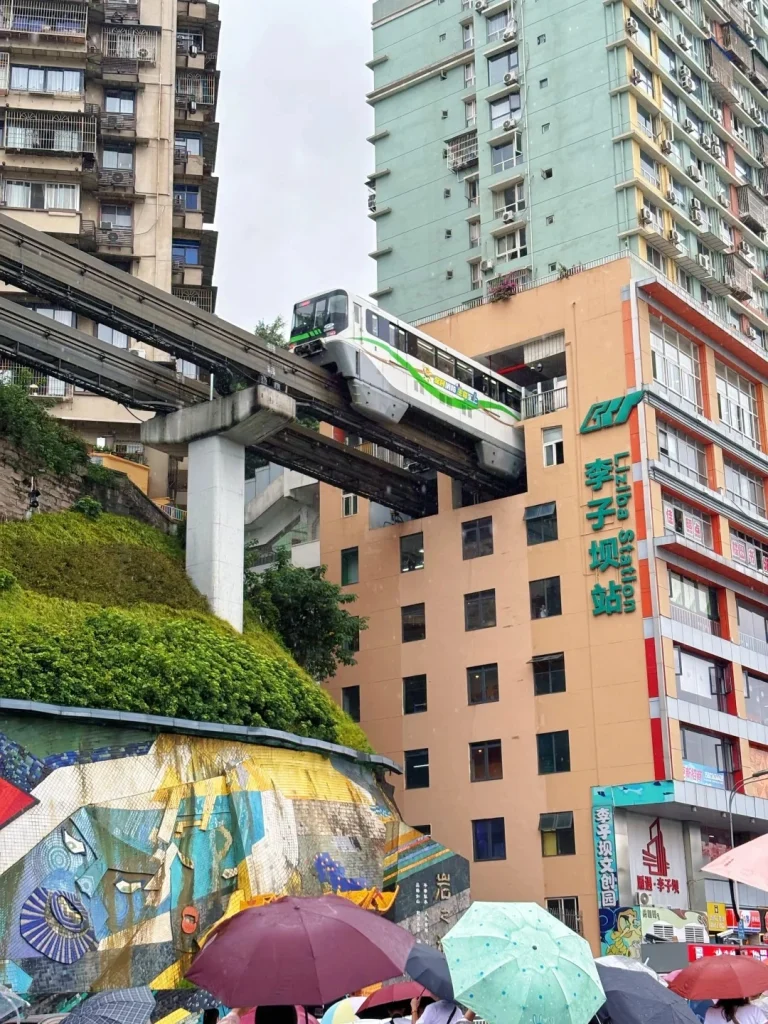
The bus engine roars as it climbs steep inclines that feel more like a roller coaster track than a city street. You will watch in awe as the driver effortlessly maneuvers a massive transit vehicle around hairpin cliffside turns, passing residential buildings where the fifth floor is a street-level entrance.

What to Know Before You Go: Skip the Overrated Cableway

Many guidebooks and tour operators aggressively push the Yangtze River Cableway as a “must-do” experience. However, waiting 90 minutes in a cramped, sweaty queue for a 4-minute ride packed shoulder-to-shoulder with tourists is a classic rookie mistake.

The Route 501 bus gives you a 40-minute panoramic tour of the city’s vertical architecture and the muddy confluence of the Yangtze and Jialing rivers. You get the exact same sweeping views of the futuristic Raffles City complex, but from the comfort of an air-conditioned seat.

Aerial view of the confluence of two rivers, one muddy brown and the other emerald green, with the iconic Chongqing Raffles City twin skyscrapers and connecting skybridge in the foreground, and a cityscape with bridges and buildings in the background under a clear blue sky.

Experience Chongqing’s breathtaking skyline and the dramatic meeting of the Jialing and Yangtze rivers, much like the unique 3D perspectives you can catch from Route 501 – a scenic journey for just a few Yuan!

Photography Tips for the Ride

Because the bus windows are tinted to block the intense Chongqing sun, you’ll need to press your smartphone lens directly against the glass to avoid glare and reflections. Switch your camera to ultra-wide mode to capture the sheer scale of the high-rises towering above the riverbanks.

The absolute best time to ride is just before sunset, around 6:30 PM in the autumn or 7:30 PM in the summer. You will catch the exact moment the city’s cyberpunk-style neon lights flicker to life across the bridges and skyscrapers.


Common Questions About Traveling to China

What is the 144-hour visa-free transit policy for China?

This policy allows travelers from 54 eligible countries to visit specific Chinese cities, including Chongqing, for up to 144 hours (six days) without a traditional visa. You must hold a valid passport and a confirmed onward flight ticket to a third country or region.

Most public transportation in major Chinese cities, including buses and subways, uses digital payment systems. You should set up the ‘Transport’ mini-program within the Alipay or WeChat Pay apps to generate a QR code for scanning at transit turnstiles.

Yes, using a travel eSIM is highly recommended for first-time visitors. It provides reliable high-speed data that helps you bypass the Great Firewall, navigate using GPS, and access essential payment apps like Alipay without needing a local physical SIM card.

Prioritize setting up digital payments like Alipay before arrival, download a reliable translation app, and secure a travel eSIM for connectivity. Additionally, try to embrace local transit routes over tourist-heavy options to save time and experience the city like a local.

Conclusion

Chongqing is a city that rewards the adventurous traveler who is willing to step off the heavily beaten tourist path. By swapping the overpriced, crowded tourist traps for the local Route 501 bus, you’ll save money, avoid the queues, and experience the authentic, chaotic beauty of China’s most fascinating megacity. Make sure your Alipay is set up, grab a window seat, and enjoy the ride. If you’re looking to plan the rest of your trip, check out our complete 3-day Chongqing itinerary for more hidden gems and spicy hotpot recommendations.

Similar posts to this one

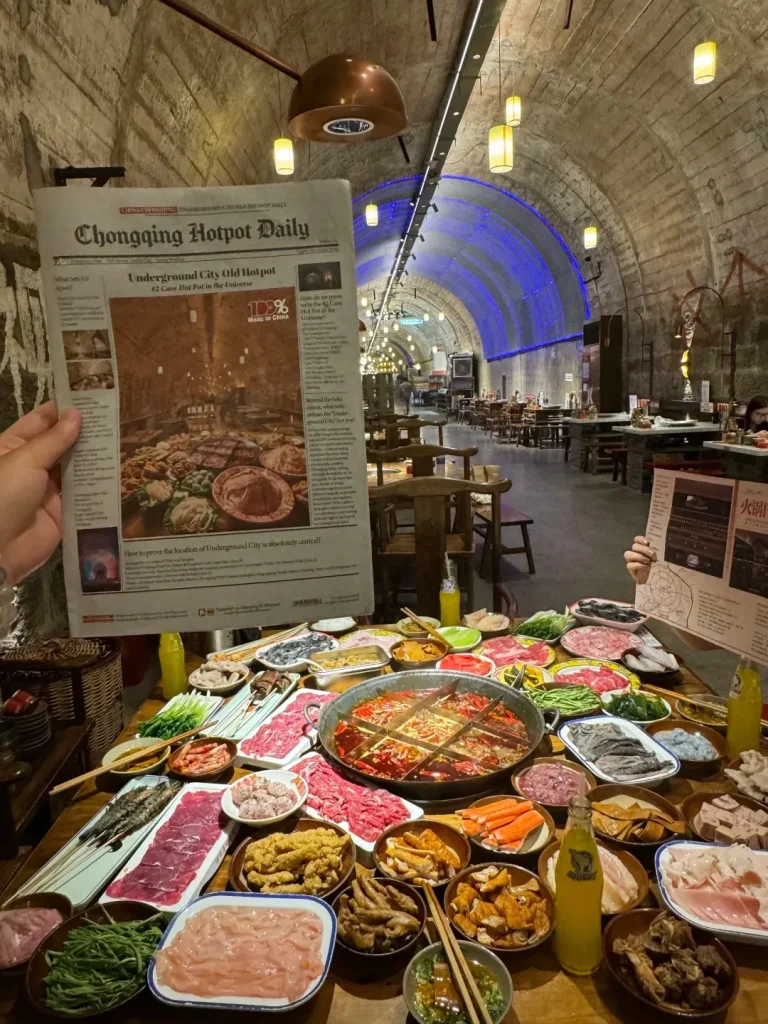
A person holds up a newspaper titled 'Chongqing Hotpot Daily' which features a picture of a large spread of hot pot ingredients. The newspaper is in front of a long table laden with various dishes of raw meats, vegetables, seafood, and other hot pot ingredients, arranged around a central divided hot pot. The table is set in a long, arched concrete tunnel with blue and white lights illuminating the background, suggesting it's a converted air raid shelter. Several bottles of yellow liquid and dipping sauces are also visible on the table.

Chongqing's Civil Defense Architecture: A Guide to Converted Air Raid Shelters

Chongqing is famously known as one of China's "Furnace Cities," where summer temperatures regularly push past 40°C (104°F). To truly [...]

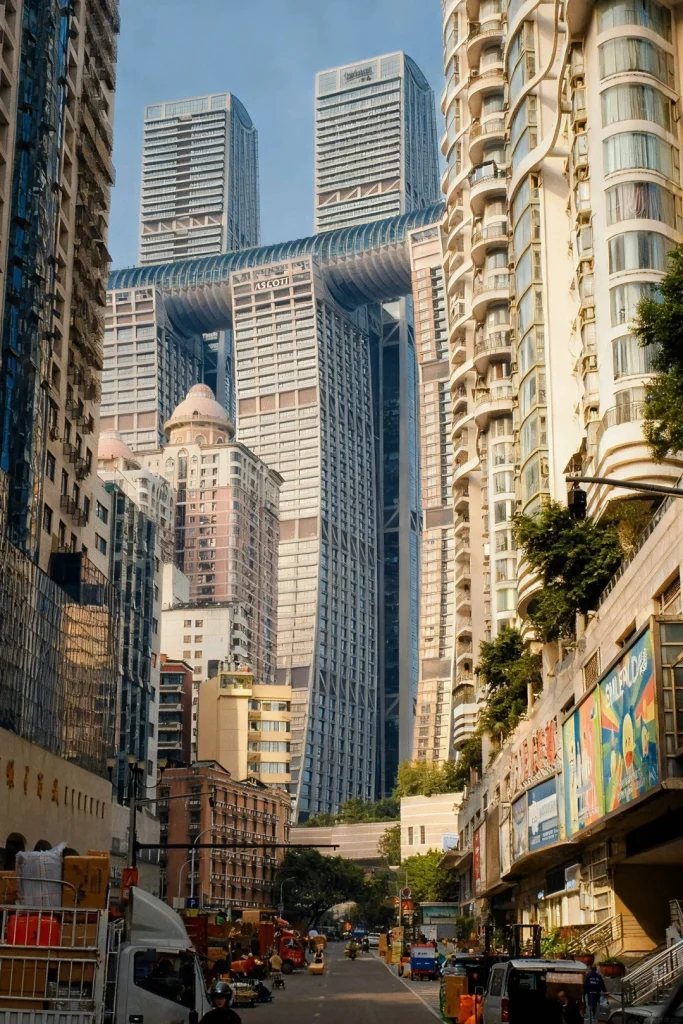
A view looking up a street in Chongqing, China, with towering, dense skyscrapers on either side. In the center background, two extremely tall skyscrapers are connected by a large, curved bridge-like structure containing windows and the word 'ASCOTT'. Below this bridge, another building with a dome-shaped roof is visible. The street below is filled with vehicles including trucks, cars, and motorcycles, and there are shops and signs along the sides.

Chongqing's Vertical Challenge: Navigating the 3D City Without a Map

Chongqing defies the laws of traditional urban planning. You might be standing on the ground floor of a bustling public [...]

An aerial perspective of Chongqing's dynamic cityscape. In the foreground, a curved, white pedestrian bridge, bustling with people, spans between buildings. The bridge leads to a large, open public plaza next to a traditional Chinese building featuring an ornate, orange-tiled, multi-tiered roof. Tall, modern glass skyscrapers dominate the background under a partly cloudy sky, illustrating the city's complex vertical topography and architectural blend.

Chongqing's 'Hidden' Elevators: A Vertical City Survival Guide

If you look at a 2D map of Chongqing, a walk from the riverside to Jiefangbei Square seems like a [...]

Get the China Arrival Survival Kit

Planning a trip here has a steep learning curve. Join our newsletter and receive our free “Day One Checklist” covering everything from setting up Alipay and WeChat to bypassing the internet firewall.