

Dongbei Comfort Food: A Traveler’s Guide to Northeast China’s Cuisine

Most international visitors brave the biting -20°C (-4°F) winter winds of Northeast China solely for the dazzling Harbin Ice Festival. While the frozen castles are undeniably spectacular, leaving without exploring the region’s culinary landscape is a massive missed opportunity.

This region, historically known as Manchuria, produces hearty, unapologetically bold dishes engineered to keep locals warm during brutal winters. If you are searching for a definitive Dongbei food guide, you need to step away from the overpriced tourist strips and into the bustling, steam-filled local diners.

From the sharp, vinegary crunch of authentic Guo Bao Rou to the communal warmth of a bubbling iron pot stew, this guide covers exactly what to eat, where to find it, and how to navigate China’s northeast like a seasoned traveler in 2026.

Quick Summary: Key Takeaways for Your Trip

  • Portions are massive: Dongbei hospitality means oversized plates. Order one dish per two people to avoid food waste and budget burnout.
  • Cash is obsolete: Set up the international versions of Alipay or WeChat Pay before landing; even rural street vendors rarely carry change for a 100 RMB bill.
  • Connectivity is crucial: You will need a VPN-enabled data plan to translate menus and navigate Baidu Maps on the go.
  • Book trains officially: Always use the official railway app to secure high-speed rail tickets between major Dongbei cities like Shenyang, Changchun, and Harbin.

Summarize with :

How to Navigate the Northeast: Logistics & Connectivity

Traveling through Dongbei requires a bit of digital preparation. Since Google Maps is highly inaccurate in China and foreign credit cards aren’t widely accepted at local eateries, your smartphone is your absolute lifeline.

Before you even board your flight, ensure your phone is equipped with an international eSIM. Reliable internet is non-negotiable for translating menus, scanning QR codes to order food, and hailing DiDi rides in the freezing cold.

💡 Editor’s Pick: We recommend Nomad eSIM for China because it reliably bypasses the Great Firewall with stable speeds.

For intercity travel between Shenyang, Changchun, and Harbin, the high-speed rail network is incredibly efficient. According to the official 12306 rail policy, foreign travelers can now easily verify their passports online and use e-tickets, completely skipping the chaotic paper ticket lines at the station.

What is the 144-hour visa-free transit?

The 144-hour visa-free transit is an official Chinese immigration policy allowing eligible passport holders to explore specific regions, including Liaoning province (Shenyang and Dalian), for up to six days without a pre-approved visa, provided they hold a confirmed onward flight to a third country.

Hearty Classics: What to Eat in Dongbei

Dongbei cuisine is heavy on wheat, preserved vegetables, garlic, and fatty cuts of meat. It lacks the delicate presentation of southern Cantonese dim sum, replacing it with rustic, flavor-packed comfort food.
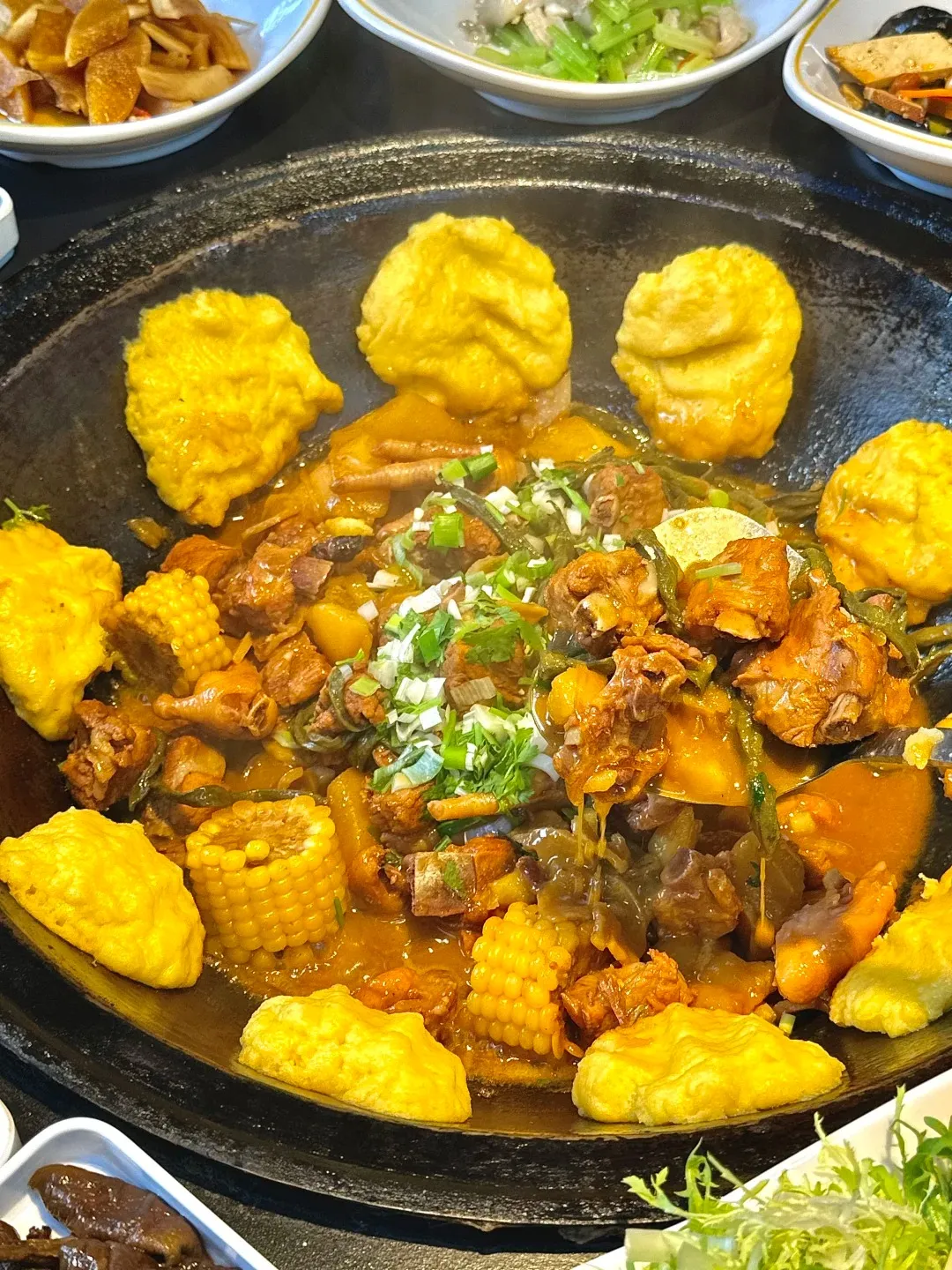
A large, dark, round cast-iron wok filled with a hearty stew. The stew contains visible pieces of meat, likely ribs, along with chunks of corn on the cob, potatoes, and green onions. Surrounding the stew are several golden-yellow, fluffy cornmeal buns. The dish is steaming, indicating it is hot. In the background, out of focus, are small white bowls containing other food items.

Experience the soul-warming essence of Dongbei cuisine with this classic Tie Guo Dun (iron pot stew). Served steaming in a traditional wok, this hearty dish is often accompanied by soft, slightly sweet cornmeal buns – the perfect vehicle for soaking up every last drop of the rich, savory broth.

Tie Guo Dun (Iron Pot Stew)

If you only eat one meal in Harbin, make it Tie Guo Dun. You sit around a table with a massive, wood-fired cast iron pot built directly into the center. The server fries up bone-in goose, pork ribs, or river fish with an intense mix of soy sauce, star anise, and fermented bean paste.

The best part? Halfway through the cooking process, the server slaps raw cornmeal dough against the inside of the hot pot. These steamed corn buns (Bazi) soak up the rich, savory broth. Expect to pay around 150-200 RMB ($20-$28 USD) for a pot that easily feeds four people.

Guo Bao Rou (Sweet and Sour Pork)

Do not confuse this with the gloopy, neon-red sweet and sour pork found in Western takeaways. Authentic Dongbei Guo Bao Rou is a masterclass in texture. Thin slices of pork tenderloin are battered in potato starch and double-fried until shatteringly crisp.

The sauce is a minimalist glaze of sugar and black rice vinegar. When a fresh plate hits your table, the sharp, acidic steam should literally make you cough. If it doesn’t tickle the back of your throat, it isn’t authentic.

Kao Leng Mian (Grilled Cold Noodles)

This is the undisputed king of Dongbei street food. Despite the name, it is served piping hot. A pre-cooked sheet of cold noodles is tossed onto a sizzling flat-top grill, coated with a cracked egg, and brushed with a sweet, sour, and spicy sauce.

Vendors then roll it up with grilled sausage, raw onions, and fresh cilantro. At just 8-12 RMB ($1.10-$1.70 USD) per serving, it’s the perfect late-night snack to warm your hands while navigating the snowy streets.
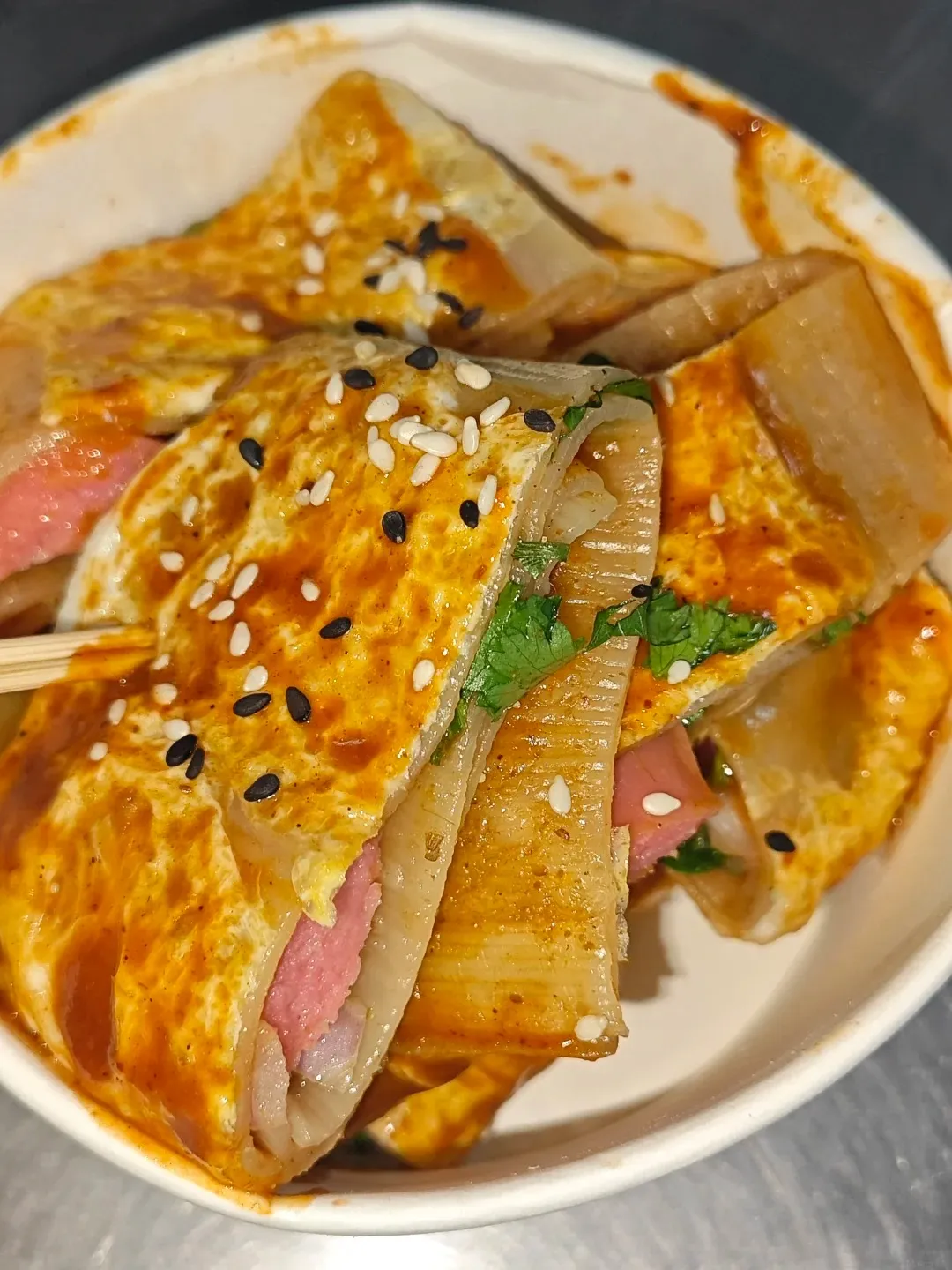
A close-up shot of a Jianbing, a Chinese breakfast crepe, folded and sliced in a white paper bowl. The crepe is filled with pink sausage and a cooked egg, and drizzled with a reddish-brown sauce. It is sprinkled with white and black sesame seeds and fresh green cilantro. A chopstick is inserted into the crepe.

Experience the hearty flavors of Northeast China with this Jianbing, a popular street food often enjoyed for breakfast. This version is packed with sausage and egg, a satisfying start to any day exploring Dongbei.

Insider Tip: What to Know Before You Go

If you are visiting Harbin, you will inevitably end up on Zhongyang Pedestrian Street. While the Russian architecture is stunning, the food stalls lining the main avenue are massive tourist traps.

You will find yourself paying 30 RMB for mediocre, lukewarm sausages and fighting through thick crowds of domestic tour groups. Instead, walk two blocks east or west into the quieter side alleys. Look for small, unpretentious restaurants where the windows are completely fogged up from the heat inside.

Also, hydration is key in the dry northern winter, but don’t overpay. A standard bottle of Nongfu Spring water should cost exactly 2 RMB at any local convenience store. If a vendor asks for 5 RMB, you are paying the “tourist tax.”
Dongbei Travel & Food: Your Questions Answered

How do I pay for food and travel in China in 2026?

Cash is largely obsolete in modern China, even for rural street food vendors. Before you arrive, you must set up the international versions of Alipay or WeChat Pay on your smartphone to scan QR codes for meals, shopping, and transport.

Yes, a reliable VPN-enabled eSIM or international data plan is absolutely essential for your trip. You will need unrestricted internet access to translate menus, navigate with Baidu Maps, and use ride-hailing apps like DiDi.

The 144-hour visa-free transit allows eligible passport holders to visit specific Chinese regions, like Liaoning province in the northeast, for up to six days without a pre-approved visa. To qualify, travelers must hold a confirmed onward flight ticket to a third country.

When visiting the Dongbei region, you must try Tie Guo Dun, a hearty iron pot stew cooked at your table with steamed corn buns. Other local staples include authentic Guo Bao Rou (double-fried sweet and sour pork) and Kao Leng Mian (sizzling grilled cold noodles).

Conclusion

Northeast China offers a culinary experience that is as warm and inviting as its winters are unforgiving. By embracing the massive portions of Tie Guo Dun, the sharp crunch of Guo Bao Rou, and the chaotic charm of local night markets, you will experience a side of China that most tourists completely overlook.

Equip your phone with a reliable eSIM, download Alipay, and come with an empty stomach. Ready to expand your Chinese culinary adventure? Read our comprehensive guide to navigating the fiery street food scene of Sichuan province next!

Similar posts to this one

A wooden table laden with a variety of Dai foods, including a whole grilled fish on a large banana leaf, skewers of grilled shrimp and pork, grilled corn, a whole pineapple, bowls of dipping sauces, a plate of noodles, and bottles of beer.

Dai Food 101: A Guide to the Spicy and Sour Flavors of Xishuangbanna

Xishuangbanna isn't your typical Chinese culinary destination. Tucked away in the tropical southern tip of Yunnan province, bordering Myanmar and [...]

An elevated view looking down onto a wide, paved street running alongside a tall, ancient stone wall. Several yellow taxis and other vehicles are driving on the street, which is lined with pedestrians. A set of wide stairs leads up to the top of the wall where more people are walking. Beyond the wall, a large lake is visible with numerous small boats on it, and a city skyline in the distance under a hazy, pale sky.

Nanjing Street Food and Old City Walls: 2-Day Urban Exploration Guide

Many travelers speed right past China's former southern capital on the bullet train between Shanghai and Beijing. That is a [...]

Overhead view of a wooden table set with several bamboo steamers filled with Shanghai Xiaolongbao soup dumplings. One steamer in the foreground contains five dumplings topped with orange roe. Another steamer behind it holds six dumplings. To the left, two white bowls are visible: one with two halved soft-boiled eggs in soy sauce, and another with a large, golden-yellow soup dumpling. Small white ceramic cups filled with dark dipping sauce are placed near the steamers. Chopsticks rest across the steamers and on the table. A person's hands, wearing a pink jacket, are visible at the top of the frame, giving a thumbs up. Receipts with Chinese text are placed near the dipping sauce cups.

Shanghai Xiaolongbao Guide: Best Soup Dumplings & How to Eat Them

Steaming bamboo baskets, the sharp scent of black vinegar, and the imminent danger of scalding your palate. If you are [...]

Get the China Arrival Survival Kit

Planning a trip here has a steep learning curve. Join our newsletter and receive our free “Day One Checklist” covering everything from setting up Alipay and WeChat to bypassing the internet firewall.