
Fujian's Hakka Delights: A Food Lover's Guide to Tulou Cuisine

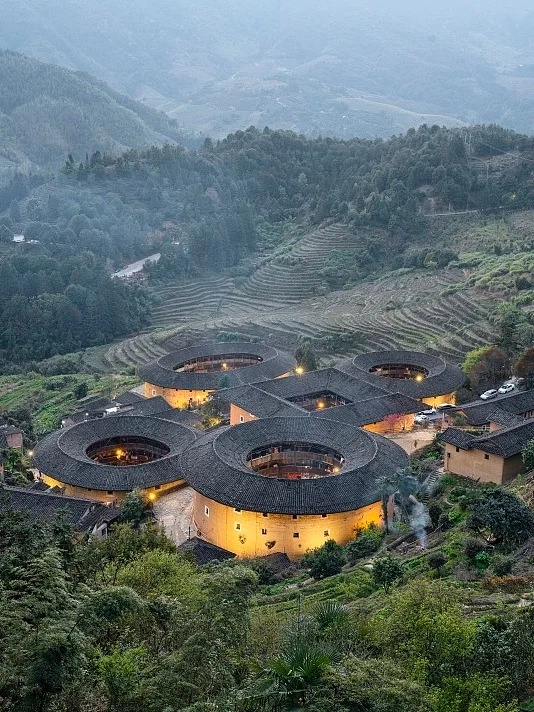
If you are traveling to southeastern China in 2026, venturing into the misty, forested mountains of Fujian to explore the earthen Tulou fortresses is an unforgettable experience. But beyond the striking UNESCO-listed architecture lies a culinary tradition that is equally profound and historically rich.

For culinary travelers, having a reliable Hakka food guide is essential to navigating the hearty, earthy flavors of this historically nomadic culture. From salt-baked delicacies to savory mountain greens, Tulou cuisine is the ultimate Chinese comfort food, deeply rooted in the concept of eating what the land provides.

Quick Summary: Key Takeaways for Your Trip

  • Top Dishes: Authentic Hakka salt-baked chicken, stuffed tofu, and savory taro cakes are the holy trinity of Tulou cuisine.
  • Best Markets: Skip the midday tourist stalls at Tianluokeng; visit the Chuxi village morning market at 6:00 AM for authentic local ingredients.
  • Payment Logistics: Cash is rarely accepted in 2026; you must have Alipay or WeChat Pay linked to your international card before arriving.
  • Connectivity: A reliable eSIM is mandatory for translating rural menus and navigating Fujian without Wi-Fi.

Summarize with :

What is the 144-Hour Visa-Free Transit?

The 144-hour visa-free transit policy allows eligible travelers from 54 countries to explore designated Chinese regions, including Fujian province, for up to six days without a prior visa. You must possess a valid passport and a confirmed onward ticket to a third country or region.

Navigating to the Tulou Villages: Logistics and Connectivity

Getting to the remote Hakka villages usually begins in the coastal city of Xiamen. According to the official 12306 rail policy, foreign travelers can seamlessly book high-speed rail tickets to Nanjing (Fujian) or Yongding stations using their passports.

Once you step off the train, you will notice the humid mountain air and the immediate need for reliable navigation. Rural Fujian is stunning, but English signage is virtually nonexistent, making translation apps an absolute necessity.

To use WeChat, Alipay, and Baidu Maps without interruption, you need an uncensored internet connection. Purchasing a travel eSIM before you land is the smartest way to bypass the Great Firewall and keep your translation apps running smoothly.

💡 Editor’s Pick: We recommend Nomad eSIM for China because it reliably bypasses the Great Firewall with stable speeds.
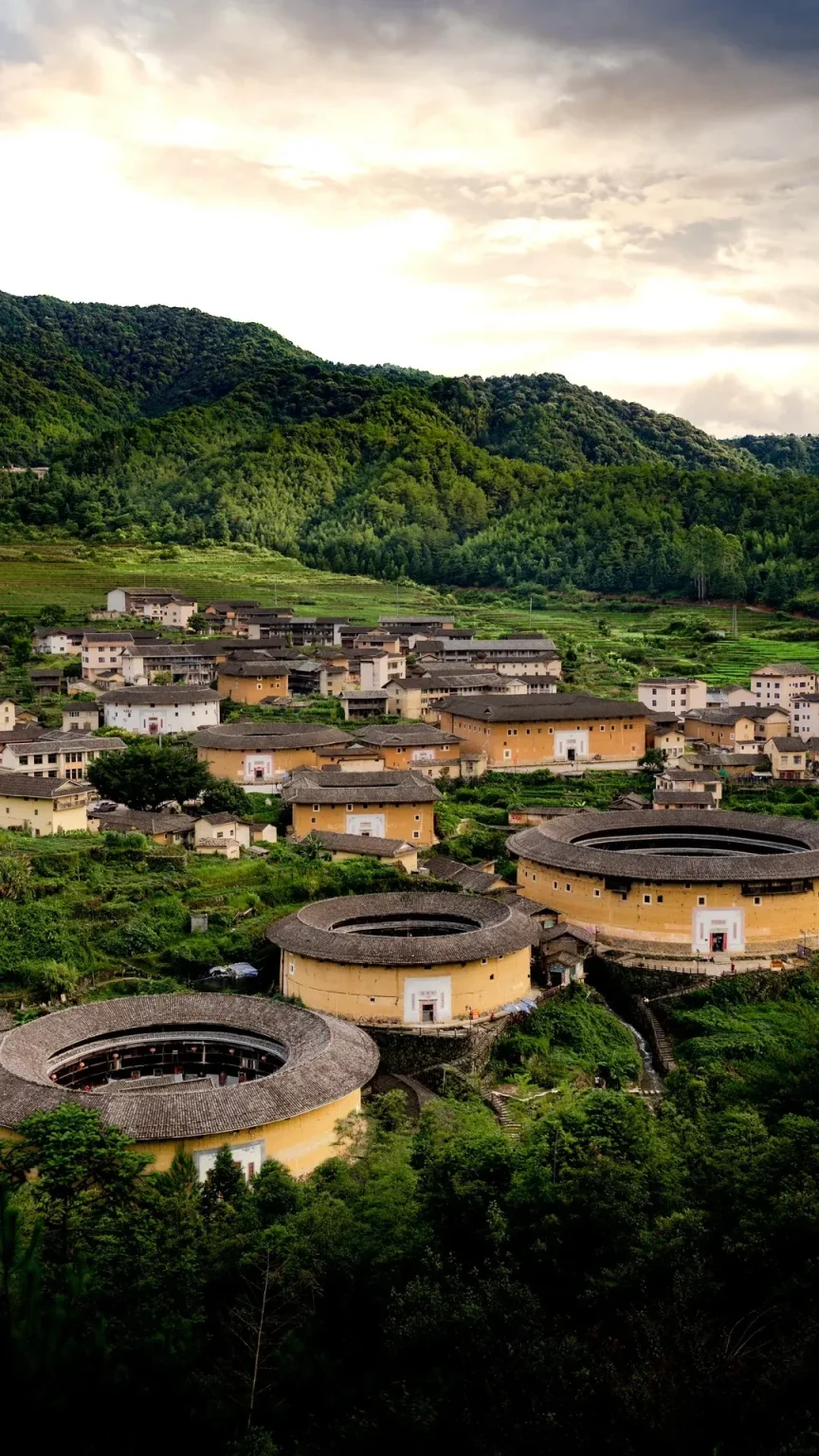
A panoramic view of a traditional Hakka Tulou village nestled in a valley with lush green, terraced hillsides and mountains in the background. Several large, circular, earthen buildings with tiled roofs are visible, along with smaller rectangular houses scattered among them. The foreground shows parts of two large, round Tulous, one more prominent and in focus than the other.

Immerse yourself in the rich cultural heritage of Fujian’s Hakka people. These magnificent Tulou, more than just architectural marvels, are the heart of a community and the birthplace of unique culinary traditions waiting to be explored in our guide to Tulou cuisine.

A Definitive Hakka Food Guide: Must-Try Dishes in Fujian

The Hakka people, whose name translates to “guest families,” historically migrated from northern China to the south. Their cuisine reflects this heritage: it is practical, preserving-focused, and incredibly flavorful, relying heavily on wood-fired woks and local mountain produce.

Hakka Salt-Baked Chicken (Yan Bao Ji)

This is the undisputed king of Hakka cuisine. Traditionally, a free-range mountain chicken is wrapped in parchment paper and buried in a wok full of scorching hot, coarse sea salt. The result is incredibly tender meat with a concentrated, savory flavor.

Insider Tip: When dining in Yongding, expect to pay around 80 to 100 RMB for a whole chicken. Do not ask for soy sauce; the perfectly crisped, salty skin is meant to be enjoyed exactly as it comes out of the salt bed.

Hakka Stuffed Tofu (Yong Tau Foo)

Legend has it that when the Hakka migrated south, they missed the wheat dumplings of the north. Lacking wheat flour, they resourcefully stuffed minced pork and mushrooms into blocks of fresh tofu instead.

The tofu in the Tulou regions has a distinctively firm texture and a slightly smoky flavor from the local well water. It is usually pan-fried until golden and then simmered in an umami-rich clay pot broth.

Taro Cakes and Preserved Mustard Greens (Mei Cai)

Because the Hakka lived in mountainous terrains, preserving food was vital. Mei Cai (dry preserved mustard greens) is a staple, famously steamed with fatty pork belly (Mei Cai Kou Rou) to create a melt-in-your-mouth dish that cuts through the humidity of the Fujian summer.

Taro is another mountain staple. Local chefs steam mashed taro with rice flour, pork bits, and dried shrimp to create dense, savory cakes that are pan-fried for a crispy edge.
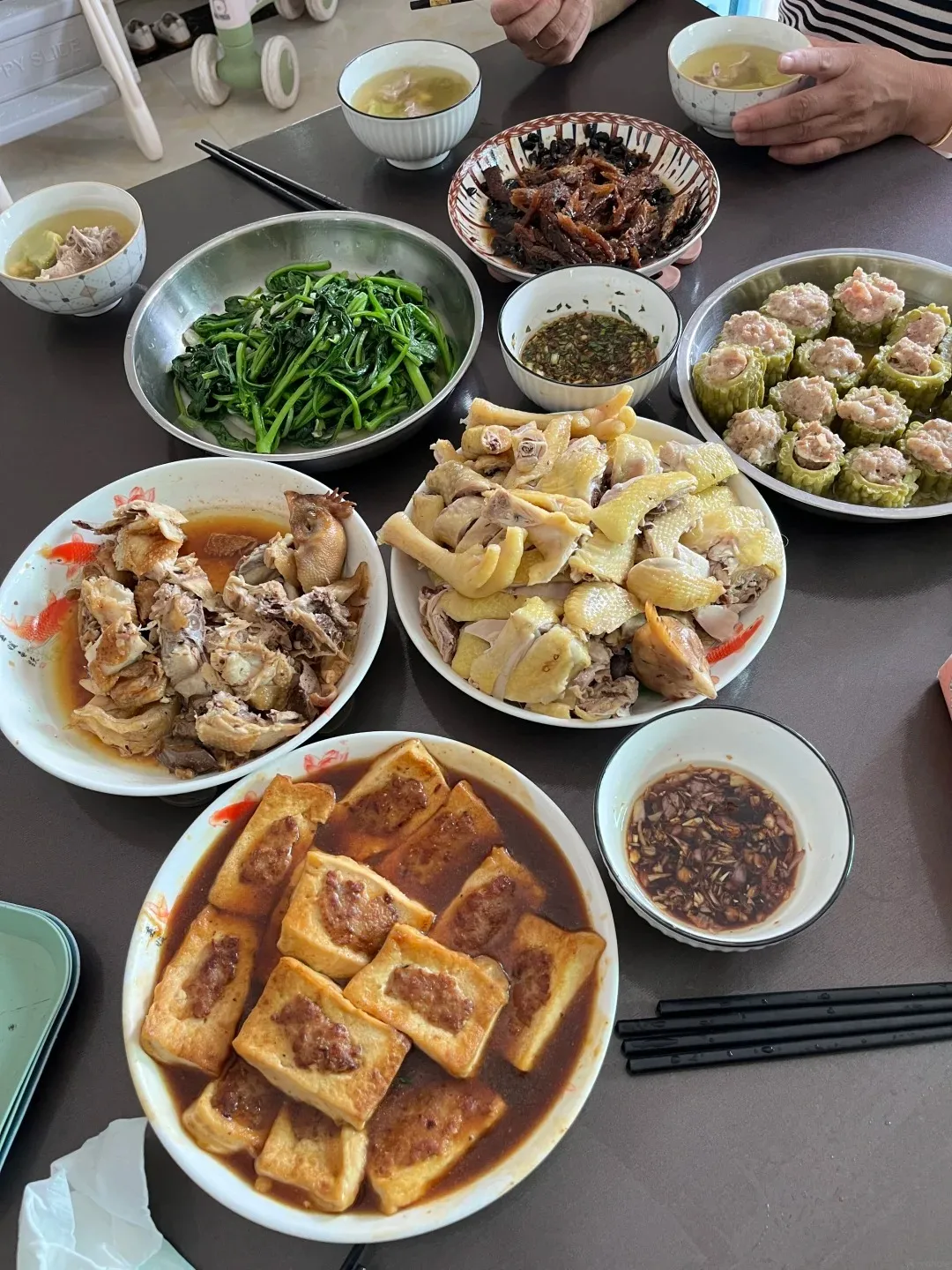
A table laden with a variety of Hakka dishes. In the foreground is a large white plate filled with golden-brown stuffed tofu triangles submerged in a savory sauce. To the left, a bowl contains cooked chicken pieces, some with bone-in. Above that, a large metal bowl holds vibrant green stir-fried leafy vegetables. In the upper right, a plate is filled with numerous stuffed bitter melon halves. Next to it, a bowl holds chopped meat and vegetables in a sauce. Further back, two small bowls contain soup with meat and vegetables. A smaller bowl in the upper middle holds a dark, dried meat dish with black beans. Chopsticks are visible on the table.

Embark on a culinary journey through Fujian’s rich Hakka heritage with this authentic Tulou feast. From the fragrant salt-baked chicken to the hearty stuffed tofu and uniquely prepared bitter melon, each dish tells a story of tradition and flavor.

What to Know Before You Go: Markets and Tourist Traps

Not all food experiences in the Tulou clusters are created equal. The commercialization of popular spots like the Tianluokeng cluster means you need to be strategic about where you eat.

Skip the Pre-Packaged Snacks

Is it worth it? The vacuum-sealed taro cakes and dried meats sold at the main tourist entrances are heavily preserved and lack the soul of Hakka cooking. Skip these overrated souvenirs.

Hit the Early Morning Village Markets

For a true culinary adventure, wake up at 6:00 AM and head to the local market in Chuxi or Hongkeng village. Here, you will smell the sharp aroma of freshly ground ginger and see locals trading bamboo shoots harvested just hours prior.

You can buy a steaming bowl of handmade beef balls or rice noodles for just 15 RMB. Watching the vendors expertly fold pork into tofu blocks offers an unfiltered look at Hakka culinary prowess.

Practical Tips for Dining in 2026

Dining in rural China has modernized rapidly. Physical menus are rare; instead, you will find QR codes taped to the wooden tables of family-run restaurants.

You must scan these codes using Alipay or WeChat to view the menu, order, and pay. Ensure your international Visa or Mastercard is verified within these apps before leaving your home country, as rural vendors cannot process foreign credit cards directly.

Finally, embrace the communal dining style. Dishes are served family-style on a lazy Susan, and meals are often accompanied by tiny cups of local oolong tea, acting as a perfect palate cleanser between heavy, savory bites.


Common Questions About Your China Trip

What is the 144-hour visa-free transit policy for China?

The 144-hour visa-free transit policy allows eligible travelers from 54 countries to visit specific regions, including Fujian, for up to six days without a visa. You must have a valid passport and a confirmed onward ticket to a third country or region.

Physical credit cards are rarely accepted in rural areas. You must link your international Visa or Mastercard to Alipay or WeChat Pay before arriving to pay for meals, transport, and services.

Yes, a reliable eSIM is highly recommended to bypass the Great Firewall. It ensures you have consistent access to translation apps, Baidu Maps, and digital payment platforms while exploring remote regions.

The culinary highlights include Hakka salt-baked chicken, stuffed tofu (Yong Tau Foo), and savory taro cakes. These dishes are deeply rooted in local mountain traditions and offer an authentic taste of Hakka culture.

Exploring the Tulou villages is as much a journey for the palate as it is for the eyes. By seeking out authentic salt-baked chicken, embracing the morning markets, and coming prepared with your digital payment apps, you will unlock the true flavors of Fujian. Book a local food tour on your next trip to China to experience the warmth and resilience of Hakka culinary heritage firsthand.

Similar posts to this one

A long table laden with various Russian and Russian-influenced dishes, including a large bowl of beef stew in tomato sauce, sliced steak, meat skewers with salad and dipping sauces, a baked dish resembling a large quiche or pie, a salad with beets and blueberries, various types of bread, and small bowls of soup. Russian nesting dolls are visible in the background.

Beyond the Skewers: A Guide to Harbin's Russian-Influenced Food Scene

Stepping onto the cobblestones of Harbin in January means bracing against -25°C winds, but the biting cold is quickly forgotten [...]

A wooden table laden with a variety of Dai foods, including a whole grilled fish on a large banana leaf, skewers of grilled shrimp and pork, grilled corn, a whole pineapple, bowls of dipping sauces, a plate of noodles, and bottles of beer.

Dai Food 101: A Guide to the Spicy and Sour Flavors of Xishuangbanna

Xishuangbanna isn't your typical Chinese culinary destination. Tucked away in the tropical southern tip of Yunnan province, bordering Myanmar and [...]

An elevated view looking down onto a wide, paved street running alongside a tall, ancient stone wall. Several yellow taxis and other vehicles are driving on the street, which is lined with pedestrians. A set of wide stairs leads up to the top of the wall where more people are walking. Beyond the wall, a large lake is visible with numerous small boats on it, and a city skyline in the distance under a hazy, pale sky.

Nanjing Street Food and Old City Walls: 2-Day Urban Exploration Guide

Many travelers speed right past China's former southern capital on the bullet train between Shanghai and Beijing. That is a [...]

Get the China Arrival Survival Kit

Planning a trip here has a steep learning curve. Join our newsletter and receive our free “Day One Checklist” covering everything from setting up Alipay and WeChat to bypassing the internet firewall.