
Hangzhou on 3 RMB: A Guide to the Grand Canal Water Bus

If you want to experience the ancient Grand Canal without paying 150 RMB for a crowded tourist boat, you need this Hangzhou Water Bus guide. While most visitors flock to the expensive sightseeing cruises, savvy travelers know that the local public transit system offers the exact same views for a fraction of the cost.

In 2026, traveling smart in China means blending in with the locals. This guide breaks down exactly how to navigate the city’s historic waterways using nothing but your smartphone and pocket change.

Quick Summary: Key Takeaways for Your Trip

  • Price: Exactly 3 RMB per ride, payable via Alipay or WeChat Pay transit QR codes.
  • Best Route: Line 1 from Wulinmen Pier to Gongchen Bridge offers the most scenic, historic views of the Grand Canal.
  • Operating Hours: Usually 7:00 AM to 6:00 PM, but avoid the 7:30 AM and 5:30 PM local commuter rush hours to guarantee a seat.
  • No Advance Booking: The system operates strictly on a first-come, first-served basis. Line up at the pier 20 minutes early.

Summarize with :

What is the Hangzhou Water Bus?

The Hangzhou Water Bus is a public transit network operating on the UNESCO-listed Grand Canal and surrounding urban waterways. Unlike expensive tourist cruises, it functions as a daily commuter ferry for locals, offering an authentic, budget-friendly way to navigate the city’s historic districts for just 3 RMB.

How to Pay and Board (2026 Logistics)

Forget buying paper tickets. In 2026, China is completely cashless, and the water bus is no exception. You simply queue up at the pier and scan your Alipay or WeChat Pay Transit QR code at the turnstile as you board. The fare is a flat 3 RMB (about $0.40 USD), making it the cheapest scenic tour in the city.

To ensure your payment apps work seamlessly at the turnstile, you need a reliable internet connection. Public Wi-Fi requires a Chinese phone number, so setting up an eSIM before you land is mandatory to bypass the firewall and access your digital wallet.

💡 Editor’s Pick: We recommend Nomad eSIM for China because it reliably bypasses the Great Firewall with stable speeds.
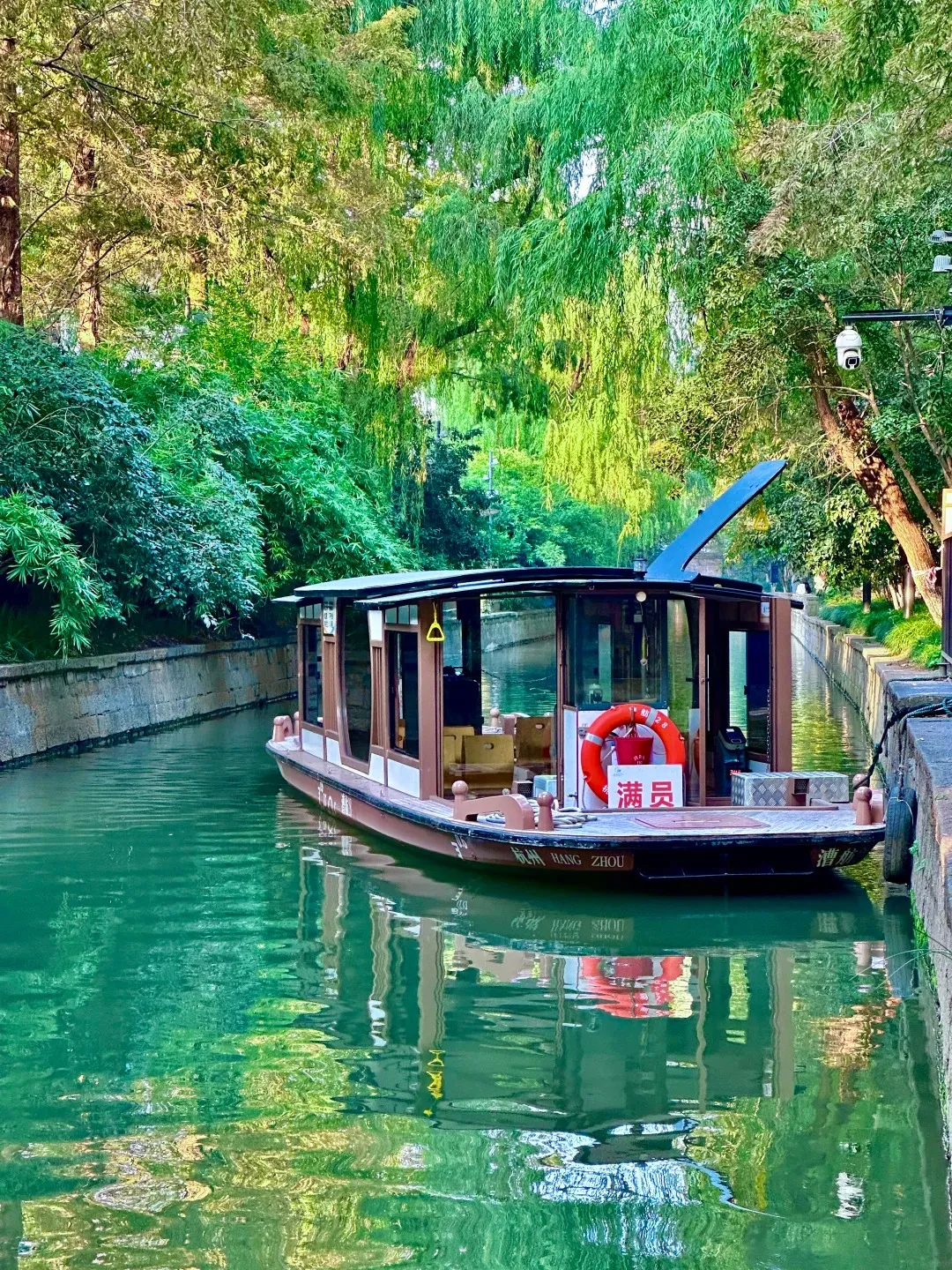
A narrow boat with a brown and white cabin and a dark roof with a blue fin sails on a green canal. The boat has windows and a life preserver hanging on the side. Lush green trees with long, drooping branches line both sides of the canal, and their reflections are visible in the water.

Experience the charm of Hangzhou by hopping on the Grand Canal water bus for just 3 RMB. Glide along ancient waterways surrounded by vibrant greenery, a tranquil journey mirroring the city’s rich history.

Insider Tips: What to Know Before You Go

Here is an honest truth: this is public transit, not a luxury cruise. The boats are highly functional, smelling faintly of diesel and damp river wood. You will hear the loud hum of the engine and the rapid-fire Hangzhou dialect of elderly locals heading to the market.

Insider Tip: Skip the tourist trap “Grand Canal Night Cruise.” Many travelers pay upwards of 150 RMB for a flashy evening boat ride. Save your money. Ride the Water Bus Line 1 at 4:30 PM instead. You get the same golden-hour views of the weeping willows and stone bridges for 3 RMB.

Because it is so cheap, the boats fill up fast. If you are boarding at a mid-way stop rather than a terminal pier, you might have to stand. Grab a 2 RMB bottle of Nongfu Spring water from a convenience store before you queue up, as there are no facilities on board.

Can You Ride the Water Bus on a Layover?

What is the 144-hour visa-free transit?

The 144-hour visa-free transit is an official Chinese immigration policy allowing eligible passport holders to enter specific regions, including Hangzhou, for up to six days without a pre-approved visa, provided they hold a confirmed onward flight ticket to a third country.

According to the official China National Immigration Administration guidelines, travelers arriving at Hangzhou Xiaoshan International Airport (HGH) or arriving via high-speed rail from Shanghai can easily utilize this policy. If you have a two-day layover, spending an afternoon on the water bus is the perfect micro-itinerary.
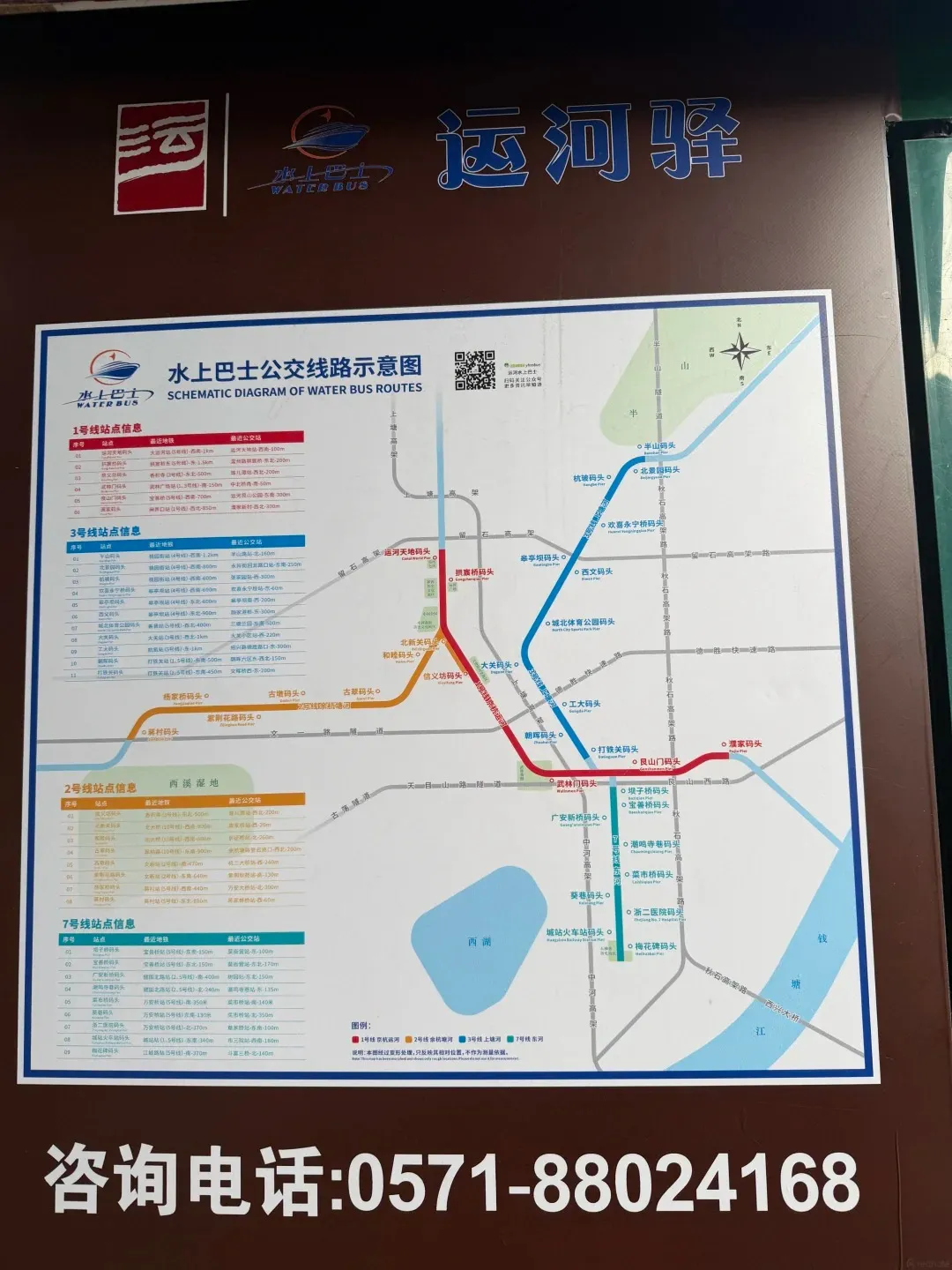
A diagram showing Hangzhou water bus routes, including route numbers, station names, and distances. The map displays different colored lines representing bus routes, with points marking stations. Below the map are tables listing information for route 1, route 2, and route 7, including station names and fare information. The bottom of the image features a large phone number for inquiries.

Explore Hangzhou’s Grand Canal for as little as 3 RMB! This comprehensive water bus route map details all the stops and helps you navigate the city’s waterways efficiently and affordably.

The Best Route: Line 1 Sights

While there are several commuter lines, Water Bus Line 1 is the undisputed champion for visitors. The journey from Wulinmen to Gongchen Bridge takes about 30 minutes. Here is where you should explore.

Wulinmen Pier (The Starting Point)

Located right in the modern city center, this is where you board. The queue can get incredibly long on weekends, so arrive 20 to 30 minutes before departure. Boarding here guarantees you a window seat.

Qiaoxi Historic Street

Disembark near Gongchen Bridge to explore this preserved neighborhood. You will immediately smell the pungent, savory aroma of stinky tofu frying at street stalls. It is a stark contrast to the modern skyscrapers you left behind at Wulinmen. Watch local grandfathers slapping Mahjong tiles onto wooden tables in the narrow alleyways.

Gongchen Bridge

This is the highest and longest ancient stone arch bridge in Hangzhou, marking the end of the Grand Canal. Standing at the top of the bridge offers a perfect vantage point of the massive cargo barges navigating the murky green waters below.

Frequently Asked Questions About China Travel

Do I need a visa to visit Hangzhou in 2026?

You may be eligible for the 144-hour visa-free transit policy if you are traveling from a qualifying country and have an onward flight to a third country. This allows you to explore Hangzhou and surrounding areas for up to six days without a traditional visa.

China is a largely cashless society. You should set up Alipay or WeChat Pay before you arrive and link your international credit card. These apps generate a QR code that you scan at turnstiles for buses, subways, and water taxis.

Yes, an eSIM is highly recommended for first-time travelers. It provides reliable data access to essential apps like Alipay, maps, and translation tools while allowing you to bypass the Great Firewall without needing a local Chinese phone number.

Skip the expensive tourist cruises and take the local Water Bus Line 1. It costs only 3 RMB, departs from Wulinmen Pier, and offers the same historic views of the canal as the premium sightseeing boats.

Conclusion

Navigating the city doesn’t have to drain your wallet. By following this Hangzhou Water Bus guide, you can skip the overpriced tourist traps and experience the Grand Canal exactly how the locals do. Armed with Alipay, an eSIM, and 3 RMB, you are ready to explore the historic heart of the city.

Have you ridden the water bus yet? Leave a comment below with your favorite stop, or check out our complete guide to navigating China’s high-speed rail network for your next adventure!

Similar posts to this one

Exterior front view of a silver and red Fuxinghao high-speed train stopped at a station platform under a modern gray and white canopy. A yellow sign on the platform reads 'Caution, Gap'. People are visible near the train doors.

Silent Carriage Travel: How to Book Quiet Seats on China's High-Speed Trains

Traveling across China by high-speed rail is an incredible experience, but if you have ever been trapped next to [...]

A panoramic aerial view of Guangzhou, China, featuring a dense urban landscape. In the background, several modern skyscrapers dominate the skyline, including the distinctive Canton Tower with its lattice structure. In the foreground and mid-ground, there are numerous tightly packed residential buildings with varied architectural styles and colorful facades, interspersed with trees and some signs of street life.

Guangzhou Subway Guide: Fares, Apps, and Top Tourist Stops

Welcome to the humid, bustling heart of southern China. Navigating this 15-million-strong megacity above ground means battling gridlock traffic and [...]

A blue and white airplane taking off in the sky above multiple levels of elevated high-speed trains and road traffic in a city.

From Airport to City Center: A Complete Guide to China's Top Transit Options

Arriving in a Chinese mega-city after a 14-hour flight can feel overwhelming. The sheer scale of the terminals, the hum [...]

Get the China Arrival Survival Kit

Planning a trip here has a steep learning curve. Join our newsletter and receive our free “Day One Checklist” covering everything from setting up Alipay and WeChat to bypassing the internet firewall.