
Guangzhou's Best Night Markets: A Guide to Evening Street Food and Local Life

The humid evening air in southern China carries an unmistakable scent: a mix of sizzling garlic, sweet soy sauce, and the smoky charcoal of wok hei. If you are searching for the ultimate Guangzhou night markets guide, you already know that this city doesn’t sleep when the sun goes down—it eats. From the bustling avenues of Xihua Road to the hidden corners of Baoyuan Road, Guangzhou transforms into a culinary playground. Here is how to navigate the crowds, pay like a local, and eat the best Cantonese street snacks in 2026.

Quick Summary: Key Takeaways for Your Trip

  • Top Markets: Xihua Road is best for traditional Cantonese snacks, while Baoyuan Road offers a quieter, highly authentic local vibe.
  • Payment: Cash is rarely accepted in 2026; you must set up Alipay or WeChat Pay before arriving.
  • Average Costs: Expect to pay between 10 to 25 RMB ($1.50 to $3.50 USD) for standard street food dishes like rice noodle rolls or beef offal.
  • Navigation: Use the Guangzhou Metro (Lines 1 and 8 connect to most markets) and rely on the Amap (Gaode Ditu) app for walking directions.

Summarize with :

What is the 144-hour transit visa?

The 144-hour transit visa is an official Chinese immigration policy allowing travelers from 54 eligible countries to stay in Guangdong Province without a traditional visa for up to six days. You must possess a valid passport and a confirmed onward flight ticket to a third country or region.

How to Navigate Payments and Connectivity in 2026

To survive a Guangzhou night market, your smartphone is your wallet. Vendors, even those selling a 5 RMB bottle of water from a plastic stool, exclusively use QR codes. Download Alipay or WeChat and bind your international credit card before your flight lands. According to the official China National Immigration Administration, tourists can seamlessly verify their identities on these apps with a foreign passport.

Because Google Maps is notoriously inaccurate here and international roaming is spotty, a reliable connection is mandatory. You will need an eSIM to bypass the Great Firewall and use local navigation apps like Amap.

đź’ˇ Editor’s Pick: We recommend Nomad eSIM for China because it reliably bypasses the Great Firewall with stable speeds.

Xihua Road: The Undisputed King of Cantonese Street Snacks

If you only have one night in the city, Xihua Road (西华路) is your non-negotiable destination. Unlike the heavily commercialized tourist traps, this street remains a stronghold for old-school Cantonese flavors. The sheer density of food stalls here is staggering, and the air is thick with steam from bamboo baskets.
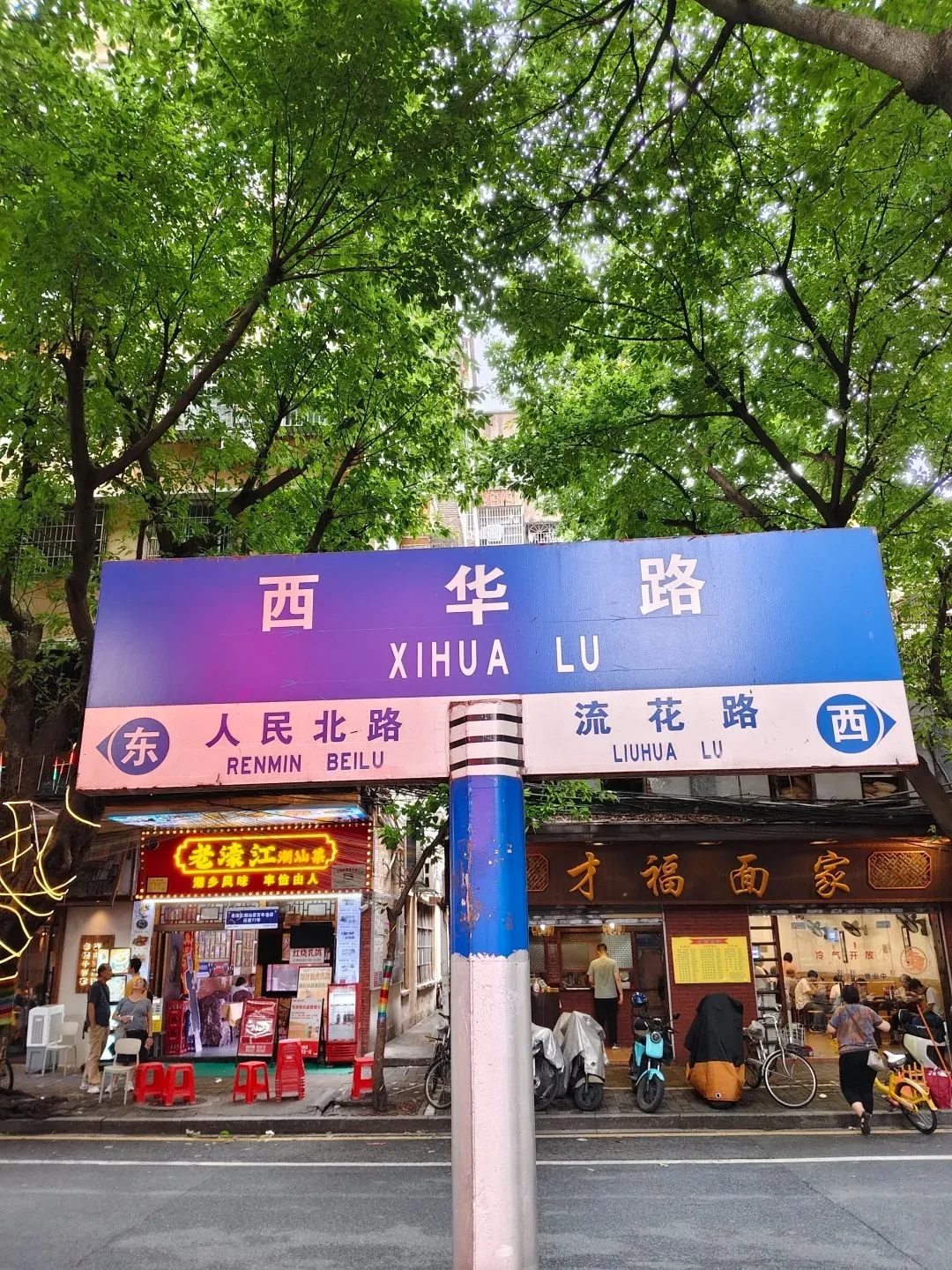
A street sign in Guangzhou, China, with text in Chinese characters and English. The sign reads 'Xihua Lu' in large English letters and below it 'Renmin Beilu' and 'Liuhua Lu'. The sign is purple and blue and is mounted on a striped pole. Below the sign, there are storefronts with illuminated signs and awnings, with people walking and eating. Trees with green leaves overhang the street.

Navigating Guangzhou’s vibrant night markets is an adventure! This sign points the way to Xihua Road, a bustling hub where the aroma of local delicacies fills the air.

Your first stop should be for Cheung Fun (steamed rice noodle rolls). Look for the stall with the longest line of local aunties; that is your quality guarantee. A plate of translucent, soy-drenched beef rice rolls will cost you exactly 15 RMB. Next, brave the pungent but deeply savory Radish and Beef Offal stew (Niuzha), simmered for hours in star anise and tangerine peel.

Baoyuan Road Night Market: The Lesser-Known Local Favorite

For travelers wanting to escape the shoulder-to-shoulder crowds, Baoyuan Road offers a masterclass in neighborhood dining. Located in the historic Liwan District, this market is where locals go to unwind under the canopy of banyan trees after a long workday.

Here, the focus shifts slightly toward late-night seafood and wok-fried dishes. Grab a plastic chair and order a plate of charcoal-grilled oysters smothered in minced garlic (usually 30 RMB for a half-dozen). Pair it with a bowl of Tingting porridge (Tingzai Jook), a comforting rice gruel packed with peanuts, sliced fish, and pork rind.

The “Dawn Market” at Haizhu Square: A Midnight Adventure

If you are a night owl, Guangzhou has a secret waiting for you. Known locally as the “Ghost Market” or Dawn Market, this pop-up bazaar near Haizhu Square only comes alive around 2:00 AM and vanishes before sunrise. It is an exceptionally free-wheeling trading ground.

While not strictly a food market, the surrounding alleys are packed with late-night food carts catering to the antique dealers and bargain hunters. Grab a steaming skewer of cumin lamb or a baked sweet potato to keep your hands warm while you browse vintage jade, old ceramics, and retro electronics.

What to Know Before You Go: Insider Tips and Mistakes to Avoid

Skip the Beijing Road Food Stalls: While Beijing Road is fantastic for modern shopping and seeing neon lights, the street food here is heavily overpriced and caters entirely to tourists. You will pay double the price for snacks that lack the authentic wok hei found in Liwan or Yuexiu districts.

Master the Metro: Guangzhou’s humidity is oppressive, even at 9:00 PM in October. Do not try to walk between distant districts. The Guangzhou Metro is hyper-efficient, air-conditioned, and costs just 2 to 5 RMB per ride. Use the official metro mini-program inside WeChat to scan in and out of the turnstiles.
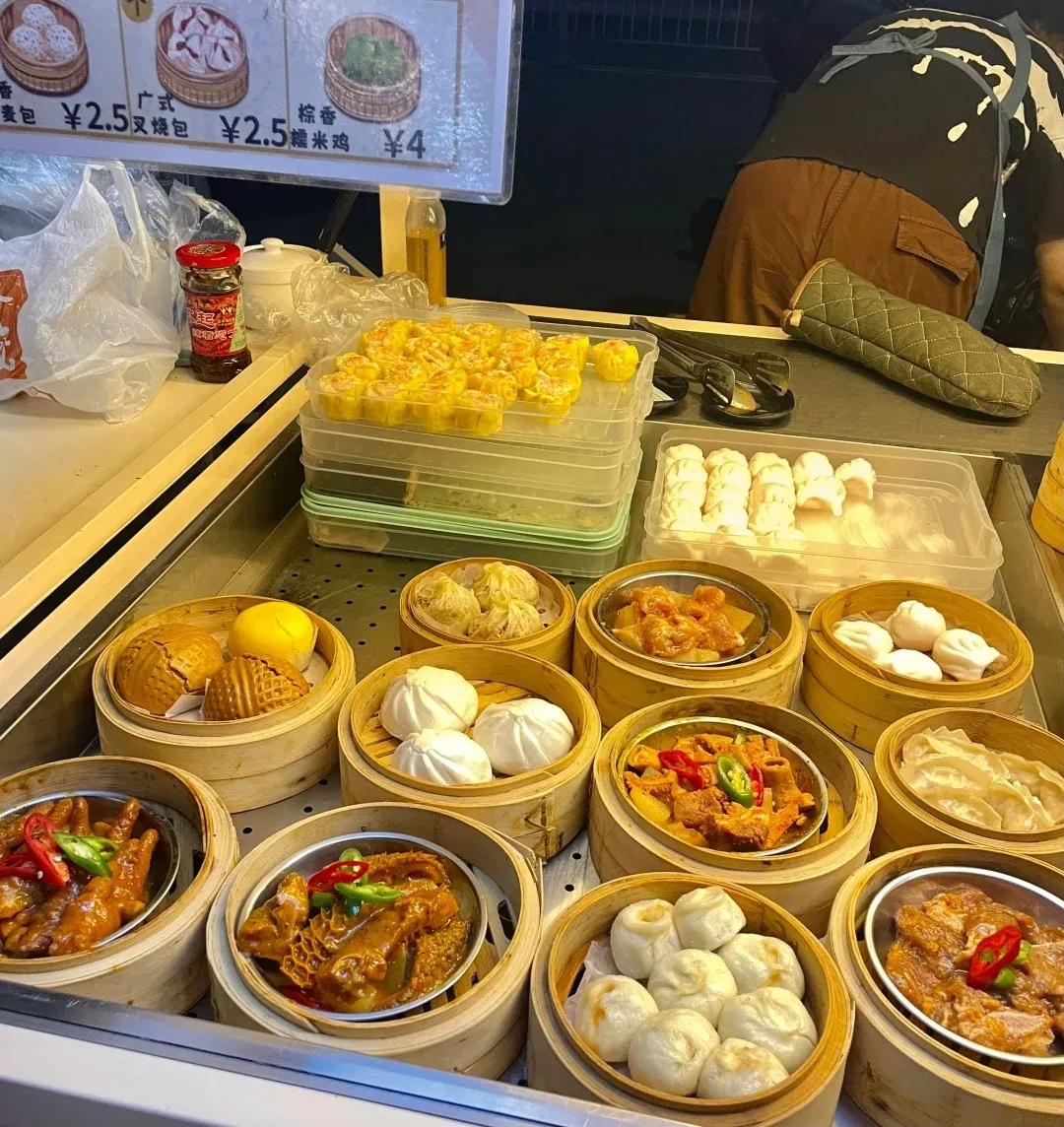
A close-up view of various Cantonese dim sum and steamed dishes displayed in bamboo steamers on a metal counter. In the foreground, there are several bamboo steamers filled with different food items. The leftmost steamer contains braised chicken feet with chili and sauce. Next to it is a steamer with tripe in a rich brown sauce. Moving right, there are steamers with white steamed buns, small steamed dumplings (shumai), and a dish of diced meat with vegetables. In the upper part of the image, there are trays filled with small, yellow steamed dumplings or sui mai. A small bottle of red condiment is visible on the left. In the background, a person wearing an apron is partially visible.

Indulge in the authentic flavors of Guangzhou’s night markets! These steaming bamboo baskets showcase a delightful array of traditional Cantonese dim sum and local specialties, perfect for a late-night culinary adventure.

Bring Your Own Tissues: Night market stalls prioritize turnover speed over hospitality. You will rarely find napkins on the tables. Pack a small packet of tissues and some wet wipes to clean your hands after tackling sticky barbecue skewers or peeling fresh shrimp.

Frequently Asked Questions About Traveling China

Do I need a visa for a short trip to China in 2026?

You may be eligible for the 144-hour transit visa, which allows travelers from 54 countries to stay in specific regions, like Guangdong, for up to six days without a traditional visa. You must have a confirmed onward ticket to a third country to qualify.

Cash is rarely accepted in 2026. Almost all vendors, including small street food stalls, exclusively use digital payment platforms like Alipay or WeChat Pay. It is essential to set these up and bind your international credit card before you arrive.

To bypass the Great Firewall and use essential apps like Amap for navigation, you should purchase an eSIM before your trip. Relying on hotel Wi-Fi or international roaming can be spotty and often restricts access to many common websites.

The most efficient way to travel is by using the local metro system, which is air-conditioned and inexpensive. You can use the official metro mini-program within WeChat to scan in and out of turnstiles easily.

Conclusion

Exploring Guangzhou’s night markets is the most visceral way to connect with southern China’s rich culinary heritage. Whether you are navigating the bustling lanes of Xihua Road for the perfect rice noodle roll or hunting for midnight antiques at the Dawn Market, the city rewards hungry, curious travelers. Make sure your Alipay is loaded, your eSIM is active, and your appetite is ready. If you are continuing your journey through China, be sure to read our comprehensive guide to navigating China’s high-speed rail network to plan your next stop.

Similar posts to this one

The upper levels of the Yellow Crane Tower, a traditional Chinese multi-tiered pavilion with orange tiled roofs and red painted columns, are visible against a clear blue sky. Green foliage from trees and branches frame the lower and left sides of the image. A black plaque with Chinese characters is mounted on the central structure.

Wuhan 48-Hour Weekend Guide: Hot Dry Noodles & Yangtze Views

Wuhan is a city that runs on high-octane energy, fueled by rich sesame paste and the relentless current of the [...]

A person wearing a hat and plaid shirt stands on a walkway in front of a traditional multi-tiered pagoda with a modern blue glass skyscraper behind it. A red wooden railing runs along the walkway in the foreground.

Chaozhou Street Food Guide: Best Markets and Local Snacks

Chaozhou (often known as Teochew) is a legendary culinary destination in Guangdong province, recognized by UNESCO as a City of [...]

A large white bowl filled with Guilin rice noodles topped with slices of roasted pork belly, pan-fried pork belly, and peanuts. A side bowl of creamy soup and small bowls of condiments like chili flakes, chopped green onions, and pickled vegetables are visible in the background.

A Guide to Guilin Rice Noodles: Where to Eat and How to Order Like a Local

Stepping into a humid Guilin morning, the first thing that hits you isn't the view of the karst mountains—it's the [...]

Get the China Arrival Survival Kit

Planning a trip here has a steep learning curve. Join our newsletter and receive our free “Day One Checklist” covering everything from setting up Alipay and WeChat to bypassing the internet firewall.